

TL;DR:
- A pool construction draw schedule links each payment to verified project milestones, protecting your budget and contractor accountability. It typically involves 5 to 7 phases, with payments made after completing and confirming specific work stages like excavation, shell, and equipment installation. Following a milestone-based schedule and verifying work through inspections or photos ensures timely progress and prevents financial risks.
A pool construction draw schedule is a structured payment plan that ties each payment to a verified stage of construction, so you never pay for work that hasn’t happened yet. Most Central Florida pool projects follow 5–7 defined phases, from the initial deposit through final startup, each linked to a specific milestone your contractor must complete before receiving the next payment. Understanding this schedule protects your budget, keeps your contractor accountable, and prevents the financial losses that come from front-loaded payment arrangements. The Florida Swimming Pool Association publishes guidelines on residential draw schedule phases that serve as the industry standard for structuring these payments.
What is a pool construction draw schedule and how does it work?
A pool construction draw schedule, known in the construction industry as a milestone-based payment plan, defines exactly when money changes hands during your project. Each “draw” is a payment released only after a specific phase of work is complete and verified. The schedule protects both you and your contractor: you don’t pay ahead of progress, and your contractor maintains steady cash flow tied to real deliverables.
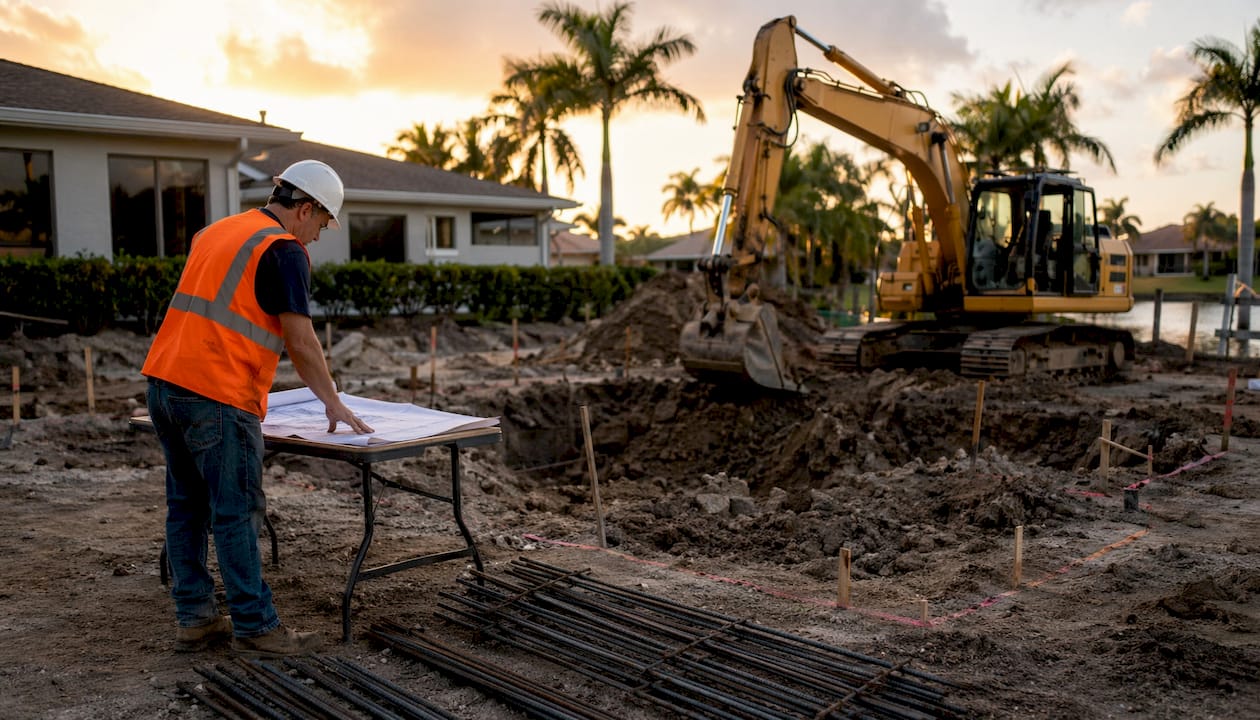
The pool construction process moves through design, permitting, excavation, structural work, utilities, inspections, decking, and startup. Each of those stages can trigger a payment draw. Without a written schedule, payments become informal and disputes become inevitable.
The term “draw schedule” comes from commercial construction finance, where lenders “draw down” funds from a loan as work progresses. For residential pool projects, the same logic applies whether you’re paying cash or using a pool financing plan. Money flows out in stages, not all at once.
What are the typical phases and payment breakdowns?
Florida pool draw schedules typically run 5–7 phases, with each phase tied to a specific construction milestone. The exact percentages vary by contractor and pool type, but the structure below reflects standard industry practice.
| Phase | Typical Payment % | Work Completed |
|---|---|---|
| Initial deposit | 5%–10% | Contract signed, design finalized |
| Excavation/mobilization | 15%–25% | Dig complete, site prepared |
| Rebar and plumbing rough-in | 15%–20% | Steel framing and plumbing set |
| Gunite or shotcrete shell | 15%–25% | Pool structure formed and cured |
| Tile, coping, and decking | 15%–25% | Surface work and surround complete |
| Equipment installation | 10%–20% | Pump, filter, heater, and electrical set |
| Final startup and punch list | 5%–10% | Water filled, systems tested, defects corrected |
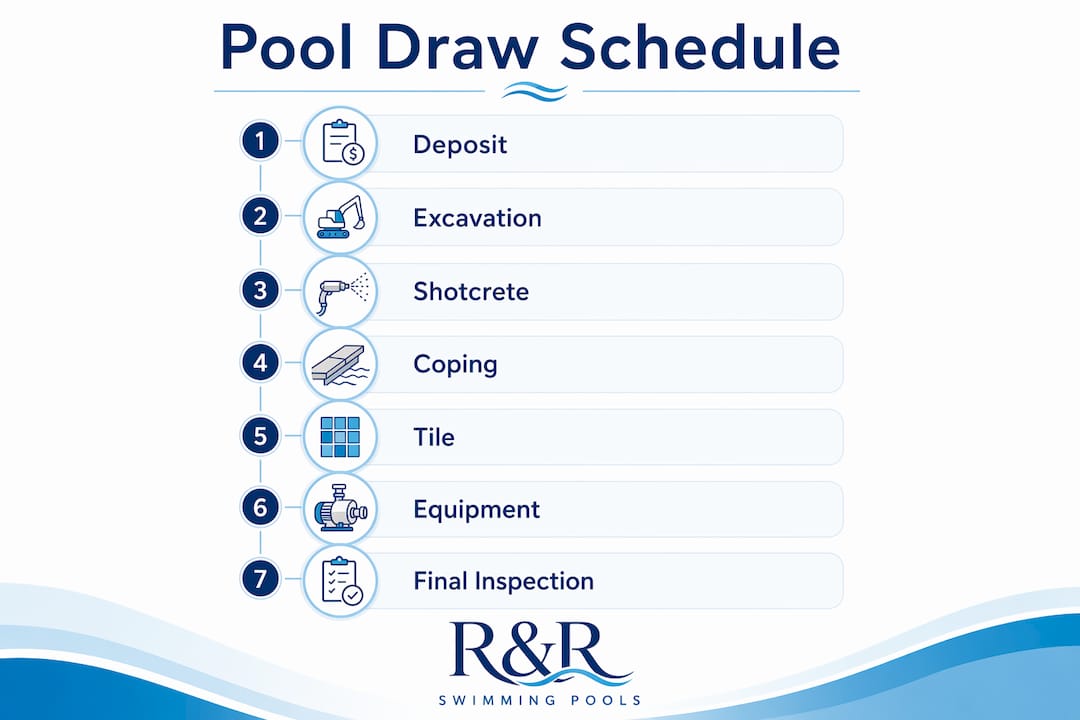
Payments often follow 20% increments at excavation, shotcrete, coping, tile, and equipment phases, with a 10% deposit upfront and 5%–10% held back until the punch list is complete. That holdback is not a courtesy. It’s the most effective tool you have to get every last detail finished correctly.
The schedule shifts slightly depending on pool type. A concrete pool has a longer shell phase than a fiberglass pool, which arrives as a prefabricated unit. Your contractor’s draw schedule should reflect the actual sequence of work for your specific build. If it doesn’t, ask for a revised version before signing.
Pro Tip: Ask your contractor to attach the draw schedule directly to the contract as an exhibit, not as a separate document. This makes each payment milestone legally part of your agreement.
Why does a milestone-based payment schedule protect your finances?
Front-loading payments is the single biggest financial risk in pool construction. Avoid paying more than 20%–30% of the total project cost before the pool shell is complete. Deposits above that threshold, without tied milestones, signal a contractor who prioritizes cash collection over construction progress.
Most failed pool projects result from unclear scopes and payments collected before deliverables are verified. That pattern is predictable and preventable. When your contractor knows the next payment only comes after a specific phase is done, the incentive to finish that phase is direct and financial.
Escrow accounts offer an additional layer of protection. With an escrow arrangement, you deposit funds with a neutral third party, and each draw is released only after verified completion of the corresponding phase. This protects your contractor’s cash flow while preventing you from paying too far ahead of actual progress.
Pro Tip: Before releasing any draw payment, request either a passed inspection report from your local municipality or a set of date-stamped photos documenting the completed work. Visual site visits alone are not sufficient proof of code compliance.
Milestone verification should rely on official inspections or documented photo evidence, not just your contractor’s word that a phase is done. A site that looks busy is not the same as a site that has passed inspection.
How do permitting and inspections affect the payment timeline in Central Florida?
Permits in Central Florida are not optional, and they directly affect your pool project timeline and payment schedule. Your contractor must submit permit applications to the relevant county or city building department before breaking ground. In Orange, Osceola, Lake, and Seminole counties, permit approval can take several weeks depending on the municipality’s workload and the complexity of your design.
Require proof of permit submittal or issuance before releasing your initial deposit or any early draw. A contractor who asks for money before permits are filed is asking you to fund a project that may not legally proceed. That is a risk you should not accept.
Inspections are built into the construction sequence and directly tie to your draw schedule. Common inspection points include post-excavation, after rebar and plumbing rough-in, after the gunite or shotcrete shell, and at final startup. Each of these inspections must pass before the corresponding draw payment is appropriate. Your pool building timeline in Florida should map these inspection points alongside each payment phase.
Permitting delays are common in Central Florida, particularly during high-demand seasons. Build buffer time into your cash flow expectations. A delay in permit approval does not mean your contractor failed, but it does mean your payment schedule shifts accordingly. Never release a draw payment simply because time has passed. Release it because the milestone is complete and verified.
What are the best practices for managing your draw schedule?
A written, milestone-linked payment schedule in your contract is non-negotiable. Verbal agreements about payment timing are unenforceable and create disputes. Your contract should name each phase, define what “complete” means for that phase, and state the exact dollar amount or percentage due at each draw.
Here are the key actions every homeowner should take before and during construction:
- Confirm contractor licensing. Verify your contractor holds a current Florida Certified Pool/Spa Contractor license through the Florida Department of Business and Professional Regulation before signing anything.
- Attach the draw schedule to the contract. The payment schedule should be an exhibit to your contract, not a separate handshake agreement.
- Require written change orders. Change orders must be written, priced, and dated to avoid unintentionally altering your payment schedule. Any scope change that isn’t documented in writing can become a billing dispute.
- Verify permits before releasing the deposit. Ask for official submittal confirmation from the municipality, not just your contractor’s assurance.
- Document each phase with photos. Keep a dated photo log for every completed milestone. This record protects you if a dispute arises later.
- Hold back 5%–10% until punch list completion. Retain a holdback payment until startup is confirmed, all systems are operational, and every punch list item is resolved.
- Clarify what triggers the final payment. “Substantial completion” means different things to different contractors. Your contract should define it precisely, including what systems must be running and what defects must be corrected.
Managing your pool project planning workflow with this level of documentation keeps your contractor on schedule and gives you clear grounds to withhold payment if a milestone isn’t genuinely complete.
Homeowners should treat draw schedules as negotiation frameworks rather than fixed terms handed down by the contractor. You have the right to negotiate phase percentages, milestone definitions, and holdback amounts before you sign. A contractor who refuses to discuss the payment schedule is a contractor worth reconsidering.
Key Takeaways
A pool construction draw schedule is the most effective financial tool you have to protect your investment and keep your project on track.
| Point | Details |
|---|---|
| Milestone-based payments reduce risk | Release each payment only after verified phase completion, not on a calendar basis. |
| Limit early payments | Avoid paying more than 20%–30% of total cost before the shell is complete. |
| Permits come before payments | Require proof of permit submittal before releasing your initial deposit. |
| Written change orders protect you | Every scope change must be documented with a price and date to preserve original terms. |
| Hold back until punch list is done | Retain 5%–10% of the total contract value until all systems are running and defects are corrected. |
What I’ve learned from watching homeowners navigate draw schedules
The most common mistake I see is treating the draw schedule as the contractor’s document rather than a shared agreement. Homeowners sign it without negotiating a single term, then feel powerless when a payment dispute arises mid-project. The schedule is a starting point for a conversation, not a take-it-or-leave-it form.
The second mistake is conflating activity with progress. A crew showing up on your property every day feels like momentum. It isn’t the same as a passed inspection or a completed phase. Central Florida’s permitting environment adds real complexity here. Delays in Orange County or Lake County can stall a project for weeks, and a homeowner who has already paid for the next phase has lost their leverage entirely.
The contractors worth working with welcome a well-structured draw schedule. It protects their cash flow just as much as it protects your budget. When both sides have clear expectations about what triggers each payment, the project runs cleaner. The contractors who resist detailed milestone definitions are usually the ones who benefit from vague terms.
My honest advice: before you sign any pool contract, read the payment schedule line by line and ask your contractor to define “complete” for each phase. If the answer is vague, push for specifics. That single conversation will tell you more about how your project will go than any sales presentation ever will.
— Randrswimmingpools
Planning your Central Florida pool project with expert support
Building a pool in Central Florida involves more moving parts than most homeowners expect, and the payment schedule is where financial risk concentrates. Randrswimmingpools has been building custom inground pools across Central Florida since 1985, and that experience shows up in how clearly we structure every project from contract to startup.
The inground pool installation guide covers every phase of the construction process, from permit submission through final startup, with plain-language explanations of what happens at each stage and when payments align with progress. If you want to understand exactly what you’re paying for before you sign, that guide is the right place to start. R and R Swimming Pools also offers free consultations for homeowners ready to move from planning to building.
FAQ
What is a pool construction draw schedule?
A pool construction draw schedule is a written payment plan that releases funds to your contractor at specific, verified stages of construction rather than all at once. It typically covers 5–7 phases from deposit through final startup.
How much should the initial deposit be for a pool?
The initial deposit for a pool project should fall between 5%–10% of the total contract value. Deposits above 20%–30% before the shell is complete are a financial risk and a recognized red flag.
Can I negotiate the draw schedule with my contractor?
Yes. The Florida Swimming Pool Association recognizes draw schedules as negotiation frameworks, not fixed legal obligations. You can negotiate phase percentages, milestone definitions, and holdback amounts before signing.
What happens if my contractor asks for payment before permits are issued?
Do not release any payment before your contractor provides official proof of permit submittal or issuance from the municipality. Paying before permits are filed increases your risk of project delays and cancellations significantly.
What is a retainage holdback and why does it matter?
A retainage holdback is 5%–10% of the total contract value that you withhold until final startup is complete and all punch list items are resolved. It is your most direct financial incentive for your contractor to finish every last detail correctly.
