
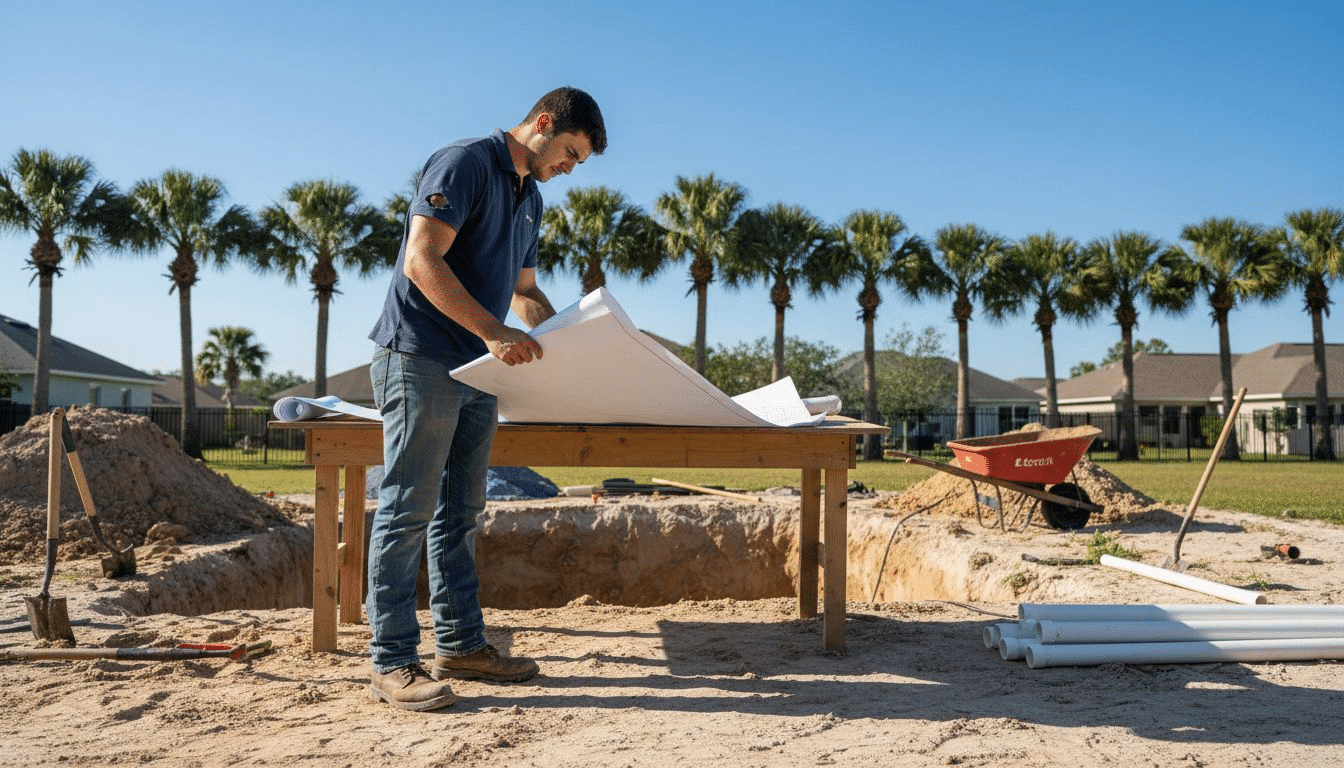
Building a custom inground pool in Central Florida can feel overwhelming when you’re unsure what comes next. Between navigating permits, choosing between concrete and fiberglass, and coordinating contractors, many homeowners face unexpected delays and budget overruns. This guide walks you through every phase of the pool building process, from essential prerequisites through final inspections, helping you make informed decisions and avoid costly mistakes that could derail your dream backyard oasis.
Table of Contents
- Prerequisites: What You Need Before Starting
- Step 1: Design and Planning
- Step 2: Site Preparation and Excavation
- Step 3: Pool Shell Construction (Concrete Or Fiberglass)
- Step 4: Plumbing, Electrical, And Finishing Touches
- Common Mistakes And How To Avoid Them
- Expected Timelines And Outcomes
- Plan Your Custom Pool Build With Expert Support
- Frequently Asked Questions
Key takeaways
| Point | Details |
|---|---|
| Permits and site prep matter | Proper permits and soil testing prevent structural issues and legal delays |
| Pool shell choice affects timeline | Concrete offers customization but takes longer; fiberglass installs faster with limited shapes |
| Safety and quality prevent problems | Following construction best practices and waterproofing standards avoids expensive repairs |
| Communication drives success | Regular contractor updates improve satisfaction and keep projects on track |
| Plan for 4 to 6 months | Expect this total duration with 10 to 20 percent contingency budgets |
Prerequisites: what you need before starting
Before breaking ground on your pool project, completing critical early preparations saves time and money. Skipping these foundational steps leads to structural problems, legal complications, and budget overruns that frustrate homeowners.
Start by securing required permits from your local building department. Permit processing in Central Florida typically takes 4 to 6 weeks, so submit applications early to avoid construction delays. Your contractor should handle most paperwork, but staying informed keeps the process moving smoothly.
Soil testing and grading are non-negotiable for long-term pool stability. Central Florida’s variable soil conditions, especially clay-heavy areas, require professional assessment to identify drainage issues or unstable ground that could crack your pool shell. Professional grading ensures proper water runoff and prevents foundation settling.
Budget preparation requires realistic cost estimates plus contingency funds. Most experts recommend adding 10 to 20 percent above your base estimate to cover unexpected expenses like rock removal, additional drainage work, or permit fees. This buffer prevents mid-project financial stress.
Selecting a licensed, experienced local contractor ranks among your most important decisions. Verify credentials, check references, and review past projects to ensure quality work. Local contractors understand Central Florida’s unique building codes and climate challenges, delivering better outcomes than out-of-area companies.
Pro Tip: Schedule your soil test during the dry season when ground conditions are most stable. This timing provides the most accurate assessment of your property’s drainage and structural characteristics, helping your contractor design appropriate solutions.
Key preparations include:
- Complete permit applications 6 to 8 weeks before planned construction start
- Hire licensed soil engineers for professional site assessment
- Verify contractor licenses, insurance, and local references
- Establish realistic budgets with adequate contingency reserves
- Review and understand all contract terms before signing
Taking time for thorough planning your pool project upfront prevents the majority of issues that delay or derail construction later.
Step 1: design and planning
With prerequisites handled, you’re ready to finalize your pool design and secure official approvals. This phase transforms your vision into detailed construction plans that contractors follow throughout the build.
Your first major decision involves choosing between concrete and fiberglass pool shells. Concrete pools offer unlimited customization in shape, size, depth, and features like integrated spas, waterfalls, or beach entries. However, this flexibility comes with longer construction timelines and higher costs. Fiberglass pools install much faster and typically cost less, but you’re limited to pre-manufactured shell designs that may not perfectly match your vision.
Once you’ve selected your pool type, work with your contractor to finalize your pool design and features including exact dimensions, depths, entry points, and custom elements. This step requires detailed engineering drawings that show every aspect of construction from plumbing layouts to electrical connections.
Finalize pool type and features, submit plans for permit approval, and get contractor estimates before starting construction to ensure everyone understands project scope and timeline. These detailed plans become your official construction blueprint and form the basis of your building permit application.
Submit complete construction documents to your local building department as soon as possible. Incomplete applications get rejected, restarting the 4 to 6 week approval clock. Your contractor should review all submissions for accuracy and code compliance before filing.
Request detailed cost breakdowns and realistic timeline estimates from your contractor during this phase. Understanding where your money goes helps you make informed decisions about optional features or design modifications that fit your budget.
Pro Tip: Take time reviewing the fiberglass vs concrete pool comparison carefully before committing. Changing your mind after permits are issued creates expensive delays and may require restarting the approval process.
Design phase essentials:
- Choose pool shell material based on budget, timeline, and customization needs
- Finalize all design features before submitting permit applications
- Review engineering drawings for accuracy and completeness
- Obtain detailed written cost estimates and construction schedules
- Confirm permit submission includes all required documentation
Step 2: site preparation and excavation
With permits approved, construction begins with proper site preparation and safe excavation. This phase establishes the foundation for your entire pool, making quality work absolutely critical.
Site clearing and grading must follow recommendations from your soil test results. Remove trees, shrubs, and structures from the construction zone, then grade the area to ensure proper drainage away from your home and pool. Poor grading causes water to pool around your foundation, leading to expensive structural repairs.
Excavation safety cannot be compromised. OSHA requires protective systems like trench boxes or sloping for any excavation over 5 feet deep, which includes most residential pools. Licensed contractors follow these standards to protect workers and prevent cave-ins that delay projects and endanger lives.
Site preparation including soil testing and grading can reduce post-installation issues by over 40%, especially in Central Florida’s challenging clay soils. This investment in careful groundwork prevents cracks, leaks, and settling that cost thousands to repair.
Rushing through site work creates problems that haunt you for years. Take time to properly compact fill material, install drainage systems, and verify utility locations before digging. Hitting underground power, water, or gas lines causes dangerous situations and expensive emergency repairs.
Pro Tip: Mark your property lines clearly before excavation begins. Equipment operators working near boundaries need visible markers to avoid trespassing on neighboring properties, which creates legal headaches and relationship problems.
“Proper site preparation forms the foundation of pool longevity. Skipping steps here guarantees problems later, no matter how well you execute remaining construction phases.”
| Site Prep Task | Timeline | Critical Factor |
|---|---|---|
| Tree and structure removal | 1 to 2 days | Clear access for equipment |
| Soil grading and compaction | 2 to 3 days | Proper drainage and stability |
| Utility location and marking | 1 day | Safety and code compliance |
| Excavation | 3 to 5 days | Accurate dimensions and depth |
Quality site preparation and excavation best practices include:
- Verify utility locations through official locator services
- Install temporary fencing to keep children and pets safe
- Protect existing landscaping you want to preserve
- Confirm excavation dimensions match engineering plans exactly
- Inspect soil conditions during digging for unexpected issues
Learn more about site preparation benefits and soil considerations to understand why this phase deserves careful attention and adequate time.
Step 3: pool shell construction (concrete or fiberglass)
Pool shell construction represents the most visible phase of your project. The material you chose during planning determines your timeline, budget, and construction approach.
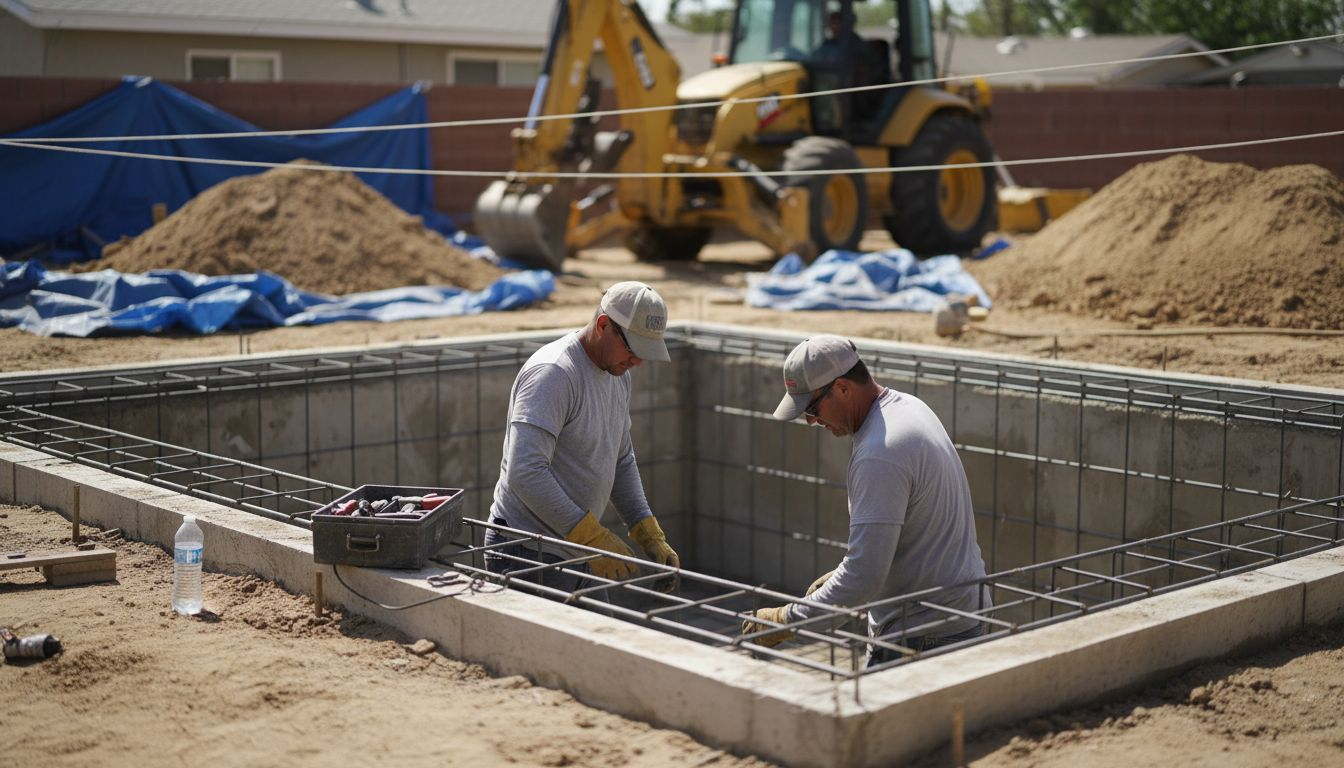
Concrete pools require extensive formwork, steel reinforcement installation, and multiple concrete pours to create the shell structure. Concrete pools take 12 to 16 weeks to cure properly before finishing work can begin. This extended timeline allows unlimited shape customization and integration of features like swim-up bars, beach entries, and complex spa combinations. The flexibility makes concrete ideal for homeowners prioritizing unique designs over quick completion.
Fiberglass pools arrive as pre-manufactured shells that cranes lower into your excavated hole. Fiberglass pools install in 4 to 8 weeks from excavation to water-ready, making them perfect for homeowners who want to swim sooner. The trade-off involves accepting standard shapes and sizes that may not perfectly match your vision.
Waterproofing ranks as your most critical quality factor regardless of shell material. Proper waterproofing reduces leaks by 90%, protecting your investment from expensive repairs. Concrete pools require certified waterproof membranes applied before finishing materials. Fiberglass shells arrive waterproof but need careful installation to prevent ground movement that could crack the gel coat.
Demand quality materials and experienced installers during this phase. Cutting corners on waterproofing or reinforcement creates problems that surface months or years later, requiring partial or complete pool reconstruction.
| Feature | Concrete Pools | Fiberglass Pools |
|---|---|---|
| Installation time | 12 to 16 weeks | 4 to 8 weeks |
| Design flexibility | Unlimited customization | Limited to manufactured shapes |
| Initial cost | Higher | Lower |
| Waterproofing | Requires membrane application | Built into gel coat |
| Durability | Extremely durable with proper maintenance | Durable but can crack if ground shifts |
Shell construction essentials:
- Verify steel reinforcement meets engineering specifications for concrete pools
- Inspect fiberglass shells for shipping damage before installation
- Confirm waterproofing materials carry manufacturer warranties
- Monitor concrete curing conditions to prevent premature drying or cracking
- Document all construction phases with photos for warranty purposes
Explore detailed concrete pool construction details or fiberglass pool installation details to understand what quality construction looks like for your chosen material.
Step 4: plumbing, electrical, and finishing touches
With your pool shell complete, attention shifts to essential systems and aesthetic elements that make your pool functional and beautiful. This phase requires careful coordination between multiple trades working simultaneously.
Plumbing installation includes circulation pumps, filtration systems, heating equipment, and water features like fountains or waterfalls. Code-compliant plumbing and electrical installation are critical for pool safety, ensuring proper water chemistry, temperature control, and equipment longevity. Licensed plumbers must follow local codes for pipe materials, valve placements, and equipment locations.
Electrical work powers pumps, heaters, lights, and automated control systems. This work requires licensed electricians who understand pool-specific code requirements for ground fault circuit interrupters, bonding, and underwater lighting. Improper electrical installation creates serious shock hazards that endanger swimmers.
Pro Tip: Install variable speed pumps instead of single-speed models. They cost more upfront but reduce energy consumption by 50 to 75 percent, paying for themselves within two to three years through lower utility bills.
Finishing work transforms your pool from functional to beautiful:
- Apply interior surface finishes like plaster, aggregate, or tile
- Install coping around the pool edge for safety and aesthetics
- Complete deck construction using pavers, concrete, or natural stone
- Add custom features like waterfalls, slides, or integrated spas
- Install required safety fencing and self-closing gates
- Integrate landscaping to blend the pool into your yard design
Explore pool finishing options to understand material choices and their impact on maintenance, durability, and appearance. Surface finishes affect water chemistry, cleaning requirements, and long-term costs.
Final phase essentials:
- Verify all pool plumbing and electrical installation passes inspection
- Test equipment operation before final payment
- Confirm safety fencing meets local height and gate requirements
- Document warranty information for all equipment and materials
- Schedule final inspections promptly to avoid occupancy delays
Common mistakes and how to avoid them
Even well-planned projects encounter problems when homeowners or contractors take shortcuts. Learning from common mistakes helps you avoid expensive delays and repairs.
Skipping required permits and soil testing ranks as the most expensive mistake homeowners make. Skipping soil tests and permits increases delays by 35% as building departments halt unpermitted work and require expensive corrective measures. Code violations discovered during sale attempts force costly repairs before closing.
Poor waterproofing installation causes the majority of leak-related repairs. Poor waterproofing causes costly repairs that require draining pools, removing finishes, and reapplying membranes. This mistake stems from hiring unqualified installers or using substandard materials to save money upfront.
Communication breakdowns between homeowners and contractors create dissatisfaction and disputes. Poor communication lowers satisfaction by 20% as expectations diverge from reality. Regular progress meetings, written change orders, and prompt responses to questions prevent most conflicts.
“The costliest mistakes in pool construction come from trying to save money by cutting corners on permits, materials, or qualified labor. These shortcuts create problems that cost many times more to fix than doing things right initially.”
Mistakes to avoid:
- Never begin construction before obtaining all required permits
- Don’t hire contractors solely based on lowest bid without verifying credentials
- Avoid verbal agreements; get all changes and costs in writing
- Don’t skip recommended soil remediation to save money
- Never ignore building inspector feedback or required corrections
Read about avoiding common pool building mistakes to understand warning signs of problems before they become expensive repairs.
Expected timelines and outcomes
Setting realistic expectations for project duration and costs helps you plan accordingly and avoid frustration. Understanding typical timelines lets you coordinate landscaping, events, and budget allocation.
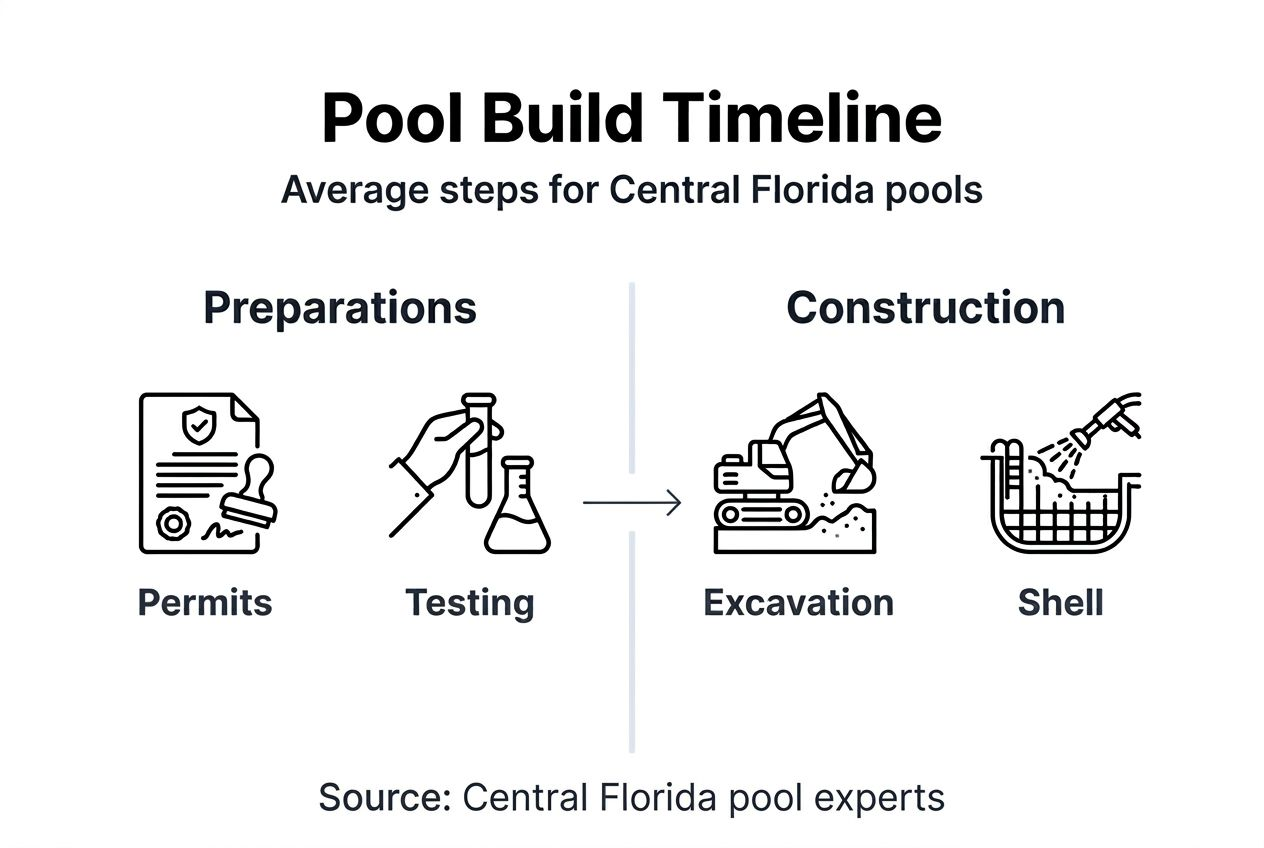
Average total project duration is 4 to 6 months in Central Florida, accounting for permit processing, construction phases, inspections, and weather delays. Concrete pools require more time than fiberglass installations due to curing requirements. Summer rainy season can extend timelines as heavy rain halts excavation and concrete work.
Recommended budget contingencies of 10 to 20 percent above your base estimate cover unexpected costs without forcing project compromises. Rock removal, additional drainage work, utility relocations, and upgraded materials commonly push costs beyond initial estimates.
Quality benchmarks at project completion include leak-free waterproofing verified through multi-day water loss tests, all equipment operating per specifications, and final inspections passed without deficiencies. Your contractor should provide written warranties covering workmanship, materials, and equipment.
| Project Phase | Concrete Timeline | Fiberglass Timeline |
|---|---|---|
| Permits and approvals | 4 to 6 weeks | 4 to 6 weeks |
| Site prep and excavation | 1 to 2 weeks | 1 to 2 weeks |
| Shell installation and curing | 12 to 16 weeks | 4 to 8 weeks |
| Plumbing, electrical, finishing | 4 to 6 weeks | 3 to 4 weeks |
| Total project duration | 5 to 7 months | 3 to 5 months |
Outcome expectations:
- Pool passes all required inspections on first attempt
- Water loss stays under acceptable evaporation rates
- All equipment operates quietly and efficiently
- Surface finishes show no cracks, delamination, or color issues
- Safety features meet or exceed current code requirements
Review the pool building timeline and outcomes to understand what quality construction delivers and how to verify proper completion.
Plan your custom pool build with expert support
Building a custom inground pool represents a significant investment in your property and lifestyle. The guidance in this article helps you understand each phase, but working with experienced professionals makes the difference between a smooth project and a frustrating ordeal.
R & R Swimming Pools brings over 35 years of Central Florida pool construction experience to every project. Our team handles everything from initial design through final inspection, ensuring quality work that meets your timeline and budget. We understand local soil conditions, permitting requirements, and construction challenges unique to our region.
Explore our expert inground pool installation guide for detailed information about our process and quality standards. Our custom pool installation services cover both concrete and fiberglass options with transparent pricing and realistic timelines.
Ready to start building your dream pool? Contact the trusted Central Florida pool builders at R & R Swimming Pools today for a free consultation and detailed project estimate.
Frequently asked questions
How long does a custom inground pool take to build in Central Florida?
Custom inground pools typically require 4 to 6 months from initial design through completion, depending on pool type and weather conditions. Permit processing alone takes 4 to 6 weeks before construction begins. Concrete pools need 12 to 16 weeks for curing compared to fiberglass pools that install in 4 to 8 weeks. Selecting experienced local contractors and avoiding common mistakes like inadequate site prep helps prevent delays that extend your timeline.
What are the main differences between concrete and fiberglass pools?
Concrete pools allow unlimited customization in shape, size, and features but require 12 to 16 weeks to cure and typically cost more upfront. Fiberglass pools install much faster, usually within 4 to 8 weeks, and cost less initially but limit you to pre-manufactured shell designs. Both options deliver quality results when installed properly by qualified contractors.
How can I avoid common pool building mistakes?
Complete all required permits and professional soil testing before starting any excavation work. Hire only licensed local contractors with verified references and proven Central Florida experience. Ensure proper waterproofing installation using certified materials and qualified installers. Maintain regular communication with your contractor through scheduled progress meetings and written documentation of all changes or concerns.
What is the typical permit process for pools in Central Florida?
Permits usually require 4 to 6 weeks for processing after submission of complete construction plans and engineering documents. Submitting thorough, accurate applications the first time prevents rejection and resubmission delays. Working with knowledgeable local contractors familiar with your municipality’s specific requirements streamlines the approval process and ensures code compliance throughout construction.
