
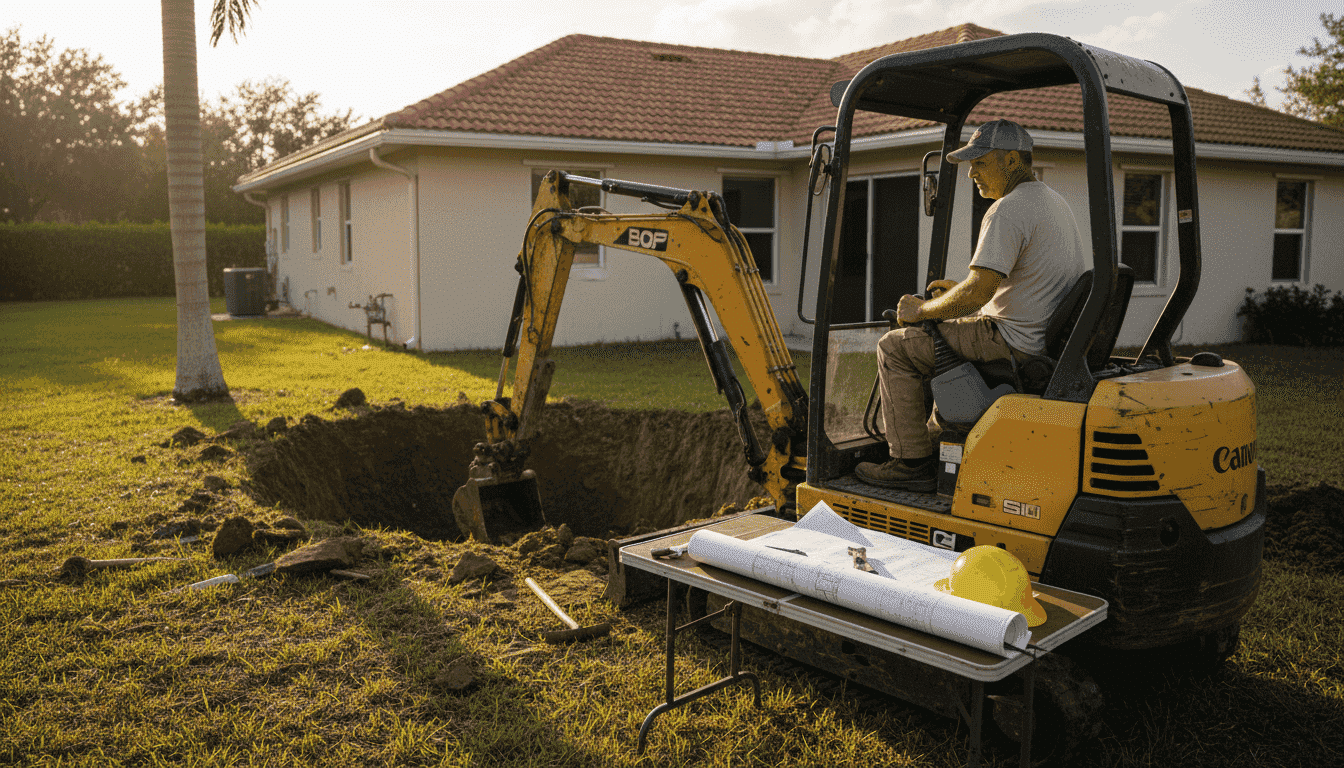
Building a custom inground pool in Central Florida sounds exciting, but the first big step—excavation—often causes confusion and concern for homeowners. Many people think excavation is just digging a hole, but excavation work has a near double fatality rate compared to general construction, making knowledge and safety more important than ever. This guide clears up common misconceptions, explains what goes into excavation, and gives you a foundation for smarter decisions as you plan your pool project.
Table of Contents
- Defining Pool Excavation And Common Misconceptions
- Excavation Types For Inground Pools
- Step-By-Step Pool Excavation Process
- Florida Permit And Safety Requirements
- Costs, Risks, And Mistakes To Avoid
Key Takeaways
| Point | Details |
|---|---|
| Understanding Excavation | Pool excavation involves careful planning, precise measurements, and knowledge of soil conditions, going beyond just digging a hole. |
| Addressing Misconceptions | Misunderstandings about excavation can lead to poor contractor choices and unrealistic expectations regarding costs and timelines. |
| Choosing the Right Excavation Method | Selection of the excavation type should match your property’s specific conditions to ensure safety and structural integrity of the pool. |
| Prioritizing Safety and Compliance | Adhering to Florida’s permit and safety regulations protects your investment and family while avoiding costly delays and legal issues. |
Defining Pool Excavation and Common Misconceptions
Pool excavation is the removal of soil and rock from your property to create the basin where your pool will sit. It’s the foundational step that transforms your backyard vision into reality, but many homeowners misunderstand what it actually involves.
According to industry standards, excavation is defined as any man-made cut, cavity, or depression in the earth formed by removing soil or rock. For pools specifically, this means digging a hole with precise dimensions, depth, and slope that matches your pool’s design specifications.
What Pool Excavation Actually Entails
Pool excavation goes far beyond simply digging a hole. The process includes:
- Removing topsoil and vegetation from the excavation area
- Digging to the correct depth based on your pool design
- Creating proper slope and grading for drainage
- Identifying and managing underground hazards (utilities, rock formations)
- Compacting the soil base to prevent settling
- Managing water and debris removal during the process
Each step requires precision and planning. A contractor uses specialized equipment like excavators and graders to achieve exact measurements and angles.
Common Misconceptions About Pool Excavation
Many homeowners hold beliefs about excavation that simply aren’t accurate. Here’s what we typically hear—and what’s actually true.
Misconception 1: “It’s just digging”
This is the biggest misunderstanding. Excavation requires expertise in soil analysis, equipment operation, and safety protocols. Improper excavation can lead to pool failure, flooding, or structural damage to nearby structures.
Misconception 2: “The depth doesn’t really matter”
Depth is critical. Your pool’s depth affects water volume, structural integrity, and long-term stability. Digging too shallow or too deep creates serious problems that become expensive to fix later.
Misconception 3: “Excavation is safer than other construction work”
This couldn’t be further from the truth. In fact, excavation work carries hazards including cave-ins, falls, and utility strikes that can cause serious injury. Proper safety protocols and a competent supervisor are essential.
Misconception 4: “Any contractor can excavate a pool”
Excavation requires specific training, equipment, and experience. A contractor must understand soil conditions, local regulations, and how to work safely in confined spaces. This isn’t a task for just anyone with a backhoe.
Why These Misconceptions Matter
These misunderstandings can lead to poor decisions. You might choose a less experienced contractor, skip important safety measures, or set unrealistic expectations about the timeline and cost. When you truly understand what excavation involves, you can make informed choices about your pool project.
Proper excavation is the difference between a pool that lasts 20 years and one that fails in 5. Don’t underestimate this step.
Your pool’s longevity, safety, and performance depend on excavation done correctly. When you’re preparing for your pool build, understanding excavation helps you ask the right questions and set realistic expectations.
Pro tip: Ask potential contractors about their soil testing process and how they handle unexpected conditions during excavation—this reveals who truly understands the work involved.
Excavation Types for Inground Pools
Not all pool excavation is the same. The type of excavation your contractor chooses depends on your site conditions, pool design, and local soil characteristics. Understanding these types helps you grasp what’s happening in your backyard and why your contractor makes specific decisions.
Cut Excavation: The Standard Approach
Cut excavation is the most common type for inground pools in Central Florida. This involves removing soil and rock to create the pool cavity. Your contractor digs down to the specified depth, creating the basin that will hold water.
Cut excavation works best when:
- Your property has sufficient elevation or slope
- Soil conditions are stable and predictable
- You’re not working near water bodies or unstable terrain
- Your pool design calls for the cavity to be below grade
For most Central Florida homes, cut excavation is straightforward because our relatively flat terrain and predictable soil composition make it the preferred method. Your contractor removes topsoil first, then digs deeper to reach the proper pool depth.
Fill Excavation: Raising Your Pool Foundation
Fill excavation involves adding material to raise the ground level before or after pool installation. This method is useful when your property slopes unfavorably or when you want to elevate the pool for better aesthetics or drainage.
Fill excavation typically includes:
- Importing soil or fill material to raise grade
- Compacting fill material in layers for stability
- Grading to create proper water drainage away from the pool
- Creating a level foundation for the pool basin
Florida properties sometimes use fill excavation to address drainage issues. By raising the pool foundation, contractors can direct water away from the structure and prevent pooling around the pool—ironically.
Here’s a quick comparison of common pool excavation types and when each is most suitable:
| Excavation Type | Best For | Typical Challenges | Key Equipment |
|---|---|---|---|
| Cut Excavation | Flat, stable properties | Hard rock, water table issues | Excavator, grader |
| Fill Excavation | Sloped or low-lying properties | Soil compaction, drainage | Loader, compactor |
| Trenching | Utility and plumbing installation | Hitting buried utilities | Trenching machine |
Trenching for Utilities and Plumbing
Trenching is a specialized excavation type that creates narrow, deep channels for utility lines and pool plumbing. Unlike general pool excavation, trenches are deeper than they are wide. Your contractor digs these to run electric lines, water pipes, and drain systems.
According to excavation type guidelines, trenching requires careful planning to avoid hitting existing utilities. One of the most common—and dangerous—mistakes is striking underground lines during trenching.
Before any trenching begins, you should always call 811 (or your local utility locating service) to mark existing lines. This simple step prevents costly damage and potential safety hazards.
Choosing the Right Excavation Type
Your contractor evaluates several factors when deciding which excavation type works best for your property:
- Soil composition and stability in your area
- Site drainage characteristics and water table depth
- Existing structures and utilities on your property
- Pool design specifications and desired final appearance
- Local building codes and regulatory requirements
The Florida Building Code emphasizes that excavation type selection directly impacts pool structural integrity and safety compliance. Your contractor’s expertise in choosing the right method prevents costly problems down the road.
Proper excavation type selection is about matching the method to your unique property—not using the same approach for every pool.
Your specific situation determines the best approach. An experienced contractor evaluates your property, asks questions about your preferences, and recommends the excavation method that ensures stability, proper drainage, and long-term pool performance.
Pro tip: Request a soil assessment and site evaluation from your contractor before finalizing design plans—this identifies any surprises and ensures the right excavation type is chosen for your specific property.
Step-by-Step Pool Excavation Process
Excavation doesn’t happen all at once. It’s a methodical process with distinct phases, each critical to getting your pool foundation right. Here’s what happens from the moment your contractor arrives until the hole is ready for pool installation.
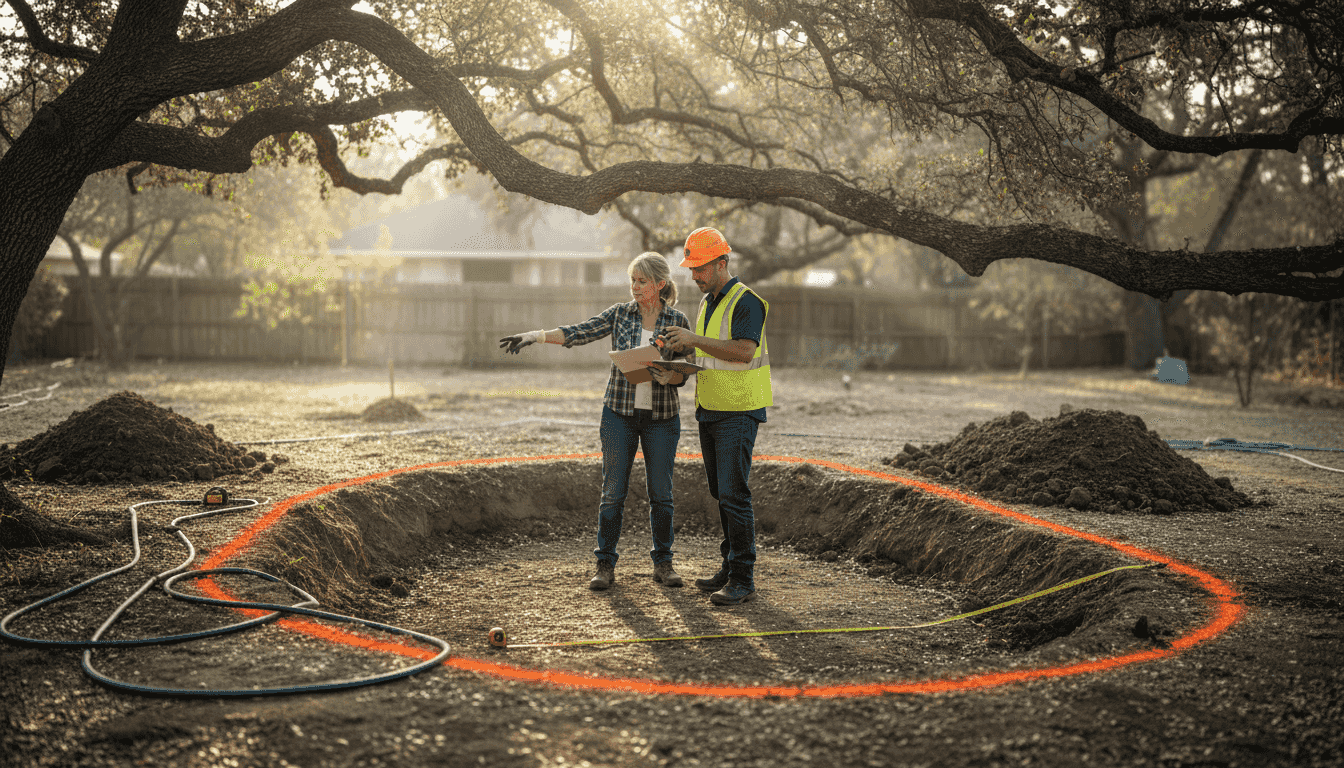
Phase 1: Pre-Excavation Planning and Site Preparation
Before any equipment moves onto your property, your contractor prepares the site. This phase includes marking the pool boundaries, identifying underground utilities, and setting up safety barriers.
Key pre-excavation activities include:
- Calling 811 to locate and mark all underground utilities
- Marking the exact pool boundaries with paint or stakes
- Clearing vegetation and obstacles from the excavation area
- Setting up equipment staging areas and material storage zones
- Establishing work site safety protocols and worker safety equipment
This preparation phase prevents costly mistakes. Missing a utility line during excavation can result in thousands of dollars in damage and potential safety hazards for your workers.
Phase 2: Systematic Soil Removal
Once the site is prepared, systematic soil removal follows planned procedures to reach the proper depth and dimensions. Your contractor removes soil in stages, using equipment like excavators to dig while dump trucks haul away excess material.
Your contractor controls the excavation carefully:
- Removing topsoil first and setting it aside for later grading
- Digging to the specified depth in measured increments
- Maintaining proper slopes to prevent cave-ins
- Assessing soil conditions as they dig deeper
- Adjusting technique based on actual soil composition encountered
For Central Florida properties, this phase typically reveals layers of sand, clay, and rock. Your contractor’s experience reading these layers helps identify any surprises early.
Phase 3: Inspection and Verification
Once excavation reaches the designed depth, your contractor inspects the cavity before moving forward. This inspection verifies that dimensions match specifications and soil conditions support pool installation.
The inspection process includes:
- Measuring depth at multiple points to confirm accuracy
- Checking slopes and angles match pool design specifications
- Assessing soil stability and bearing capacity
- Identifying any underground springs or water seepage
- Verifying drainage characteristics of the soil
A competent person—typically your contractor or a qualified inspector—walks the excavation site to ensure safety compliance and proper execution. This step catches problems before concrete or fiberglass installation begins.
Phase 4: Post-Excavation Cleanup and Preparation
After excavation verification, your contractor removes debris and stabilizes the site. Excess soil is hauled away, the excavation area is cleaned, and the site is prepared for the next construction phase.
Proper inspection during excavation prevents expensive rework after pool installation has begun. Catching issues now saves thousands later.
Your contractor may need to address site conditions during installation, so thorough post-excavation documentation is important. Your contractor documents conditions with photos and measurements for reference.
Pro tip: Request a walkthrough of the completed excavation before any pool materials are delivered—this gives you confidence in the foundation and allows you to ask questions about conditions your contractor discovered.
Florida Permit and Safety Requirements
Building a pool in Florida isn’t just about digging a hole and installing equipment. The state imposes strict permit and safety requirements designed to protect your family and comply with building codes. Understanding these requirements upfront saves time and prevents costly delays.
Understanding Florida’s Permit Process
Florida requires permits from local authorities before any pool construction begins. Your contractor must secure permits from your county or municipality, and these permits come with specific conditions and inspections.
The permit process includes:
- Submitting detailed pool design plans to your local building department
- Obtaining approval from your county health department
- Passing initial site inspections before excavation starts
- Scheduling inspections at multiple construction stages
- Final approval after all work is completed
Your local building department reviews plans to ensure compliance with the Florida Building Code. This code covers mechanical systems, plumbing, electrical work, and structural safety. Don’t skip this step—working without permits can result in fines, forced removal of the pool, or problems when selling your home.
Safety Requirements for Residential Pools
Florida law mandates specific safety features for all new residential pools. The Residential Swimming Pool Safety Act requires barriers, alarms, covers, and self-closing gates to prevent drowning.
Required safety features include:
- Four-sided barriers surrounding the pool (fencing or walls)
- Self-closing, self-latching gates that open away from the pool
- Safety covers that meet ASTM standards
- Drain safety devices to prevent entrapment
- Rescue equipment accessible near the pool
- Proper signage displaying safety rules and depth markings
These requirements apply to all new pools, regardless of whether you’re building your first pool or upgrading an existing one. Your contractor must verify that all safety features are installed correctly before final inspection.
Sanitation and Water Quality Standards
Florida’s Department of Health enforces water quality and sanitation standards outlined in Chapter 64E-9 of the Florida Administrative Code. Even residential pools must meet these standards.
Key standards address:
- Proper filtration and circulation systems
- Correct chemical balance and testing requirements
- Adequate lighting around the pool area
- Backwash management and proper drainage
- Regular water quality maintenance and documentation
Your contractor should explain how your pool’s filtration system meets these requirements and what maintenance you’ll need to perform.
Electrical and Plumbing Inspections
Electrical and plumbing work requires separate inspections. These systems must meet Florida Building Code standards for safety and functionality.
Permits and inspections aren’t bureaucratic red tape—they protect your investment and your family’s safety.
Your contractor coordinates all inspections throughout the construction process. Each phase of work typically requires an inspection before the next phase can begin. This staged approach catches problems early rather than discovering them after the pool is finished.
Pro tip: Ask your contractor to provide you with a copy of the permit and a timeline showing when each inspection will occur—this keeps you informed and prevents surprise delays.
Below is a summary of permit, safety, and compliance essentials for Florida pool excavation:
| Requirement | Description | Cost Impact | Who’s Responsible |
|---|---|---|---|
| Construction Permit | Local approval before work starts | High if missing (fines) | Contractor |
| Safety Barriers | Fencing, gates to prevent accidents | Moderate for materials | Homeowner/Contractor |
| Utility Marking | Locate all underground lines pre-dig | Saves on accident cost | Contractor |
| Inspection Schedule | Staged reviews during project | Prevents costly rework | Contractor |
Costs, Risks, and Mistakes to Avoid
Pool excavation involves real financial investment and genuine safety risks. Understanding what can go wrong helps you make smarter decisions and protect both your budget and your property.
Understanding Excavation Costs
Excavation costs vary widely depending on your property size, soil conditions, and pool design. Most Central Florida homeowners spend between $3,000 and $12,000 for excavation alone, but this can increase significantly if complications arise.
Factors affecting excavation costs include:
- Pool size and depth
- Soil type and compaction requirements
- Distance to haul excess soil
- Underground obstacles or utilities requiring relocation
- Permit and inspection fees
- Equipment rental and operator labor
The most common cost surprise occurs when contractors discover unexpected soil conditions—rock layers, clay, or poor drainage—requiring additional work. This is why pre-site assessment costs money upfront but saves thousands in unexpected charges later.
Common Mistakes That Increase Costs
Certain mistakes dramatically increase excavation expenses. Avoiding these protects your budget.
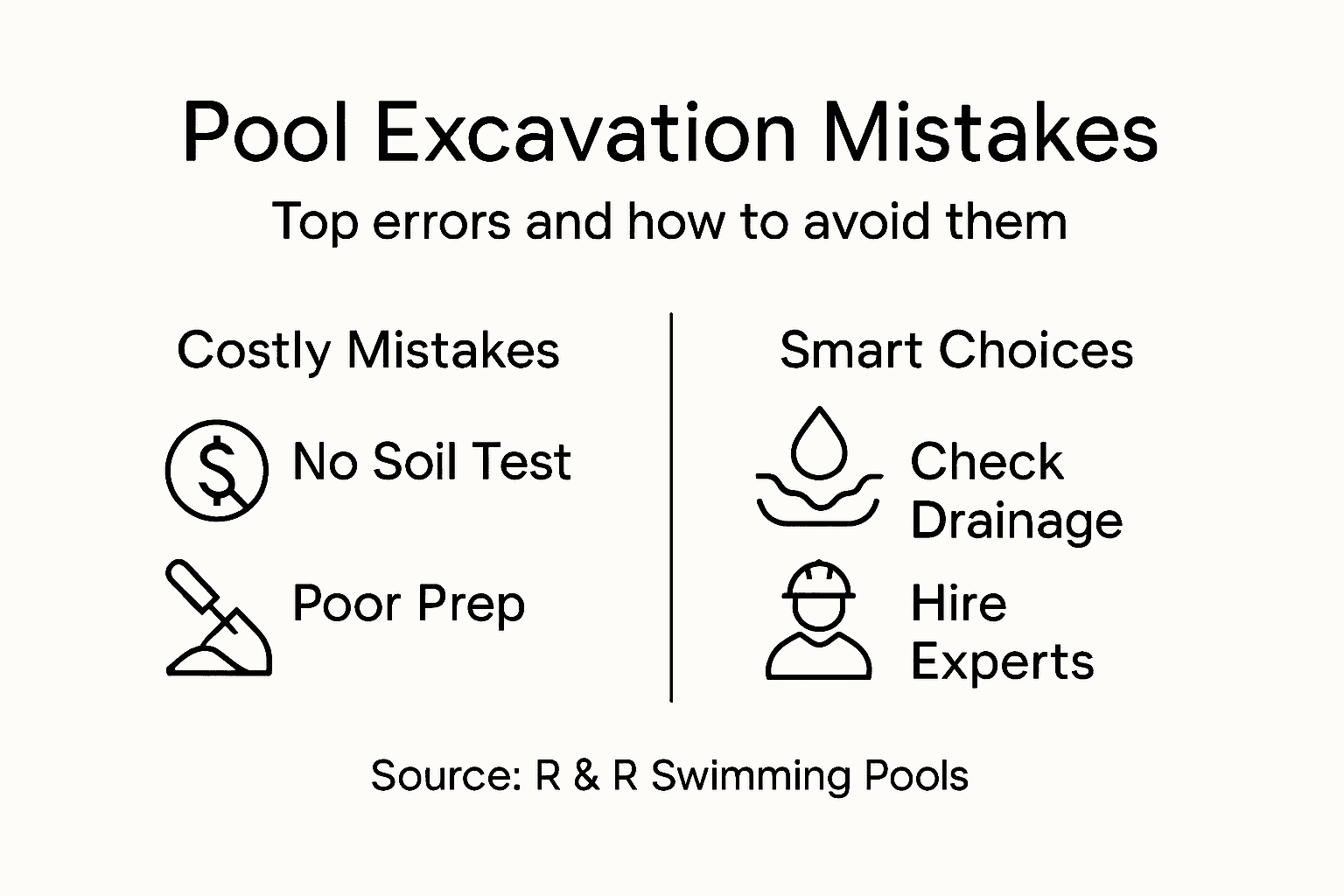
Skipping soil testing: Not understanding your soil composition before excavation leads to surprises. You might discover that your soil can’t support the pool design, requiring expensive modifications.
Poor communication with contractor: Unclear expectations about property conditions or drainage cause rework. Specify in writing what you expect the contractor to handle if they encounter issues.
Inadequate site preparation: Failing to clear vegetation or mark utilities properly slows excavation and creates safety hazards. Budget extra time for thorough pre-work planning.
Ignoring drainage assessment: Excavating without understanding water flow and drainage characteristics causes future flooding or pool failure. Proper site assessment prevents this expensive problem.
Safety Risks in Excavation
Common excavation hazards include soil collapse, equipment accidents, and utility strikes. These aren’t theoretical—they cause real injuries and damage to properties.
Major excavation risks include:
- Soil collapse or cave-ins during digging
- Underground utility strikes (electrical, gas, water lines)
- Equipment accidents involving heavy machinery
- Exposure to hazardous conditions during excavation
- Damage to neighboring properties from improper grading
Your contractor must implement proper protective systems, including shoring, sloping, and atmospheric monitoring. A competent person should oversee all excavation work to identify and mitigate these risks in real time.
Avoiding Compliance Failures
Compliance failures with safety standards lead to fines, project delays, and potential liability. Florida adopts OSHA standards for excavation safety, and violations carry serious consequences.
Common compliance mistakes include:
- Operating without required permits
- Skipping safety inspections or competent person oversight
- Failing to mark and locate utilities before digging
- Using unqualified or untrained equipment operators
- Neglecting proper documentation and record-keeping
Your contractor bears responsibility for compliance, but you should verify they have proper licensing, insurance, and safety certifications. Request proof of workers’ compensation insurance and ask about their safety record.
A cheap contractor who cuts corners on safety often becomes an expensive contractor when problems arise.
The lowest bid rarely represents the best value. A slightly higher bid from an experienced, safety-conscious contractor prevents costly rework and dangerous situations.
Pro tip: Before hiring, ask your contractor about their last three projects—request contact information for homeowners and ask specifically if any unexpected conditions or additional costs arose during excavation.
Secure Your Florida Pool Investment with Expert Excavation and Design
Understanding the complexities of pool excavation is vital for every homeowner dreaming of a custom inground pool in Central Florida. Challenges like soil testing, choosing the right excavation type, managing safety risks, and navigating Florida’s permit process can feel overwhelming. Avoid costly mistakes and ensure your pool’s long-term stability by working with professionals who specialize in these critical steps.
At R & R Swimming Pools, we bring over three decades of experience designing and building custom pools that stand the test of time. Our expert team handles everything from precise excavation planning to high-quality construction, ensuring your pool complies with all local safety codes and regulations while matching your unique vision.

Learn more about the essential steps and expert insights in our Pool School | R & R Swimming Pools section. Ready to transform your backyard with confidence? Visit our R & R | R & R Swimming Pools page to explore our custom options, view galleries, and schedule your free quote. Don’t risk delays or surprises—partner with a trusted contractor who understands Florida’s unique pool excavation challenges. Start your journey today at https://randrswimmingpools.com.
Frequently Asked Questions
What is pool excavation?
Pool excavation is the process of removing soil and rock from your property to create the basin where your pool will be installed. It involves precise digging to the correct dimensions and depth specified in your pool design.
Why is depth important in pool excavation?
The depth of the pool excavation is critical as it affects water volume, structural integrity, and long-term stability of the pool. Digging too shallow or too deep can lead to significant issues that may become costly to fix later.
What are the common misconceptions about pool excavation?
Common misconceptions about pool excavation include the belief that it’s just simple digging, that depth doesn’t matter, that excavation is safer than other construction tasks, and that any contractor can perform excavation work. Proper expertise and planning are crucial for successful pool excavation.
What types of excavation are used for inground pools?
The primary types of excavation for inground pools are cut excavation, which removes soil to create a basin, and fill excavation, which raises the ground level. Trenching is also used for utility and plumbing installation. Each method is chosen based on site conditions and pool design requirements.
