TL;DR:
- Cartridge filters are ideal for most Central Florida homeowners due to their water-saving and low-maintenance features. Sand filters are the most affordable upfront but require more water and chemical use over time. DE filters offer the clearest water but demand more precise maintenance routines and higher initial costs.
For Central Florida homeowners planning a custom inground pool, the filter system you choose shapes every swim for years to come. The three main pool filter system types are cartridge, sand, and diatomaceous earth (DE) filters. Each handles debris removal differently, demands a different maintenance commitment, and carries a different price tag over time.
Here’s the short version before the details:
- Cartridge filters trap particles down to a fine micron range, require no backwashing, and save a significant amount of water per cleaning cycle. Best fit for most Central Florida homeowners who want low-effort upkeep and water conservation.
- Sand filters filter at 20–40 microns, cost the least upfront, and are the simplest to operate. Best fit for budget-focused homeowners comfortable with occasional backwashing.
- DE filters deliver the finest filtration at 2–5 microns, producing crystal-clear water. Best fit for homeowners who want showroom-quality clarity and are genuinely willing to do the maintenance.
Table of Contents
- How pool filtration systems work in your pool’s water cycle
- What sets each filter type apart: how they work and what they need
- What each filter system actually costs you over time
- How to choose the right filter for your Central Florida pool
- Randrswimmingpools builds your pool around the right equipment from day one
- Key Takeaways
How pool filtration systems work in your pool’s water cycle
Every pool runs on a continuous closed-loop cycle: the pump draws water from the skimmer and main drain, pushes it through the filter media, and returns clean water through the jets. The filter’s only job is physical debris removal. Sanitization, whether from chlorine, a salt cell, or a UV system, happens separately in the plumbing line.
That distinction matters practically. A filter clogged with pollen or algae debris won’t kill bacteria. A sanitizer won’t pull leaves and fine particles from the water. You need both working together.
A few things affect how well the cycle performs:
- Filter sizing relative to your pump’s flow rate determines whether water moves through fast enough to stay clean without straining the equipment.
- Placement in the equipment pad affects whether the system reaches every corner of the pool. Poor placement creates dead zones where debris settles and, over time, degrades concrete pool surfaces.
- Turnover rate — how many hours it takes to cycle the full pool volume — should typically be completed at least once every 24 hours for a residential pool.
What sets each filter type apart: how they work and what they need
Understanding the mechanics of each option makes the maintenance expectations much easier to accept before you commit.
Cartridge filters
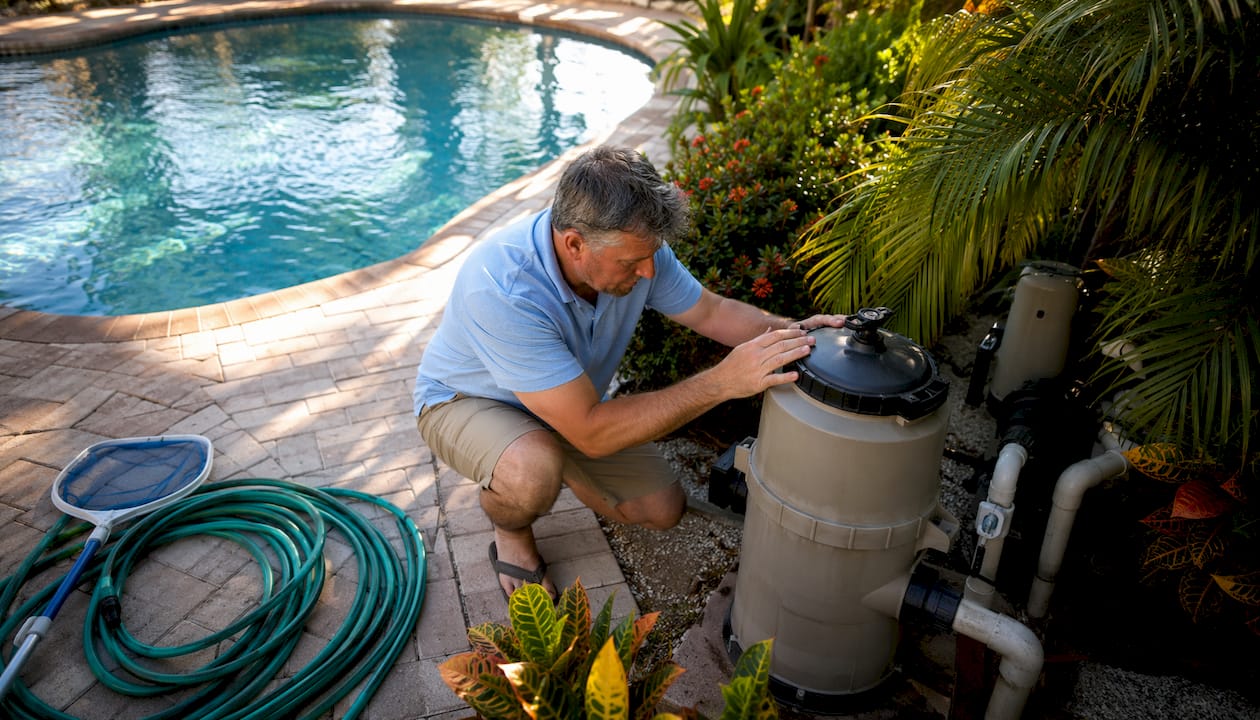
Water passes through pleated polyester fabric cartridges that catch particles down to 10–15 microns. No backwashing required. To clean them, you pull the cartridges out and rinse them with a garden hose every 4–8 weeks under normal conditions. During Central Florida’s heavy pollen seasons, that interval shortens. Cartridge media typically lasts several years with proper cleaning, and the tank itself can run 15–20 years or more.
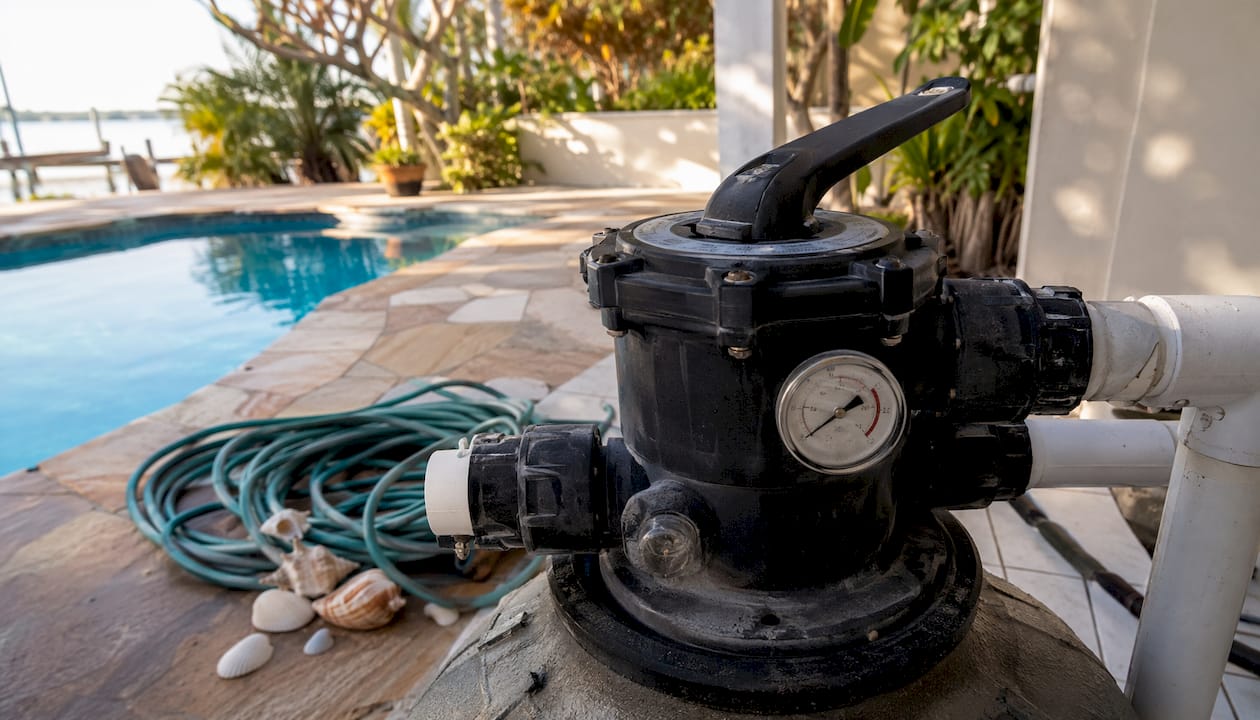
They also pair naturally with variable-speed pumps, which are now standard on most new Florida installations. Because cartridge filters perform well at lower flow rates, they let variable-speed pumps run at quieter, more efficient speeds without sacrificing filtration quality.
Sand filters
Water flows down through a bed of #20 silica sand, which traps particles in the 20–40 micron range. When pressure builds, you backwash: flip a valve, run the pump in reverse, and flush the debris out to waste. Each backwash cycle uses a notable volume of water. Sand media lasts several years before it needs replacing.
The coarser filtration means you’ll typically use more chemicals to keep water visually clear. That’s a real ongoing cost that doesn’t show up in the equipment price.
DE filters
Grids inside the filter tank are coated with diatomaceous earth powder, a fine silica-based material that filters down to 2–5 microns. The result is noticeably clearer water than either cartridge or sand can produce. DE filter grids last several years, and the tanks hold up as long as cartridge tanks.
The catch: after every backwash, you must recharge the grids with fresh DE powder. Skip that step and debris passes straight through, eventually damaging the grids themselves. The maintenance routine is more precise than most homeowners expect when they first see the water quality.
| Filter Type | Filtration Level | Maintenance Routine | Water Usage | Upfront Cost |
|---|---|---|---|---|
| Cartridge | 10–15 microns | Rinse every 4–8 weeks; no backwash | Lowest | Moderate |
| Sand | 20–40 microns | Backwash when pressure rises | High (200 gallons/cycle) | Lowest (a few hundred dollars) |
| DE | 2–5 microns | Backwash + DE powder recharge | Moderate to high | Highest |
What each filter system actually costs you over time
Upfront equipment price is only part of the story. Sand filters run $300–$600 for the unit itself, making them the cheapest entry point. Cartridge filters sit in the mid-range. DE filters carry the highest initial cost and the highest ongoing supply cost because DE powder is a recurring purchase after every backwash.
Water usage is where the real long-term gap opens up, especially in Florida where water rates and conservation rules vary by county.
| Filter Type | Water per Cleaning | Annual Backwash Cycles (est.) | Media Replacement Interval |
|---|---|---|---|
| Cartridge | — | None | Every 2 years |
| Sand | 200 gallons | 12 | Every 5 years |
| DE | Similar to sand | 12 | Grids every several years |
Water savings with cartridge filters: Cartridge systems save 200 gallons or more per cleaning compared to backwashing filters. For a pool cleaned monthly, that adds up to thousands of gallons annually — a meaningful number in a state where pool evapotranspiration already puts pressure on water budgets.
Energy costs also factor in. Cartridge filters paired with variable-speed pumps consistently deliver the lowest electricity bills because the pump can run slower without losing filtration effectiveness. Sand and DE systems typically require higher flow rates to function properly, which means the pump works harder.
How to choose the right filter for your Central Florida pool
The right filter isn’t the one with the best specs. It’s the one you’ll actually maintain consistently. Here’s what to work through before deciding:
- Pool size and bather load: Larger pools or pools with heavy use benefit from DE’s superior clarity or a high-capacity cartridge system. Smaller pools with light use do fine with sand or mid-range cartridge options.
- Maintenance commitment: Be honest. Cartridge cleaning takes 20–30 minutes every 4–8 weeks. DE maintenance requires that same effort plus precise powder recharging after every backwash. Sand is the most hands-off but produces the least clear water.
- Water clarity goals: If you want water that looks like glass, DE is the only filter that consistently delivers it. Cartridge filters produce excellent clarity for most homeowners. Sand filters are adequate but noticeably less sharp.
- Budget: Sand wins on upfront cost. Cartridge wins on total cost of ownership when you factor in water savings and lower chemical use. DE costs the most across all categories.
- Local vegetation and pollen: Central Florida’s oak and pine pollen seasons hit hard in spring. During those weeks, any filter works harder. Cartridge filters need more frequent rinsing; DE systems need more frequent backwashing and recharging.
- Pump compatibility: If your new pool will have a variable-speed pump, cartridge filters are the natural pairing for energy-efficient pool operation.
Pro Tip: Size your filter to handle at least twice your pump’s gallons-per-minute rating. An undersized filter strains the pump and shortens equipment life, which is a common and avoidable mistake in new pool installations.
One thing professional pool installers in Central Florida consistently flag: many homeowners regret choosing DE filters once they realize the maintenance routine is more demanding than they anticipated. When the recharging step gets skipped, water clarity drops fast and the grids take damage. If you’re drawn to DE for the water quality but realistic about your schedule, a high-quality cartridge system gets you most of the way there with a fraction of the effort.
For a deeper look at pool maintenance for Central Florida conditions, including seasonal filter care, the specifics vary more than most general guides acknowledge.
Randrswimmingpools builds your pool around the right equipment from day one
Choosing a filter is one decision. Getting it sized correctly, matched to the right pump, and integrated into a pool designed for your backyard is a different challenge entirely. R and R Swimming Pools has been building custom inground pools across Central Florida since 1985, and equipment selection is part of every design conversation, not an afterthought.
When you work with Randrswimmingpools, the filter system recommendation comes from someone who knows your pool’s volume, your yard’s vegetation, and your county’s water regulations. That’s the difference between a spec sheet and a system that actually performs year after year. Whether you’re leaning toward a low-maintenance cartridge setup or want to talk through whether DE clarity is worth the upkeep for your lifestyle, the team has seen every scenario.
Start with a custom pool planning consultation or explore the full inground pool installation guide to see how the process works from design through equipment commissioning.
Key Takeaways
Cartridge filters are the best overall fit for most Central Florida homeowners, combining water conservation, low maintenance, and compatibility with variable-speed pumps in a single system.
| Point | Details |
|---|---|
| Filtration quality varies significantly | DE filters at 2–5 microns produce the clearest water; sand filters at 20–40 microns produce the least. |
| Cartridge filters save the most water | No backwash means saving 200+ gallons per cleaning cycle compared to sand or DE systems. |
| Sand costs least upfront | Sand filter units run $300–$600, but higher chemical use and water waste raise long-term costs. |
| DE maintenance is often underestimated | Many homeowners regret DE systems when the powder recharging routine gets skipped, reducing clarity and damaging grids. |
| Randrswimmingpools | Has matched Central Florida homeowners to the right filter systems since 1985, integrating equipment selection into every custom pool design. |
