
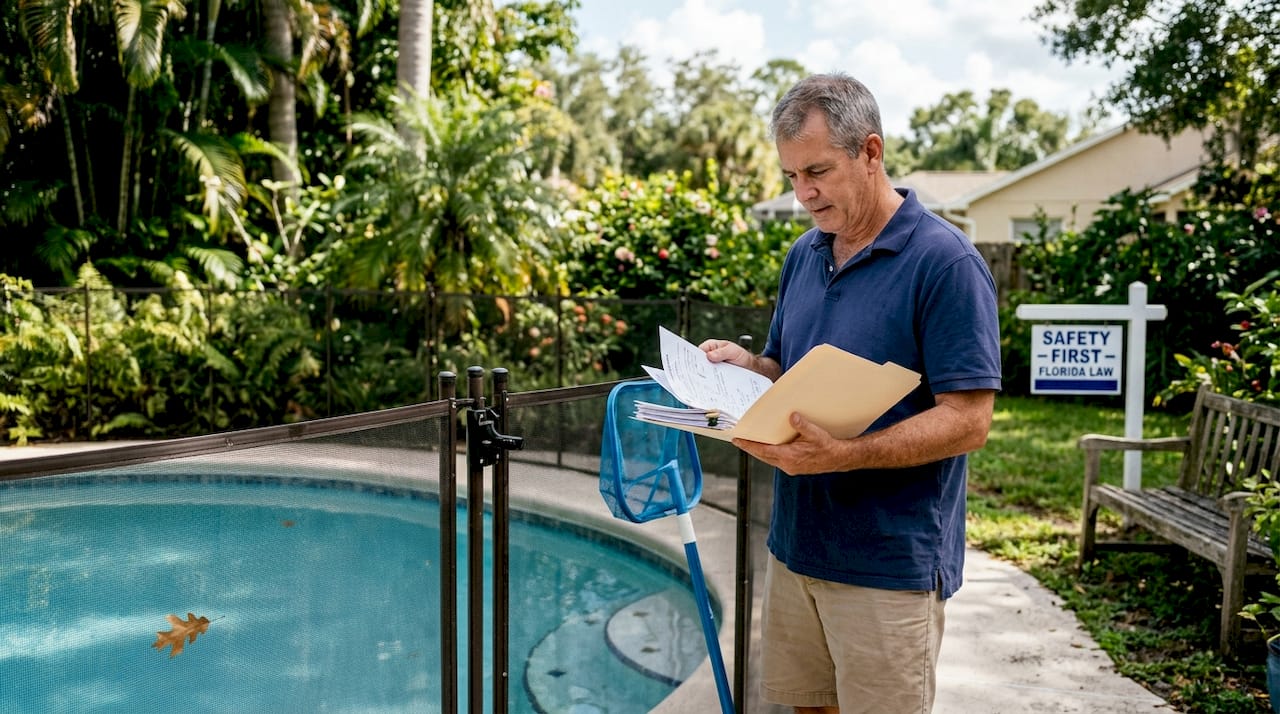
Every year, 119 children die from drowning in Florida, making it a leading cause of accidental death for young kids. Your backyard pool can be a source of joy and relaxation, but without proper safety measures, it poses serious risks to your family. This guide walks you through Florida’s legal requirements, proven protective barriers, and practical steps to create a safer pool environment. You’ll learn about mandatory safety features, effective fencing options, drain protections, and how to combine multiple safety layers for maximum family protection in your Central Florida home.
Table of Contents
- Key takeaways
- Florida pool safety laws: what homeowners must know
- Pool barriers and fencing: your home’s first line of defense
- Preventing drownings beyond fences: pool drains and layers of protection
- How to apply pool safety requirements in your Central Florida home
- Enhance your pool safety with R & R Swimming Pools
- FAQ
Key Takeaways
| Point | Details |
|---|---|
| Isolation fencing impact | Four sided isolation barriers reduce child drownings by about 73 to 83 percent by creating a dedicated barrier between children and water. |
| Mandatory safety features | Florida law requires at least one major safety feature on every new pool, including a four foot isolation barrier, an ASTM certified safety cover, exit alarms on direct pool access doors or windows, or a pool surface alarm. |
| Barrier specifics | Fences must be at least four feet high with gaps no larger than four inches, and gates must self close and self latch with latches above 54 inches. |
| Permits and inspections | Central Florida counties require engineered plans, permits, and inspections at rough in barrier installation and final completion to ensure safety features meet state minimums. |
| Mesh fence options | Removable mesh barrier systems such as Poolguard or Kinderguard provide compliant, visible solutions that protect children while maintaining access when needed. |
Florida pool safety laws: what homeowners must know
Florida’s Residential Swimming Pool Safety Act establishes clear requirements for every new residential pool. New pools must include at least one major safety feature: a four-foot isolation barrier, an approved safety cover meeting ASTM standards, exit alarms on doors and windows with direct pool access, or a pool surface alarm. These aren’t suggestions but legal mandates designed to protect children from unsupervised pool access.
The isolation barrier option requires specific construction standards. Your fence must stand at least four feet tall and completely separate the pool area from your home and yard. Gates need self-closing and self-latching mechanisms with latches positioned more than 54 inches above ground, out of reach for young children. The barrier cannot have gaps, openings, or footholds that allow a child to climb through or over.
Central Florida counties enforce these requirements through a structured permitting process. You’ll need to submit engineered plans, obtain permits before construction begins, and schedule inspections at critical stages: rough-in for plumbing and electrical, barrier installation, and final completion. Orange and Seminole counties maintain strict oversight, with inspectors verifying that every safety feature meets or exceeds state minimums.
Skipping permits or failing inspections creates liability risks and potential fines. More importantly, non-compliant pools endanger your family. Working with licensed contractors familiar with local inspection requirements streamlines the approval process and ensures your pool meets all safety standards from day one.
Key compliance steps include:
- Submit detailed construction plans with safety feature specifications
- Schedule and pass rough-in inspection before covering plumbing or electrical work
- Install approved barriers before filling the pool
- Complete final inspection confirming all safety features function properly
- Maintain documentation of permits and inspection approvals
Pool barriers and fencing: your home’s first line of defense
Four-sided isolation fencing provides the strongest protection against child drownings. Unlike perimeter fencing that encloses your entire yard, isolation barriers reduce drownings by 73-83% because they create a dedicated barrier between children and water. This design prevents kids from wandering from your home directly to the pool without adult supervision.
Florida regulations specify minimum standards for compliant fencing. Your barrier must reach at least four feet in height with vertical slats spaced no more than four inches apart. Horizontal rails or decorative elements cannot create ladder-like footholds. Chain-link fencing needs mesh openings smaller than 1.75 inches. Gates require self-closing hinges that swing shut automatically and self-latching locks positioned above 54 inches from ground level.
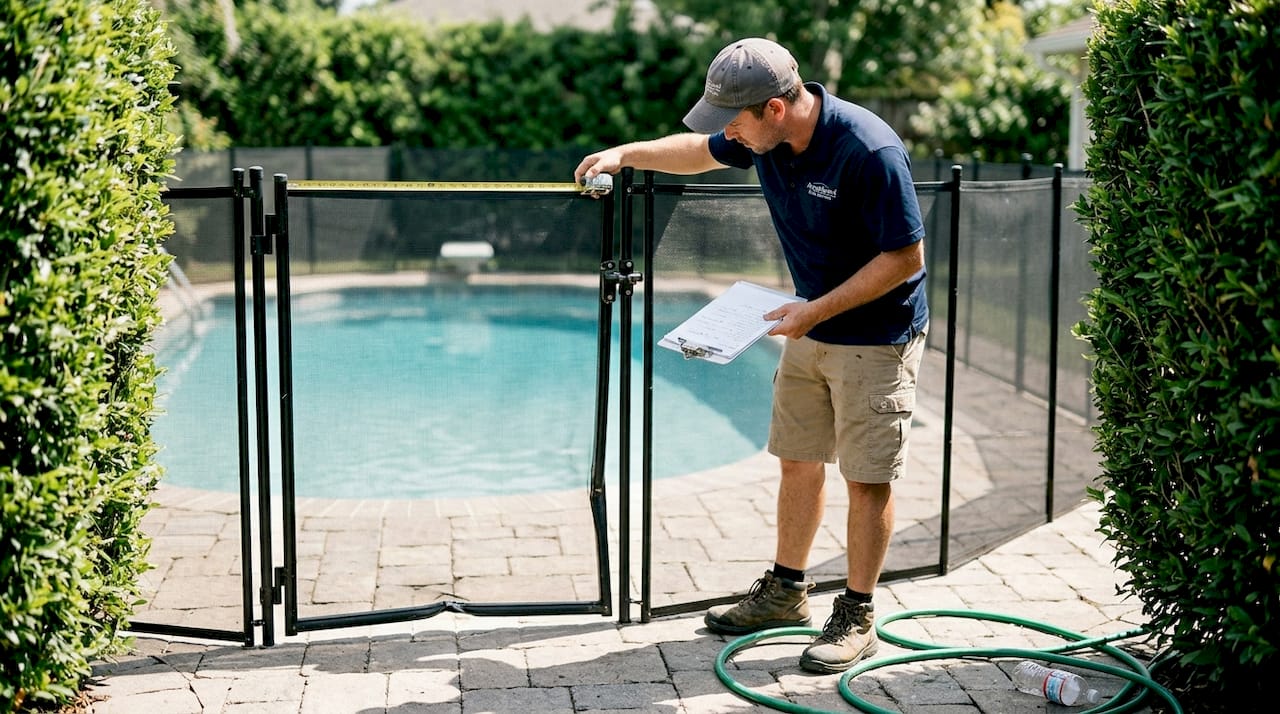
Mesh fencing systems like Poolguard or Kinderguard offer practical solutions that satisfy legal requirements while maintaining aesthetic appeal. These removable barriers use powder-coated aluminum poles and durable mesh fabric, allowing you to create pool access points when needed and restore full protection when children are present. The mesh design prevents climbing while providing visibility, letting you monitor the pool area from your home.
Pro Tip: Position gate latches on the pool side of the fence rather than the yard side. This placement adds an extra obstacle, requiring someone to reach over the fence to open the gate, making unauthorized access more difficult for curious children.
| Fencing type | Pros | Cons | Best for |
|---|---|---|---|
| Four-sided isolation | Highest protection, separates pool from home | Requires dedicated gate access | Families with young children |
| Perimeter yard fence | Secures entire property | Lower effectiveness, multiple access points | Properties needing boundary security |
| Removable mesh | Flexible access, meets code | Requires consistent reinstallation | Pools used seasonally |
| Glass panel | Modern aesthetic, visibility | Higher cost, requires professional install | Design-focused renovations |
When planning your pool enclosure in Florida, consider how fencing integrates with your overall landscape design. Many homeowners combine compliant barriers with attractive plantings, paver pathways, and lighting to create safe, inviting outdoor spaces. Renovation projects offer opportunities to upgrade older pools with modern safety features that enhance both protection and property value.
Choosing the right fence involves balancing safety requirements with your family’s lifestyle and aesthetic preferences. Isolation fencing provides maximum protection but requires everyone to use gates consistently. Removable mesh offers flexibility for adult-only pool time while maintaining child safety during family gatherings. Glass panels deliver contemporary style with full visibility, though at higher installation costs.
Preventing drownings beyond fences: pool drains and layers of protection
Pool drains present a hidden danger that many homeowners overlook. Older single-drain systems create powerful suction forces that can trap swimmers underwater. Anti-entrapment drain covers certified under ASME/ANSI standards prevent suction exceeding 300 pounds, eliminating entrapment risks. Modern pools require dual drain configurations or Safety Vacuum Release Systems that automatically shut off pumps when blockages occur.
Inspecting your drain covers annually prevents failures that create hazards. Cracks, missing screws, or warped covers compromise suction distribution and must be replaced immediately. Never operate your pool if drain covers show damage or have been removed. The Virginia Graeme Baker Pool and Spa Safety Act mandates these protections nationwide, with Florida enforcement through local building codes.
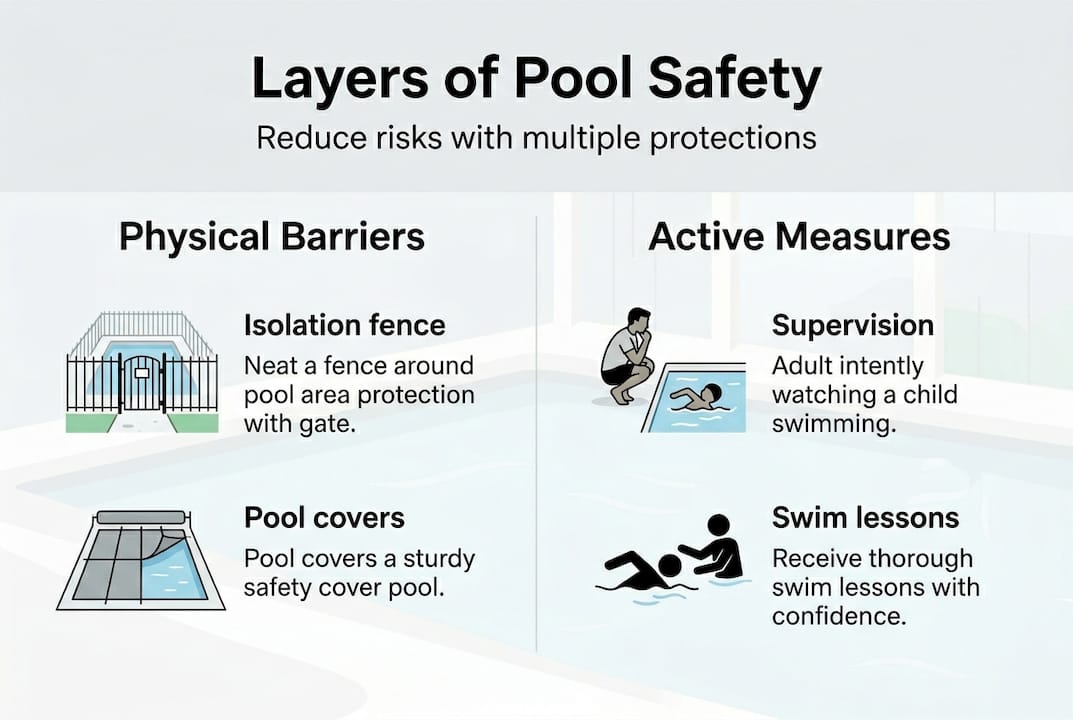
Florida Department of Health recommends five layers of protection that work together to prevent drownings:
- Active supervision with designated water watchers who avoid distractions
- Physical barriers including fences, gates, and door alarms
- Swim lessons teaching water competency and survival skills
- CPR knowledge enabling immediate emergency response
- Life jackets for weak swimmers and young children
No single measure provides complete protection. Combining multiple layers creates redundancy, so if one barrier fails, others remain in place. Continuous supervision proves critical since 51% of child drownings occur despite adults being present. Designating a water watcher who commits to undistracted monitoring during pool time significantly reduces risks.
Pro Tip: Every family member should learn CPR, not just parents. Older siblings, grandparents, and regular visitors who might be present during pool time need these skills. Local fire departments and community centers offer free or low-cost certification classes throughout Central Florida.
“Drowning happens quickly and silently. Children can slip underwater in seconds without splashing or calling for help. Multiple safety layers provide backup protection when supervision lapses or barriers fail, giving families the best chance to prevent tragedy.” – Florida Department of Health
Swim lessons build water competency that helps children survive unexpected water entry. Programs teaching self-rescue skills, floating, and basic swimming strokes reduce drowning risk substantially. Many Central Florida communities offer swim vouchers and subsidized lessons through parks and recreation departments, making instruction accessible for all families.
Maintaining safety equipment requires ongoing attention. Test gate latches monthly to confirm they close and latch automatically. Check alarm batteries quarterly and replace them annually. Schedule professional pool maintenance that includes safety equipment inspection, ensuring every protective layer functions as designed.
How to apply pool safety requirements in your Central Florida home
Obtaining proper permits before construction or renovation protects your investment and ensures compliance. Orange County requires residential pool permits with engineered plans showing barrier locations, electrical systems, and drainage. You’ll submit applications online or in person, pay permit fees based on pool size and features, and schedule inspections at designated construction milestones. Seminole County follows similar procedures with specific requirements for barrier affidavits confirming safety feature installation.
| County | Permit fee range | Required inspections | Processing time |
|---|---|---|---|
| Orange | $150-$400 | Rough-in, barrier, electrical, final | 5-10 business days |
| Seminole | $175-$425 | Rough-in, safety barrier, final | 7-14 business days |
| Osceola | $140-$380 | Rough-in, barrier, final | 5-12 business days |
Choosing compliant safety products simplifies installation and inspection approval. Mesh fencing options balance regulations with appearance, making them popular choices for renovating existing pools. These systems install without permanent posts, allowing removal when pools aren’t in use while maintaining full protection during family swim time. Glass panel barriers offer modern aesthetics with unobstructed views, though they require professional installation and higher budgets.
Integrating swim education into your family safety plan addresses the human factor in drowning prevention. Enroll children in age-appropriate lessons starting as early as one year old. Look for instructors certified through programs emphasizing survival skills like floating, treading water, and reaching pool edges. Practice these skills regularly, even after formal lessons end, to maintain competency.
Pro Tip: Partner with licensed contractors experienced in Central Florida pool construction and renovation. They understand local code requirements, maintain relationships with inspectors, and can navigate permitting efficiently. This expertise prevents costly mistakes and ensures your project meets all safety standards without delays.
Recommended safety actions for Central Florida homeowners:
- Schedule annual professional inspections of barriers, gates, and drain covers
- Complete CPR and first aid certification for all adult household members
- Test gate latches and alarms monthly to confirm proper operation
- Keep rescue equipment including reaching poles and life rings poolside
- Post CPR instructions and emergency numbers in visible pool area locations
- Remove pool toys after swimming to avoid attracting unsupervised children
- Maintain clear sightlines from home to pool for continuous monitoring
Your pool renovation checklist should prioritize safety upgrades alongside aesthetic improvements. Older pools often lack modern drain protections, compliant barriers, or proper electrical grounding. Addressing these deficiencies during renovation projects brings your pool up to current standards while enhancing enjoyment and property value.
Planning pool features for new construction allows you to integrate safety from the design phase. Discuss barrier placement, gate locations, and alarm systems with your contractor before breaking ground. This proactive approach prevents expensive modifications later and creates cohesive designs where safety features complement your overall landscape vision.
Enhance your pool safety with R & R Swimming Pools
Creating a safe pool environment requires expertise in Florida regulations, construction standards, and proven safety systems. R & R Swimming Pools brings over 35 years of Central Florida experience to every project, ensuring your pool meets or exceeds all safety requirements while delivering the custom design you envision. Our team navigates permitting processes, coordinates inspections, and installs compliant barriers that protect your family without compromising aesthetics.
Whether you’re planning a new custom pool installation or renovating an existing pool, we guide you through safety feature selection and implementation. Our comprehensive services include barrier design and installation, drain safety upgrades, electrical system compliance, and ongoing maintenance support. We work directly with local inspectors, streamlining approvals and preventing delays that extend project timelines.
Pro Tip: Early safety planning during design phases prevents costly corrections later. Consulting with experienced pool builders before finalizing plans ensures your project incorporates all required protections efficiently, avoiding expensive modifications after construction begins.
R & R Swimming Pools offers:
- Complete inground pool installation with integrated safety systems
- Safety-focused pool renovations upgrading older pools to current standards
- Barrier and fencing installation meeting Florida code requirements
- Drain safety upgrades including dual drains and SVRS systems
- Permit coordination and inspection scheduling throughout Central Florida
FAQ
What are the key legal pool safety requirements in Florida?
Florida law mandates at least one major safety feature for every new residential pool: four-foot isolation barriers, ASTM-approved safety covers, exit alarms on pool access doors, or pool surface alarms. All Central Florida counties require permits and multiple inspections to verify compliance before pools can be filled and used.
How often should I inspect and maintain pool safety equipment?
Inspect drain covers, fence barriers, and gate latches annually for damage, wear, or malfunction. Test self-closing gates and alarm systems monthly to confirm proper operation. Replace damaged components immediately and schedule professional maintenance that includes safety equipment checks.
What are the most effective ways to prevent child drownings at home pools?
Four-sided isolation fencing combined with active adult supervision reduces drowning risk by over 70%. Add swim lessons teaching water survival skills, CPR training for household members, and properly fitted life jackets for weak swimmers to create multiple protective layers.
Are pool alarms or covers enough on their own for safety?
Alarms and covers alone provide insufficient protection because they depend on consistent human behavior. Alarms can be disabled or ignored, while covers require proper replacement after every pool use. Combining physical barriers with supervision, swim skills, and emergency preparedness delivers stronger, more reliable protection.
How do I choose between removable mesh fencing and permanent barriers?
Removable mesh fencing offers flexibility for adult-only pool time while maintaining child safety during family use, though it requires disciplined reinstallation. Permanent barriers provide constant protection without depending on daily actions but limit pool access convenience. Consider your family’s supervision capabilities and children’s ages when deciding.