
TL;DR:
- Proper storm pool preparations involve managing water levels, maintaining chemistry, and securing equipment before a storm arrives. Draining pools is dangerous in Central Florida due to hydrostatic uplift caused by the high water table, so water should be lowered 12 to 18 inches instead. Additionally, disconnecting electrical systems and securing loose outdoor items are crucial to prevent damage during hurricane conditions.
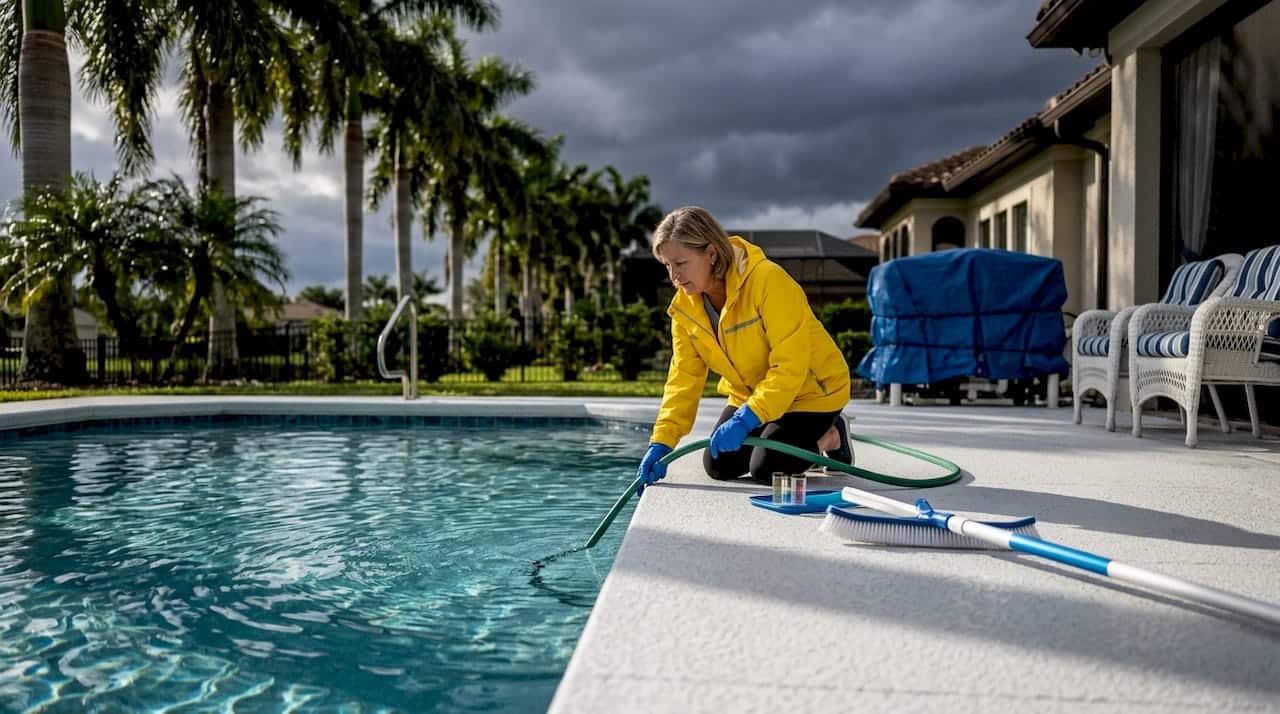
Storm preparation for pools is the process of protecting your pool, equipment, and surrounding area from hurricane and severe storm damage by following a proven, region-specific sequence of steps. Central Florida homeowners face unique risks that most generic storm guides ignore entirely. The Florida Swimming Pool Association and local experts consistently warn that the single most dangerous mistake you can make is draining your pool before a storm. This guide gives you the exact steps to protect your investment, in the right order, before the next storm makes landfall.
1. Storm preparation for pools starts with water level management
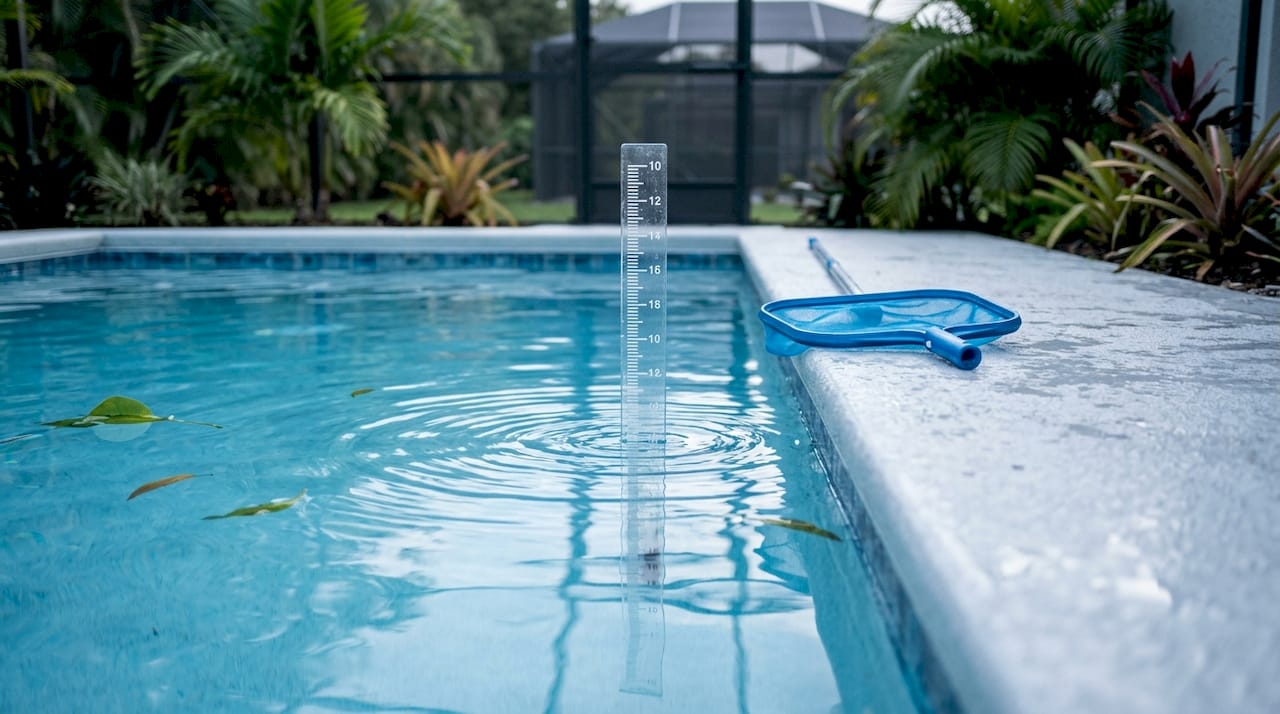
The most counterintuitive rule in hurricane pool preparation is this: do not drain your pool. Pool popping from hydrostatic uplift is a real structural risk in Central Florida, where the water table sits just a few feet below ground in many neighborhoods. When the soil becomes saturated during a storm, groundwater pressure pushes upward against the pool shell. Without the weight of water inside, that pressure can literally lift the pool out of the ground.
The correct approach is to lower the water level by 12 to 18 inches. This creates capacity for heavy rainfall while keeping enough water weight to counteract hydrostatic uplift. You can do this using your filter’s waste setting or a submersible pump.
Key steps for water level management:
- Set your multiport valve to “waste” and run the pump until the level drops 12 to 18 inches below the normal waterline
- Use a submersible pump as an alternative if your system does not have a waste setting
- Check local water table elevation data for your specific zip code before deciding how much to lower the level
- Never fully drain a concrete or fiberglass pool in Central Florida under any circumstances
Pro Tip: Start lowering your water level at least 48 hours before the storm arrives. This gives you time to adjust if rainfall begins earlier than forecast.
2. How to adjust pool chemistry before a storm
Water chemistry is your second line of defense when the pump shuts down. Super-chlorinating to about 10 ppm free chlorine 24 to 48 hours before the storm gives your water a sanitizer reserve that fights contaminants when circulation stops. Without this buffer, storm debris, dirt, and organic material will consume your chlorine rapidly and leave you with a green pool within days.
Steps to prepare your water chemistry:
- Test your current free chlorine, pH, and alkalinity levels
- Adjust pH to between 7.2 and 7.4 to maximize chlorine effectiveness
- Shock the pool to raise free chlorine to approximately 10 ppm
- Correct total alkalinity to the 80 to 120 ppm range for stability
- Remove all floating chlorine dispensers and chlorine tablets from the water before the storm
One step many homeowners skip is removing the floating chlorinator. In high winds, a plastic dispenser becomes a projectile that can crack tile, damage pool surfaces, or break screen enclosure panels. Store all chemical dispensers and loose chemical containers in a sealed, waterproof location.
Pro Tip: Skip the algaecide before the storm. It works best in circulating water and will be diluted by rain. Save it for your post-storm cleanup when the pump is running again.
3. Securing and powering down pool equipment safely
Electrical damage is one of the most expensive outcomes of a poorly prepared pool. Turning off all pool power at the circuit breaker is the correct method. Turning off the pump from the control panel or a smart app is not sufficient. Water intrusion into a live circuit can destroy a pump motor, salt cell, or automation system in seconds.
Here is the full equipment shutdown checklist:
- Turn off the pool pump, heater, salt chlorinator, and any automation systems at the main circuit breaker panel
- Shut off the gas supply valve to any gas heater at the source, not just the heater’s own controls
- Cover the equipment pad with a waterproof tarp and secure it with sandbags or heavy weights to protect against wind-driven rain
- Do NOT disconnect the pump, filter, or any plumbing fittings before the storm
That last point deserves emphasis. Disconnecting pool plumbing before a storm actually increases the risk of damage. Storm debris can shift disconnected components out of alignment, creating leaks and misaligned fittings that are expensive to repair. Leave everything connected and let the tarp do its job.
After the storm passes, do not flip the breaker back on immediately. Walk the equipment pad first and look for standing water, debris impact damage, or signs of flooding before re-energizing anything. If you have any doubt, call a licensed pool technician before restoring power.
4. Managing your pool screen enclosure and surrounding area
Screen enclosures and loose outdoor items are the source of most storm-related pool damage in Central Florida. Loose pool furniture and toys become airborne projectiles in tropical-force winds, capable of punching through screen panels, cracking coping, and damaging equipment. The Florida Building Code and most screen enclosure manufacturers provide specific guidance on panel removal for major storms.
Follow these steps to secure the pool environment:
- Remove all chairs, tables, floats, toys, umbrellas, and cleaning equipment from the pool deck and store them indoors or in a secured garage
- Trim any overhanging tree branches or dead limbs within striking distance of the pool or enclosure at least a week before storm season peaks
- Check with your screen enclosure manufacturer or a licensed contractor about whether to remove screen panels before a Category 2 or higher storm
- Take dated photographs of your entire pool area before the storm for insurance documentation purposes
- Do not place patio furniture or heavy objects in the pool as a projectile mitigation strategy. This damages pool surfaces and adds debris you will need to remove later
| Action | Timing | Risk if skipped |
|---|---|---|
| Store loose furniture | 24 to 48 hours before storm | Projectile damage to screen, pool, and equipment |
| Trim trees and branches | 1 to 2 weeks before storm season | Falling limbs crack coping and damage equipment |
| Remove screen panels (if advised) | Per manufacturer guidance | Screen frame collapse under wind load |
| Photograph pool area | Before storm arrives | Insurance claim disputes |
Automatic pool covers require special attention. Automatic covers should be retracted before a major storm rather than left deployed. A cover stretched across a pool acts like a sail in high winds, putting enormous stress on the track system and motor. Retract it, secure the housing, and let the pool take the rain.
5. Pool safety during storms and lightning precautions
Pool safety during storms is not just about protecting property. It is about protecting lives. Lightning near pools poses fatal risks because water conducts electricity and horizontal electrical discharge can travel across a pool surface even when lightning strikes at a distance. You do not need a direct strike to be in serious danger.
The rule is simple and non-negotiable:
- Clear the pool and the entire pool deck the moment you hear thunder
- Wait 30 minutes after the last thunder before anyone returns to the water
- Use lightning alert tools like Thor Guard or WeatherBug’s Spark Map to track storm cell proximity in real time
- Avoid open shelters, covered patios with metal roofing, and any structure that is not fully enclosed during a lightning event
The 30-minute rule after last thunder is the standard used by the American Red Cross and the National Lightning Safety Council. One visible flash or audible rumble resets the clock entirely.
Pool lighting systems also require attention before a storm. Review pool lighting safety protocols and confirm all underwater fixtures are properly sealed and grounded before storm season begins. A compromised fixture seal combined with storm water intrusion is a serious electrical hazard.
Key takeaways
Effective storm preparation for pools requires completing water level reduction, chemistry adjustment, equipment shutdown, and area securing in the correct sequence before the storm arrives.
| Point | Details |
|---|---|
| Never fully drain your pool | Hydrostatic pressure in Central Florida’s high water table can pop an empty pool out of the ground. |
| Lower water 12 to 18 inches | This creates rain capacity while keeping enough ballast weight to prevent structural uplift. |
| Super-chlorinate 24 to 48 hours out | Raising free chlorine to 10 ppm protects water quality when circulation stops during the storm. |
| Cut power at the breaker | Switching off at the panel or app is not enough. Only the circuit breaker fully isolates equipment from electrical damage. |
| Store everything loose | Outdoor furniture, floats, and dispensers become projectiles in tropical winds and cause serious damage. |
What 40 years of Central Florida pools taught me about storm prep
After working with pools across Central Florida since 1985, the pattern I see every storm season is the same. Homeowners who act early and follow the sequence come through with minimal damage. Homeowners who wait, drain, or improvise end up with cracked shells, dead equipment, or green water that takes weeks to recover.
The advice that surprises people most is the water level rule. Draining feels like the safe, logical thing to do. It is the opposite. The pool water’s weight prevents structural uplift in saturated soil. Removing it removes your best protection against the ground itself pushing your pool out of position.
The second mistake I see constantly is last-minute disconnection of equipment. People panic and start pulling fittings the night before a storm. That creates more problems than it solves. Leave the plumbing connected, cut the power at the breaker, cover the pad, and walk away. The storm prep sequence matters as much as the individual steps.
One more thing worth saying plainly: screen enclosure decisions are not cosmetic. Leaving panels in during a major hurricane can collapse the entire frame onto your pool deck. Check your manufacturer’s guidelines and your local building code before every storm season, not during one.
— Randrswimmingpools
Protect your pool with Central Florida’s most experienced team

R and R Swimming Pools has been building and servicing custom inground pools across Central Florida since 1985. Whether you are preparing an existing pool for storm season or planning a new installation designed to handle Florida’s weather, the team at Randrswimmingpools brings decades of region-specific expertise to every project. From concrete pool construction to post-storm inspections, every service is built around the specific conditions Central Florida homeowners face. Review the Central Florida pool installation guide to understand how a properly built pool handles storm conditions from day one. You can also use the pool maintenance checklist to stay on top of seasonal prep year-round.
FAQ
Should I drain my pool before a hurricane in Florida?
No. Draining your pool in Central Florida is one of the most dangerous things you can do before a storm. The high water table creates hydrostatic pressure that can push an empty pool out of the ground, causing severe structural damage.
How much should I lower my pool water level before a storm?
Lower the water level 12 to 18 inches below the normal waterline. This creates capacity for heavy rainfall while keeping enough water weight to prevent uplift from saturated soil.
When should I turn off my pool equipment before a storm?
Shut down all pool equipment at the circuit breaker 24 to 48 hours before the storm arrives. Do not rely on control panels or smart apps to cut power. Cover the equipment pad with a waterproof tarp secured with sandbags.
Is it safe to swim in a pool during a storm?
No. Clear the pool immediately when you hear thunder and wait at least 30 minutes after the last thunder before returning. Lightning can discharge horizontally across pool water even when a strike occurs at a distance.
What do I do with pool furniture before a hurricane?
Store all chairs, tables, umbrellas, floats, and pool toys indoors or in a secured garage at least 24 to 48 hours before the storm. Loose items become airborne projectiles in tropical winds and can cause serious damage to your screen enclosure, pool surfaces, and equipment.
