TL;DR:
- Central Florida pools face high stress from intense sun, storms, and algae, demanding structured maintenance.
- Regular weekly tasks include chemical balancing, brushing, vacuuming, and filter checks, with professional help for repairs.
- Post-storm recovery involves debris removal, water re-balancing, chemical shocking, and equipment inspection.
Central Florida pools are beautiful until the summer heat, daily thunderstorms, and relentless algae pressure remind you just how demanding local pool ownership can be. Between the intense UV exposure, phosphate-rich runoff, and hurricane season, your pool faces more stress in one month here than most pools see in a year. A structured maintenance checklist is not optional in this climate. It is the difference between a sparkling, safe pool and a green, equipment-straining mess that costs thousands to fix. This guide walks you through exactly what to do, when to do it, and why each step matters for your specific Central Florida conditions.
Table of Contents
- Why checklists matter for Central Florida pool owners
- The ultimate Central Florida pool maintenance checklist
- Storm recovery: Emergency checklist for your pool
- Advanced maintenance: When to call a licensed pro
- A smarter way to keep your Central Florida pool pristine
- Your next step: Get expert guidance for a flawless pool
- Frequently asked questions
Key Takeaways
| Point | Details |
|---|---|
| Checklist saves money | A structured checklist reduces costly mistakes and pool downtime. |
| Central Florida is unique | Frequent storms and high algae risk mean special vigilance is needed here. |
| Know when to call a pro | DIY is fine for basics, but some tasks require a licensed specialist for safety. |
| Smart tech helps | Automation and regular checkups can greatly simplify routine maintenance. |
Why checklists matter for Central Florida pool owners
Central Florida is not a forgiving environment for pools. The combination of intense sunshine, high humidity, frequent storms, and warm water temperatures creates ideal conditions for algae, chemical imbalance, and equipment wear. Without a structured routine, small problems compound fast.
Here are the most common issues Central Florida pool owners face:
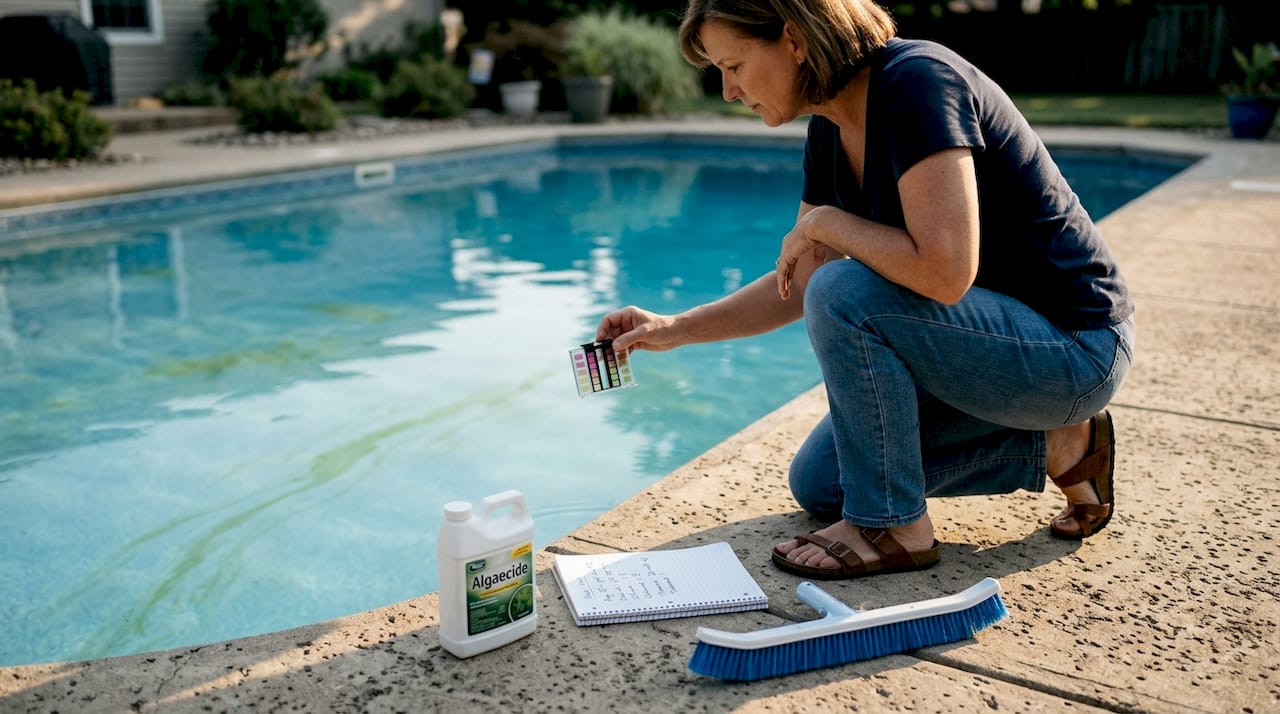
- Algae outbreaks: Warm water and phosphates above 500 ppb create the perfect feeding ground. High phosphates feed algae aggressively, and black algae in particular requires brushing combined with a high shock treatment of 20 to 30 ppm to eliminate.
- Chlorine lock: When cyanuric acid (CYA) climbs above 90 to 100 ppm, chlorine becomes ineffective. A partial drain and refill is often the only fix.
- Post-storm chemical chaos: Heavy rain dilutes and unbalances your water chemistry fast, requiring immediate rebalancing and debris removal.
- Equipment strain: Florida’s heat pushes pumps and filters harder, shortening their lifespan when not properly maintained.
- Hydrostatic pressure risk: Fully draining your pool in areas with a high water table can cause the shell to pop out of the ground. Never drain completely without professional guidance.
The importance of regular pool upkeep goes beyond aesthetics. Neglected pools cost significantly more to restore than to maintain. A reactive approach to pool care almost always means higher chemical bills, more frequent equipment repairs, and shorter pool lifespan.
“A consistent maintenance schedule is the single most effective tool for reducing long-term pool ownership costs in high-demand climates like Central Florida.”
So how often should you be maintaining your pool? Weekly service is standard for high-use or open pools, while bi-weekly care may work for low-use or screened pools. Commercial pools and those with heavy bather loads need daily chemical checks. For residential pools, most basic tasks are DIY-friendly, but licensed professionals are required for repairs, chemical applications beyond basic balancing, and equipment work.
The pool maintenance importance for Central Florida homeowners cannot be overstated. A checklist gives you a repeatable system so nothing falls through the cracks, even during busy weeks or storm recovery periods.
The ultimate Central Florida pool maintenance checklist
A great checklist is not just a list of tasks. It is a frequency-matched system that fits your pool’s actual usage and exposure. Here is how to break it down.
Daily tasks (high-use pools or post-storm)
- Skim the surface for leaves and debris.
- Check pump and skimmer baskets and empty if needed.
- Visually inspect water clarity and color.
- Test chemical levels if bather load was heavy or after rain.
Weekly tasks (all residential pools)
- Test and adjust pH (target 7.4 to 7.6), chlorine (2 to 4 ppm), alkalinity (80 to 120 ppm), and CYA.
- Brush pool walls, steps, and floor to prevent algae attachment.
- Vacuum the pool floor manually or run your automatic cleaner.
- Check filter pressure and backwash if needed.
- Inspect all equipment visually for leaks or unusual sounds.
- Test phosphate levels and apply a phosphate remover if above 500 ppb.
Monthly tasks
- Deep clean the filter (cartridge rinse or DE backwash).
- Check and lubricate o-rings and gaskets.
- Inspect pool lights, ladders, and handrails for safety.
- Review automation settings if you have a smart system.
- Check for calcium scaling on tile or waterline.
Pro Tip: Automation like variable-speed pumps and chemical feeders dramatically reduce the manual effort required each week. If you are still running a single-speed pump, upgrading is one of the best investments you can make for both energy savings and water quality.
| Task | Frequency | DIY or Pro |
|---|---|---|
| Skim and basket check | Daily/as needed | DIY |
| Chemical testing | Weekly | DIY |
| Brushing and vacuuming | Weekly | DIY |
| Filter cleaning | Monthly | DIY |
| Phosphate treatment | As needed | DIY |
| Equipment diagnostics | Quarterly | Pro |
| Algae recurrence investigation | As needed | Pro |
When algae keeps coming back despite your efforts, that is a signal worth paying attention to. Recurring algae often points to equipment issues or persistent phosphate problems that need professional maintenance tips and diagnostics beyond what a standard checklist covers. Staying on top of this routine also directly supports the impact of maintenance on pool value over time.
Storm recovery: Emergency checklist for your pool
Central Florida averages more lightning strikes per square mile than almost anywhere else in the country, and tropical storms are a seasonal reality. Knowing exactly what to do after a storm protects both your pool and your family.
Immediate post-storm steps:
- Do not enter the pool until you have confirmed no electrical damage to lights, pumps, or bonding wires.
- Remove large debris with a net before running the pump to avoid clogging the impeller.
- Lower the water level if the pool overflowed. Post-storm water management is critical because overfilled pools dilute chemicals and can damage the deck.
- Inspect equipment for physical damage, water intrusion into the motor, or tripped breakers.
- Rebalance all chemistry starting with pH, then alkalinity, then chlorine. Storms introduce contaminants that throw every parameter off.
- Shock the pool with a chlorine shock treatment to kill any bacteria or algae introduced by storm runoff.
- Run the filter continuously for 24 to 48 hours after rebalancing to clear cloudy water.
Pro Tip: Before hurricane season starts each year, photograph your equipment setup and note all baseline chemical readings. This gives you a recovery baseline and helps your insurance company if equipment is damaged. For more detailed storm pool restoration advice, working with a local service professional after major storms is always a smart call.
| Storm severity | Water change expected | Recovery time |
|---|---|---|
| Light rain (under 1 inch) | Minimal | Same day |
| Heavy rain (1 to 3 inches) | Moderate dilution | 1 to 2 days |
| Tropical storm or hurricane | Severe | 3 to 7 days |
For post-storm pool tips specific to Central Florida conditions, following a written recovery protocol every time ensures you do not miss a step when stress is high and time is short.
Advanced maintenance: When to call a licensed pro
Not everything on your checklist is a DIY task. Florida has clear regulations about what homeowners can and cannot legally do with their own pools, and ignoring those lines creates real risk.
Here is what you can handle yourself:
- Basic chemical testing and balancing
- Skimming, brushing, and vacuuming
- Emptying baskets and cleaning filter cartridges
- Operating and adjusting automation systems you own
Here is what always requires a licensed contractor:
- Structural repairs to the pool shell, coping, or decking
- Electrical work including light replacement, bonding, and wiring
- Plumbing repairs to return lines, main drains, or suction fittings
- Equipment installation including new pumps, heaters, or automation systems
Florida DBPR Chapter 489 governs all pool contractor licensing in the state. Structural, electrical, and plumbing work on pools must be performed by a licensed contractor. Public pools face even stricter oversight under FDOH rule 64E-9. Attempting unlicensed work can void your homeowner’s insurance and create serious liability.
“Recurring algae, unexplained water loss, or equipment that keeps tripping breakers are not maintenance problems. They are diagnostic problems that require a licensed professional.”
Residential DIY is appropriate for basics, but licensed pros are required for anything involving repairs, chemical application systems, or equipment replacement. Knowing this boundary protects you legally and keeps your pool safe.
Familiarizing yourself with pool safety requirements in Central Florida helps you stay compliant. If you are unsure whether a project needs a permit, review the pool permitting info before starting any work. And when your pool shows signs of wear or age, understanding when inspections are needed can prevent small issues from becoming expensive ones.
A smarter way to keep your Central Florida pool pristine
Here is something most pool guides will not tell you: the homeowners who spend the least money on pool repairs over time are not the ones who work the hardest. They are the ones who work the smartest. They invest in automation early, schedule professional checkups before problems appear, and treat their checklist as a living document rather than a one-time reference.
Conventional wisdom says pool maintenance is a weekend chore. We disagree. When you install variable-speed pumps and chemical feeders, you reduce manual effort dramatically while improving water quality consistency. The ROI is not just in time saved. It shows up in lower chemical costs, fewer algae treatments, and equipment that lasts years longer.
The checklist discipline we have outlined here creates compounding gains. Each week you stay on schedule, you reduce the chance of a major chemical correction. Each storm you recover from quickly, you protect your equipment from long-term stress. This is not about perfection. It is about consistency. And consistency, paired with the right tools and the right maintenance guide, is what separates a pool that thrives for 20 years from one that needs a full renovation in 10.
Your next step: Get expert guidance for a flawless pool
Knowing what your pool needs and having the right team behind you are two different things. At R & R Swimming Pools, we have been helping Central Florida homeowners build and maintain beautiful pools since 1985.
If you want to go deeper on the basics, our hands-on pool school gives you practical, personalized training on everything from chemical balancing to equipment operation. Thinking about refreshing an older pool? Our renovation checklist walks you through every step. And if you are ready to build your dream pool from scratch, explore our custom pool building options to see what is possible. Local expertise makes every difference in this climate.
Frequently asked questions
How often should I check my pool’s chemical levels in Central Florida?
Weekly testing is standard for most residential pools, but after storms or heavy use, you should test more frequently to catch imbalances before they become bigger problems.
What should I do if my pool water turns green after a storm?
Remove all debris first, then test and rebalance your chemicals before shocking the pool with a high dose of chlorine to eliminate algae growth.
Can I perform all pool maintenance tasks myself?
Homeowners can handle basic care like testing, brushing, and skimming, but licensed contractors are required for any structural, electrical, or plumbing repairs under Florida law.
Are automatic pool systems worth it in Central Florida?
Variable-speed pumps and chemical feeders reduce manual work and improve water consistency, making automation a smart long-term investment for most Central Florida pools.
Recommended
- Top pool maintenance tips for Central Florida homeowners
- Pool maintenance importance for Central Florida: 2026 guide
- Why regular pool maintenance matters for Central Florida
- 6-Step Pool Renovation Checklist for Central Florida Homes
- 7 Essential Rental Property Maintenance Checklist Tips – Rental Income Insurance
