
TL;DR:
- Proper planning and expert engineering are essential for seamless pool and spa integration in Central Florida.
- Timely permits, enlarged equipment, and understanding soil conditions prevent costly structural and hydraulic issues.
Many Central Florida homeowners invest in pool and spa upgrades expecting a smooth, exciting transformation, only to run into confusing contractor handoffs, permit delays, and equipment mismatches that drag out the project for months. The frustration is real, and it’s almost always avoidable. A well-planned integration workflow, built around Florida’s unique soil conditions, permitting requirements, and luxury design standards, can mean the difference between a backyard you love and a project you regret. This guide gives you the full picture, from prerequisites to final verification, so you can move forward with confidence.
Table of Contents
- What you need for a successful pool spa integration
- Step-by-step pool spa integration workflow
- Finishing touches: Luxurious customizations and verification
- Troubleshooting and common integration pitfalls
- Our expert perspective: What Florida homeowners often get wrong
- Ready for a custom pool spa integration? Work with Central Florida’s trusted experts
- Frequently asked questions
Key Takeaways
| Point | Details |
|---|---|
| Prepare thoroughly | A clear plan, permits, and expert oversight prevent costly delays and mistakes. |
| Follow proven workflow | Step-by-step integration ensures luxury results and lasting performance. |
| Anticipate local challenges | Florida’s unstable soil and high spa demand require special engineering and oversized systems. |
| Verify before enjoying | Quality checks and water testing are vital for safety and long-term enjoyment. |
| Seek expert advice | Local specialists help you avoid pitfalls and maximize the value of your upgrade. |
What you need for a successful pool spa integration
Now that you understand why a seamless integration matters, let’s examine what you’ll need before starting.
Pool and spa integration in Central Florida isn’t a weekend project or a simple add-on. It’s a layered construction process that requires licensed contractors, structural engineers in many cases, and careful coordination with your local building department. Before a single shovel hits the ground, you need the right team, the right approvals, and a clear understanding of the timeline ahead.
Who you need on your team:
- A licensed pool contractor with spa integration experience
- A structural or geotechnical engineer if your yard has unstable or sandy soil (extremely common in Central Florida)
- A licensed electrician for spa-specific wiring
- A plumbing specialist familiar with combined pool and spa systems
- Your local building department contact for permit tracking
Florida’s permitting process is not fast. The full construction workflow, including site assessment, permits, excavation, plumbing and electrical rough-in, gunite or steel placement, tile and coping, plaster, decking, fill, and startup testing, typically runs six to ten weeks in Florida when everything goes smoothly. That window can stretch considerably if permits are delayed or inspections need to be rescheduled.
Before you start planning finishes and features, read through our adding a pool spa guide for a detailed look at what’s involved, and check our pool permits guide to understand exactly what documentation your county requires.
Essential materials and equipment for luxury pool spa integration:
| Item | Purpose | Notes |
|---|---|---|
| Reinforced steel rebar | Structural support for shell | Required for gunite builds |
| High-capacity pump | Circulates water through pool and spa | Must be sized for combined volume |
| Oversized filtration system | Removes contaminants from higher bather loads | Critical for spa use |
| Spa jets and plumbing lines | Delivers hydrotherapy pressure | Dedicated lines recommended |
| Tile, coping, and waterline material | Aesthetic and structural finish | Must be rated for spa temperatures |
| Automated controls | Manages temperature, lighting, and flow | Strongly recommended for luxury builds |
| Decking material | Surrounds and connects the pool and spa | Must handle Florida’s heat and rain |
Pro Tip: Never size your pump and filter for just the pool’s volume. A spa dramatically increases the demand on your system, especially when it’s in frequent use. Oversize both components by at least 20 to 30 percent to avoid strain, poor water quality, and equipment burnout over time.
Engineering is non-negotiable in many parts of Central Florida. Sandy or limestone-heavy soils can shift under the weight of a concrete spa and pool shell, leading to cracking or structural failure years down the road. A soil assessment before excavation can save you from an extremely costly repair later.
Step-by-step pool spa integration workflow
With prerequisites prepared, homeowners can begin the integration process by following these stages.
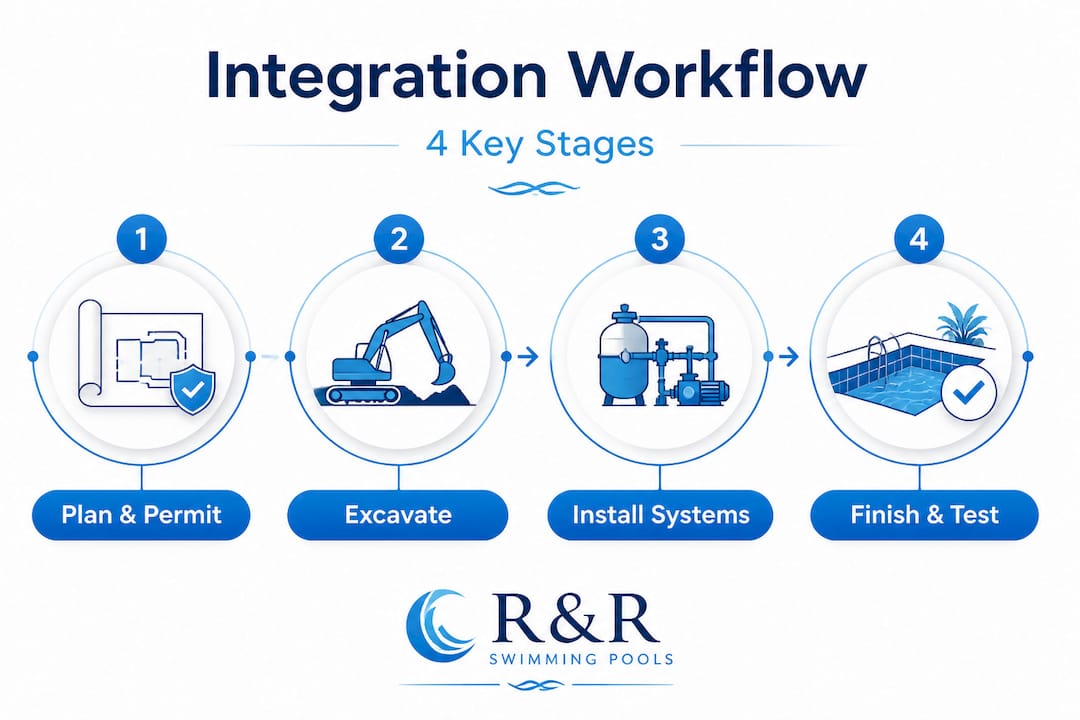
The construction sequence for a pool and spa integration follows a logical progression, and skipping or rushing any phase creates problems in later stages. Here’s exactly how the process unfolds:
- Site assessment and design finalization. Your contractor surveys the yard, evaluates soil conditions, and confirms the spa and pool placement relative to your home’s structure and utility lines. This is when your design is locked in and engineering reports are ordered if needed.
- Permit application and approval. Permit applications go to your local building department covering structural, plumbing, and electrical components. Florida’s permitting and construction timeline routinely runs six to ten weeks in total, and the permit phase alone can take two to four weeks in busy counties like Orange, Seminole, or Osceola.
- Excavation. Heavy equipment digs out the shell area to exact specifications. The spa cavity is typically excavated separately or as an extension of the pool cavity, depending on whether it’s an attached or spillover design.
- Steel and plumbing rough-in. Steel rebar is laid and tied into a grid to reinforce the shell. Plumbing lines for both the pool and spa are run at this stage, including return jets, skimmers, main drains, and dedicated spa jet lines. Electrical conduit is also stubbed in.
- Gunite or shotcrete application. Pneumatically applied concrete (gunite is dry-mix, shotcrete is wet-mix) is sprayed over the rebar framework to form the shell. This is one of the most structurally critical stages and must cure fully before the next phase begins, often taking several days to a week.
- Tile, coping, and waterline finishes. Tile is applied along the waterline and inside the spa for both visual appeal and durability. Coping stones or pavers cap the edge of the shell and create the transition to the deck surface.
- Plaster or interior finish. The interior surface of the pool and spa is applied. Plaster is the most common choice, though premium quartz and pebble finishes offer more texture, color depth, and longevity. This surface must be wetted immediately and consistently to prevent cracking.
- Decking installation. The area surrounding the pool and spa is finished with your chosen decking material. In Central Florida, popular options include travertine, cool deck, and brushed concrete.
- Fill, startup, and testing. Water fills the system and your contractor performs a full startup: balancing water chemistry, testing jet pressure, checking heater function, confirming automation controls, and verifying that the spa overflow or spillover is working as designed.
Important: Retrofitting a spa into an existing pool’s plumbing system carries real risk. Older plumbing lines may not handle the additional pressure and flow demands of a spa without leaking or failing. Always have an engineer or experienced contractor assess existing pipe sizing before any retrofit begins.
New build vs. retrofit project timeline comparison:
| Project type | Typical total timeline | Key complexity factor |
|---|---|---|
| New integrated pool and spa | 8 to 14 weeks | Permitting and cure time |
| Retrofit spa added to existing pool | 10 to 18 weeks | Plumbing assessment and modification |
| Standalone spa added near existing pool | 6 to 10 weeks | Electrical and limited plumbing |
Use our custom pool installation guide and installation steps for Central Florida pools as companion references while planning each phase.
Finishing touches: Luxurious customizations and verification
Once core construction is complete, focus shifts to luxury finishes, system testing, and quality verification.
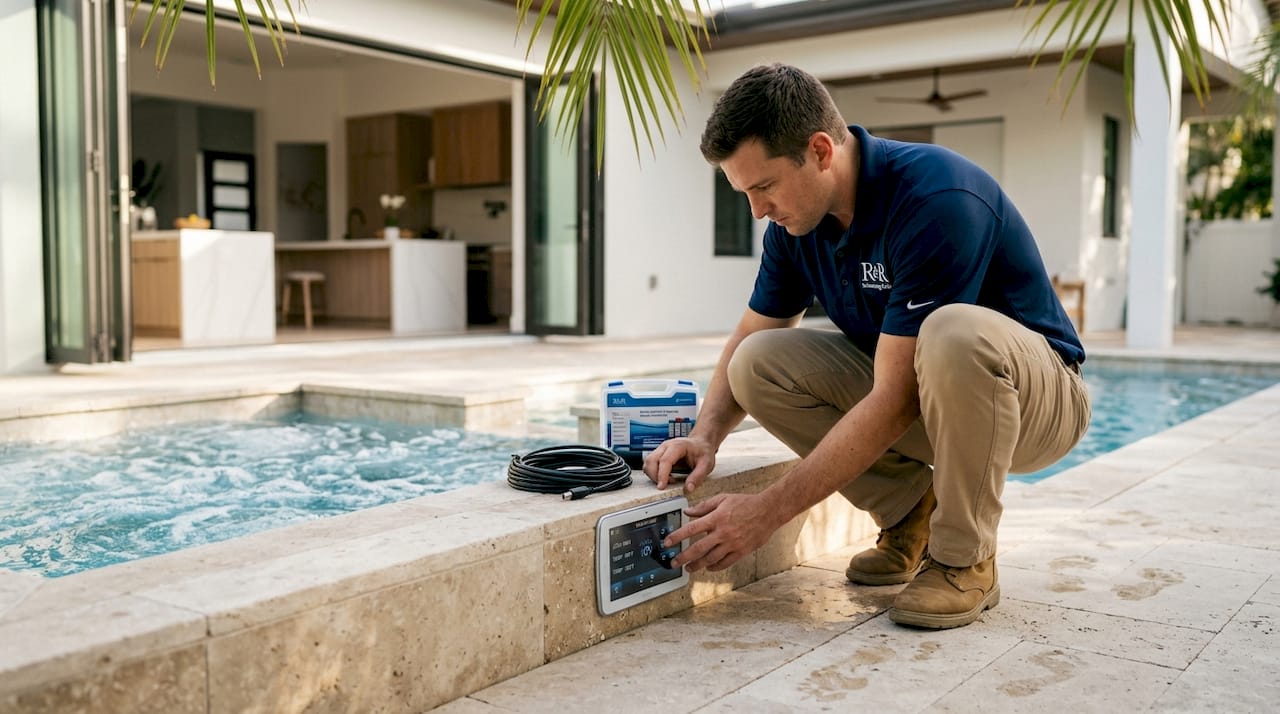
This is where your project transitions from a construction site into an actual backyard retreat. Finish choices in Central Florida need to account for intense UV exposure, high humidity, and heavy rainfall, so aesthetics and material durability have to go hand in hand.
Popular luxury finish and decking options for Central Florida pools and spas:
- Pebble Tec or quartz interior finishes: These provide a more natural, textured look than standard plaster and hold up better in Florida’s harsh sun. Colors stay vibrant longer and the surface is more resistant to staining.
- Travertine coping and decking: Stays cool underfoot even in full summer sun, which is a major benefit for barefoot use in Florida heat. It also has excellent drainage properties.
- Waterline glass mosaic tile: Adds a high-end visual element at the spa’s interior edge and holds up extremely well to the temperature swings between spa and pool water.
- LED color-changing lighting: Especially effective for spa areas used in the evening. Integrated automation lets you shift ambiance with a single tap.
- Spillover waterfalls from spa to pool: These are among the most requested luxury features in Central Florida and create a cohesive visual flow between the two water bodies.
- Automated temperature and jet controls: Let you set spa temperature remotely so it’s ready when you arrive, and adjust jet zones without getting out of the water.
Explore pool decking options and our full pool finishes guide to compare materials in more detail before making final selections.
The startup and testing phase is not something to rush or skip. Water chemistry must be balanced precisely during the initial fill and cure period to protect the new plaster surface. Your contractor should walk you through pH, alkalinity, calcium hardness, and sanitizer levels before handing the system over.
Pro Tip: During your final walkthrough, ask your contractor to run the system at full spa capacity with jets operating. Watch for pressure drops at the pool return lines. If pool circulation weakens noticeably when the spa is running, your system may be undersized and worth addressing before your warranty period ends.
Troubleshooting and common integration pitfalls
Even with perfect planning, issues can arise. Here’s how to spot and solve the most common integration challenges.
Common pitfalls in Central Florida pool and spa integrations:
- Undersized pumps and filters for spa use. A spa concentrates more bathers in a smaller water volume than a pool. This creates heavier sanitizer demand and higher heat retention requirements. High bather loads in spas demand oversized filters and pumps, and many homeowners discover this only after experiencing chronic water quality problems.
- Ignoring soil conditions. Florida’s sandy, sometimes unstable soil is one of the most common contributors to structural cracking in pool and spa shells. Engineering reports aren’t always legally required, but they’re almost always worth the investment.
- Retrofit plumbing overload. Adding a spa to an existing pool often means existing return lines and equipment pads weren’t built for the combined load. Pipe sizing, pump placement, and equipment pad space all need to be reassessed. Retrofits risk plumbing overload in ways that may not become obvious until months after the project is complete.
- Skipping automation during initial installation. Adding automation controls after the fact is significantly more expensive and sometimes requires new wiring runs. Including it in the original build is a much smarter investment.
- Neglecting heat retention planning. Florida summers mean your spa might not need much help staying warm, but winter nights in Central Florida drop into the 40s. Make sure your heater and spa cover are properly sized for your desired year-round use patterns.
Statistic callout: A hot tub typically holds 300 to 500 gallons of water and may host two to six bathers simultaneously, meaning the bather-to-water ratio is far higher than in a standard pool. Standard pool filtration systems are rarely designed for this concentration, which is why dedicated or oversized equipment is necessary from day one.
Pro Tip: If your system starts showing signs of overload, such as cloudy water that won’t clear, reduced jet pressure, or frequent filter cleaning cycles, call your contractor immediately. These are early warning signs that your equipment isn’t keeping pace with demand, and catching them early prevents more serious mechanical failures.
Browsing through best pool add-ons and pool upgrade tips can also help you identify which enhancements work best with integrated spa systems before you finalize your design.
Our expert perspective: What Florida homeowners often get wrong
Armed with troubleshooting know-how, let’s reflect on the deeper lessons from real-world luxury pool spa integrations.
After working in Central Florida’s pool industry since 1985, one pattern emerges consistently: homeowners who struggle most with pool and spa integrations are those who treated the spa as an afterthought rather than a core design element. They found a contractor they liked for the pool, then asked that same contractor to “just add a spa,” often mid-build or as a later retrofit, without revisiting the full system design.
The result is almost always the same. The spa works, but it fights the rest of the system. The pump cycles between competing demands. The heater struggles to maintain temperature without pulling down pool circulation. The filter works overtime and needs early replacement. What looked like a small addition actually changed the entire hydraulic profile of the pool, and nobody planned for that.
Cookie-cutter workflows, the kind where every project gets the same pipe sizes, same pump specs, and same equipment pad layout, simply don’t account for spa integration in a meaningful way. Florida’s soil variability alone means that a design that worked perfectly in a Windermere yard might fail structurally in a St. Cloud lot two miles away. Adding a spa multiplies those variables.
The homeowners who get outstanding results are the ones who invest heavily in the planning phase, not the finish phase. They spend time on engineering, on proper equipment sizing, on understanding how the pool and spa will share or separate their hydraulic systems. That upfront investment in gunite construction longevity and structural planning pays dividends for twenty or thirty years.
Our honest recommendation: if anyone tells you that adding a spa to your pool is a quick or simple project, that’s a red flag. It’s a rewarding project, but it deserves the same respect and rigor as building the pool itself.
Ready for a custom pool spa integration? Work with Central Florida’s trusted experts
With firsthand insights in mind, take your next step toward a seamless, luxury pool spa upgrade.
At R&R Swimming Pools, we’ve been designing and building custom pools and spa integrations across Central Florida since 1985. We understand what the local soil, climate, and permitting process demand, and we build every system to perform beautifully for decades.
Whether you’re starting from scratch or considering a retrofit, our team walks you through every phase with complete transparency. Start with our inground pool installation steps and our custom installation guide to understand what a well-run project looks like. When you’re ready to see what’s possible for your specific backyard, explore our top pool types and reach out for a free quote. Our design team is ready to build something that genuinely fits your lifestyle.
Frequently asked questions
How long does pool spa integration take in Central Florida?
The full process, from site assessment through testing, typically runs six to ten weeks in Florida, though complex projects or permit delays can extend that timeline significantly.
What permits do I need for integrating a spa into my pool?
You must obtain local building and pool permits covering both systems, including separate approvals for plumbing and electrical components tied to the spa.
Do I need special equipment for a pool spa combo?
Yes, oversized filters and pumps are essential because spas concentrate more bathers in less water, creating higher filtration and circulation demands than a pool alone.
Is it possible to retrofit a spa into an existing pool?
Retrofits are possible, but plumbing overload risks are real, and Florida’s variable soil conditions often require engineering review before any structural modifications begin.
How can I verify my pool spa integration is done correctly?
Run the full system at maximum spa capacity during your final walkthrough, confirm water chemistry balance, and check that pool circulation isn’t noticeably reduced when the spa jets are operating at full pressure.
