
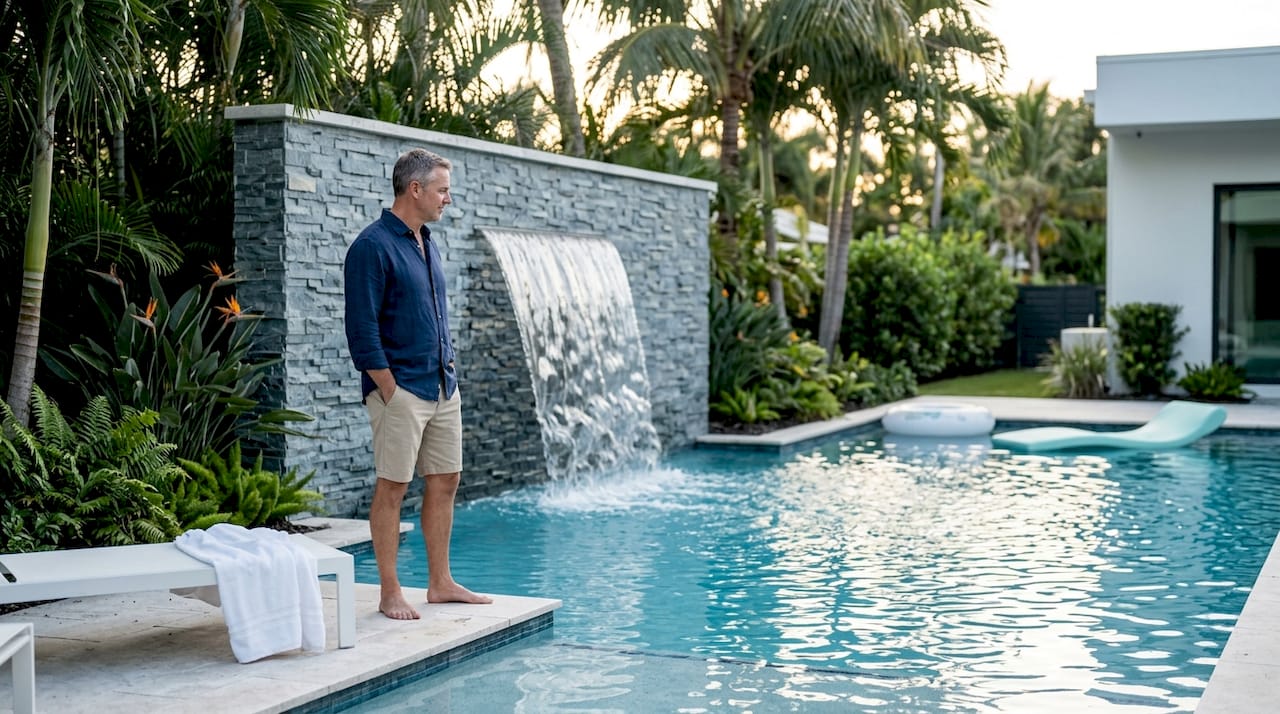
TL;DR:
- Pool waterfalls enhance water quality, lower temperatures, mask noise, and can boost home resale value.
- Their sound creates calming environments that increase pool usage and provide design flexibility for various styles.
- Installation costs vary from a few hundred to over ten thousand dollars, depending on style and complexity.
If you’ve been thinking about adding a waterfall to your pool but assumed it was just a luxury upgrade for showier backyards, you’re not alone. The benefits of pool waterfalls go much further than looks. They improve water quality, lower the temperature around your pool area, mask street noise, and can make your home sell faster. This guide cuts through the fluff and gives you what you actually need to know before deciding whether a waterfall belongs in your backyard.
Table of Contents
- Key takeaways
- The aesthetic benefits of waterfalls and backyard atmosphere
- Functional benefits that actually affect your pool health
- Do pool waterfalls improve property value?
- Installation costs and what to expect
- My honest take after decades in pool design
- Ready to add a waterfall to your pool?
- FAQ
Key takeaways
| Point | Details |
|---|---|
| More than decoration | Pool waterfalls actively improve water circulation, chemical distribution, and overall pool health. |
| Sound shapes behavior | Waterfall sounds increase how often you actually use your pool by making the space feel more inviting. |
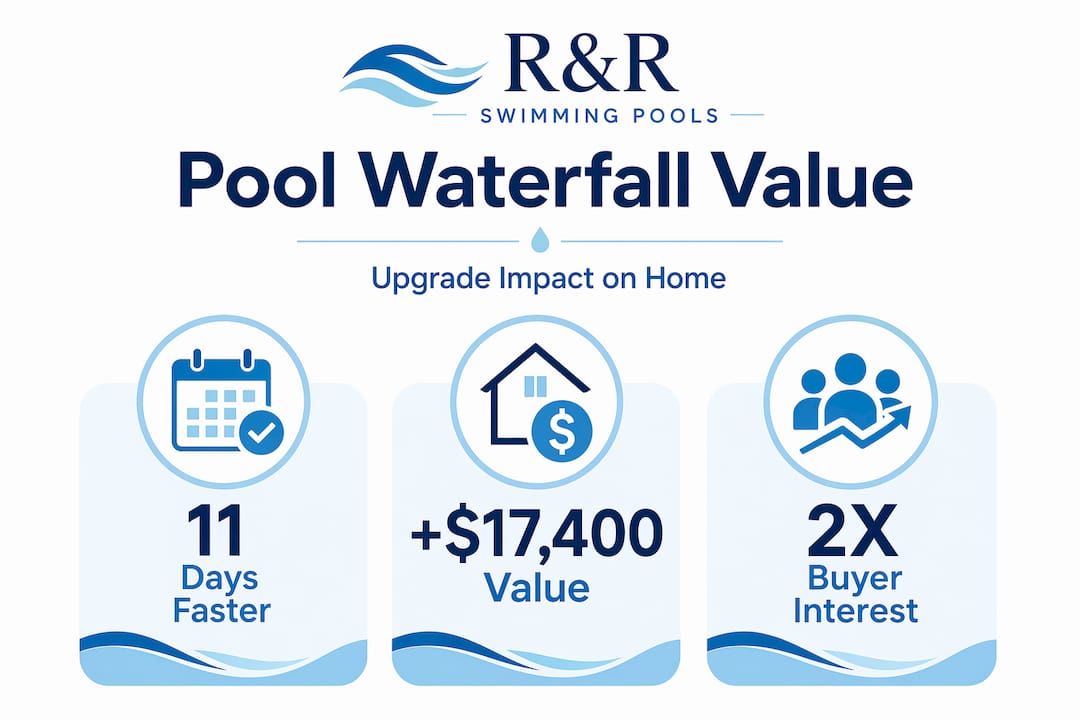
| Real estate edge | Homes with water features sold 11 days faster and for about $17,400 more in 2025. |
| Cost range is wide | Waterfall installations range from under $300 for simple fountains to over $6,500 for sheer-descent styles. |
| Maintenance matters | Increased evaporation from waterfalls is manageable with solar covers that can cut water loss by up to 95%. |
The aesthetic benefits of waterfalls and backyard atmosphere
Most homeowners think about how a waterfall will look. But the sound is where the real transformation happens.
Waterfall sounds create calming auditory environments that promote relaxation, mask unfavorable noise, and increase how often people actually use the pool. That last part often surprises people. The difference between a pool you dip into twice a week and one you spend every evening beside often comes down to how the space feels, and sound drives that more than anything visual.
Swimming pools with waterfalls give you more design flexibility than most people realize. Styles range from natural rock formations that blend into landscaped yards, to sleek sheer-descent walls that suit modern architecture, to rain curtains that create a dramatic visual effect without much sound. Each one creates a different mood:
- Natural rock waterfalls produce louder, more organic sounds that work well for families and lively outdoor entertaining
- Sheer-descent sheets offer a quieter, more visual effect that suits formal or minimalist designs
- Rain curtains and laminar jets produce gentle, almost hypnotic streams that work well in smaller yards where you want atmosphere without volume
Beyond sound, moving water catches light differently than a still surface. At night, with LED lighting paired to a waterfall, the visual effect completely changes the atmosphere of the space. The movement creates a living quality that static pools simply do not have.
Pro Tip: Position your waterfall on the side of the pool closest to any road or neighboring yard. It works best as a sound barrier when the noise source is behind it, not across the pool from you.
Moving water also produces negative ions from flowing water that are believed to increase serotonin levels and create calming effects. This is part of why people instinctively feel more relaxed around water features. It is not just psychological. There is a physiological reason your backyard feels different when a waterfall is running.
“Sound is the most underutilized design element in pool planning. Most homeowners spend hours choosing tile color and barely five minutes thinking about what their pool area will sound like.” — a common observation among experienced pool designers
Functional benefits that actually affect your pool health
Here is where the advantages of pool waterfalls get genuinely practical. The water quality improvement alone makes a strong case for adding one.
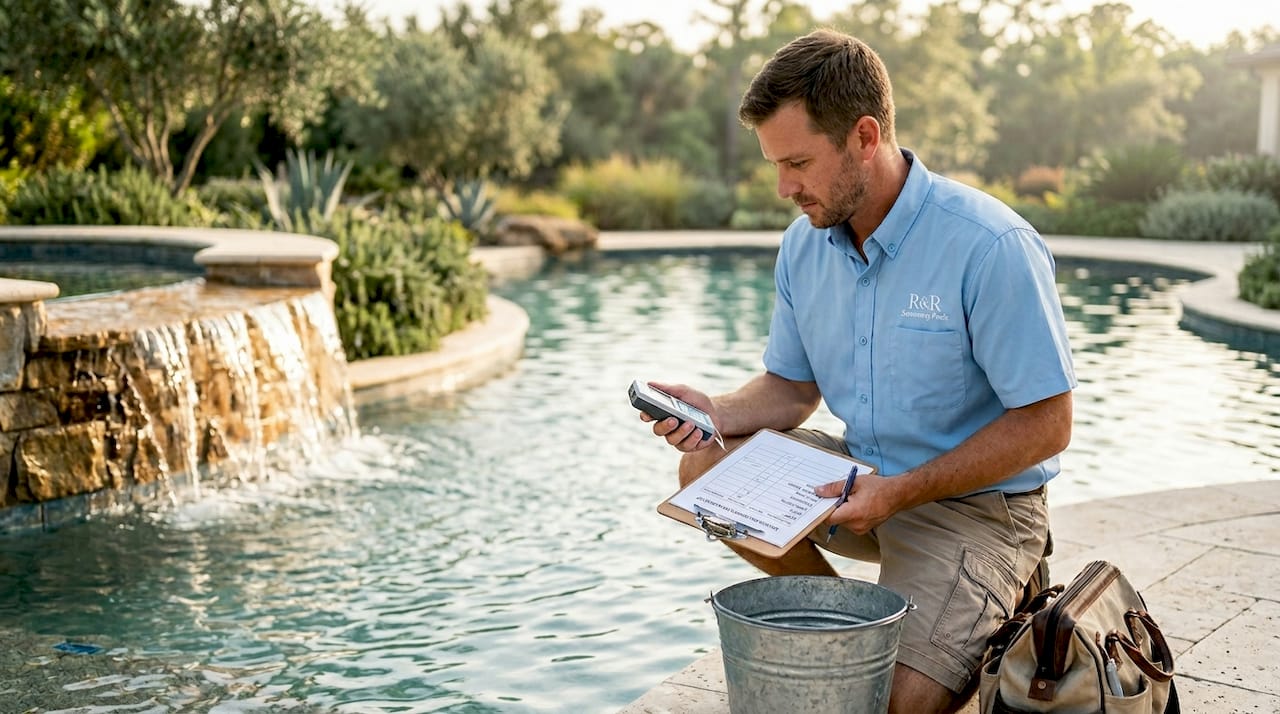
How circulation changes everything
Waterfalls keep water moving. That movement does several things at once:
- Distributes chemicals evenly. Without circulation, chlorine and other chemicals settle unevenly. Waterfalls help spread them across the entire pool. Water circulation and aeration from waterfalls directly improve chemical distribution and reduce stagnation.
- Reduces algae growth. Algae thrives in still, warm water. Moving water disrupts that environment significantly. You will likely spend less time scrubbing walls and treating outbreaks.
- Increases dissolved oxygen. Aerated water is healthier water. Higher oxygen levels support better chemical reactions and a cleaner swimming environment overall.
- Improves surface skimming. Water movement helps push debris toward skimmers rather than letting it settle.
The cooling effect
Water features create cooler microclimates of around 3 to 5 degrees Fahrenheit around the pool area through evaporative cooling. In Central Florida, where summer afternoons can make sitting near a pool feel oppressive, that temperature drop is genuinely useful. Pools with waterfalls and slides or other active water features tend to see more use during peak afternoon heat specifically because the surrounding air is more comfortable.
The evaporation tradeoff
This is the part most articles skip over. Waterfalls increase water loss. The more surface agitation, the more evaporation. This is manageable, but you need to plan for it.
| Strategy | Effectiveness | Cost |
|---|---|---|
| Solar pool cover | Reduces evaporation 70–95% | $50–$300 |
| Windbreak planting | Moderate (blocks airflow) | Varies |
| Timer-controlled pump | Reduces hours of operation | $100–$400 |
| Variable-speed pump | Saves up to 22% on energy combined with LED lighting | $400–$900 |
Pro Tip: Run your waterfall in the early morning or evening rather than during peak afternoon heat. You still get the circulation and sound benefits, and evaporation rates are lower when temperatures are cooler.
Do pool waterfalls improve property value?
The short answer is yes, with important nuance.
A 2025 NAR study finding showed that listings mentioning water features sold approximately 11 days faster and commanded about $17,400 more than comparable homes without them. That is a real number, and it is backed by transaction data, not surveys.
But here is the nuance worth understanding: that premium reflects marketing appeal more than it reflects guaranteed appraised value. A beautifully installed waterfall makes buyers feel something when they walk into the backyard. That emotional response translates into stronger offers, fewer days on market, and less negotiation. A waterfall that looks outdated or poorly maintained can work against you.
Factors that influence how much your waterfall helps on resale:
- Feature type matters. Sheer-descent waterfalls offer the highest resale value at around a 19% premium, but cost more upfront and use more energy. Laminar jets cost less and have a quicker payback period.
- Condition at time of sale. A cracked rock feature with staining reads as a maintenance liability. A well-kept feature signals that the homeowner cares about the property.
- Regional market demand. In warm-climate markets like Central Florida, outdoor living features carry more weight than in seasonal markets. Buyers here are actively looking for pools with waterfalls and slides, spa combinations, and resort-style designs.
You can explore how pool features affect home value in detail, including specific comparisons by feature type and Florida market context.
Installation costs and what to expect
Getting clear on costs before you commit is the smartest thing you can do.
Pool waterfall installation costs range from $239 for plug-and-play fountain attachments to over $6,500 for custom sheer-descent waterfalls. Here is how that breaks down by type:
| Waterfall type | Typical cost | Energy use | Best for |
|---|---|---|---|
| Plug-and-play fountain | $239–$600 | Low | Renters, temporary installs |
| Laminar jet | $500–$1,500 | Low to moderate | Modern aesthetics, efficiency |
| Rock waterfall (prefab) | $1,500–$3,500 | Moderate | Natural, resort-style looks |
| Sheer-descent | $3,500–$6,500+ | Higher | High-end, resale-focused builds |
| Custom rock formation | $5,000–$15,000+ | Varies | Showpiece installations |
Beyond the installation cost, you will pay ongoing expenses for electricity to run the pump and water to replace evaporation loss. A variable-speed pump can significantly offset those operating costs over time.
Key considerations before choosing a style:
- Yard orientation. South-facing pools in Florida get more sun exposure, meaning evaporation from an active waterfall adds up faster. Plan your cover strategy early.
- Wind patterns. Wind exposure dramatically increases pool evaporation rates, and a waterfall in a breezy location compounds that. Natural windbreaks or fencing can help.
- Noise preference. Loud waterfalls in smaller yards can feel overwhelming. Test the sound level of different styles before committing.
- HOA rules. Some communities in Central Florida restrict water feature types or heights. Check before signing a contract.
Pro Tip: Ask your pool contractor to show you video samples of each waterfall style running, not just photos. Sound and movement are impossible to judge from still images.
If you are exploring the full scope of pool renovation options, backyard pool upgrade ideas can help you see how waterfalls fit alongside other enhancements.
My honest take after decades in pool design
I’ve seen hundreds of homeowners add waterfalls to their pools over the years, and the ones who are most satisfied share one thing: they chose their feature for how they actually use their backyard, not for how it looks in a photo.
The most common regret I hear is from homeowners who installed large, dramatic rock waterfalls because they looked stunning at the showroom. Then they discovered the cleaning. Algae grows in every crevice of a natural rock feature. The noise level surprised them. The water bill increased more than expected. None of these are deal breakers, but they matter if no one warned you.
On the other side, I’ve seen laminar jet installations in modest yards that completely changed how families used their outdoor space. The gentle arching streams, lit with color-changing LEDs at night, made a $900,000 designer pool feel unnecessary by comparison. The family was outside every night after dinner. That is the real return on investment.
My actual recommendation: start with your lifestyle. Do you want background ambiance or a visual centerpiece? Do you have twenty minutes a week for extra cleaning, or are you already stretched on pool maintenance? Are you in this house for five more years or thirty? Your answers should drive the feature choice, not the catalog.
Pools fountains and waterfalls both have their place, but the right choice is the one you will still love maintaining in year three.
— Randrswimmingpools
Ready to add a waterfall to your pool?
At R and R Swimming Pools, we’ve been designing custom inground pools with water features across Central Florida since 1985. Whether you’re starting from scratch or adding a waterfall to an existing pool, we help you match the feature to your yard, your lifestyle, and your budget before a single shovel hits the ground.
Our inground pool installation guide walks through every planning step, including how water features are integrated into the design and permitting process. For a more personalized look at options, our custom pool installation guide covers waterfall styles, cost considerations, and what to expect from the build process in Central Florida’s specific climate.
Contact us for a free consultation and let’s talk about what a waterfall can actually do for your backyard.
FAQ
What are the main benefits of pool waterfalls?
Pool waterfalls improve water circulation and chemical distribution, create cooler temperatures around the pool area, produce relaxing ambient sound, and can increase your home’s resale appeal. They also reduce algae growth by keeping water moving.
Do pool waterfalls actually improve property value?
Yes, listings with water features sold about 11 days faster and for roughly $17,400 more according to 2025 data, though the premium reflects buyer appeal more than guaranteed appraised value and varies by market and feature condition.
How much does a pool waterfall cost to install?
Costs range from around $239 for basic fountain attachments to over $6,500 for sheer-descent waterfalls. Custom rock formations can exceed $15,000. Ongoing costs include electricity for the pump and additional water to replace evaporation.
Will a waterfall increase my water bill?
Yes. Waterfalls increase evaporation by agitating the water surface. Using a solar pool cover can reduce that water loss by 70 to 95 percent, making the increase very manageable for most homeowners.
What type of pool waterfall is best for resale value?
Sheer-descent waterfalls offer the strongest resale impact at approximately a 19% premium, but they cost more upfront. Laminar jets offer a lower cost with a faster payback period and suit modern designs well.
