
TL;DR:
- Pool mastic is a flexible sealant placed in the expansion joint between your pool’s coping and deck to prevent water intrusion and structural damage. Regular inspection and replacement every 3 to 10 years are necessary to maintain its protective function and avoid costly repairs. Proper installation, including complete removal of old sealant and use of a backer rod, is essential for longevity and effective sealing.
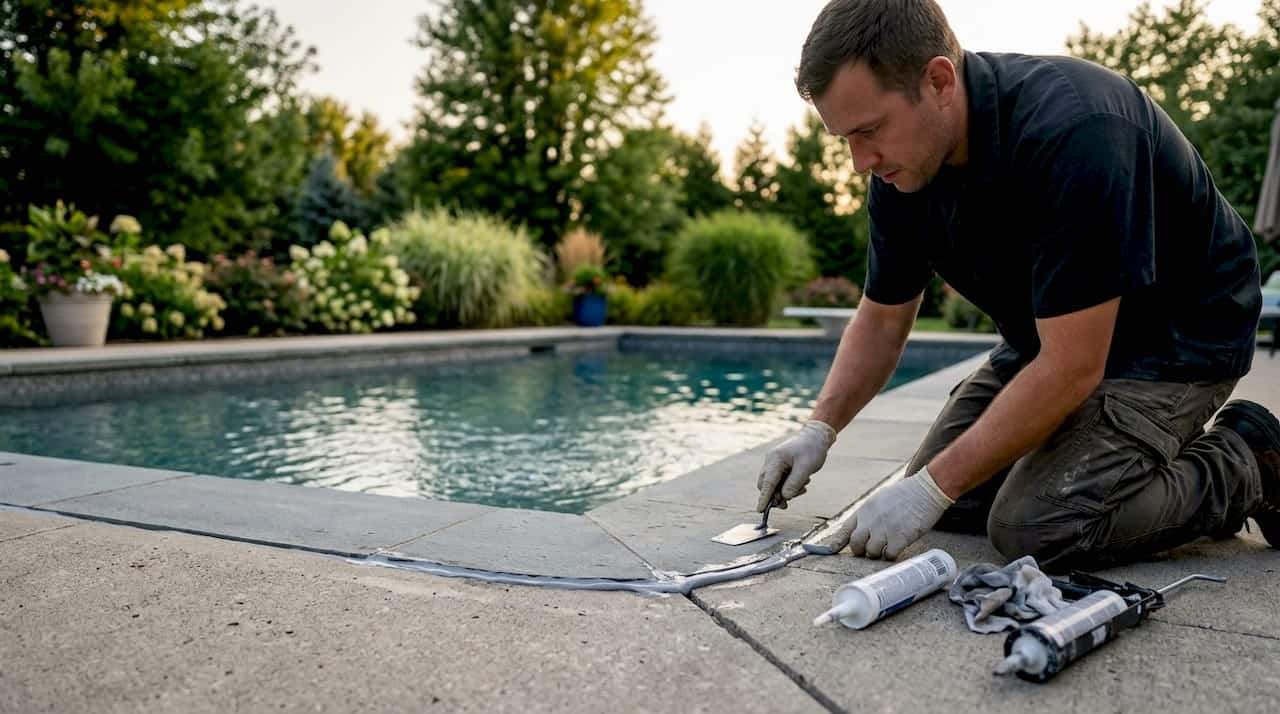
Pool mastic is defined as the flexible, waterproof sealant installed in the expansion joint between your pool’s coping and surrounding deck. It absorbs structural movement, blocks water intrusion, and protects the bond beam from long-term damage. Without it, water works its way behind your pool walls with every rain and temperature shift. Randrswimmingpools has seen firsthand how this one small strip of material makes the difference between a pool that holds up for decades and one that develops expensive structural problems within a few years. Understanding what pool mastic does, which type to use, and when to replace it is one of the most practical things you can do as a pool owner.
What is pool mastic and why does your pool need it?
Pool mastic is the industry term for a flexible expansion joint sealant placed between pool coping stones and the concrete deck. The technical name you will hear from contractors is “expansion joint sealant,” but pool mastic is the widely accepted term among homeowners and pool professionals alike. Its job is to fill the deliberate gap left between the coping and deck so the two surfaces can shift independently without cracking each other.
Concrete expands and contracts with temperature changes. In Florida’s climate, that movement happens constantly. Without a flexible filler in that joint, the coping and deck grind against each other, causing cracks, tile loosening, and water infiltration. Pool mastic absorbs that movement while keeping water out.
Neglected expansion joints allow water and root intrusion, causing bond beam deterioration, tile loosening, and soil entry behind the pool wall. That kind of damage is far more expensive to fix than a simple reseal. Routine inspection and timely replacement every few years is the most cost-effective pool maintenance habit you can build.
What are the common types of pool mastic and their features?
Two materials dominate the pool mastic market: polysulfide and polyurethane. Each has a specific set of strengths, and choosing the wrong one for your environment shortens its lifespan considerably.
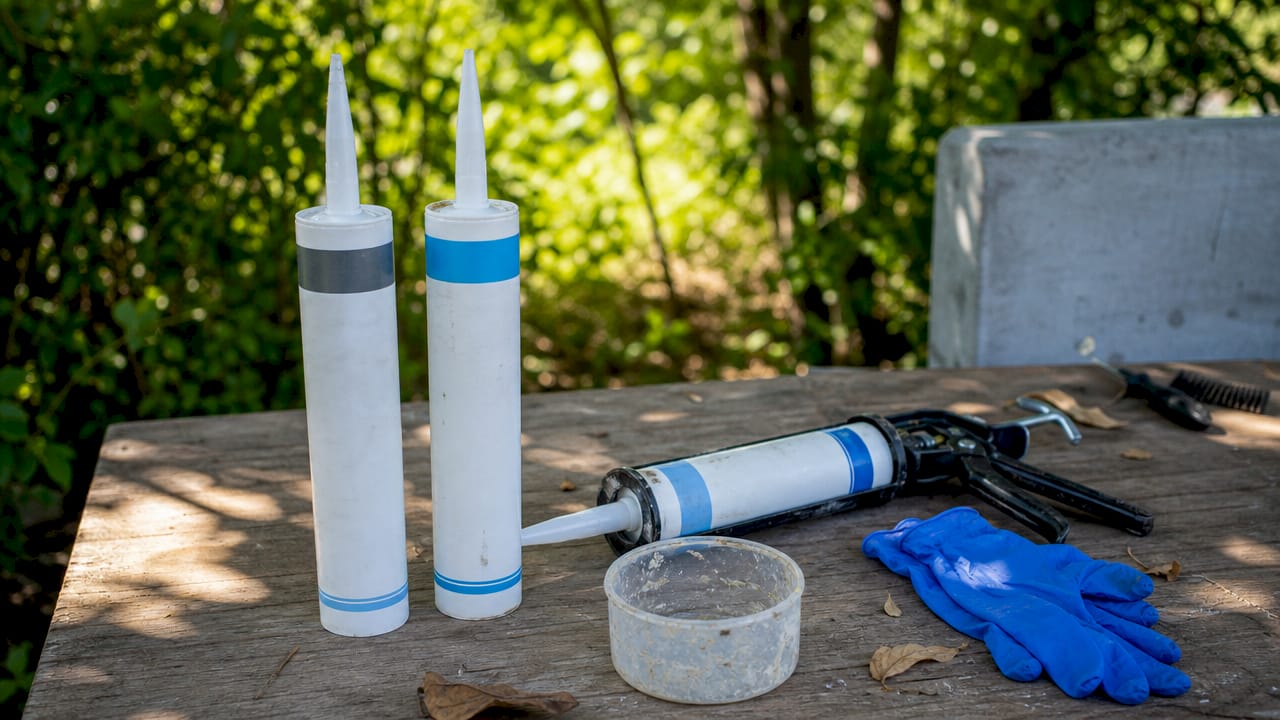
Polysulfide mastic is a two-part compound that cures to a rubber-like consistency. It bonds well to concrete and coping stone and handles constant water exposure without breaking down. Polysulfide mastic typically lasts 5–10 years, depending on UV exposure and climate conditions. It is a reliable choice for pools with heavy shade or moderate sun exposure.
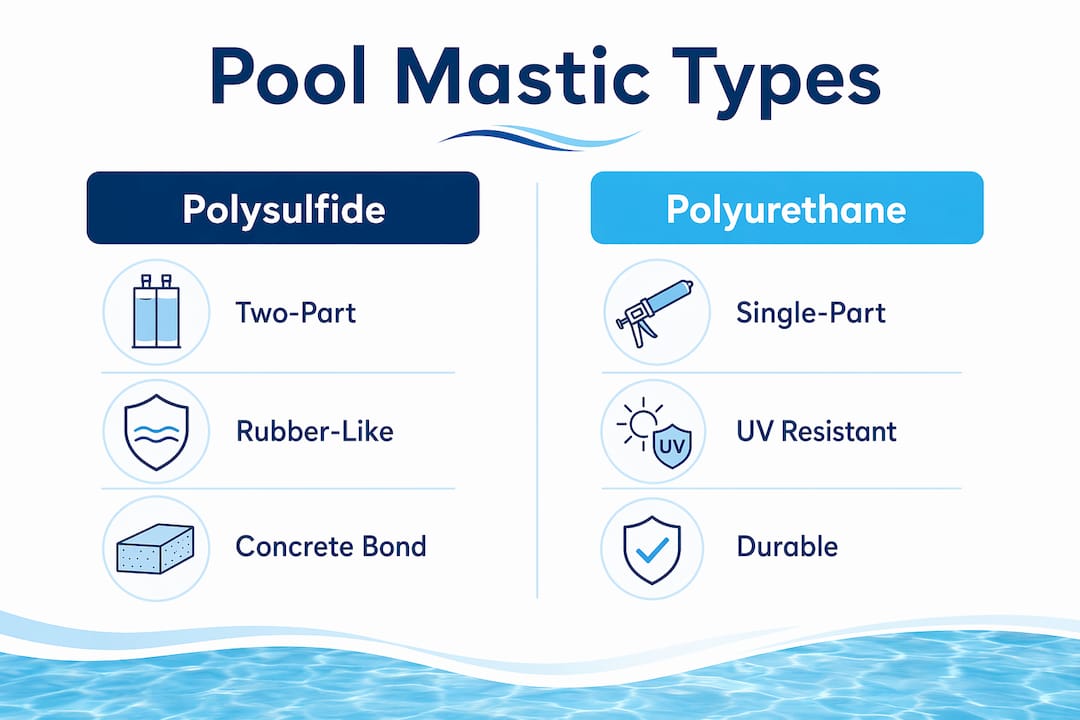
Polyurethane sealant is a single-component product that outperforms polysulfide in direct sunlight. It resists UV degradation better and polyurethane sealants last 7–12 years under similar conditions. For Central Florida pools that bake in the sun year-round, polyurethane is the stronger long-term choice.
| Type | Durability | Best Use | UV Resistance |
|---|---|---|---|
| Polysulfide | 5–10 years | Shaded or moderate sun pools | Moderate |
| Polyurethane | 7–12 years | Full sun, Florida climates | High |
| Generic caulk | Under 1 year | Not recommended for pools | Very low |
Backer rod is a closed-cell foam cylinder installed in the joint before the sealant is poured. It serves two purposes: it gives the mastic something to rest on so you do not overfill the joint, and it acts as a bond breaker so the sealant only adheres to the two vertical sides of the joint. The backer rod must be sized about 25% larger than the expansion joint width to compress snugly and hold its position during pouring.
- Use closed-cell foam backer rod, not open-cell, which absorbs water
- Match backer rod diameter to joint width plus 25% for a secure fit
- Never skip the backer rod, even on narrow joints
Pro Tip: Never substitute generic hardware-store caulk for pool mastic. Pool mastic is engineered polyurethane sealant designed to handle constant submersion, UV exposure, and mechanical stress. Standard caulk fails within months in a pool environment.
How does pool mastic installation work, and what are best practices?
Proper installation is the single biggest factor in how long your pool mastic lasts. A rushed or poorly prepped job will fail within a season, regardless of how good the sealant is.
- Remove all old mastic completely. Use a utility knife, oscillating tool, or grinder to cut out every trace of the old sealant. Leftover residue severely compromises new seal adhesion and leads to early failure. This step takes the most time and effort, but skipping it guarantees problems.
- Clean the joint surfaces. After mechanical removal, vacuum out debris and wipe both sides of the joint with a clean cloth. Any dust, dirt, or moisture left behind will prevent the new sealant from bonding properly.
- Insert the backer rod. Press the foam rod into the joint so it sits at the correct depth. The sealant depth should equal roughly half the joint width. Sealant thickness at about 50% of joint width ensures proper flexibility without wasting material.
- Mask the edges. Apply painter’s tape along both sides of the joint before pouring. This protects the coping and deck surface and gives you a clean, straight edge when you peel it off.
- Pour and tool the sealant. Fill the joint over the backer rod and use a rounded tool or gloved finger to press the sealant into a slight concave shape. This shape sheds water rather than collecting it.
- Apply color-matched sand (optional but recommended). While the sealant is still wet, broadcast fine sand that matches your deck color over the joint. Using painter’s tape and color-matched sand is the gold standard for a professional-looking finish.
- Allow full cure time. Keep the joint dry for 24 to 48 hours after installation to achieve optimal performance. Do not run sprinklers, allow rain exposure, or refill the pool during this window.
Pro Tip: Avoid three-point adhesion by always using a backer rod. When sealant bonds to the bottom of the joint as well as both sides, it cannot flex properly and will tear under normal deck movement.
What signs indicate pool mastic needs replacement and how often?
Pool mastic has a finite lifespan. The exact timeline depends on your climate, sun exposure, and how well the original installation was done. Most homeowners should plan for inspection every year and replacement every 3–10 years.
The most reliable way to check your mastic is to walk the perimeter of your pool and look closely at the expansion joint. Run your finger along the sealant as you go. You are looking for these warning signs:
- Cracking or splitting along the length of the joint
- Peeling or pulling away from the coping or deck on either side
- Hardness or brittleness when you press the sealant with your finger
- Missing sections where the mastic has fallen out entirely
- Weeds or grass growing up through the joint, which means the seal has been open long enough for soil to accumulate
- Discoloration or mold on the sealant surface, indicating water is sitting in gaps
Any one of these signs means replacement is overdue. Two or more signs together mean water has likely already entered the joint and you should inspect the bond beam and coping for early damage.
The consequences of ignoring these signs go beyond cosmetic issues. Water seeping behind the pool wall causes bond beam deterioration, loosens coping stones, and can introduce soil and roots that accelerate cracking. Catching the problem at the mastic stage costs a fraction of what structural repairs run. A solid pool maintenance workflow that includes annual mastic inspection is the simplest way to stay ahead of this.
DIY versus professional pool mastic replacement: what to know
DIY pool mastic replacement is achievable for a motivated homeowner, but it comes with real challenges. The finished result often looks less polished than a professional job, and the prep work is harder than most people expect.
The tear-out phase is where most DIY attempts fall short. Mechanical removal of old sealant requires an oscillating multi-tool or angle grinder, not just a utility knife. Inadequate prep guarantees premature failure of the new mastic, no matter how good the product is.
What you need for a DIY replacement:
- Oscillating multi-tool or grinder with a scraper blade
- Shop vacuum and clean rags
- Closed-cell foam backer rod (sized to your joint width plus 25%)
- Polyurethane pool sealant (not generic caulk)
- Painter’s tape
- Color-matched sand (optional)
- Gloves and eye protection
Hiring a professional makes sense when the joint runs a long perimeter, when the coping shows signs of movement or damage, or when you want a finish that blends seamlessly with the deck. Professionals bring the right tools, know how to handle irregular joint widths, and can spot related damage you might miss. The role of pool maintenance in protecting home value is well documented, and a properly sealed expansion joint is part of that picture.
Pro Tip: Always choose a quality polyurethane sealant labeled specifically for pool or concrete expansion joints. Generic caulk from a hardware store is not rated for submersion or UV exposure and will fail within one season.
Key takeaways
Pool mastic is the single most overlooked line of defense against structural water damage in a swimming pool, and replacing it on schedule costs far less than repairing what happens when you don’t.
| Point | Details |
|---|---|
| Pool mastic definition | A flexible polyurethane or polysulfide sealant filling the expansion joint between pool coping and deck. |
| Replacement schedule | Inspect annually and plan for replacement every 3–10 years depending on sun exposure and climate. |
| Backer rod is non-negotiable | Size it 25% wider than the joint and use closed-cell foam to prevent three-point adhesion. |
| Prep determines longevity | Complete mechanical removal of old sealant is the most critical step in any replacement job. |
| Material choice matters | Use polyurethane sealant for full-sun Florida pools; never substitute generic hardware caulk. |
What I’ve learned from watching homeowners skip this one step
Pool mastic is the part of pool care that gets ignored until something expensive breaks. I have seen it happen more times than I can count. A homeowner notices a crack in the coping, calls for a repair, and the root cause turns out to be a failed expansion joint that had been open for two or three seasons. The mastic was gone, water got in, and the bond beam paid the price.
The mistake I see most often is using the wrong material. Hardware-store caulk looks similar to pool mastic in the tube, but it is not rated for submersion or constant UV exposure. It breaks down within months, and because it looks intact on the surface, homeowners assume the joint is still sealed. It is not.
The second most common mistake is skipping the backer rod. Without it, the sealant fills the full depth of the joint and bonds to three surfaces instead of two. That kills its flexibility. The next time the deck shifts, the sealant tears instead of stretching.
My honest advice: walk your pool perimeter once a year, press your finger into the mastic, and look for the warning signs listed above. Catching a failing seal early is a 30-minute fix. Catching it after the bond beam has started to deteriorate is a multi-thousand-dollar project. The pool maintenance tools and inspection habits that protect your pool long-term are simpler than most people think. You just have to actually do them.
— Results
Professional pool guidance from Randrswimmingpools
R and R Swimming Pools has been building and maintaining custom inground pools across Central Florida since 1985. That experience covers every aspect of pool construction, from the first pour of concrete to the final seal of the expansion joint.

If you are planning a new pool or renovating an existing one, the inground pool installation guide from Randrswimmingpools walks you through every structural detail, including how expansion joints are built and sealed for Florida’s climate. For homeowners considering a full renovation, the pool remodeling process guide covers what to expect when updating aging pool surfaces and seals. Randrswimmingpools is available for free consultations and quotes across Central Florida.
FAQ
What is pool mastic made of?
Pool mastic is made from either polysulfide or polyurethane compounds engineered for constant water exposure, UV resistance, and structural flexibility. Generic caulk is not a substitute and fails quickly in pool environments.
How often should pool mastic be replaced?
Most pool mastic lasts 3–10 years depending on climate, sun exposure, and installation quality. Annual inspection helps you catch failure early before water damage begins.
Can I install pool mastic myself?
Yes, but complete removal of old sealant using mechanical tools is required for the new seal to hold. Skipping that prep step is the most common reason DIY mastic jobs fail prematurely.
What happens if pool mastic is not replaced?
Water seeps behind the pool wall and causes bond beam deterioration, loose coping stones, and tile damage. Roots and soil can also enter the joint, accelerating structural cracking.
What is the difference between pool mastic and regular caulk?
Pool mastic is a purpose-built expansion joint sealant rated for submersion, UV exposure, and mechanical movement. Regular caulk lacks those properties and typically fails within one season in a pool environment.
