
TL;DR:
- A pebble pool finish is a durable surface created by embedding natural river pebbles into cement. It lasts 15 to 25 years and offers aesthetic appeal and slip resistance that smooth plaster cannot match. Proper water chemistry and maintenance are essential to maximize its lifespan and value.
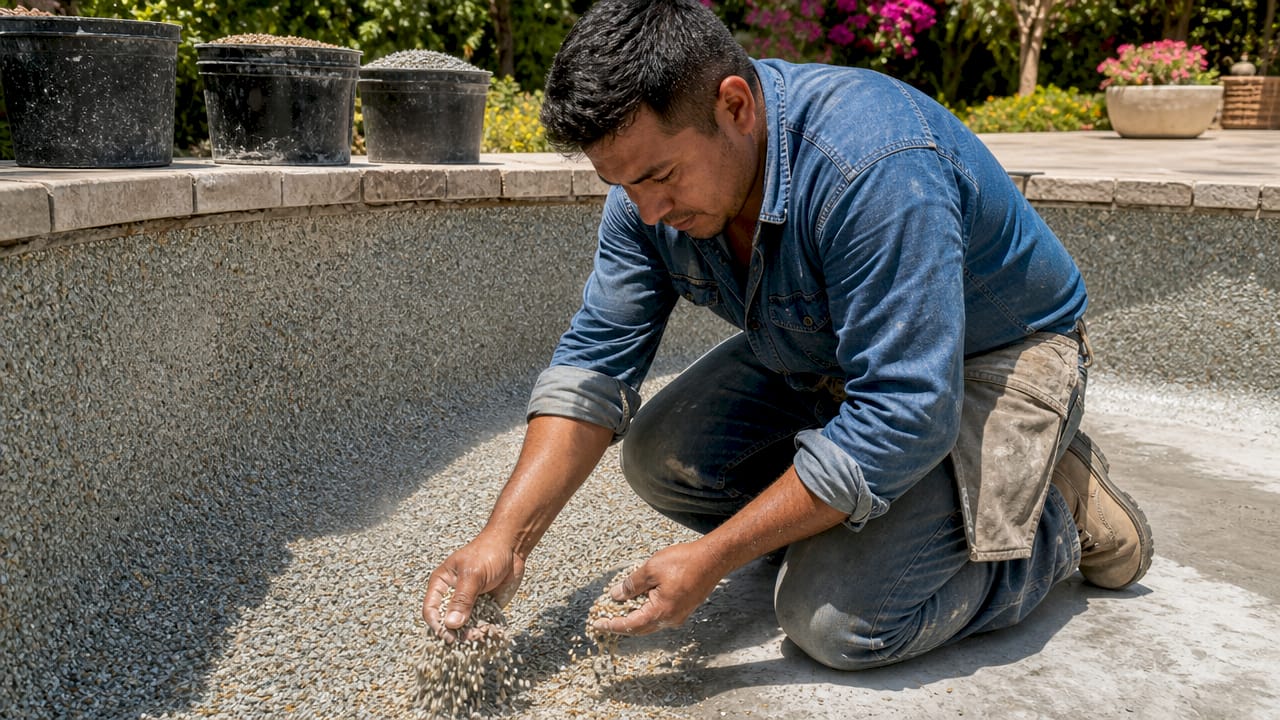
A pebble pool finish is a pool surface created by embedding natural river pebbles into a cementitious base, then washing the surface to expose the stones and create a textured, durable interior. This finish, often called an exposed aggregate finish in the industry, lasts 15–25 years compared to 5–10 years for standard plaster. The result is a surface that looks like a natural riverbed, resists staining and UV discoloration, and holds up far longer than most traditional pool finishes. For homeowners weighing their options, the pebble finish delivers a combination of beauty, safety, and long-term value that smooth plaster simply cannot match.
What is a pebble pool finish made of?
A pebble pool finish is built from natural pebbles embedded in cement, creating a surface that balances cost, longevity, and aesthetics better than most other pool interior options. The pebbles are typically small river stones, ranging from fine polished aggregates to larger natural stones, mixed into a marble or cementitious base coat. The quality of that cement matrix determines how well the surface holds up over time.
Installation follows a defined sequence:
- Pool shell preparation. The existing surface is cleaned, repaired, and roughened to accept the new finish.
- Bond coat application. A cementitious base is applied to the shell to anchor the aggregate layer.
- Aggregate application. The pebble and cement mixture is hand-troweled onto the bond coat in an even layer.
- Surface washing. Within hours of application, workers wash and brush the surface to expose the tops of the pebbles and reveal the texture.
- Curing period. The pool is filled and the surface cures over several weeks, hardening the cement matrix around each stone.
Water chemistry during the curing period matters as much as the installation itself. The cement base is vulnerable to acidic or calcium-starved water, so maintaining proper mineral balance from day one protects the finish long term.
Pro Tip: Ask your installer for the specific aggregate size options before signing a contract. Smaller, polished aggregates create a near-smooth surface ideal for families with young children, while larger natural pebbles offer more grip but a rougher feel underfoot.
What are the aesthetic and safety benefits of pebble pool finishes?
The visual appeal of a pebble pool finish comes from the natural variation in stone color and texture. Colors range from cool blues and grays to warm beiges, tans, and near-black tones. No two pools look exactly alike because the stones themselves carry natural variation. That organic quality gives pools a resort-style appearance that painted or plastered surfaces cannot replicate.
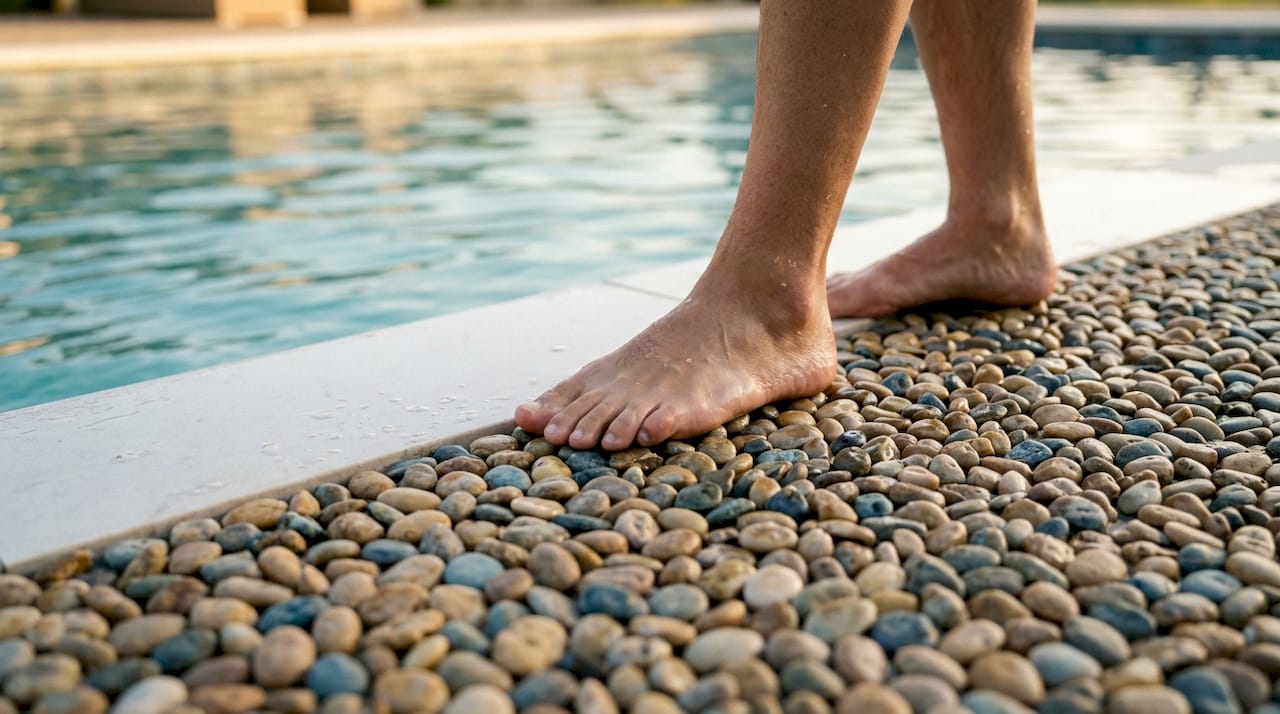
The safety benefits are just as real as the visual ones. Pebble finishes provide superior slip resistance because the natural stone texture creates micro-surfaces that increase traction compared to smooth plaster. This is especially valuable on pool steps, benches, and entry points where wet feet are most likely to slip. Industry experts consistently point to this non-slip quality as one of the strongest functional arguments for choosing a pebble surface.
Key aesthetic and safety advantages include:
- Color variety. Aggregate blends produce water colors from deep sapphire to warm lagoon green, depending on stone selection.
- Natural texture. The surface mimics a riverbed, giving pools a tactile quality that smooth finishes cannot offer.
- Stain masking. The varied color and texture of pebble surfaces hide minor stains and surface imperfections that would stand out on white plaster.
- Slip resistance. The textured micro-surfaces reduce fall risk on wet pool surfaces, particularly at entry points.
- Comfort options. Polished fine-aggregate finishes maintain durability while offering a smoother surface for swimmers sensitive to rough textures.
The texture variation is worth thinking through carefully. Larger natural pebbles deliver the most grip but can feel rough on bare feet after extended swimming. Polished or smaller aggregate options solve that problem while keeping the same long-term durability. Professional installers recommend selecting aggregate size based on how the pool will actually be used, balancing grip needs with comfort.
How does pebble finish durability compare to traditional plaster?
Pebble finishes outlast plaster by a significant margin. Plaster surfaces typically last 5–7 years before resurfacing is needed, while a well-maintained pebble finish holds up for 15–25 years. That difference compounds over time into a major cost and convenience advantage.
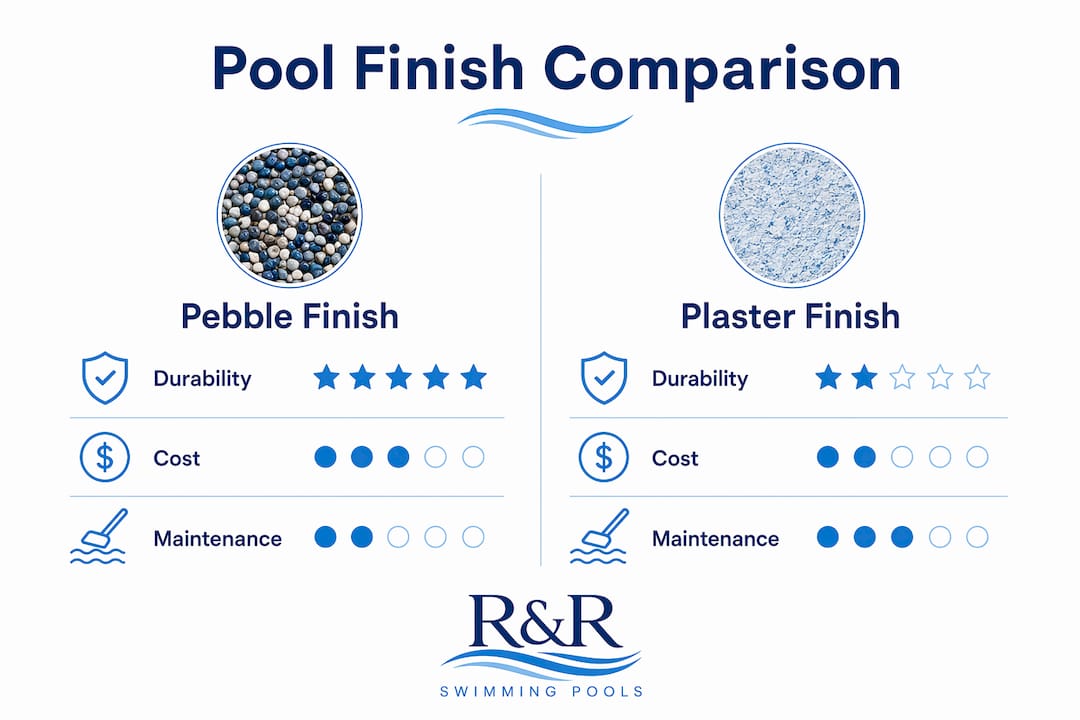
The durability gap comes from material properties. Pebble finishes resist acid etching, UV discoloration, and saltwater corrosion far better than plaster because the natural stone aggregates are chemically inert. The cement matrix around the stones is the vulnerable component. Calcium hardness below 250 ppm causes that cement to dissolve slowly, which loosens pebbles even though the stones themselves are unaffected. This means water chemistry management is the single most important factor in how long a pebble finish lasts.
Over a 25-year period, the math strongly favors pebble finishes. Plaster may require three resurfacings costing $18,000–$25,500, while a single pebble finish installation costs $11,000–$14,500. That is a meaningful difference in total ownership cost, and it does not account for the disruption of draining and resurfacing a pool every five to seven years.
Pro Tip: Test your pool water weekly during the first year after installation. Keep calcium hardness above 250 ppm and pH above 7.2 at all times. These two numbers protect the cement matrix more than any other maintenance step.
You can learn more about how pool resurfacing works and why the choice of finish affects the frequency and cost of future renovations.
What does a pebble pool finish cost?
Pebble finishes cost 20%–40% more upfront than plaster, with a typical installed price of $10,000–$14,000 for a standard 20,000-gallon pool. That premium reflects the cost of the aggregate materials, the skilled labor required for hand application, and the longer installation timeline compared to spray-applied plaster.
Several factors drive the final price up or down:
- Aggregate type. Polished or specialty stone blends cost more than standard river pebble mixes.
- Pool size and shape. Larger pools and complex shapes with steps, benches, and curves require more material and labor.
- Finish texture. Fine polished aggregate finishes often carry a higher price than standard exposed aggregate options.
- Installer experience. Certified applicators with a track record of proper curing and startup procedures command higher rates, and they are worth it.
- Regional labor rates. Installation costs vary by market, with Central Florida pricing reflecting local labor and material availability.
Comparing pebble finishes to quartz or glass aggregate alternatives is useful context. Quartz aggregate finishes sit in a similar price range to pebble and offer a slightly smoother surface. Glass aggregate finishes cost more and deliver a distinctive sparkle effect. For most homeowners, the pebble finish hits the best balance of cost, durability, and natural appearance.
The long-term math is clear. Paying 20%–40% more upfront for a surface that lasts two to three times longer than plaster is not a luxury decision. It is a practical one. Reviewing pool finishes for value and style in your region helps put those numbers in local context.
How to maintain a pebble pool finish for maximum lifespan
The startup period after installation is the most critical window for a pebble finish. Daily brushing with soft nylon brushes for 2–4 weeks is required to promote even curing and prevent surface damage. Skipping this step or using the wrong brush causes uneven curing that permanently affects surface aesthetics and pebble retention.
Follow this maintenance sequence after installation:
- Brush daily for 2–4 weeks. Use only soft nylon brushes. Stiff or wire brushes scratch the cement matrix and can loosen pebbles permanently.
- Test water chemistry three times per week. Focus on calcium hardness (keep above 250 ppm) and pH (keep above 7.2) during the startup period.
- Run the pump continuously for the first 72 hours. Constant circulation helps distribute chemicals evenly and supports uniform curing.
- Transition to weekly testing after the first month. Maintain balanced water chemistry year-round to protect the cement base.
- Inspect the surface annually. Look for pebble loss, calcium scale buildup, or rough patches that signal the cement matrix is degrading.
Ongoing care is straightforward once the startup period ends. Avoid acid washing unless a professional recommends it, as repeated acid treatments erode the cement matrix faster than normal wear. When calcium scale builds up on the surface, use a calcium-specific pool cleaner rather than aggressive scrubbing. If you notice pebbles loosening in a localized area, that is a sign of water chemistry imbalance rather than a finish defect.
Pro Tip: Keep a simple pool log. Record your weekly water test results with dates. If pebble loss or scaling appears, the log lets a professional trace the problem back to a chemistry event rather than guessing.
Understanding pool plaster and its lifespan gives useful contrast when evaluating how much more forgiving a well-maintained pebble surface is over time.
Key Takeaways
A pebble pool finish lasts 15–25 years, costs 20%–40% more than plaster upfront, and delivers lower total ownership cost over time when water chemistry is properly maintained.
| Point | Details |
|---|---|
| Lifespan advantage | Pebble finishes last 15–25 years versus 5–10 years for standard plaster surfaces. |
| Long-term cost savings | Over 25 years, pebble finishes cost significantly less than multiple plaster resurfacings. |
| Water chemistry is critical | Calcium hardness below 250 ppm dissolves the cement matrix and causes pebble loss. |
| Startup brushing matters | Daily soft-brush brushing for 2–4 weeks after installation protects long-term surface quality. |
| Texture options exist | Polished fine-aggregate finishes offer near-smooth comfort while keeping full durability benefits. |
Why pebble finishes are worth the upfront cost
After working with homeowners on pool finishes for years, the pattern I see most often is this: homeowners focus on the upfront price difference and underestimate the disruption of resurfacing a pool every five to seven years. Draining a pool, living without it for weeks, and paying for labor twice or three times over a decade is a real cost that rarely shows up in the initial comparison.
The texture concern is the other common hesitation. Homeowners worry the surface will feel rough on bare feet. That concern is legitimate for older-style large-pebble finishes, but the industry has moved. Polished and fine-aggregate options now deliver a surface that feels close to smooth plaster while keeping the same durability and natural appearance. The technology has genuinely improved.
The maintenance misconception I hear most is that pebble finishes are low-maintenance because they are durable. They are not low-maintenance. They require disciplined water chemistry. The stones themselves are nearly indestructible, but the cement holding them is not. Homeowners who skip weekly water testing are the ones who end up with pebble loss at year eight instead of year twenty.
My honest view: for most homeowners building or renovating a pool they plan to keep for more than a decade, a pebble finish is the right call. The aesthetic is better, the lifespan is longer, and the total cost over time is lower. The upfront premium is real, but it pays for itself.
— Results
Randrswimmingpools can help you choose the right finish
Choosing a pool finish is one of the most permanent decisions in the pool building process. The surface you select affects how your pool looks, how it feels underfoot, and how much you spend on maintenance and resurfacing over the next two decades.
R and R Swimming Pools has been building and finishing custom inground pools across Central Florida since 1985. The team helps homeowners select the right aggregate size, color blend, and finish texture for their specific pool design and usage needs. Every installation follows proper curing and startup protocols to protect the finish from day one. If you are planning a new pool or considering a renovation, the inground pool installation guide is a strong starting point for understanding your full range of options.
FAQ
What is a pebble pool finish?
A pebble pool finish is a pool interior surface made by embedding natural river pebbles into a cementitious base and washing the surface to expose the stones. The result is a textured, durable finish that lasts 15–25 years with proper maintenance.
How long does a pebble finish last compared to plaster?
Pebble finishes last 15–25 years, while standard plaster surfaces typically need resurfacing every 5–7 years. Proper water chemistry is the primary factor that determines where in that range a finish lands.
What does a pebble pool finish cost?
A pebble pool finish typically costs $10,000–$14,000 installed for a standard 20,000-gallon pool, which is 20%–40% more than plaster. Over 25 years, the longer lifespan makes it less expensive than multiple plaster resurfacings.
How do you maintain a pebble pool finish?
Brush the surface daily with soft nylon brushes for 2–4 weeks after installation, then maintain calcium hardness above 250 ppm and pH above 7.2 year-round. Avoid stiff brushes and acid washing, which damage the cement matrix holding the pebbles in place.
Is a pebble pool finish rough on bare feet?
Standard large-pebble finishes have a noticeable texture that some swimmers find rough. Polished or fine-aggregate finishes offer a much smoother surface while maintaining the same durability, making them a practical choice for families who prioritize comfort.
