
TL;DR:
- Pool shell thickness measures the depth of the structural material that contains water and resists external forces, affecting durability and longevity. Fiberglass shells typically range from 3/8 to 1/2 inch, with reinforced zones reaching up to 3/4 inch, while concrete shells vary from 6 to 12 inches depending on reinforcement and strength targets. Verifying laminate schedules, rebar placement, and third-party certifications is essential for assessing actual quality beyond just thickness numbers.
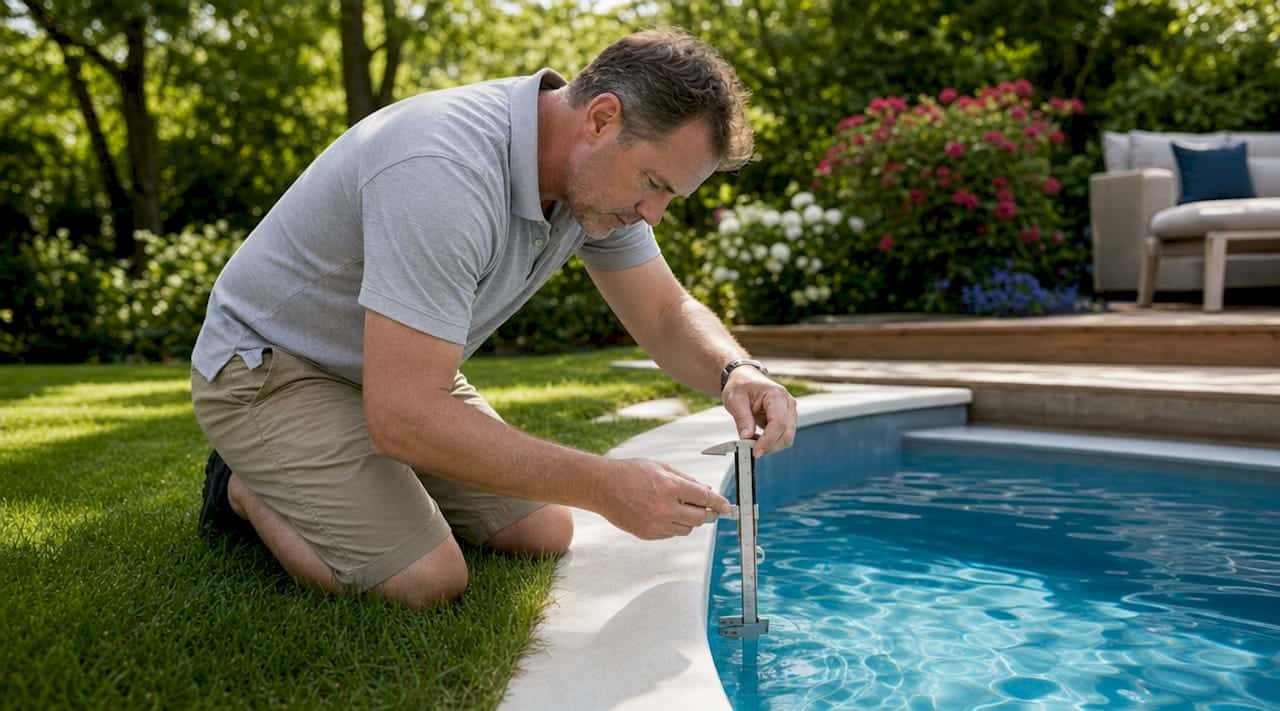
Pool shell thickness is the measured depth of the structural material forming the water-holding basin of a swimming pool, and it directly determines how well your pool resists soil pressure, water load, and decades of use. For fiberglass pools, that thickness typically runs from 3/8 inch to 1/2 inch. For concrete pools built with gunite or shotcrete, the shell reaches 6 to 12 inches. Understanding these numbers before you sign a contract separates a smart investment from an expensive regret. This guide covers what those measurements mean, why they differ by material, and what you should actually ask your builder before construction begins.
What is pool shell thickness and why does it matter?
Pool shell thickness refers to the depth of the structural wall and floor material that contains the water and withstands external forces like soil movement, hydrostatic pressure, and freeze-thaw cycles. The industry term you will hear from engineers and builders is shell wall thickness or laminate thickness for fiberglass, and shell thickness or concrete section depth for gunite and shotcrete pools. Both terms describe the same core concept: how much material stands between your water and the ground.
Thickness matters because thinner shells flex more under load, crack sooner under stress, and wear out faster under chemical exposure. A pool shell that meets minimum standards will last decades. One that cuts corners on depth or material quality can fail within years, leading to leaks, structural cracking, and costly repairs. The ICC-ES Evaluation Report ESR-4349 sets a minimum cured floor thickness of 0.27 inch (7.0 mm) for manufactured pool and spa systems. That figure represents the absolute floor, not the target.
Pool shell thickness also varies by location within the pool itself. Walls, floors, steps, and structural beams each carry different loads, so responsible manufacturers and builders apply different thickness standards to each zone. A pool that advertises a single thickness number without specifying where that measurement applies is giving you incomplete information.
What are typical pool shell thicknesses for fiberglass pools?
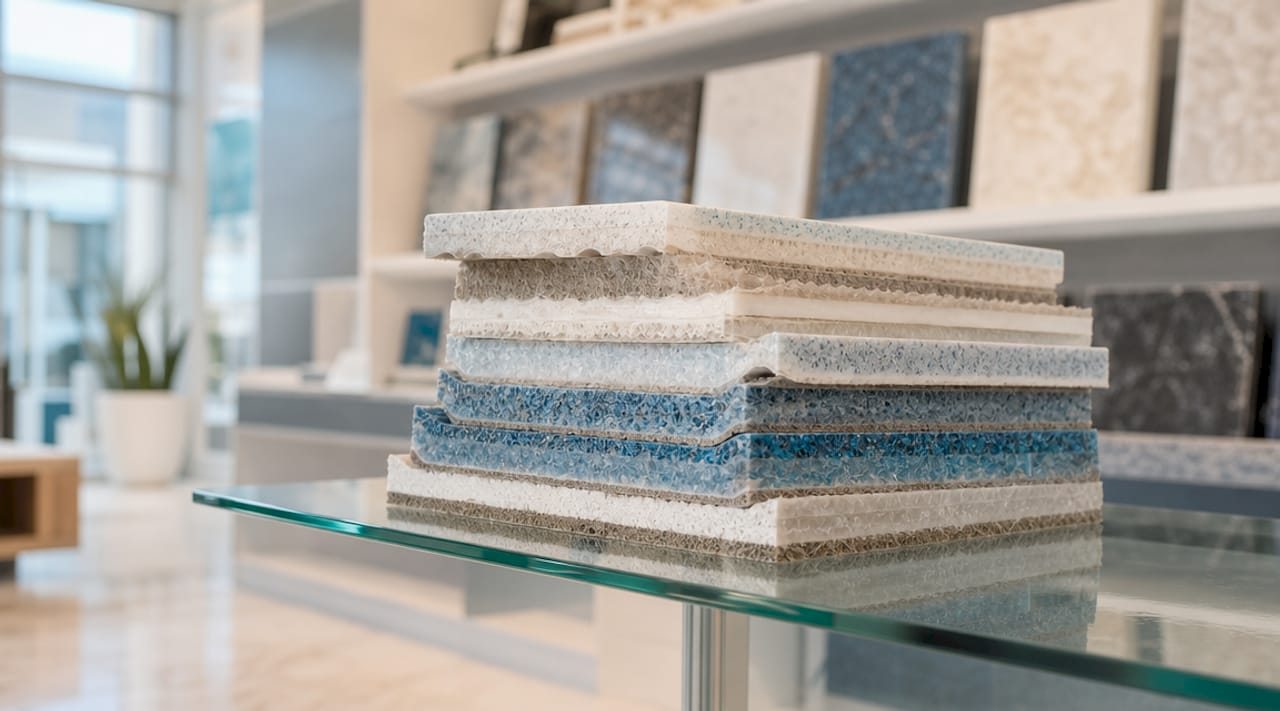
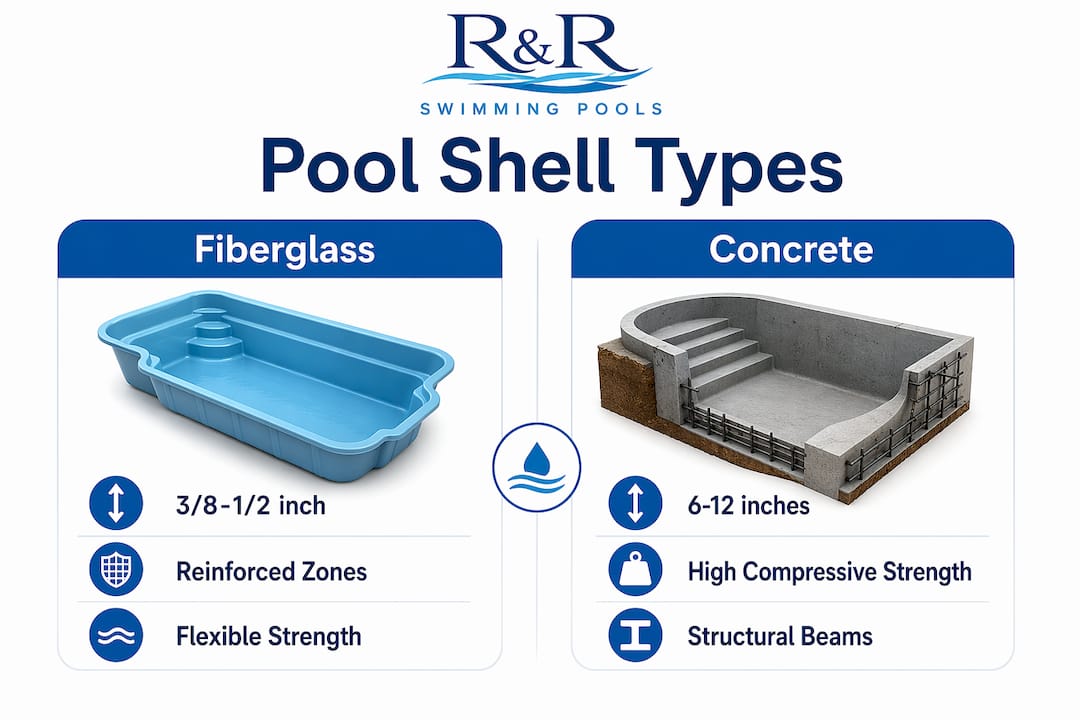
Fiberglass pool shells are laminated composites, not solid slabs. The shell thickness ranges from 3/8 inch (10 mm) to 1/2 inch (12 mm) across standard wall and floor sections, with reinforced zones at steps, beams, and structural corners reaching up to 3/4 inch (18 mm). That difference matters because steps and beams absorb the most mechanical stress during installation and daily use.
The layers that make up a fiberglass shell each serve a specific purpose:
- Gel coat: The innermost surface layer, typically 20 to 30 mils thick, acts as a waterproof barrier and gives the pool its color and finish.
- Fiberglass mat layers: Woven or chopped strand fiberglass saturated in resin forms the structural core of the shell.
- Resin matrix: Polyester or vinyl ester resin binds the fiberglass layers and determines chemical resistance and flexibility.
- Structural reinforcement layers: Additional fiberglass and resin build-up at high-stress zones like steps, floor beams, and wall transitions.
The laminate architecture of gel coat, resin, and fiberglass layers creates a balance of flexibility and strength that raw thickness numbers alone do not capture. A shell with five well-engineered laminate layers at 3/8 inch can outperform a poorly built shell at 1/2 inch. This is why buyers should request the full laminate specification from manufacturers, not just a single thickness figure.
Pro Tip: Ask your fiberglass pool manufacturer for the complete laminate schedule, including the number of layers, resin type, and gel coat thickness. A reputable manufacturer like Latham Pool Products or San Juan Pools will provide this documentation without hesitation.
Fiberglass pool durability is heavily dependent on reinforced zones. Steps and beams receive thicker laminates specifically to resist the stresses of repeated foot traffic and soil movement. If a manufacturer cannot tell you how thick those reinforced zones are, treat that as a red flag.
What are typical pool shell thicknesses for concrete pools?
Concrete pools built with gunite or shotcrete operate on an entirely different structural logic than fiberglass. Concrete shell thickness typically falls between 6 and 12 inches, with compressive strength targets ranging from 4,000 to 6,000 psi. The thickness and the strength work together. Neither alone is sufficient.
Here is how the key structural elements of a concrete pool shell work together:
- Rebar grid: Steel reinforcing bars are placed in a grid pattern before concrete is applied. Proper spacing, typically 12 inches on center, distributes load across the entire shell.
- Concrete cover: The concrete must fully envelop the rebar with adequate cover depth to prevent corrosion. Minimum concrete cover on rebar and proper lap splices are critical to long-term structural integrity.
- Mix design: The water-to-cement ratio and aggregate size determine compressive strength. A mix that achieves 4,000 psi at 28 days curing is the accepted minimum for residential pools.
- Application method: Gunite uses a dry mix that combines with water at the nozzle. Shotcrete uses a pre-mixed wet material pumped through a hose. Gunite and shotcrete produce similar structural strengths when properly applied, though shotcrete achieves higher compressive strength with less material waste.
- Curing time: Strength and density at 28 days curing correlate more strongly to durability than thickness alone. Rushing the curing process undermines every other quality measure.
Pro Tip: When reviewing a concrete pool proposal, ask the builder for the specified compressive strength at 28 days, the rebar size and spacing, and the minimum concrete cover over the steel. These three numbers tell you far more about pool quality than the shell thickness alone.
Soil conditions in Central Florida add another layer of complexity. Expansive soils, high water tables, and sandy substrates all create lateral pressure on pool walls. A builder who does not account for local soil conditions when specifying shell thickness and rebar layout is designing for a different environment than yours.
How does pool shell thickness compare across pool types?
Pool shell thickness is not a directly comparable metric between fiberglass and concrete because the materials achieve structural performance through completely different mechanisms. Comparing 1/2 inch of fiberglass laminate to 8 inches of reinforced concrete is like comparing the hull of a fiberglass boat to a concrete retaining wall. Both hold water. Both work. The engineering behind each is entirely different.
| Pool type | Typical shell thickness | Reinforcement method | Key durability factor |
|---|---|---|---|
| Fiberglass | 3/8 to 1/2 inch (up to 3/4 inch at stress zones) | Laminate layers, gel coat | Laminate quality and layer count |
| Concrete (gunite/shotcrete) | 6 to 12 inches | Steel rebar grid | Compressive strength and rebar cover |
| Vinyl-lined | 3 to 4 inches (steel or polymer wall panels) | Steel or polymer frame | Liner thickness and panel gauge |
Vinyl-lined pools use a different structural approach entirely. The shell is a steel or polymer panel system, and the vinyl liner (typically 20 to 30 mils thick) provides the waterproof barrier. The panel thickness and liner gauge matter more than any single shell measurement.
Thicker is not always better across all pool types. A fiberglass shell that is too thick loses the flexibility that allows it to handle minor ground movement without cracking. A concrete shell that is thick but poorly reinforced or under-cured will still fail. The right thickness is the one that matches the material’s engineering requirements, not the highest number on a spec sheet.
What factors influence optimal pool shell thickness and quality?
Several variables beyond raw thickness determine whether a pool shell performs well over decades of use:
- Soil conditions: Expansive clay soils, high water tables, and loose sandy substrates all increase lateral pressure on pool walls. Builders in these environments should specify thicker shells and closer rebar spacing for concrete pools.
- Water chemistry: Aggressive water with low pH or high chlorine demand accelerates gel coat degradation in fiberglass pools and can corrode rebar in concrete pools with inadequate cover.
- Curing quality: For concrete pools, strength and density at 28 days matter more than thickness. A properly cured 6-inch shell outperforms a poorly cured 10-inch shell.
- Reinforced zone placement: For fiberglass pools, the location and extent of thicker laminate zones at steps, beams, and corners determine real-world durability more than the average shell thickness.
- Quality control during construction: Concrete mix consistency, rebar placement accuracy, and spray application technique all affect the final shell quality in ways that no post-construction inspection can fully verify.
Pool shell thickness specifications often differentiate between floor and wall minimums, making precise verification important before purchase. A pool that meets the floor minimum but falls short on wall thickness is not compliant with full structural standards.
Pro Tip: Do not accept marketing claims about shell thickness without asking for engineering specifications or third-party certification documents. ICC-ES reports, manufacturer laminate schedules, and structural engineering drawings are the documents that actually confirm quality.
How can homeowners verify pool shell thickness before and during construction?
Verification requires asking specific questions at specific stages of the process. Here is a practical checklist:
- Before signing: Request the manufacturer’s laminate specification sheet for fiberglass pools, or the structural engineering drawings for concrete pools. Both should specify thickness by zone, not just a single average figure.
- During design review: Confirm that the proposed shell thickness accounts for your specific soil conditions and local building codes. In Central Florida, the Florida Building Code governs pool construction standards.
- At the pre-pour inspection: For concrete pools, verify that rebar is placed at the correct spacing and depth before shotcrete or gunite is applied. Once the concrete is sprayed, rebar placement cannot be confirmed without destructive testing.
- Request third-party documentation: For fiberglass pools, ask whether the shell carries an ICC-ES evaluation report or equivalent third-party certification. These reports confirm that the manufacturer’s thickness and laminate claims have been independently verified.
- Watch for red flags: Vague answers about shell thickness, refusal to provide laminate schedules, or proposals that specify only a single thickness number without zone differentiation all signal a builder who is not working to a documented standard.
The trade-off between thickness, cost, and durability is real. Thicker concrete shells and more laminate layers in fiberglass pools both add cost. But the cost difference between a properly built pool and a substandard one is small compared to the cost of structural repairs or full shell replacement five years into ownership.
Key takeaways
Pool shell thickness determines structural performance only when paired with the right materials, reinforcement, and construction quality for each pool type.
| Point | Details |
|---|---|
| Fiberglass shell range | Standard walls run 3/8 to 1/2 inch; reinforced zones reach 3/4 inch at steps and beams. |
| Concrete shell range | Gunite and shotcrete shells measure 6 to 12 inches with 4,000 to 6,000 psi compressive strength targets. |
| Thickness is not the whole story | Laminate quality, rebar cover, and 28-day curing strength matter as much as raw thickness numbers. |
| Verify before you build | Request laminate schedules, engineering drawings, and ICC-ES reports before signing any pool contract. |
| Material comparison is not direct | Fiberglass and concrete achieve structural performance differently; comparing their thickness numbers side by side is misleading. |
Why thickness numbers alone have always been the wrong question
After decades of watching homeowners evaluate pool proposals, the pattern is consistent: buyers fixate on thickness numbers because those numbers feel concrete and comparable. They are not. A fiberglass pool manufacturer who advertises a 1/2-inch shell without disclosing the laminate schedule is giving you a number that sounds reassuring but tells you almost nothing about actual durability.
The pools that fail early almost never fail because the shell was 3/8 inch instead of 1/2 inch. They fail because the gel coat was applied too thin, the resin was the wrong grade, the rebar was placed too close to the surface, or the concrete was rushed through curing to meet a schedule. These are quality failures, not thickness failures.
What I have found actually works is treating thickness as a starting point for a deeper conversation, not a final answer. When a builder or manufacturer can walk you through their laminate schedule, their rebar specification, their concrete mix design, and their curing protocol, you are talking to someone who builds pools that last. When they answer “what is your shell thickness?” with a single number and a confident smile, keep asking questions.
The long-term value of a properly constructed pool shell is not just structural. A pool that does not crack, leak, or delaminate over 20 years costs less to maintain, holds its resale value, and delivers the experience you actually paid for. That outcome starts with understanding what thickness means and what it does not.
— Randrswimmingpools
Build your pool on a foundation of verified quality

R and R Swimming Pools has been building custom inground pools across Central Florida since 1985, and every project starts with the same commitment: documented shell specifications, not marketing promises. Whether you are considering a fiberglass pool with a verified laminate schedule or a gunite pool built to last with engineered rebar and proper compressive strength targets, the team at Randrswimmingpools walks you through every specification before a single shovel hits the ground. Explore the inground pool installation guide to see exactly what quality construction looks like at every stage, or contact Randrswimmingpools directly for a free quote and a conversation about the shell specifications that will protect your investment for decades.
FAQ
What is the standard pool shell thickness for fiberglass pools?
Fiberglass pool shells typically measure 3/8 inch to 1/2 inch across standard wall and floor sections, with reinforced areas at steps and beams reaching up to 3/4 inch. The laminate layer count and resin quality matter as much as the overall thickness.
How thick should a concrete pool shell be?
Concrete pools built with gunite or shotcrete require a shell thickness between 6 and 12 inches, paired with compressive strength targets of 4,000 to 6,000 psi and properly spaced rebar with adequate concrete cover.
Does thicker always mean a more durable pool shell?
No. For fiberglass pools, excessive thickness can reduce the flexibility that protects against ground movement. For concrete pools, a thicker shell with poor rebar placement or inadequate curing will still fail. Quality of materials and construction technique determines durability more than thickness alone.
What documents should I request to verify pool shell thickness?
Request the manufacturer’s laminate specification sheet for fiberglass pools, structural engineering drawings for concrete pools, and any ICC-ES evaluation reports or equivalent third-party certifications that confirm the shell meets documented thickness and strength standards.
Does pool shell thickness differ between the floor and walls?
Yes. Pool shell thickness specifications differentiate between floor and wall minimums, and reinforced zones like steps and beams carry their own thickness requirements. Always ask for zone-specific thickness data rather than a single average figure.
