
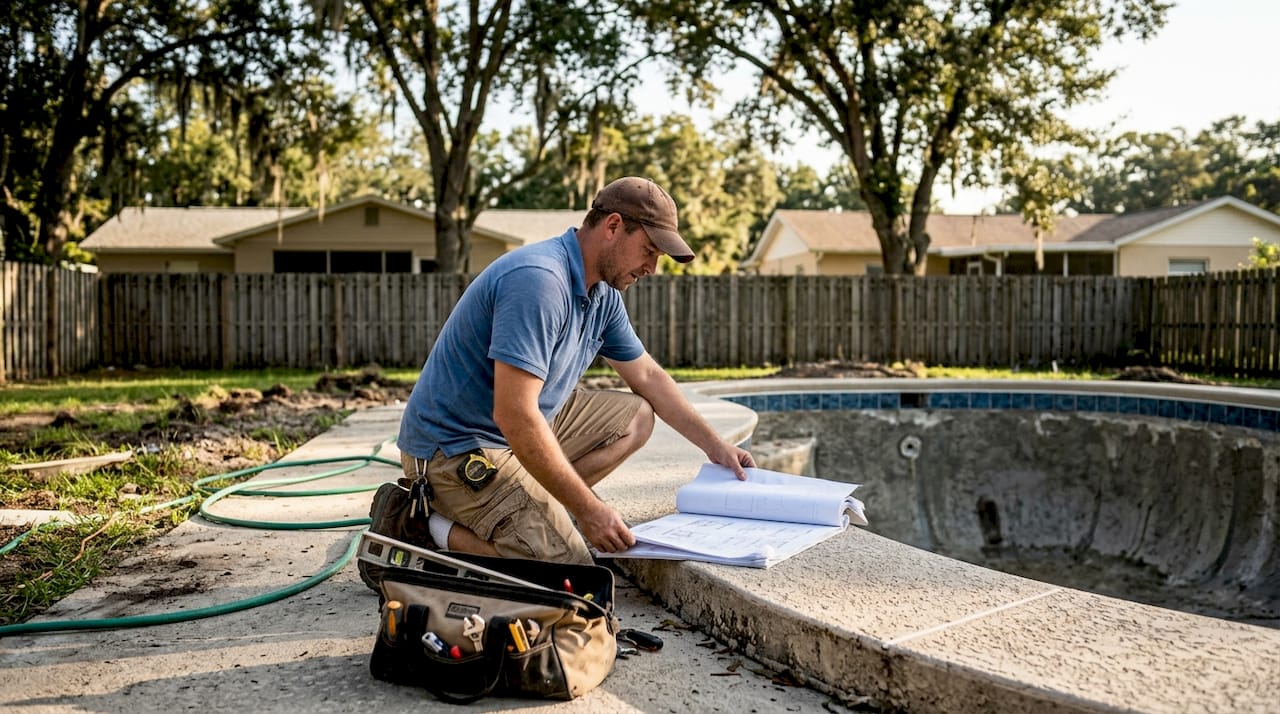
Most homeowners focus on pool shape, color, and features but overlook the most critical component: the pool shell. This watertight structural basin is the foundation that determines your pool’s durability, installation timeline, and long-term maintenance. Understanding what a pool shell is and how different types perform in Central Florida’s unique soil and climate conditions will help you make smarter decisions about your custom inground pool project. This guide explains pool shell types, installation processes, and key factors for choosing the right option for your home.
Table of Contents
- Key takeaways
- What is a pool shell and why it matters
- Types of pool shells: fiberglass vs concrete
- Fiberglass pool shell installation process for Central Florida homeowners
- Choosing the right pool shell for your Central Florida home
- Explore expert pool installation guides and services
- Frequently asked questions
Key Takeaways
| Point | Details |
|---|---|
| Pool shell definition | The watertight structural basin forms the core of an inground pool and determines durability, installation timeline, and maintenance. |
| Fiberglass benefits | Pre molded shells install quickly and require less maintenance due to a smooth gel coat, with most projects finishing in two to three weeks. |
| Fiberglass limits | Shapes are limited to manufacturer molds and large shells require crane access and a wide installation space. |
| Concrete benefits | Onsite sprayed gunite or shotcrete with rebar allows unlimited shape customization and is well suited for complex designs and site constraints. |
| Cost impact | The pool shell typically accounts for about forty to fifty percent of total construction costs, making shell choice a major driver of value and decision making. |
What is a pool shell and why it matters
A pool shell is the watertight structural basin that holds water and withstands internal water pressure and external soil forces, forming the core of every inground pool. Think of it as the skeleton of your pool, the permanent structure that everything else is built around. Without a properly installed shell, even the most beautiful tile work and sophisticated filtration systems become meaningless.
The shell must resist thousands of gallons of water pushing outward while simultaneously handling soil pressure, groundwater, and root systems pressing inward. In Central Florida, where sandy soils and seasonal water tables create unique challenges, the shell’s structural integrity becomes even more critical. Your pool school education should start here because this component affects every other decision you’ll make.
Many homeowners mistakenly believe the pool shell refers only to the walls or the finished surface they see. The shell actually includes the entire structural basin: floor, walls, and the transition areas between them. This complete watertight envelope must be engineered to handle hydrostatic pressure, thermal expansion, and ground movement over decades of use.
The shell type you choose impacts installation speed, shape flexibility, surface texture, maintenance requirements, and total project cost. Fiberglass shells arrive as single-piece units manufactured in controlled factory conditions. Concrete shells are formed onsite using steel reinforcement and sprayed concrete, allowing unlimited shape customization. Each approach carries distinct advantages depending on your priorities and property conditions.
“The pool shell is the foundation of pool longevity. Everything from water chemistry to equipment performance depends on starting with a structurally sound, properly installed shell.”
Understanding these fundamentals helps you ask better questions during consultations and recognize when contractors cut corners. The shell represents your largest single investment in the pool structure, typically accounting for 40-50% of total construction costs. Getting this decision right sets the foundation for years of enjoyment.
Types of pool shells: fiberglass vs concrete
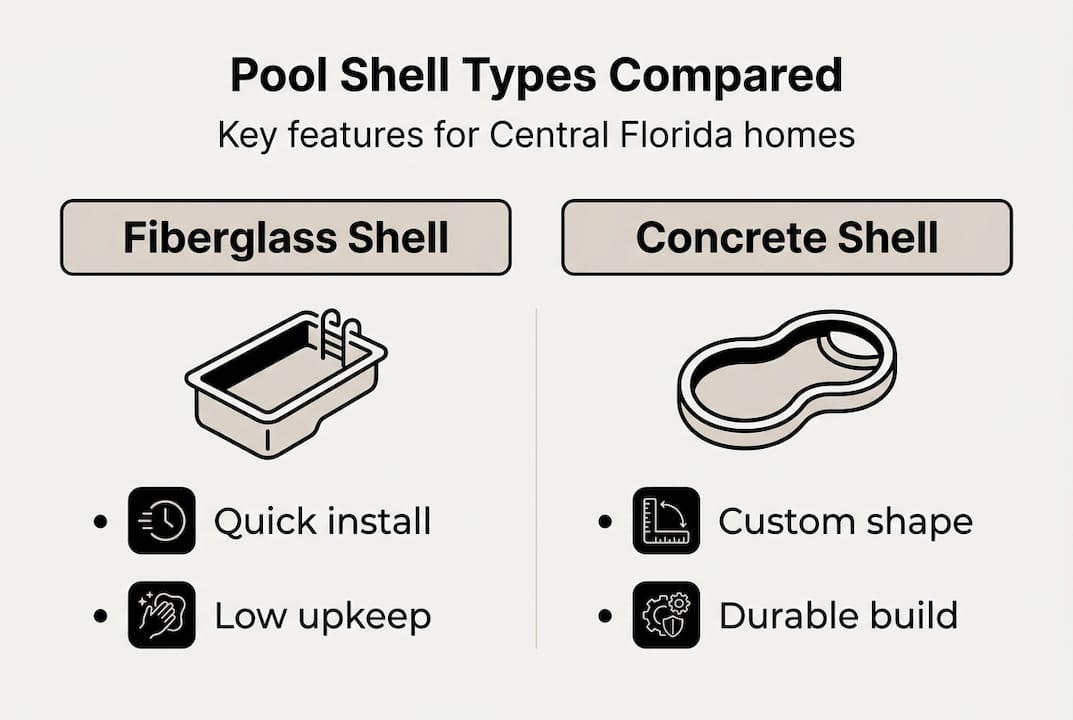
The two dominant pool shell types are fiberglass and concrete, each engineered for different priorities and construction approaches. Fiberglass shells are pre-molded factory units with smooth, non-porous gel coat surfaces that arrive ready for installation. Concrete shells use onsite rebar frameworks sprayed with gunite or shotcrete, creating custom shapes limited only by engineering constraints and imagination.
Fiberglass shells offer several compelling advantages for homeowners prioritizing speed and low maintenance. The smooth gel coat surface naturally resists algae growth, reducing chemical usage and cleaning time. Installation happens quickly because the shell arrives complete, requiring only excavation, placement, and backfilling. Most fiberglass installations finish within 2-3 weeks from start to completion.
However, fiberglass shells come with limitations. Shapes are restricted to manufacturer molds, typically offering 30-50 standard designs. The shells weigh 400kg or more, requiring crane access to your backyard. Transportation width restrictions limit maximum pool size to about 16 feet wide. If you envision a truly unique shape or need an oversized pool, fiberglass won’t accommodate your vision.
Concrete shells shine when customization matters most. Builders can create any shape, depth, or size your property and budget allow. Want an irregular kidney shape with a beach entry, integrated spa, and custom tanning ledge? Concrete makes it possible. This flexibility explains why custom pool construction in Lake County FL often relies on concrete for distinctive designs.
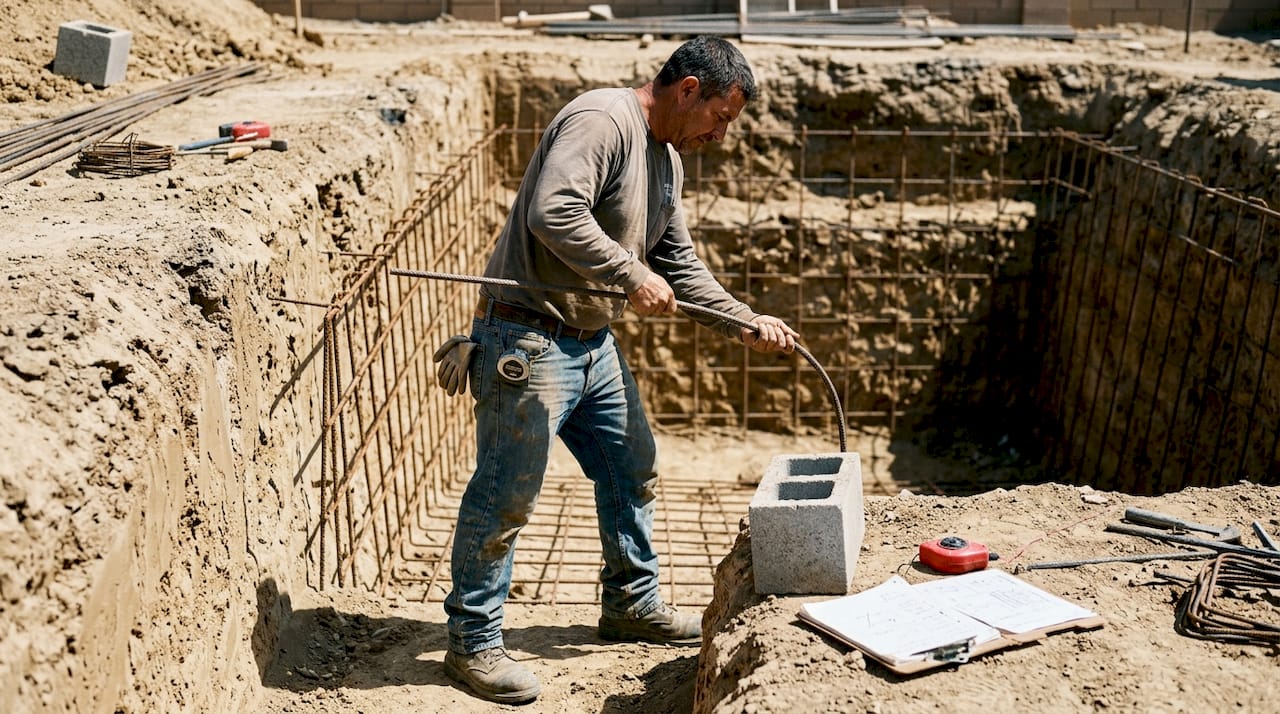
The tradeoff comes in construction time and ongoing maintenance. Concrete pools typically require 8-12 weeks to complete, involving multiple specialized steps and weather-dependent curing periods. The porous concrete surface needs regular acid washing and eventual resurfacing every 10-15 years. Chemical balance becomes more critical because improper pH levels can damage the plaster or aggregate finish.
| Feature | Fiberglass Shell | Concrete Shell |
|---|---|---|
| Installation time | 2-3 weeks | 8-12 weeks |
| Shape options | Limited to molds | Unlimited custom |
| Surface texture | Smooth gel coat | Textured plaster |
| Algae resistance | Excellent | Requires more maintenance |
| Size limitations | Max ~16 ft wide | No practical limits |
| Resurfacing needs | Rarely needed | Every 10-15 years |
Central Florida’s sandy soils and high water tables influence which shell type performs best on your property. Fiberglass shells handle minor ground shifts better due to their flexibility, while concrete shells require more careful site preparation and drainage management. The concrete pool advantages in Florida include superior performance in challenging soil conditions when properly engineered.
Pro Tip: Request soil testing before choosing your shell type. Sandy soils with good drainage favor either option, but properties with high clay content or seasonal flooding may benefit from fiberglass flexibility or require enhanced concrete engineering.
Fiberglass pool shell installation process for Central Florida homeowners
Fiberglass pool shell installation follows a precise sequence that transforms your backyard in weeks rather than months. Understanding each step helps you prepare your property and set realistic expectations for the construction timeline. The process demands careful coordination but moves quickly once equipment arrives onsite.
-
Site excavation and preparation: Crews dig the hole slightly larger than the shell dimensions, accounting for backfill space and utility placement. Excavation depth must accommodate the shell plus a 100-150mm base layer. In Central Florida’s sandy soils, excavation typically progresses quickly, but underground utilities and tree roots can complicate the work.
-
Base preparation and leveling: Workers create a laser-leveled foundation using sand or crusher dust compacted to precise specifications. This base must be perfectly level because any deviation affects shell placement and stress distribution. The base material also provides drainage and prevents shell flexing.
-
Crane delivery and shell placement: The fiberglass shell, weighing 400kg or more, arrives on a truck and gets lifted by crane into the excavated hole. This step requires clear overhead access and stable ground for crane positioning. Placement must be exact because repositioning a shell this size is nearly impossible once set.
-
Simultaneous backfilling and water filling: As the shell fills with water, crews backfill around the exterior with sand or gravel. This simultaneous process is critical because it equalizes pressure on both sides of the shell walls, preventing warping or cracking. Rushing either process creates dangerous stress points.
-
Plumbing and electrical connections: Once the shell is stable, plumbers connect filtration lines, returns, and drains. Electricians run conduit for lights, pumps, and automation systems. These systems integrate with the shell through pre-molded fittings that maintain watertight integrity.
-
Bond beam and coping installation: A concrete bond beam pours around the pool perimeter, creating structural support and a base for coping stones. The coping provides the finished edge and protects the shell lip from damage. This step typically happens 3-5 days after shell placement.
Total installation time runs 2-3 weeks from excavation to swim-ready completion. Weather delays, equipment availability, and permit processing can extend this timeline. The fiberglass pool installation steps require careful sequencing, but the process moves much faster than concrete alternatives.
Central Florida’s afternoon thunderstorms and summer rain can impact scheduling. Excavation and backfilling become difficult in saturated soil, and concrete work requires dry conditions for proper curing. Most contractors recommend starting projects in fall or winter when weather patterns are more predictable.
Pro Tip: Confirm crane access before committing to fiberglass. Measure gate widths, overhead clearance, and ground stability where the crane must position. Properties with narrow access or soft soil may need additional preparation or alternative shell types. Review the pool building guide for Central Florida for comprehensive planning.
Choosing the right pool shell for your Central Florida home
Selecting between fiberglass and concrete shells requires honest assessment of your priorities, property conditions, and long-term plans. No single answer fits every homeowner, but understanding the tradeoffs helps you make a confident decision that aligns with your specific needs.
Start by defining your must-have features and constraints. Do you need a specific shape that doesn’t exist in fiberglass molds? Is your timeline tight, requiring the fastest possible installation? What’s your appetite for ongoing maintenance and eventual resurfacing costs? Does your property have crane access limitations or challenging soil conditions?
Budget considerations extend beyond initial installation costs. Fiberglass shells typically cost more upfront but save money over time through reduced maintenance and chemical usage. The algae-resistant surface means less scrubbing and fewer shock treatments. Concrete pools have lower initial costs but require periodic acid washing, replastering, and more intensive chemical management.
| Decision Factor | Choose Fiberglass If… | Choose Concrete If… |
|---|---|---|
| Timeline | You want to swim in 3 weeks | You can wait 10-12 weeks |
| Shape | Standard designs work for you | You need custom shapes |
| Maintenance | You prefer minimal upkeep | You don’t mind regular care |
| Budget | You want lower lifetime costs | You need lower upfront costs |
| Property | You have crane access | Access is limited or soil is challenging |
Central Florida’s soil composition plays a bigger role than many homeowners realize. Sandy soils with good drainage accommodate both shell types well. Properties with high water tables or clay content may favor fiberglass flexibility or require enhanced drainage systems for concrete shells. Seasonal ground movement from wet and dry cycles can stress rigid concrete shells more than flexible fiberglass.
Site evaluation by experienced professionals reveals factors you might miss. Underground utilities, setback requirements, tree root systems, and drainage patterns all influence which shell type works best. A pool that looks perfect on paper may face expensive modifications if site conditions aren’t properly assessed upfront.
Consider your long-term plans for the property. If you’re building a forever home where you’ll enjoy the pool for decades, concrete’s customization might justify the maintenance commitment. If you’re in a starter home or plan to sell within 10 years, fiberglass’s low maintenance and quick installation may offer better value.
Your lifestyle and usage patterns matter too. Families with young children might prioritize fiberglass’s smooth surface that’s gentler on feet and swimsuits. Entertainers who host large gatherings might need concrete’s size flexibility. Homeowners who travel frequently appreciate fiberglass’s resistance to algae blooms during absences.
Pro Tip: Schedule consultations with contractors experienced in both shell types. Avoid companies that push only one option regardless of your needs. The best contractors match shell type to your specific situation rather than their preferred installation method. Use the custom pool planning guide for Central Florida to prepare questions and evaluate responses.
Understanding pool design in Florida helps you visualize how shell choice impacts your overall backyard vision. The shell type influences deck layout, landscaping options, and feature integration. Making this decision early in planning prevents costly changes later in the process.
Explore expert pool installation guides and services
Now that you understand pool shell fundamentals, take the next step toward your custom inground pool with trusted expertise. R & R Swimming Pools has guided Central Florida homeowners through successful pool installations since 1985, offering both fiberglass and concrete options tailored to your property and preferences.
Our comprehensive inground pool installation guide for Central Florida walks you through every decision point, from initial planning to final landscaping. Whether you’re leaning toward fiberglass or concrete, our custom pool planning guide helps you evaluate options based on your specific site conditions and goals. For detailed installation insights, review our fiberglass pool installation steps to see exactly what to expect during construction. Contact us today for a personalized consultation that matches the right shell type to your Central Florida home.
Frequently asked questions
What is the difference between fiberglass and concrete pool shells?
Fiberglass shells are factory-made single units with smooth, algae-resistant surfaces that install quickly in 2-3 weeks but come in limited preset shapes. Concrete shells are built onsite using steel reinforcement and sprayed concrete, offering unlimited custom shapes and sizes but requiring 8-12 weeks to complete and more ongoing maintenance.
How long does it take to install a fiberglass pool shell?
Typical fiberglass pool shell installation takes 2 to 3 weeks from excavation through final finishing, including base preparation, crane placement, backfilling, plumbing, and coping installation. Timing varies based on weather conditions, crane availability, and site access challenges that may require additional preparation work.
Do I need a crane to install a fiberglass pool shell?
Yes, fiberglass shells weighing 400kg or more require crane lifting from delivery truck into the excavated site because manual placement is impossible. Confirm crane access during planning by measuring gate widths, overhead clearance from trees or power lines, and ground stability where equipment must position.
What maintenance differences exist between fiberglass and concrete pools?
Fiberglass pools resist algae growth due to smooth gel coat surfaces, requiring less frequent cleaning, fewer chemicals, and rarely needing resurfacing over their lifetime. Concrete pools need regular acid washing, careful chemical balancing to protect plaster, and complete resurfacing every 10-15 years to maintain appearance and water quality. Learn more about pool maintenance requirements for both shell types.