
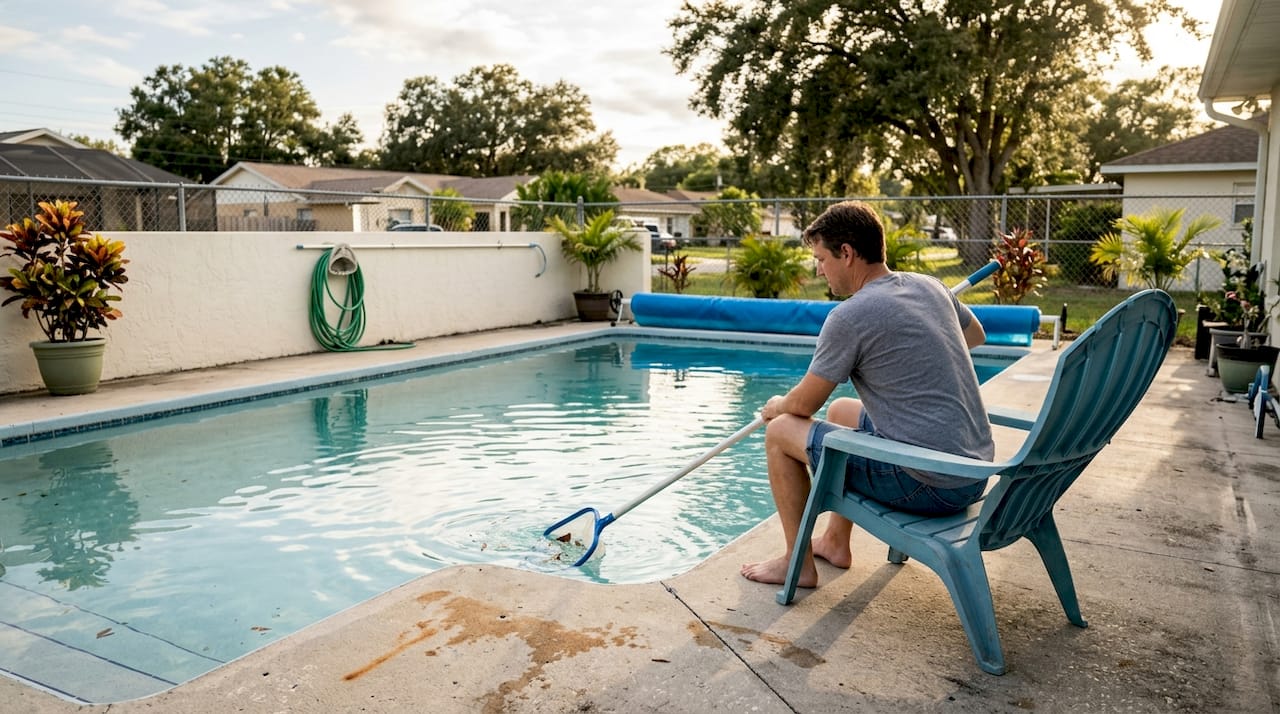
Running a pool in Central Florida is one of life’s great pleasures, but it can quietly drain your wallet if your equipment and habits are working against the climate instead of with it. Between the intense sun, high humidity, and near-year-round swimming season, Central Florida pools face energy demands that homeowners in cooler states simply never deal with. The good news: strategic upgrades and smarter daily habits can cut your monthly pool energy costs by more than half. This article walks you through exactly what to prioritize, which systems deliver the best return, and how to make decisions that actually fit Florida’s unique conditions.
Table of Contents
- Set clear energy-saving goals and criteria
- Choose the smartest pool heating solution
- Invest in smart pump and filtration choices
- Cut water and heat losses with covers and smart habits
- Making your choices: summarized options and best practices
- Why most pool energy advice misses Central Florida’s unique challenges
- Ready to upgrade your pool? Get expert help
- Frequently asked questions
Key Takeaways
| Point | Details |
|---|---|
| Heaters impact costs most | Smart heater choice is the biggest lever for year-round pool savings in Central Florida. |
| Covers prevent major losses | Solar covers can almost stop evaporation, saving energy and water even in humid weather. |
| Pump upgrades now required | State law increasingly mandates variable speed pumps for new and replacement installs over 1HP. |
| Combine habits with tech | Mixing smart owner routines with efficiency upgrades delivers the highest, fastest returns. |
Set clear energy-saving goals and criteria
Before you spend a dollar on upgrades, you need to understand what’s actually costing you money. Central Florida’s climate creates a specific set of challenges that most generic pool advice ignores entirely.
The heat and sun are obvious, but the real hidden villain is evaporation. Florida’s evaporation rates of 1 to 1.5 inches per week make water and energy loss a critical issue for pools here. Every gallon that evaporates takes heat energy with it, forcing your heater to work harder and your water bill to climb.
Here are the four biggest energy drains to evaluate for your pool:
- Heating: How often do you heat, and to what temperature?
- Pump runtime: Are you running a single-speed pump longer than necessary?
- Evaporation: Is your pool uncovered during peak sun hours?
- Maintenance habits: Are you running equipment at peak-rate electricity hours?
When you sit down to plan upgrades, work through this quick checklist:
- Pool size and volume (gallons)
- How many months per year you actively swim
- Your current monthly electric bill attributed to the pool
- Your budget for upfront investment versus ongoing savings
- Whether you’re building new or retrofitting existing equipment
Upfront planning matters more than most homeowners realize. Retrofitting a pool that was built without efficiency in mind costs significantly more than designing it right from the start. Explore energy-efficient pool options before you commit to any single upgrade path, and look at the full picture of reducing pool costs across heating, pumping, and water management together.
Pro Tip: Don’t chase the flashiest upgrade. Start with the change that directly addresses your single biggest cost driver. For most Central Florida homeowners, that’s the pump.
Choose the smartest pool heating solution
Heating is often the largest line item in a pool’s energy budget, and choosing the wrong system can cost you thousands over just a few years. You have three real options: heat pumps, solar heating, and gas heaters.
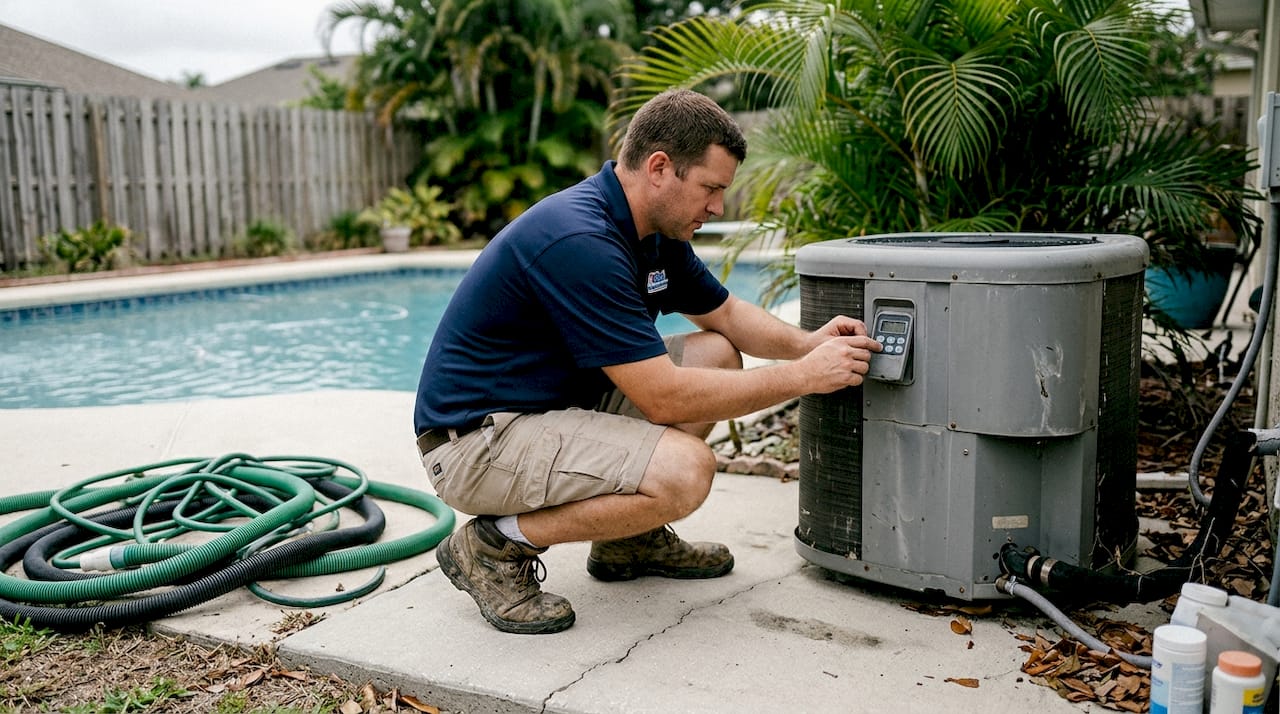
Heat pumps are the clear winner for year-round Central Florida swimmers. They work by pulling warmth from the surrounding air and transferring it to your pool water, which means they don’t generate heat from scratch. A quality heat pump delivers a COP of 5 to 7, meaning it produces 5 to 7 units of heat for every unit of electricity consumed. That translates to operating costs 70 to 80% lower than gas or electric resistance heaters.
Solar heating is essentially free to run once installed, but it depends entirely on sun exposure. It’s ideal for shoulder seasons in Florida, when temperatures are mild and you just need a small boost. On cloudy stretches or during cooler winter weeks, solar alone won’t keep your pool comfortable.
Gas heaters heat water fast, which makes them useful for occasional use or when you need to warm a pool quickly for a party. But the ongoing fuel cost makes them expensive for daily use.
| Heating type | Upfront cost | Operational cost | Best for |
|---|---|---|---|
| Heat pump | $2,500 to $5,000 | Very low | Year-round swimmers |
| Solar heating | $3,000 to $6,000 | Near zero | Shoulder season boost |
| Gas heater | $800 to $2,500 | High | Occasional or fast heating |
For energy-efficient pool upgrades that pay off over time, a heat pump is almost always the right call in Central Florida’s climate.
Pro Tip: If you swim year-round, a heat pump typically pays for itself within 2 to 4 years through energy savings alone. That’s a return most home improvements can’t match.
“The best heater for your pool isn’t the cheapest to buy. It’s the one that costs the least to run for the next 10 years.”
Invest in smart pump and filtration choices
After heating, your pool pump is the biggest energy consumer in the system. And here’s the thing most homeowners don’t know: in Central Florida, upgrading your pump isn’t just smart, it may be legally required.
A variable speed pump (VSP) uses a permanent magnet motor that can operate at multiple speeds. At lower speeds, it uses dramatically less electricity than a single-speed pump running flat out. The energy savings are real and significant.
VSPs are required for replacements over 1 horsepower under Florida Building Code and Department of Energy standards. If your current pump is over 1HP and needs replacing, you’re already required to go variable speed. Many homeowners are surprised to learn this.
Here’s how pump types compare:
| Pump type | Avg. power use | Annual energy cost | Payback period |
|---|---|---|---|
| Single-speed | 1,500 to 2,500W | $800 to $1,200 | N/A (baseline) |
| Two-speed | 800 to 1,500W | $400 to $700 | 2 to 3 years |
| Variable speed | 150 to 1,100W | $150 to $400 | 1 to 3 years |
Proper pump sizing also matters. An oversized pump runs harder than necessary, wastes energy, and puts extra wear on your filtration system. Work with a professional to match pump size to your pool’s actual volume and plumbing.
For filtration, cartridge filters generally require less backwashing than sand filters, which saves water and reduces pump strain. Keep your pool maintenance schedule consistent, because a dirty filter forces your pump to work harder and burns more electricity.
Cut water and heat losses with covers and smart habits
You can have the most efficient pump and heater on the market, but if your pool sits uncovered in the Florida sun all day, you’re still losing money. This is where daily habits and simple equipment choices make a huge difference.
Solar pool covers are one of the highest-return investments you can make. Solar covers reduce evaporation by up to 95% and cut heat loss by 50 to 70%. In a climate where evaporation runs 1 to 1.5 inches per week, that’s a massive amount of water and energy being saved every single week.
Automatic covers go one step further by making it easy to cover and uncover the pool with minimal effort, so you’re more likely to actually use the cover consistently.
Here’s a step-by-step approach to implementing covers and smarter habits:
- Install a solar cover sized to your pool’s exact dimensions
- Cover the pool whenever it’s not in use, especially during peak sun hours (10am to 4pm)
- Program your VSP to run filtration cycles during off-peak electricity hours (typically after 9pm)
- Lower your target pool temperature by 2 to 3 degrees when you’re away for extended periods
- Check water levels weekly to catch evaporation loss early
Some additional habits that add up over a season:
- Run your pump during nighttime hours to take advantage of lower electricity rates
- Trim nearby trees or plants that drop debris, which forces more frequent filter cleaning
- Explore upgraded pool features like automatic water levelers that prevent waste
Making your choices: summarized options and best practices
Now that you understand each upgrade category, here’s a clear summary to help you decide where to start based on your specific situation.
| Upgrade | Best for | Estimated savings | Priority level |
|---|---|---|---|
| Variable speed pump | All pool owners | 50 to 70% on pump costs | High |
| Heat pump heater | Year-round swimmers | 70 to 80% vs. gas | High |
| Solar cover | All pool owners | Up to 95% evaporation loss | High |
| Solar heating | Seasonal swimmers | Near-zero operating cost | Medium |
| Cartridge filter | High-use pools | Water and pump savings | Medium |
Before you call a contractor, gather this information:
- Your current monthly electric bill and pool-related portion
- Pool volume in gallons and surface area in square feet
- Current pump horsepower and age
- Whether you have a south-facing roof with good sun exposure (for solar)
Common pitfalls to avoid when upgrading:
- Skipping permits: Unpermitted work can void warranties and create problems when you sell your home
- Oversizing equipment: Bigger is not always better. Oversized pumps and heaters waste energy
- Ignoring habits: Equipment upgrades alone won’t deliver maximum savings without behavioral changes
- Doing upgrades piecemeal without a plan: Random upgrades rarely deliver the same ROI as a coordinated strategy
Think about how these upgrades also increase pool value for your home overall. If you’re working with an older system, understanding the full case for upgrading an old pool can help you make a more confident decision.
Why most pool energy advice misses Central Florida’s unique challenges
Here’s something we’ve seen repeatedly over decades of building and upgrading pools across Central Florida: homeowners follow generic advice from national sources and end up with equipment that wasn’t designed for this climate.
A heat pump spec’d for a New England pool won’t perform the same way in Orlando’s humidity. A pump schedule that works in Arizona ignores Florida’s specific electricity rate structures. And solar heating advice that doesn’t account for Central Florida’s afternoon thunderstorm season sets unrealistic expectations.
What actually works here is matching every upgrade decision to local realities: the building code requirements, the evaporation rates, the electricity pricing tiers, and the near-year-round swimming season. Generic advice treats all pools as equal. They’re not.
After hundreds of Central Florida pool projects, we’ve seen that the homeowners who get the best results are the ones who plan holistically, hire professionals who know local code, and don’t cut corners on the equipment that runs every single day. The pool remodeling benefits go well beyond energy savings when you approach it with a region-specific strategy.
Ready to upgrade your pool? Get expert help
You now have a clear roadmap for cutting your pool’s energy costs in a way that actually fits Central Florida’s climate and code requirements.
Whether you’re building a new pool from scratch or retrofitting an existing one, professional guidance makes the difference between upgrades that pay off and ones that fall short. Our inground pool installation guide is a great place to start if you’re planning a new build. For ongoing education, Pool School covers everything from chemistry to equipment. And if you’re ready to act, explore our full range of energy-efficient upgrades designed specifically for Central Florida homeowners.
Frequently asked questions
How much can I save on pool energy bills by upgrading?
Energy-efficient upgrades can cut Central Florida pool energy costs by 50 to 60% when done strategically, with variable speed pumps and heat pumps delivering the largest share of savings.
Do I need permits for installing a variable speed pump or solar panels in Central Florida?
Yes. Florida Building Code requires VSPs for replacements over 1HP, and solar installations typically need permits along with FSEC certification and a properly oriented roof.
Are pool covers really worth it in humid Florida?
Absolutely. Solar covers reduce evaporation by up to 95%, which saves both water and the energy used to heat it, making them one of the most cost-effective tools available regardless of humidity.
What is the fastest payback upgrade for pool efficiency?
A variable speed pump or solar cover typically delivers the fastest return on investment. VSPs and solar covers both provide high ROI in Florida’s climate, often paying back within one to three seasons.
