Central Florida’s relentless sun and year-round swimming season mean your pool plaster faces challenges most other regions never see. While standard plaster might last 15 years in cooler climates, high UV and constant use can cut that lifespan nearly in half here. Pool plaster is the foundation of your pool’s beauty and durability, the visible surface that protects your investment and defines your backyard experience. This guide covers what pool plaster is, your finish options, how our climate affects longevity, and the smartest choices for Central Florida homeowners.
Table of Contents
- What is pool plaster?
- Popular types of pool plaster finishes
- How Central Florida’s climate affects pool plaster
- Lifespan, warranty, and signs of plaster problems
- Expert recommendations for choosing and caring for plaster
- Upgrade your pool with expert help
- Frequently asked questions
Key Takeaways
| Point | Details |
|---|---|
| Climate matters | Central Florida’s heat and chemicals speed up pool plaster wear compared to other regions. |
| Durable options available | Quartz and pebble finishes outlast standard plaster and look great longer. |
| Prevention pays off | Proactive maintenance and water testing extend the life of any pool plaster finish. |
| Watch for warning signs | Early cracks, stains, or roughness mean it’s time for action to avoid bigger repairs. |
What is pool plaster?
Pool plaster is a specialized mortar applied over your concrete or gunite pool shell. It combines cement, sand, water, pigment, and sometimes performance additives to create the waterproof barrier you see and feel every time you swim. Standard plaster serves as the final waterproof coating for concrete pools, providing a smooth and attractive surface that seals the porous shell beneath.
Think of plaster as your pool’s skin. It has several critical jobs:
- Seals the concrete shell to prevent water loss and structural damage
- Protects the underlying structure from chemical exposure and erosion
- Defines your pool’s color, texture, and overall aesthetic
- Creates the tactile surface swimmers interact with daily
Most concrete pool advantages stem from the flexibility plaster provides. Unlike fiberglass pools with factory finishes, concrete pools let you choose exactly how your surface looks and performs. Understanding your pool finish options starts with knowing what plaster actually does and why it matters for long-term enjoyment.
Popular types of pool plaster finishes
With a basic understanding of pool plaster, let’s explore the most common finish options and their pros and cons. Each type offers different trade-offs in cost, durability, appearance, and feel.
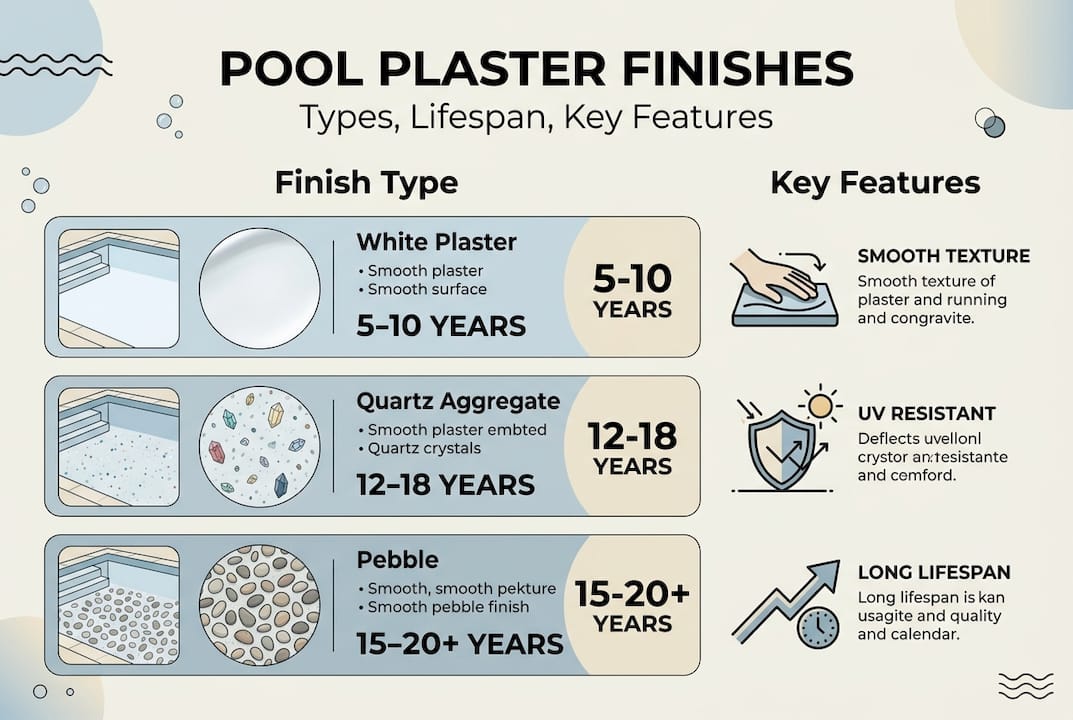
Standard white plaster represents the classic pool finish. It delivers a smooth, bright surface at the lowest initial cost. However, it has the shortest lifespan, typically lasting 7 to 15 years under normal conditions. In Central Florida’s harsh environment, expect the lower end of that range. Standard plaster shows stains more readily and requires diligent chemistry management.
Quartz aggregate finishes add finer quartz particles to the plaster mix. This creates improved durability and better stain resistance compared to standard plaster. The texture is slightly coarser but still comfortable underfoot. Quartz aggregate lasts 12 to 20 years, making it a solid middle-ground choice. You get enhanced performance without the premium price of pebble finishes.
Pebble and exposed aggregate finishes incorporate natural stone pebbles for maximum durability. These finishes handle UV exposure and chemical stress better than any other option, lasting 15 to 25 years or more. The trade-off is a noticeably coarser feel that some swimmers find uncomfortable. Pebble finishes also cost significantly more upfront but deliver the best long-term value in demanding climates.
| Finish Type | Lifespan | Texture | UV Resistance | Cost |
|---|---|---|---|---|
| Standard White | 7-15 years | Smooth | Fair | Lowest |
| Quartz Aggregate | 12-20 years | Slightly Textured | Good | Moderate |
| Pebble/Aggregate | 15-25+ years | Coarse | Excellent | Highest |
Pro Tip: If you have young children who spend hours in the pool, test a pebble finish sample before committing. The texture that provides durability can feel rough on sensitive skin during extended play sessions.
When choosing a finish, consider how you actually use your pool. Weekend swimmers might prioritize smooth comfort, while daily users benefit more from long-term durability that reduces resurfacing frequency.
How Central Florida’s climate affects pool plaster
Understanding the finish options sets the stage to ask: how does the local environment in Central Florida really impact plaster durability and upkeep? Our climate creates unique challenges that accelerate plaster degradation.
Central Florida’s intense UV radiation breaks down the chemical bonds in plaster surfaces faster than almost anywhere else. Combined with year-round swimming seasons, plaster degrades faster here, often lasting just 7 to 12 years for standard finishes instead of the 15 years common in northern states. The sun doesn’t just fade colors. It weakens the entire surface structure.
Our water chemistry presents another major challenge. Central Florida’s hard water contains high mineral content that promotes scaling, those rough white deposits that form on plaster surfaces. Meanwhile, pH swings from heavy rain or improper chemical dosing cause etching, where acidic water literally dissolves the plaster surface. Both issues create rough spots and discoloration that ruin your pool’s appearance.
| Climate Factor | Impact on Plaster | Severity in Central Florida |
|---|---|---|
| UV Exposure | Breaks down surface bonds | Extreme (year-round) |
| Heat | Accelerates chemical reactions | High (90°F+ summers) |
| Hard Water | Causes scaling deposits | Moderate to High |
| pH Fluctuations | Triggers etching | Moderate (rainy season) |
Aggressive startup procedures after new plaster installation can trigger crazing, those spiderweb-like surface cracks that appear when plaster cures too quickly. Temperature swings between cool nights and hot days stress the surface, especially during the first month. Rushing the curing process or failing to maintain proper chemistry during startup often voids warranties.
“Consistent water balancing is your best defense against premature plaster failure. Test weekly during summer and after heavy rain, adjusting pH and alkalinity before problems start.”
Pro Tip: Avoid draining your pool during the hottest months. The combination of direct sun on exposed plaster and rapid temperature changes when refilling creates stress cracks that never fully heal.
Understanding pool maintenance importance becomes critical when you realize how quickly our climate damages neglected surfaces. Regular care isn’t optional here. It’s the difference between 8 years and 15 years from the same plaster job. Your poolside environment also matters, as proper drainage prevents standing water that promotes algae and staining. Every detail of why pool maintenance matters connects back to protecting your plaster investment.
Lifespan, warranty, and signs of plaster problems
Because Central Florida’s conditions are so tough, how long should you expect your plaster to last, and what are the warning signs to watch for? Setting realistic expectations helps you budget and catch problems early.
Expected plaster lifespan varies significantly by finish type. Standard white plaster typically lasts 7 to 12 years here, while quartz aggregate extends that to 10 to 18 years. Pebble finishes deliver 15 to 25 years or more, justifying their higher upfront cost through fewer resurfacing cycles over your pool’s lifetime.
Watch for these common failure signs:
- Discoloration: Permanent stains or fading that won’t respond to cleaning
- Rough patches: Areas that feel like sandpaper, indicating surface erosion
- Cracks and crazing: Visible lines or spiderweb patterns in the plaster
- Scaling: Thick white deposits that keep returning despite treatment
- Severe staining: Dark spots from metals or organic matter embedded in the surface
Crazing, cracking, etching, and staining often result from preventable causes. High water-cement ratios during installation create weak plaster prone to crazing. Low pH causes etching that roughens surfaces. Metal contamination during startup leaves permanent stains. Each of these issues can void your warranty if traced back to improper maintenance or unauthorized repairs.
Warranty protection requires documentation. Keep records of your water chemistry tests, showing you maintained proper pH, alkalinity, and calcium hardness. Save receipts from professional service visits. If problems appear, this documentation proves you followed manufacturer guidelines, protecting your warranty claim.
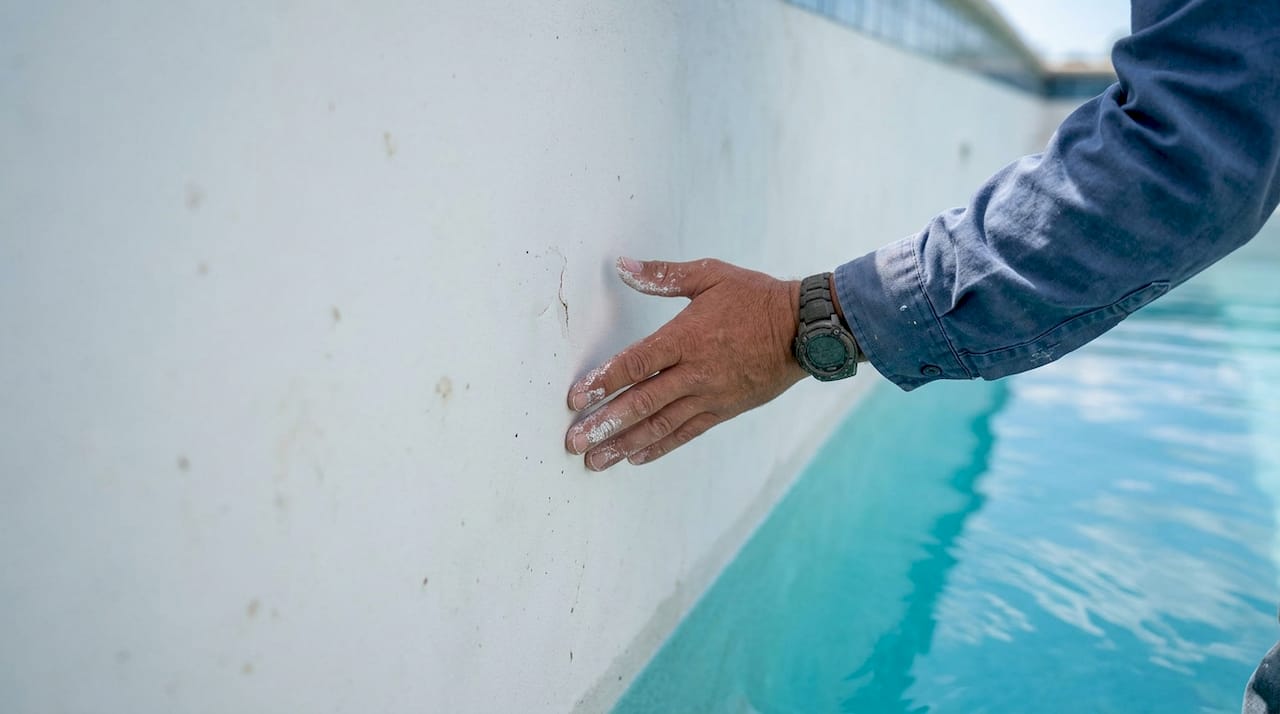
Pro Tip: Detecting minor changes early can save you thousands on resurfacing. Run your hand along the pool walls monthly, feeling for rough spots that indicate early erosion. Catching problems at the rough-patch stage often means targeted repairs instead of complete resurfacing.
Understanding pool warranty details helps you know exactly what’s covered and what actions void protection. Most warranties exclude damage from chemical imbalance, so following pool maintenance tips isn’t just good practice. It’s warranty preservation.
Expert recommendations for choosing and caring for plaster
Now, let’s pull everything together: what do experts suggest for Central Florida homeowners choosing, installing, and caring for pool plaster?
- Choose pebble for maximum durability: Pebble finishes provide superior resistance to UV and chemicals, making them ideal for Central Florida, though some homeowners may find them rough underfoot. If budget allows, pebble delivers the best long-term value.
- Consider quartz as the sweet spot: Quartz aggregate balances appearance, comfort, and lifespan. It costs less than pebble while significantly outperforming standard plaster in our climate.
- Follow strict water chemistry protocols: Test pH and alkalinity weekly during summer, after heavy rain, and whenever the pool sees heavy use. Keep pH between 7.4 and 7.6, total alkalinity between 80 and 120 ppm.
- Brush plaster surfaces regularly: Weekly brushing prevents algae attachment and distributes chemicals evenly. Use a nylon brush on standard and quartz finishes, stainless steel only on pebble.
- Invest in professional startup service: The first 28 days after new plaster installation determine long-term success. Professional startup service ensures proper curing, preventing crazing and staining that plague DIY attempts.
- Address problems immediately: Small rough spots or stains grow exponentially if ignored. Early intervention often means simple fixes instead of expensive resurfacing.
Following practical pool care tips consistently matters more than choosing the perfect finish. Even pebble plaster fails prematurely with neglect, while well-maintained standard plaster can exceed expected lifespan. Your custom pool planning should include realistic maintenance commitments, not just initial construction choices.
Upgrade your pool with expert help
Ready to bring your pool vision to life or upgrade your existing pool? Here’s where expert support makes all the difference.
Professional expertise ensures your plaster investment delivers maximum lifespan and beauty. Experienced contractors understand Central Florida’s unique challenges, from selecting finishes that handle our climate to executing flawless startup procedures that prevent common failures. They know which shortcuts cause problems years later and which details matter most for long-term success.
Whether you’re planning a complete pool remodeling process or starting fresh with new construction, the right guidance prevents costly mistakes. Our inground pool installation guide walks you through every decision, from initial design to final finishes. The custom pool planning guide helps you balance aesthetics, durability, and budget to create the perfect backyard retreat. Professional support transforms complex decisions into confident choices that protect your investment for decades.
Frequently asked questions
What is the best pool plaster option for Central Florida?
Pebble and quartz aggregate offer superior UV and chemical resistance in Central Florida. Pebble lasts longest but feels rougher, while quartz balances durability and comfort.
How do I know when my pool plaster needs to be replaced?
Look for rough spots, permanent stains, visible cracks, or dark discoloration. Cracking, etching, and staining are early indicators of plaster failure in Central Florida’s harsh conditions.
Can I add new plaster over old, or is complete removal better?
Full chip-out is recommended over partial replaster in most cases. Complete removal ensures proper bonding and prevents future delamination that occurs when new plaster separates from old.
What causes pool plaster to crack or etch?
Etching and cracking result from low pH and improper installation procedures. Poor water balance, harsh startup protocols, and shortcuts during application create most plaster failures.
