TL;DR:
- Choosing the right pool size depends on your yard’s dimensions, intended usage, and budget considerations.
- Smaller pools like plunge or compact designs suit tight spaces and prioritize relaxation or hydrotherapy, while larger pools serve active families or entertainment needs.
Choosing the right pool size is one of the most consequential decisions you’ll make for your backyard, and most homeowners underestimate how complex it gets once you move past “I want a pool.” A solid pool size comparison list cuts through the confusion fast, giving you real numbers to weigh against your yard, your family, and your budget. Whether you’re working with a narrow lot in Winter Park or a sprawling property in Lake Mary, the right pool dimensions can either transform your outdoor space or create headaches you didn’t see coming. This guide gives you exactly what you need to compare pool sizes with confidence.
Table of Contents
- Key takeaways
- What to know before using a pool size comparison list
- 1. Plunge pools (6×10 to 10×14 feet)
- 2. Spas and hot tubs integrated with pools (6×8 to 8×10 feet for the spa portion)
- 3. Lap pools (6×30 to 10×50 feet)
- 4. Small standard pools (10×20 to 12×24 feet)
- 5. Standard family pools (14×28 to 16×32 feet)
- 6. Large recreational pools (18×36 to 20×40 feet)
- 7. Diving pools (16×32 feet minimum, with depth of 8+ feet)
- 8. Freeform and lagoon pools (custom shapes, varies widely)
- 9. Full comparison table for common pool sizes
- 10. Choosing the right pool size for your specific situation
- My take on pool size decisions in Central Florida
- Ready to find your perfect pool size?
- FAQ
Key takeaways
| Point | Details |
|---|---|
| Match size to yard, not wishes | Your usable backyard space sets a hard ceiling on how large your pool realistically can be. |
| Footprint exceeds water surface | Decking, equipment pads, and safety fencing add 30 to 50 percent more space than the pool shell alone. |
| Plunge pools fit tight yards well | A plunge pool as small as 6×10 feet delivers luxury and relaxation in yards that can’t support a standard pool. |
| Bigger pools cost more to run | Larger pools mean higher utility bills, chemical costs, and maintenance time every single month. |
| Custom pools solve unique layouts | Central Florida homeowners are increasingly choosing custom shapes to work with irregular or landscaped yards. |
What to know before using a pool size comparison list
Before you can compare pool sizes meaningfully, you need to answer a few questions specific to your property and lifestyle. Skipping this step is how homeowners end up with a pool that looks great on paper but feels wrong in real life.
Your available yard space comes first. Measure your usable backyard, then subtract space for the required deck clearance. The equipment pad and deck width requirements typically demand 3 to 5 feet of clearance around the water’s edge, and that adds up quickly. A pool that fits on paper may leave your backyard feeling cramped once the deck, fence, and equipment pad are in place.
How you’ll use the pool shapes everything. A family with young children who want weekend splash time has very different needs than someone who swims laps every morning or hosts large gatherings. Exercise swimmers benefit most from longer, narrower pools. Families prioritizing play and entertainment do better with wider, shallower designs. Relaxation-focused buyers often find a well-designed plunge or compact pool more satisfying than a large pool they rarely use fully.
Here are the key factors worth working through before you compare pool sizes:
- Backyard dimensions and usable flat space
- HOA restrictions or local zoning setbacks in your Central Florida municipality
- Primary use: exercise, family fun, entertaining, or relaxation
- Number of regular swimmers and their ages
- Total installation budget, including landscaping and decking
- Ongoing monthly costs for chemicals, water, and energy
- Safety requirements, including fencing (non-climbable pool fencing starts at over $1,000 and is non-negotiable for families with children)
Pro Tip: In Central Florida, your pool will likely be in use 10 to 11 months a year. That level of use makes maintenance costs matter far more here than in states where pools sit covered for half the year. Factor that into your size decision from the start.
Reviewing the pool safety requirements for Central Florida homeowners before finalizing your size is a smart move that many people skip until it’s too late.
1. Plunge pools (6×10 to 10×14 feet)
Plunge pools are the smallest category and, for many Central Florida homeowners, the most practical entry point. A plunge pool can be as small as 6×10 feet and typically costs between $10,000 and $50,000 installed, making them the most affordable inground option.
They’re designed for cooling off, hydrotherapy, and relaxation rather than lap swimming or water games. In tight backyards, especially common in many Orlando-area neighborhoods, a plunge pool lets you enjoy the feel of a private pool without sacrificing the entire yard to it. The tradeoff is limited functionality for larger families or those who want active swimming.
2. Spas and hot tubs integrated with pools (6×8 to 8×10 feet for the spa portion)
Many Central Florida homeowners combine a full-size pool with an attached spa rather than building a standalone pool. The spa itself occupies a small footprint, typically 6×8 to 8×10 feet, but it adds significant value and daily use even when you don’t feel like a full swim.
Integrated spa-and-pool designs are popular because they give you year-round utility. During Florida’s cooler months (yes, they exist), a heated spa gets used far more frequently than a larger pool. When you’re planning your overall pool layout, always account for the spa footprint in your total space budget.
3. Lap pools (6×30 to 10×50 feet)
Lap pools prioritize one function above all others: swimming laps for exercise. They’re narrow and long, and lap pools range from 6×30 to 10×50 feet depending on how seriously you take your training. A standard competitive lap is 25 meters, but most residential lap pools run 30 to 40 feet for practical yard integration.
The advantage here is that you get maximum swimming distance while keeping the width narrow, which means a lap pool can fit in yards where a traditional rectangular pool wouldn’t. The disadvantage is that they don’t work as well for family play, entertaining, or anything beyond dedicated exercise.
4. Small standard pools (10×20 to 12×24 feet)
This size category works well for couples, small families, or homeowners who prioritize having a pool but have real yard constraints. A 10×20 foot pool gives you enough room to float, play, and cool off without dominating a modest backyard.
Installation costs in this range are more approachable, and the ongoing monthly maintenance is noticeably lower than larger pools. Water loss from evaporation adds approximately $40 to $80 monthly in ongoing utility costs, and that number scales up with pool size. Smaller pools give you all the lifestyle benefits at a fraction of the long-term expense.
5. Standard family pools (14×28 to 16×32 feet)
This is the most popular pool size category for residential installations in the United States. Standard inground pools at 14×28 feet strike the balance most families are looking for: enough room to swim proper laps, play with kids, and entertain guests, without the maintenance commitment of a larger pool.
A 16×32 pool holds roughly 21,000 gallons and gives most families all the pool they’ll realistically use. This size category works well in medium-sized backyards and leaves enough room around the perimeter for a comfortable deck and landscaping. For the majority of Central Florida homeowners, this range hits the sweet spot.
6. Large recreational pools (18×36 to 20×40 feet)
Large family pools step up the experience considerably. At 20×40 feet, you’re looking at a pool that can comfortably host pool parties, accommodate competitive swimming, and support features like beach entries, water features, and integrated spas.
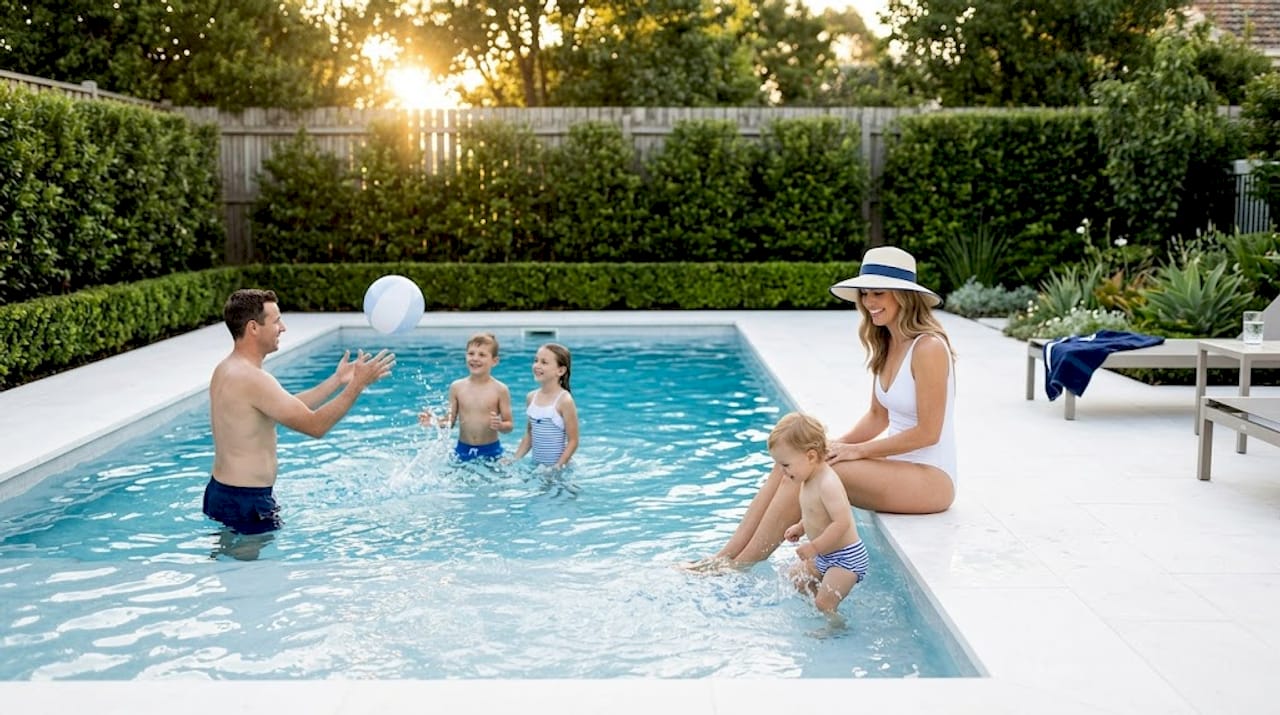
The tradeoff is real. These pools require larger lots, more extensive decking, higher chemical volumes, and more powerful (and energy-hungry) equipment. Fiberglass pools in this size range can run from $50,000 to $150,000 depending on site conditions and add-on features. If your yard can handle it and your lifestyle calls for it, a large pool delivers an experience that a standard-size pool simply can’t match.
7. Diving pools (16×32 feet minimum, with depth of 8+ feet)
Diving pools require a specific combination of length and depth that most pools don’t meet. The minimum safe configuration is typically 16×32 feet with the deep end reaching at least 8 feet, and many professionals recommend 9 feet for a standard diving board setup.
This size requirement means diving pools often end up larger than a homeowner originally intended, which affects both cost and yard usage. If diving is a priority, plan your pool size around that requirement from the start rather than trying to retrofit it later.
8. Freeform and lagoon pools (custom shapes, varies widely)
Freeform pools don’t follow standard rectangular dimensions. They’re designed to mimic natural bodies of water, often incorporating curves, beach entries, rock features, and irregular edges. Sizes vary widely, but most residential freeform pools fall within the general footprint of a standard to large rectangular pool.
Custom pools are increasingly popular in Central Florida precisely because many lots here feature irregular shapes, existing landscaping, or specific orientation challenges that rectangular pools can’t accommodate. Concrete pools offer the most flexibility in size and shape, which is a meaningful advantage when you’re working around existing yard features.
9. Full comparison table for common pool sizes
Use this side-by-side pool dimensions chart to compare your main options at a glance.
| Pool type | Typical dimensions | Approx. volume | Estimated cost | Best for |
|---|---|---|---|---|
| Plunge pool | 6×10 to 10×14 ft | 2,000 to 5,000 gal | $10,000 to $50,000 | Small yards, relaxation |
| Lap pool | 6×30 to 10×50 ft | 10,000 to 30,000 gal | $30,000 to $80,000 | Exercise-focused swimmers |
| Small standard | 10×20 to 12×24 ft | 8,000 to 12,000 gal | $25,000 to $55,000 | Couples, small families |
| Standard family | 14×28 to 16×32 ft | 15,000 to 22,000 gal | $40,000 to $85,000 | Most families, medium yards |
| Large recreational | 18×36 to 20×40 ft | 25,000 to 40,000 gal | $60,000 to $150,000 | Entertaining, large yards |
| Diving pool | 16×32 ft+ (8 ft deep) | 20,000 to 35,000 gal | $50,000 to $100,000 | Active families, large lots |
| Freeform/custom | Varies | Varies | $50,000 to $150,000+ | Unique lots, design-focused |
Pro Tip: When reviewing this table, always add 30 to 50 percent to the pool’s footprint dimensions to account for deck space, equipment pad, and safety fencing. A 14×28 pool doesn’t just need a 14×28 plot. It needs significantly more.
For a deeper look at what drives installation costs beyond just pool size, the pool cost factors guide from Randrswimmingpools breaks down seven variables that most contractors don’t discuss upfront.
10. Choosing the right pool size for your specific situation
Once you’ve reviewed the pool size comparison list, the final step is matching a size to your real circumstances. Here’s how to approach it based on common homeowner situations in Central Florida:
- Small backyard (under 1,000 sq ft usable): A plunge pool or small standard pool (10×20) is your practical range. Focus on quality finishes and features rather than size.
- Medium backyard (1,000 to 2,500 sq ft usable): A 14×28 to 16×32 standard family pool fits well and leaves room for decking and landscaping. This is the most common scenario in Central Florida subdivisions.
- Large backyard (over 2,500 sq ft usable): You have real options. A large recreational pool, diving pool, or freeform custom design can all work. Focus on how you’ll use it rather than how large you can go.
- Budget-conscious approach: Prioritize a well-built smaller pool over a larger pool with cut corners. A properly constructed 12×24 pool will outperform and outlast a cheaply built 16×32 every time.
- Families with young children: A shallower, wider design with a gradual entry works better than deep rectangular pools for safety and usability. Review local safety requirements before finalizing your design.
Modern pool designs increasingly integrate decking and landscaping as cohesive elements, which means a well-designed smaller pool can feel more luxurious than a larger pool dropped into a bare yard. Think about the entire outdoor space, not just the water surface.
My take on pool size decisions in Central Florida
I’ve worked alongside Central Florida homeowners long enough to recognize the most common mistake in the pool planning process: choosing a size based on what looks impressive rather than what actually fits their life.
The number of families I’ve seen stretch their budget to build a 20×40 pool, only to spend most of their time in one corner of it, is remarkable. Bigger pools don’t automatically mean more enjoyment. They mean more chemicals, more water, more energy to heat and circulate, and more surface area to maintain. In a state where your pool runs year-round, that maintenance reality hits differently than it does for homeowners in cooler climates.
What I’ve found actually works is this: start with how you’ll use the pool on a regular Tuesday, not just on a holiday weekend. That honest answer usually points toward a size one step smaller than your first instinct. Then, invest the budget difference into better finishes, a spa, or smart water features that genuinely improve daily enjoyment.
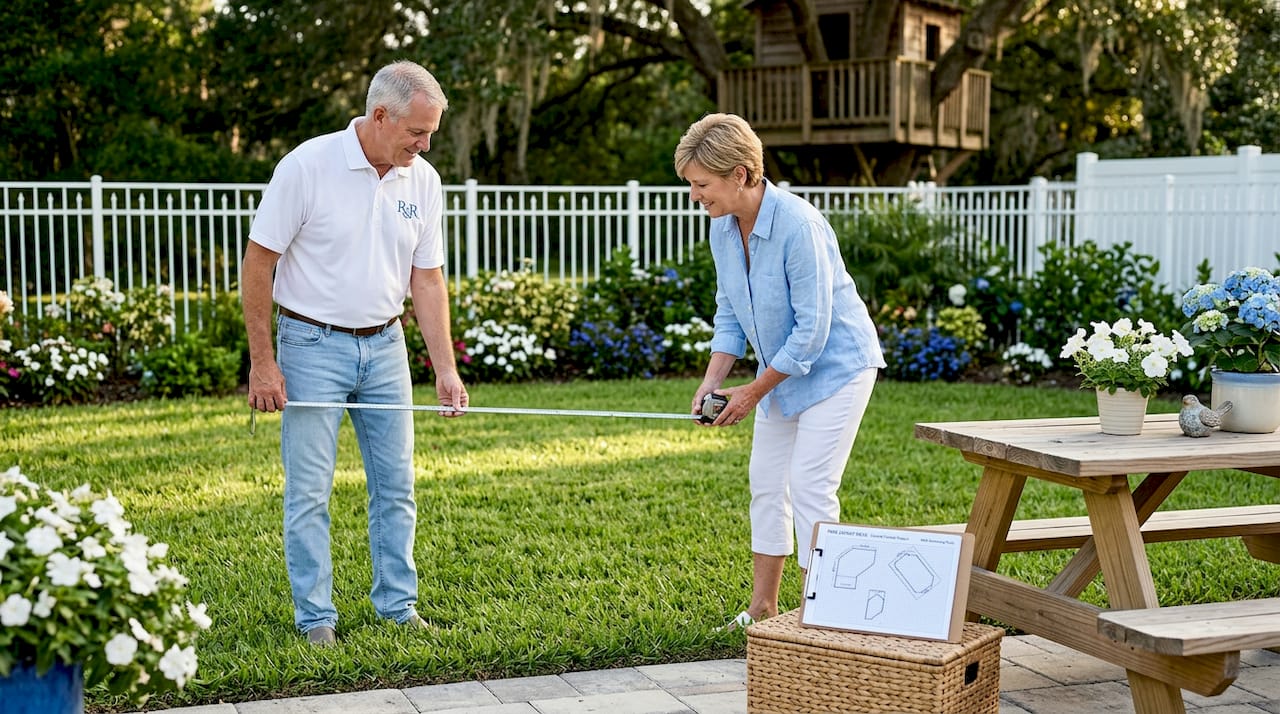
The pool design process should always begin with a professional walking your actual yard, not just reviewing square footage numbers. Your lot grade, tree placement, sun exposure, and existing structures will shape your size options in ways no chart can fully capture.
— Randrswimmingpools
Ready to find your perfect pool size?
If this pool size comparison list has helped you narrow down your options, R and R Swimming Pools is ready to take the next step with you. Since 1985, we’ve been helping Central Florida homeowners design and install custom inground pools that fit their backyards, budgets, and lifestyles, not just a catalog size.
Whether you’re leaning toward a compact plunge pool for a tight yard or a full-size custom freeform design for a larger property, our team will walk you through every size option with real measurements and honest cost projections. Explore our inground pool types guide to see the full range of options we build across Central Florida, or visit our pool installation guide to understand exactly how the design and build process works from start to finish.
FAQ
What is the most common inground pool size?
The most popular residential inground pool size is 14×28 feet, which balances usable swimming space, manageable maintenance, and installation cost for most family backyards.
How small can a backyard pool be?
A plunge pool can be installed at dimensions as small as 6×10 feet, making it a practical option for compact Central Florida yards where a standard pool won’t fit.
How do I figure out what pool size I need?
Measure your usable backyard space, subtract at least 3 to 5 feet on each side for decking and equipment clearance, then match the remaining footprint to the pool dimensions chart above based on your primary use case.
Do larger pools always cost more to maintain?
Yes. Larger pools require more water, more chemicals, and more energy to run the circulation system, and monthly maintenance costs scale noticeably with pool size. The difference in ongoing costs between a 12×24 and a 20×40 pool can run hundreds of dollars per month.
Can I get a custom pool size in Central Florida?
Absolutely. Custom pools built from concrete allow nearly unlimited flexibility in dimensions and shape, and they’re increasingly popular in Central Florida for homeowners with irregular lots or specific design preferences.
