

TL;DR:
- Most Central Florida homeowners neglect both in-pool and yard drainage systems, risking costly repairs. Proper maintenance, safety compliance, and correct drainage design are essential to prevent structural damage and safety hazards. Regular inspections and timely upgrades help ensure safe, efficient water management and protect your property.
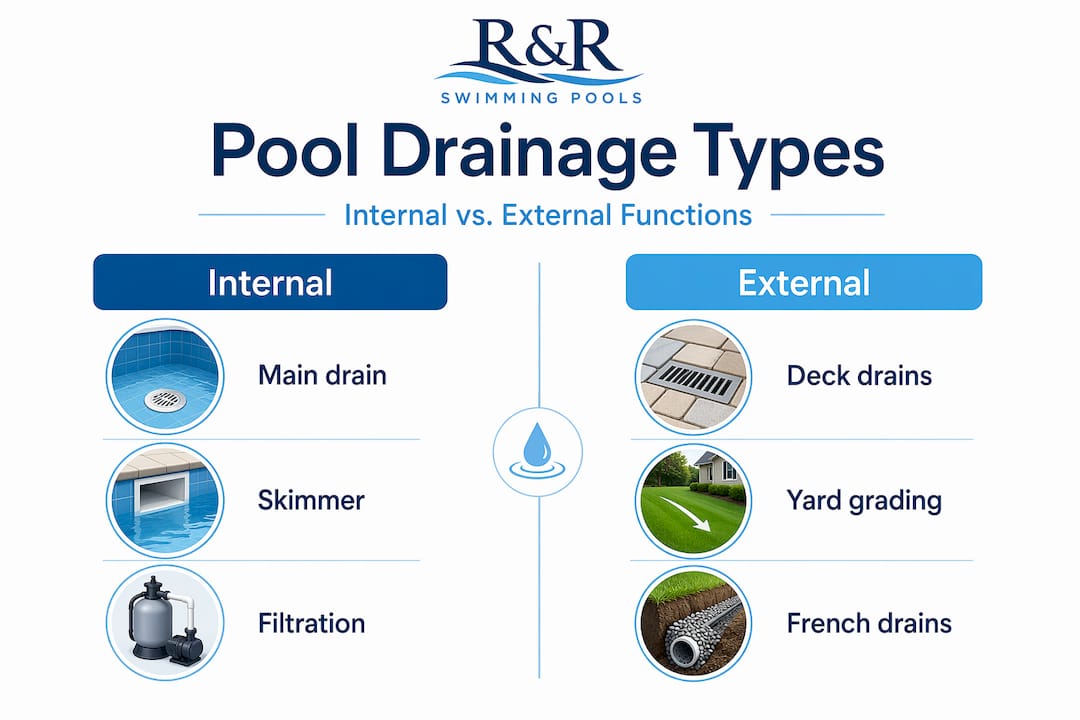
Most Central Florida homeowners think about pool drainage only when something goes wrong. Water pools on the deck after a rainstorm, a drain cover cracks, or a neighbor mentions getting fined for improper discharge. The role of pool drainage is actually two separate jobs working at the same time: managing water inside your pool through suction and filtration, and managing water outside your pool through the surrounding landscape. Both matter. Both get neglected. And in a region that sees over 50 inches of rainfall per year, getting either one wrong can cost you far more than a repair bill.
Table of Contents
- Key Takeaways
- The role of pool drainage inside your pool
- Drain safety: what Central Florida homeowners must know
- External drainage: protecting your yard and home
- How to drain your inground pool safely
- Keeping your drainage system in good shape
- My take on what homeowners consistently get wrong
- Why Randrswimmingpools should be your first call
- FAQ
Key Takeaways
| Point | Details |
|---|---|
| Two systems, not one | In-pool drainage and yard drainage are separate systems that each require specific maintenance and design. |
| Safety laws are real | The Virginia Graeme Baker Act requires certified anti-entrapment drain covers, and full assembly compliance matters as much as the cover itself. |
| Florida rain creates real risk | Central Florida’s heavy seasonal rainfall makes external drainage a structural issue, not just a comfort issue. |
| Draining incorrectly has consequences | Discharging pool water to storm drains is environmentally harmful and can violate local, state, and federal regulations. |
| Maintenance prevents major costs | Regular inspection of drain covers, lines, and catch basins stops small problems from becoming expensive repairs. |
The role of pool drainage inside your pool
Your pool’s internal drainage system does two things: it pulls water from the bottom of the pool for filtration, and it skims debris from the surface before it sinks. These aren’t backup systems for each other. They work together.
Pool main drains are openings at the bottom of the pool that draw water into your filter, removing debris and improving water quality throughout the entire pool volume. Without a functioning main drain, water at the bottom stagnates. Algae grows. Chemical treatments stop circulating properly.
Skimmers handle the surface layer. They pull floating debris, oils, and contaminants into the filter before they break down and cloud your water. The table below shows how these two components divide the work.
| Component | Location | Primary function | Maintenance need |
|---|---|---|---|
| Main drain | Pool floor | Pulls bottom water to filter | Inspect cover monthly; check for blockage |
| Skimmer | Pool wall at waterline | Removes surface debris | Empty basket weekly; check weir door |
Together, these components drive water quality and chemical balance. When one fails, the other can’t compensate fully. A skimmer clogged with leaves forces debris to the bottom, where the main drain has to work harder. A blocked main drain means your filter runs on surface water only, leaving the bottom of the pool undertreated.
Pro Tip: Check your skimmer basket every week during Florida’s summer storm season. Leaves and debris accumulate fast, and a packed basket cuts your circulation by half without triggering any obvious warning sign.
Connecting your pool filtration system to properly functioning drains is what makes all the difference in water clarity and chemical efficiency.
Drain safety: what Central Florida homeowners must know
This is the section most people skip. Don’t.
Between 1985 and 2002, 147 incidents were reported involving suction entrapment from pool drains, resulting in 36 fatalities. These aren’t accidents caused by negligence. Many happened in residential pools with covers that looked intact. The force generated by a single main drain operating at full suction can pin a swimmer to the drain floor in seconds.
Suction entrapment happens when a drain cover is missing, damaged, or incorrectly sized. It also happens when a technically compliant cover is installed in an incompatible sump. That second point is where most homeowners get caught off guard.
Here’s what you need to understand about safety compliance:
- The Virginia Graeme Baker Pool and Spa Safety Act, effective since 2008, requires ANSI/APSP/ICC-16 certified anti-entrapment drain covers on public pools and spas.
- Residential pools are not federally mandated under this law, but many states and municipalities have adopted similar requirements for new construction.
- A compliant cover installed incorrectly or in an incompatible fitting assembly creates a false sense of security. The entire suction outlet assembly must be compatible, not just the cover.
- Additional safety layers recommended by safety experts include dual drains (spaced at least three feet apart), safety vacuum release systems (SVRS), and gravity drainage options.
“Suction entrapment prevention requires multiple safety layers beyond drain covers, including dual drains and safety vacuum release systems.” — Pool safety research consensus
Pro Tip: If your pool was built before 2008 and you haven’t had the drain assembly professionally inspected, schedule one now. Older pools often have single main drains with domed covers that look fine but don’t meet current safety standards.
You can find more on residential pool safety in Central Florida including entrapment risks and what inspections should cover.
External drainage: protecting your yard and home
Here’s where Central Florida’s climate makes pool ownership genuinely different from other parts of the country. The region’s wet season runs roughly June through September, delivering intense afternoon storms that can drop several inches of rain in under an hour. If your pool deck and surrounding landscape aren’t draining properly, that water doesn’t just puddle. It saturates.
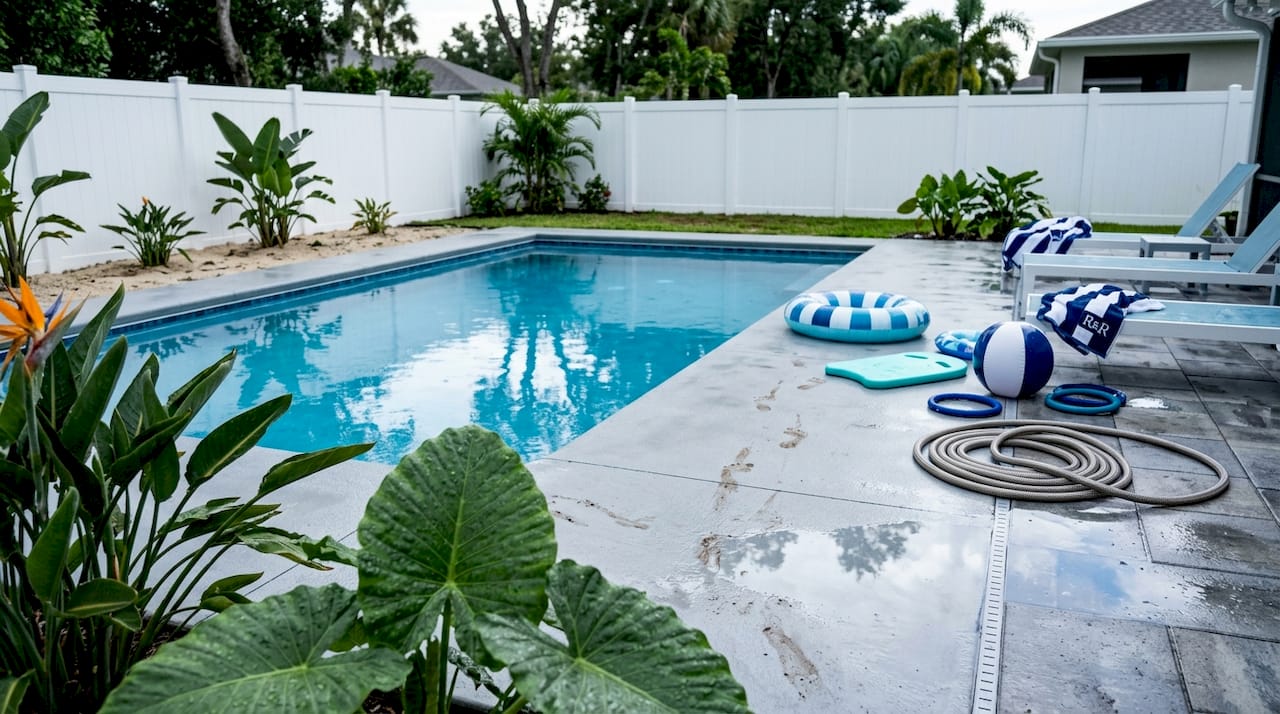
Subsurface water that lingers after storms causes soil to swell and shrink repeatedly. Over time, this movement shifts pool structures, cracks decking, and undermines the stability of patios and foundations near the pool perimeter. This is not a theoretical risk in Florida. It happens regularly, and the repairs are expensive.
Common external drainage solutions include:
- Grading: Sloping the ground away from the pool and home so water flows toward designated runoff areas rather than pooling near structures.
- French drains: Perforated pipe systems installed below ground that redirect subsurface water away from pool and foundation areas. They pair well with professional rainwater and soil management strategies.
- Catch basins: Surface-level drains installed in low spots on the deck or patio to capture standing water and direct it underground.
- Trench drains: Linear channel drains installed along the pool deck edge that intercept sheet flow before it reaches the structure.
| Solution | Best for | Installation complexity | Maintenance |
|---|---|---|---|
| Grading | New installs or renovation | Low to moderate | Minimal |
| French drain | Subsurface water accumulation | Moderate | Annual flushing |
| Catch basin | Surface pooling in low spots | Low | Clear debris monthly |
| Trench drain | Deck sheet flow | Moderate | Clear debris monthly |
Central Florida’s sandy soils drain quickly in dry conditions but compact under repeated saturation, which changes how water moves through the ground over time. A drainage design that worked when your pool was new may need reassessment after five or ten years. The role of pool elevations in managing runoff and soil saturation is another piece of this puzzle that’s worth understanding before problems develop.
How to drain your inground pool safely
You will eventually need to fully drain your pool, whether for resurfacing, major repairs, or chemical rebalancing that can’t be corrected any other way. Most pools need a complete drain every five to seven years. Doing it wrong can crack the shell, cause sewer backflow into your home, or result in a fine.
Follow these steps to do it right:
- Locate your sanitary sewer cleanout. This is the correct discharge point for pool water. It connects to the municipal sewer system, not a waterway. Do not use a floor drain that connects to a storm system.
- Shut off all pool equipment. Turn off the pump, heater, and any automated systems before you begin.
- Connect a submersible pump. Lower it to the deepest part of the pool and run the discharge hose to the sewer cleanout.
- Monitor the flow rate. Draining too fast can cause sewer backflow into your home. Keep the flow rate moderate and check periodically that the cleanout is accepting the water without backing up.
- Watch the water level closely. Once the water drops below a certain point, hydrostatic pressure from groundwater can lift or crack the shell. Don’t leave a drained pool unattended for extended periods, especially during the wet season.
- Refill promptly. In Central Florida’s high water table conditions, an empty pool left overnight is a risk.
Municipal guidelines are clear that pool water should never be discharged to storm drains or streets. Chlorinated water harms aquatic ecosystems, and draining to storm drains can violate local, state, and federal water quality regulations. If you’re unsure where your storm and sanitary systems connect, call your municipality before you start.
Pro Tip: Wait until chlorine levels drop below 1 ppm before discharging, even to the sanitary sewer. Letting the pool sit uncovered for a day or two before draining allows chlorine to off-gas naturally and reduces the chemical load on the sewer system.
Keeping your drainage system in good shape
The benefits of proper drainage only hold if you maintain the systems that deliver them. A well-designed pool drainage system that isn’t maintained will fail, often at the worst possible time.
Here’s what a practical maintenance schedule looks like for Central Florida pool owners:
- Monthly: Inspect drain covers for cracks, warping, or missing hardware. A damaged cover needs replacement, not tape.
- Weekly during storm season: Clear skimmer baskets and check catch basins for debris accumulation. Summer storms can clog these in a single day.
- Annually: Flush French drain lines and inspect catch basin outlets for root intrusion or compacted sediment.
- After major storms: Walk the pool perimeter and deck to identify new pooling areas or signs of soil movement. Address them early before they worsen.
- Every 3 to 5 years: Have the full suction outlet assembly professionally inspected. Covers degrade with UV exposure. Internal components can corrode.
Clogged drains or non-compliant parts increase safety risk and reduce system performance. The cost of a professional inspection is a fraction of the cost of a structural repair or a personal injury claim.
Signs your drainage system needs attention include water that lingers on the deck for more than 30 minutes after rain stops, uneven ground near the pool edge, discolored water despite correct chemical levels, and visible cracks or movement in pool coping or surrounding concrete.
Pro Tip: Keep a simple maintenance log. If you ever sell your home or need to pull a permit for pool renovation, documented maintenance history and proof of compliant drain covers will save you significant time and negotiation headaches.
My take on what homeowners consistently get wrong
I’ve worked with Central Florida pools long enough to see the same mistakes repeat. The most common one is treating pool drainage as a single concept when it’s actually two completely separate systems. Homeowners often mix up their in-pool suction drainage with the yard drainage around the pool, and that confusion leads to neglecting both.
The second mistake I see constantly is assuming that because residential pools aren’t federally regulated the same way public pools are, the safety requirements don’t really apply. They do. The physics of suction entrapment don’t care whether your pool is residential or commercial. A missing drain cover is dangerous regardless of what the local code says.
What I’ve found in practice is that the homeowners who treat drainage as part of their regular pool upkeep spend far less money over time. A $150 drain cover inspection catches a problem that could turn into a $5,000 deck repair or, worse, a liability situation. The properties I’ve seen handle our wet season best are the ones where someone thought about grading and drainage design before the first shovel hit the ground, not after the first flood.
If your pool was built more than ten years ago and you haven’t had a drainage review done, that’s the most useful thing you can do this year.
— Randrswimmingpools
Why Randrswimmingpools should be your first call
Since 1985, R and R Swimming Pools has built custom inground pools across Central Florida with drainage design built into every project from the start, not added as an afterthought. We understand how Florida’s water table, seasonal rainfall, and clay-heavy soils affect both in-pool systems and the landscape around them.

Whether you’re installing a new pool and want drainage done right from day one, or you own an existing pool and have concerns about safety compliance or yard drainage performance, our team has the experience to give you a straight answer. Explore our inground pool installation guide to see how drainage fits into the full construction process, or visit Pool School for maintenance guidance you can put to use right away. When you’re ready to talk through your specific situation, we’re here for it.
FAQ
What does pool drainage actually do?
Pool drainage manages water both inside and outside your pool. Inside, main drains and skimmers pull water through the filtration system to maintain water quality and chemical balance. Outside, drainage solutions like grading and French drains protect your deck, landscape, and home foundation from water damage.
How do I know if my pool drain covers are safe?
Look for covers that are certified to ANSI/APSP/ICC-16 standards and check for visible cracks, warping, or missing screws. A compliant cover installed in an incompatible sump is still unsafe, so a professional inspection of the full suction outlet assembly is the only reliable way to confirm safety.
Can I drain my pool into the street or storm drain?
No. Discharging pool water to storm drains or streets is prohibited under most local, state, and federal water quality regulations. Pool water should be discharged to a sanitary sewer cleanout, not a storm system, to protect aquatic ecosystems and avoid legal penalties.
How often should inground pools in Central Florida be fully drained?
Most inground pools need a complete drain every five to seven years for resurfacing or chemical rebalancing. In Central Florida, timing matters. Drain during dry season when the water table is lower to reduce the risk of hydrostatic pressure lifting or cracking the pool shell.
What are signs that my yard drainage near the pool is failing?
Watch for water that pools on the deck or surrounding lawn for more than 30 minutes after rain, visible soil movement or cracking near the pool coping, and soft or uneven ground around the pool perimeter. These are signs that subsurface water is accumulating and causing structural stress.
