TL;DR:
- A structured pool project planning workflow in Central Florida involves site assessment, budget setting, builder selection, design finalization, and permits to avoid costly delays. Each phase depends on the previous one, with careful sequencing and clear scope agreements essential for success. Proper planning, contingency budgeting, and coordinated management ensure timely, high-quality pool construction.
A pool project planning workflow is the structured sequence of decisions, approvals, and construction phases that moves a custom swimming pool from concept to completion without budget blowouts or scheduling failures. Central Florida homeowners face site-specific challenges that make this structure non-negotiable: high water tables, sandy soil, active permit offices in Orange, Seminole, and Osceola counties, and a year-round building season that keeps contractors booked months out. Getting your workflow right before a single shovel hits the ground separates a smooth backyard renovation from a costly, stressful ordeal. This guide covers every phase of the swimming pool design process, from initial site assessment through final landscaping, with real numbers and practical coordination strategies.
What are the essential steps in a pool project planning workflow?
The industry term for this process is critical path scheduling, and it applies directly to residential pool builds. Your pool project planning workflow follows a fixed sequence because each phase depends on the one before it. Skipping steps or reordering them creates expensive rework.
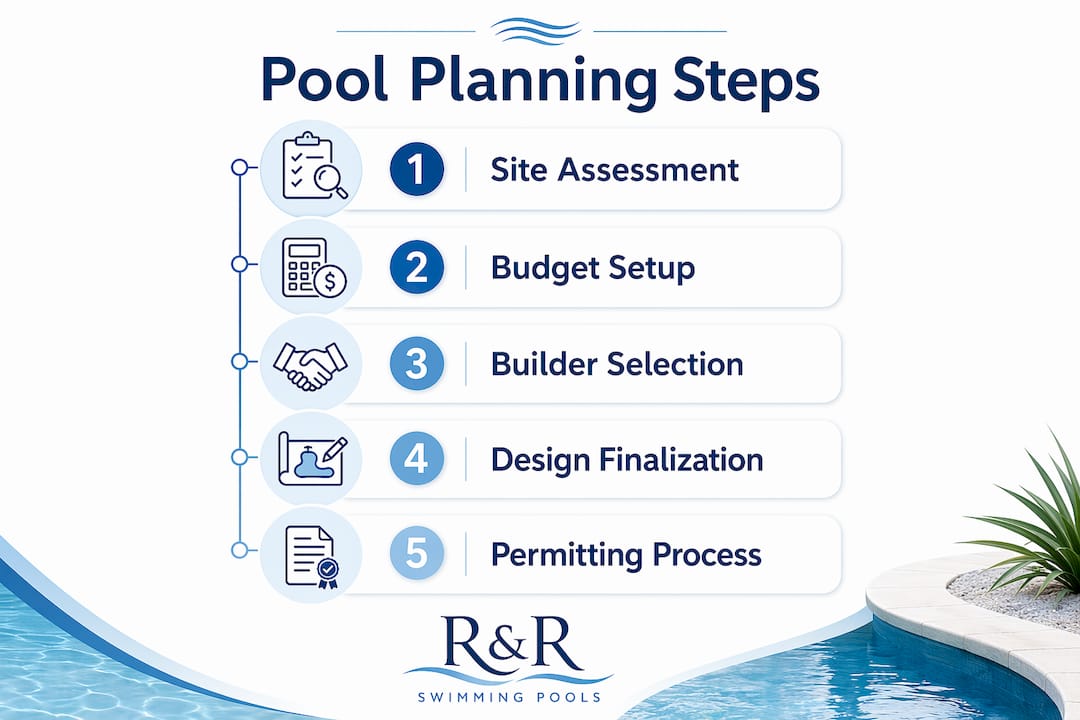
Step 1: Site assessment and feasibility check
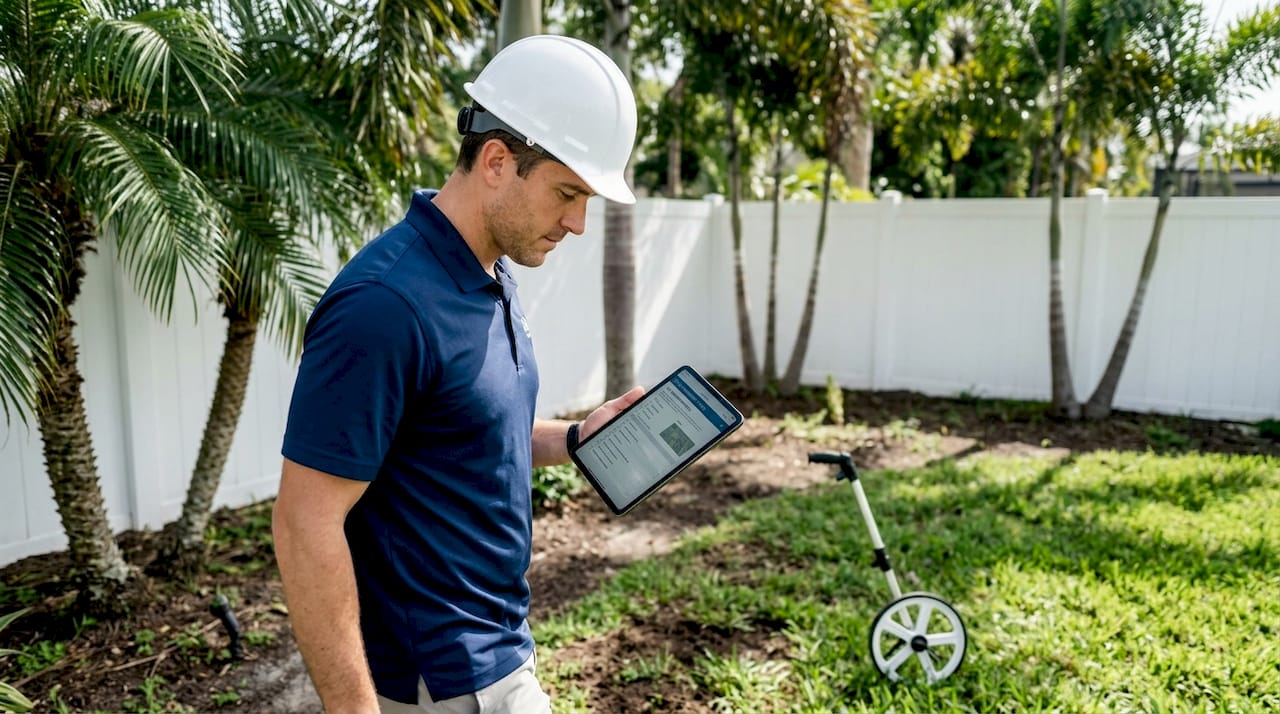
Before you look at a single pool design, walk your property with a licensed contractor. Site-specific factors like tree roots, high water tables, and limited equipment access are major cost drivers that cause mid-project price spikes when discovered late. In Central Florida, a high water table is not a rare exception. It is a common condition across much of the region, and it directly affects excavation depth, dewatering costs, and structural requirements.
Step 2: Establish your budget with a contingency reserve
Set your total project budget before you select a builder or finalize any design. Allocate a 10 to 15% contingency over your base installation cost to cover unforeseen site conditions and project changes. That contingency is not a slush fund. It is insurance against the surprises that show up in nearly every custom build.
Step 3: Select your builder before finalizing design
Most homeowners get this backward. They fall in love with a design, then shop for someone to build it. The right sequence is to choose a builder whose experience matches your site conditions, then develop the design together. Your builder’s knowledge of local permit requirements and subcontractor availability will shape what is realistic within your budget and timeline.
Step 4: Finalize pool type, features, and landscaping plans
Decide between freeform and geometric pool shapes based on your yard dimensions and how the pool connects to your home’s architecture. Select water features, spa additions, decking materials, and pool landscaping ideas at this stage, not after excavation begins. Design changes after construction begins cause premium costs and significant delays. Lock in every aesthetic decision before the build starts.
Step 5: Permitting and engineering
Central Florida municipalities require structural engineering drawings, electrical plans, and barrier compliance documentation before issuing a pool permit. Budget two to six weeks for permit approval depending on your county. Include permit and engineering fees in your initial financial plan, not as an afterthought.
Pro Tip: Get your pool installation checklist in writing from your contractor before signing any contract. Every feature, finish, and timeline milestone should appear as a line item. Verbal agreements disappear when disputes arise.
How does the pool construction timeline impact project planning?
The construction timeline is the backbone of your outdoor pool project guide. Understanding each phase prevents you from making the single most common mistake: pressuring your contractor to rush a phase that physically cannot be rushed.
Phase-by-phase construction breakdown
| Phase | Duration | Key dependency |
|---|---|---|
| Layout and excavation | 2 to 3 days | Permit approval and site access confirmed |
| Plumbing and steel installation | 4 to 6 days | Excavation complete and inspected |
| Gunite application | 1 day | Steel inspection passed |
| Curing period | 7 to 14 days minimum, 28 days ideal | Gunite applied and moisture maintained |
| Tile, coping, and decking | 5 to 10 days | Curing period complete |
| Equipment, electrical, and plaster | 3 to 5 days | Decking and tile complete |
The gunite curing period is the phase most homeowners underestimate. Rushing it leads to costly callbacks from premature plaster application and finish failures. Twenty-eight days is the professional standard, even when seven days feels sufficient. This single phase has more impact on your pool’s long-term durability than almost any other decision you make.
A typical residential pool project coordinates 8 to 12 subcontractors, each dependent on the previous trade’s timely completion and inspection sign-off. That sequential dependency means one delayed inspection can push every downstream trade by days or weeks. In Central Florida’s busy building season, rescheduling a subcontractor who has moved on to another job can add two to three weeks to your timeline.
Pro Tip: Ask your builder which digital project management tools they use to track subcontractor scheduling and inspections. Builders using centralized platforms like Projul or Buildertrend maintain better document control and communicate more reliably than those relying on text messages and whiteboards.
What are common challenges and how can homeowners mitigate risks?
Central Florida pool projects carry a specific set of risks that homeowners in other regions do not face at the same frequency. Knowing them in advance gives you the leverage to address them before they become budget problems.
The most preventable risk is choosing a pool design before confirming site feasibility. Homeowners who fall in love with a design on Pinterest or in a showroom, then discover their yard requires significant grading or structural retaining walls, face thousands of dollars in unplanned costs. Site feasibility must drive design, not the other way around.
Pre-construction walkthroughs with key subcontractors are a practice that separates well-run projects from chaotic ones. When your excavator, plumber, and electrician all walk the site together before work begins, they identify conflicts in access routes, utility locations, and sequencing that would otherwise surface mid-build. This single step, which costs nothing but time, prevents the kind of rework that construction project management research consistently identifies as a top driver of budget overruns.
“The biggest source of mid-project cost increases is not the pool itself. It is the site conditions that nobody looked at carefully before the contract was signed.” This is the consistent finding from experienced pool builders across Florida’s high-water-table regions.
Written scope agreements matter more than most homeowners realize. Every feature, every finish material, and every timeline milestone should appear in your contract as a specific line item. Vague language like “standard decking” or “pool equipment package” leaves room for interpretation that rarely favors the homeowner. Require specifics: brand names, model numbers, square footage, and material grades.
Procurement delays hit hardest in the tile, coping, and equipment phases. Specialty tiles, custom water features, and specific pump models can carry lead times of four to eight weeks. Order these materials before excavation begins, not after. Your pool build preparation guide should include a materials procurement checklist tied to your construction timeline.
How to budget effectively within the pool project planning workflow
Budgeting for a custom pool is not a single number. It is a layered financial plan that covers construction, site preparation, landscaping, permits, and ongoing maintenance.
Cost categories every homeowner should plan for
| Cost category | Typical range | Notes |
|---|---|---|
| Pool shell and equipment | $60,000 to $150,000+ | Varies by size, type, and features |
| Hardscape and decking | $8,000 to $25,000 | Material choice drives cost significantly |
| Landscaping | $3,000 to $15,000 | Depends on scope and plant selection |
| Permits and engineering | $1,500 to $4,000 | County-specific; budget early |
| Contingency reserve | 10 to 15% of total | Non-negotiable for custom builds |
Custom pool costs range from $80,000 to $250,000 or more based on site conditions, finish materials, and added features like spas and water elements. That range reflects real market variation, not padding. A basic rectangular pool with standard plaster in a flat yard costs far less than a freeform design with a spa, waterfall, and premium quartz finish on a sloped lot.
Finish material selection is one of the highest-leverage budget decisions you make. Quartz finishes cost more upfront than standard plaster but last significantly longer and resist staining better in Florida’s hard water conditions. The pool maintenance workflow over a 10-year period often favors the higher initial investment in quartz because replastering costs and chemical consumption both decrease.
Pro Tip: Build your contingency reserve into your original budget presentation to your contractor, not as a hidden personal reserve. When your contractor knows you have flexibility for legitimate site surprises, they are more likely to surface issues early rather than absorb them silently and cut corners elsewhere.
Labor market conditions in Central Florida directly affect both pricing and scheduling. The region’s construction volume means experienced subcontractors are in high demand. Builders with established subcontractor relationships get priority scheduling. This is one concrete reason to choose a builder with a long local track record, like Randrswimmingpools, which has operated in Central Florida since 1985.
Key takeaways
A successful pool project in Central Florida requires locking in site assessment, budget, design, and contractor selection before construction begins, because every phase after excavation depends on the decisions made before it.
| Point | Details |
|---|---|
| Site first, design second | Confirm feasibility and site conditions before finalizing any pool design to avoid costly structural surprises. |
| Budget with contingency | Set aside 10 to 15% above your base cost to cover unforeseen site conditions and material changes. |
| Lock design before excavation | Finalize every finish, feature, and material choice before work starts to prevent premium-cost change orders. |
| Respect the curing period | Allow 28 days for gunite curing to prevent finish failures and expensive rework down the line. |
| Use written scope agreements | Require specific line items for every material, brand, and milestone to eliminate costly contract ambiguity. |
What I’ve learned from decades of Central Florida pool builds
After nearly 40 years of building pools across Central Florida, the pattern I see most often is not a design problem or a budget problem. It is a sequencing problem. Homeowners arrive at our office with a beautiful rendering they found online, a rough number in their head, and a timeline that assumes everything goes perfectly. The rendering is great. The number is usually 20% short. The timeline ignores the permit office.
The homeowners who have the best experiences are the ones who treat the planning phase as the real work. They spend three to four weeks on site assessment, contractor selection, and design finalization before a single permit application is filed. That upfront investment pays back in a construction phase that moves predictably and a finished pool that matches what they imagined.
Digital tools have genuinely changed how we coordinate complex builds. When every subcontractor, inspection date, and material delivery is tracked in one platform, the whole project runs with less friction. Miscommunication between trades used to be the number one source of delays. Centralized scheduling has cut that significantly on our projects.
The one piece of advice I give every homeowner before we start: do not fall in love with a feature you have not priced. Waterfalls, grottos, and infinity edges are spectacular. They are also the first things that push a project from $120,000 to $200,000. Know what each feature costs before it goes on the plan, not after the contract is signed.
— Randrswimmingpools
Plan your Central Florida pool project with expert guidance
R and R Swimming Pools has been designing and building custom inground pools across Central Florida since 1985, and the resources below are built specifically for homeowners at every stage of the planning process.
Whether you are still comparing pool types or ready to review permit requirements, the inground pool installation guide walks you through every phase with local specifics built in. For homeowners focused on the design stage, the custom pool planning guide covers site-specific design decisions, feature selection, and how to align your vision with your budget. Both guides are free and written for Central Florida conditions, not generic national advice. Schedule a free quote directly through Randrswimmingpools to get a site-specific assessment from a team that knows your county’s permit process and your neighborhood’s soil conditions.
FAQ
What is a pool project planning workflow?
A pool project planning workflow is the ordered sequence of steps from site assessment and budgeting through design, permitting, construction, and landscaping that governs a custom pool build. Following this sequence prevents costly rework and keeps the project on schedule.
How long does a pool construction timeline take in Central Florida?
A typical custom inground pool in Central Florida takes 10 to 16 weeks from permit approval to completion, depending on site conditions, design complexity, and inspection scheduling. The gunite curing period alone requires a minimum of 7 to 14 days, with 28 days recommended for best results.
How much contingency should I budget for a pool project?
Budget a 10 to 15% contingency reserve above your base pool installation cost to cover unforeseen site conditions, material changes, and permit-related adjustments. This reserve is standard practice for custom builds in Florida’s variable soil and water table conditions.
When should I finalize my pool design and feature selections?
Finalize all design decisions, including pool shape, tile, decking, water features, and finish materials, before excavation begins. Changes made after construction starts carry premium costs and can delay the entire project by weeks.
How many contractors are involved in a pool build?
A residential pool project typically coordinates 8 to 12 subcontractors, including excavators, plumbers, steel workers, gunite crews, tile setters, electricians, equipment installers, plasterers, and landscapers. Each trade depends on the previous one completing on time and passing inspection.
