
TL;DR:
- Effective pool drainage protects the pool structure, water quality, and user safety by preventing damage and contamination. Proper slopes and regular inspections are essential in Central Florida to handle intense storms and sandy soils, reducing repair costs and health risks. Using planned surface and subsurface drainage systems, along with professional design, ensures long-term pool stability and water conservation.
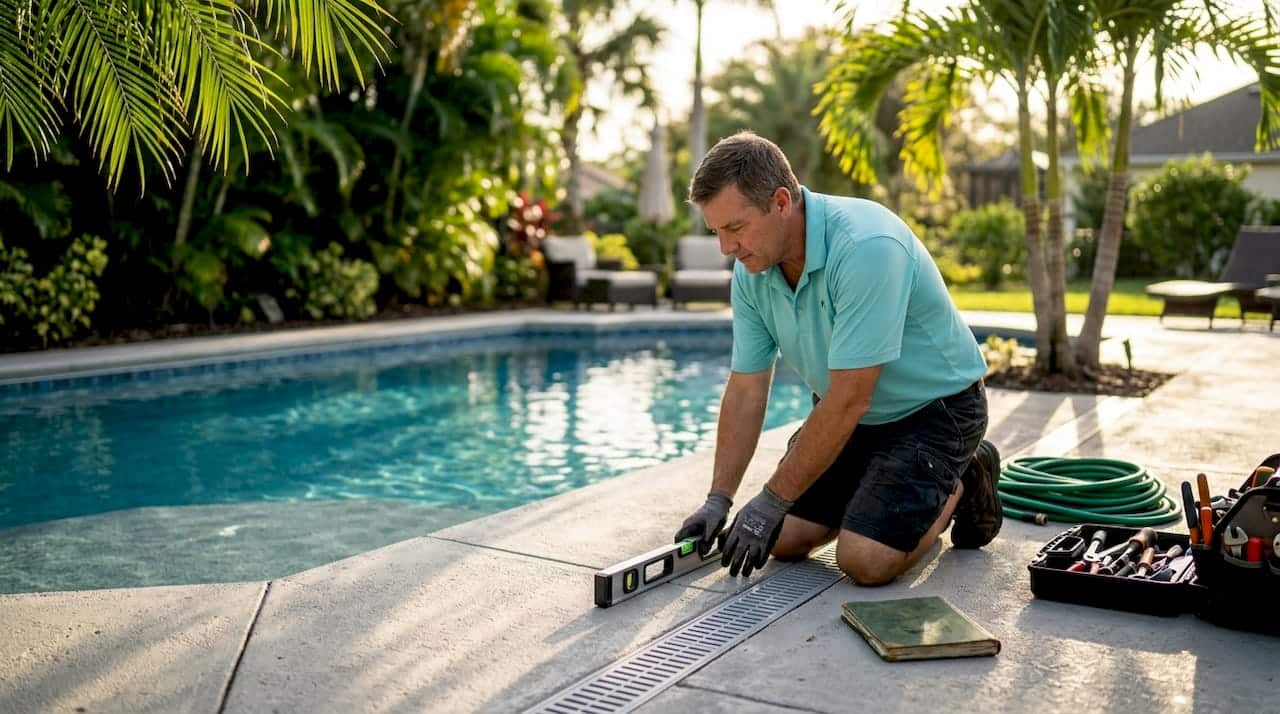
Pool drainage is the deliberate management of water flow around your swimming pool to prevent structural damage, maintain water quality, and protect user safety. Central Florida homeowners face a specific challenge: the region’s intense summer rainstorms, sandy soils, and year-round pool use create drainage demands that most standard designs underestimate. The importance of pool drainage goes far beyond keeping your deck dry. A failed drainage system can crack your pool shell, spike your chemical costs, and turn your backyard into a mosquito habitat. Getting drainage right from the start is the single most cost-effective decision you can make as a pool owner.
What are the main benefits of effective pool drainage?
Effective pool drainage protects four things at once: your pool structure, your water chemistry, your deck surface, and the safety of everyone who uses the pool. Each benefit compounds the others. When water drains correctly, you spend less time and money correcting problems caused by standing water.
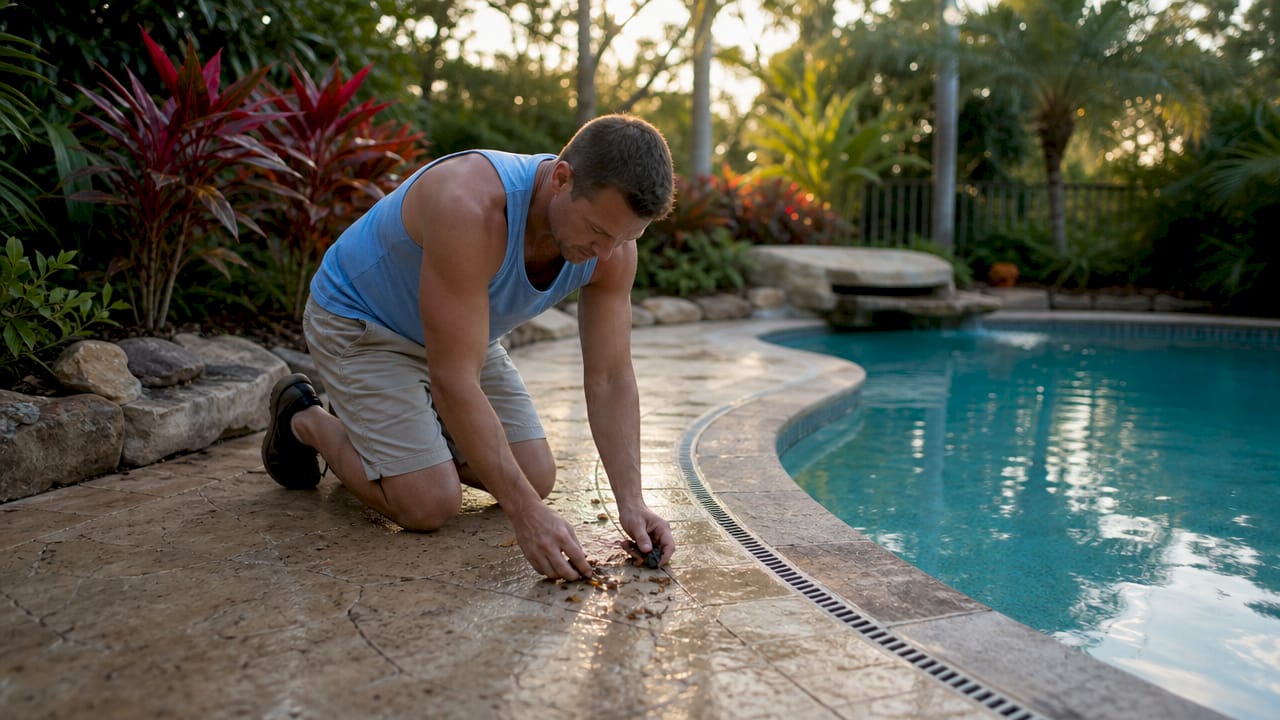
The structural benefit is the most overlooked. When rainwater pools around your deck and soaks into the surrounding soil, it creates hydrostatic pressure against the pool shell. Over time, that pressure causes cracks, tile displacement, and ground settling under the deck. Effective drainage systems are often invisible but critical for preventing the water pooling that causes these problems.
Water quality also depends on proper runoff management. Rainwater carries fertilizers, debris, and contaminants into your pool when drainage is poor. That runoff throws off your pH and chlorine levels, forcing you to add more chemicals more often. A well-graded deck and a functional drainage channel keep that contaminated water moving away from the pool, not into it.
Safety is the third major benefit. Standing water on a pool deck is a slip hazard. Stagnant water near the pool edge also becomes a breeding ground for mosquitoes, which is a serious concern in Central Florida from april through october. Proper drainage eliminates both risks.
- Prevents deck erosion and soil settling under pool surrounds
- Reduces algae risk by limiting contaminated water entry
- Lowers chemical use by maintaining stable water chemistry
- Eliminates slip hazards from standing water on deck surfaces
- Removes mosquito breeding conditions near the pool
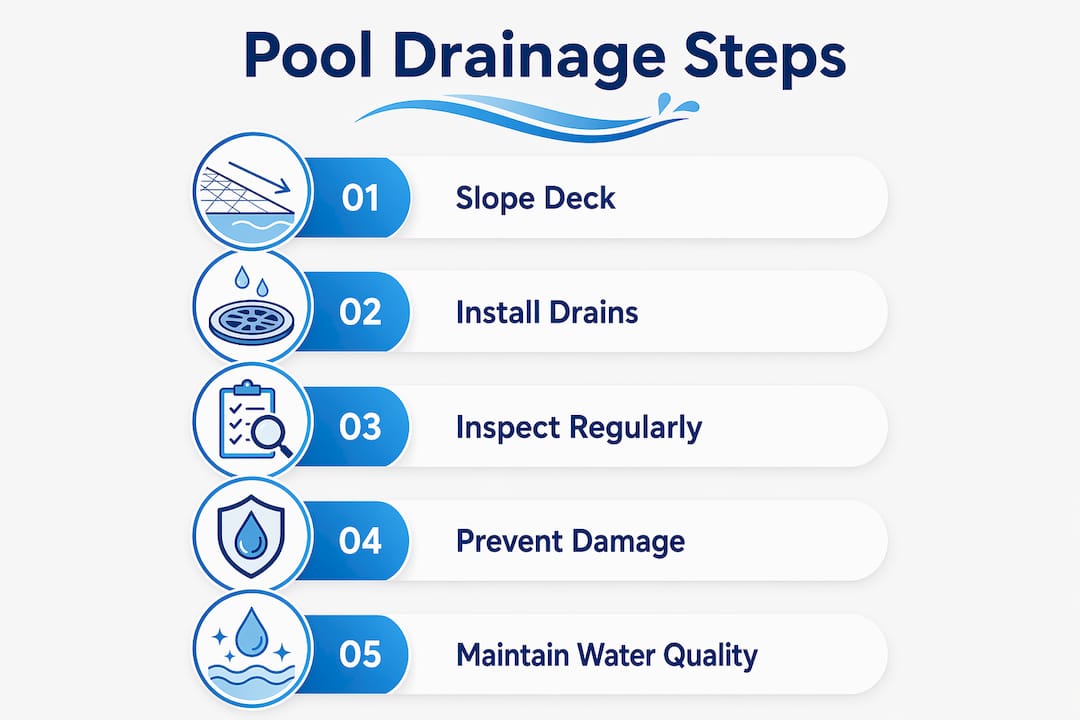
Pro Tip: Professional contractors recommend at least a 1/4 inch per foot slope on pool decks for realistic performance under heavy bather loads. The code minimum is 1/8 inch per foot, but that standard was not designed for Florida’s rainfall intensity or busy family pools.
How does poor drainage impact pool maintenance and costs?
Poor drainage turns routine pool ownership into an expensive repair cycle. The damage starts underground, where water-saturated soil loses its load-bearing capacity. As the soil shifts, the concrete deck above it settles unevenly, creating cracks that let more water in and accelerate the problem. Homeowners who ignore early drainage issues often face full deck reconstruction within a few years.
Algae growth is the most visible sign of a drainage problem. Pools left unattended are 3.5 times more likely to develop severe algae growth, which drives up chemical costs and creates health risks. Poor drainage accelerates this by introducing organic material and nutrient-rich runoff into the pool water. That combination feeds algae faster than chlorine can control it.
The financial impact extends beyond chemicals. Consider what a drainage failure actually costs:
- Deck resurfacing after settling: several thousand dollars depending on size
- Pool shell crack repair: costly and sometimes requiring full draining
- Increased chemical purchases from chronic water imbalance
- Pest control costs from mosquito infestations near standing water
- Potential health code violations if the pool becomes a public hazard
Biannual drainage inspections help maintain functional runoff and prevent ground settling before it becomes a structural issue. Clearing drainage channels before and after Central Florida’s rainy season, which runs roughly from june through september, is the minimum standard for responsible pool ownership. Catching a blocked drain early costs almost nothing. Fixing the damage it causes costs far more.
What climate-specific factors in Central Florida complicate pool drainage?
Central Florida’s climate creates drainage conditions that most generic pool guides do not address. The region receives intense, concentrated rainfall during its summer months, often dropping several inches in a single afternoon storm. That volume of water overwhelms drainage systems designed for moderate climates. The result is rapid surface runoff that erodes soil, undercuts deck edges, and floods pool surrounds before the water has time to disperse.
Soil type compounds the problem. Much of Central Florida sits on sandy, porous soils that drain quickly in some areas but shift dramatically when saturated. In areas with higher clay content or near water tables, groundwater pressure builds against pool shells during heavy rain events. That hydrostatic pressure is a leading cause of pool shell cracking and fiberglass pool displacement. Understanding how ground elevation interacts with drainage is critical for any homeowner planning a new pool or remodel.
The industry standard for ground grading is a 2–3% slope away from the pool in all directions. Many Central Florida homeowners fall short of this standard, either because the original grading was insufficient or because landscaping changes over time have redirected water flow back toward the pool.
| Grading standard | Slope requirement | Performance in Central Florida |
|---|---|---|
| Code minimum | 1/8 inch per foot | Adequate for light rain; fails during heavy storms |
| Recommended performance | 1/4 inch per foot | Handles typical Florida afternoon storms reliably |
| Industry ground grading standard | 2–3% slope away from pool | Prevents soil erosion and deck settling under sustained rainfall |
Pro Tip: After any major landscaping project near your pool, have a contractor verify that the ground slope still directs water away from the pool shell. Mulch beds, retaining walls, and new sod installations frequently redirect drainage without homeowners realizing it.
Which pool drainage systems and maintenance practices work best?
The right drainage solution depends on your pool’s design, your yard’s grade, and how much rainfall your area receives. Central Florida homeowners generally benefit from a layered approach that combines surface drainage with subsurface management.
Common drainage system options
- French drains: Perforated pipes buried in gravel-filled trenches that collect subsurface water and redirect it away from the pool. French drains are particularly effective in areas with high groundwater or clay-heavy soil.
- Trench drains: Linear surface drains installed at the pool deck edge that capture runoff before it reaches the pool or surrounding soil. These are the most visible drainage solution and work well for decks with heavy bather traffic.
- Gutter systems: Channel-based systems integrated into the deck perimeter that direct water to a designated outlet. Gutter systems work best when combined with proper deck slope.
Maintenance practices that protect your drainage investment
- Clear all drainage channels and grates of leaves and debris at least twice a year, ideally before and after the rainy season
- Inspect the deck surface for low spots or pooling areas after heavy rain
- Check that downspouts from any adjacent structures do not discharge near the pool
- Monitor the soil around the pool perimeter for signs of erosion or settling
Pool filtration systems play a supporting role in reducing how often you need to drain and refill. Strong filtration keeps water quality stable, which means fewer situations where draining seems like the only fix. Modern mobile reverse osmosis systems recycle and purify existing pool water, reducing the need for full drainage and refills entirely. This approach conserves water and avoids the structural risks that come with emptying a pool.
Full pool draining carries real danger. Removing all water from a pool removes the internal pressure that keeps the shell stable, which can cause cracking or displacement, especially in fiberglass or older concrete pools. Partial draining is safer and sufficient for most maintenance needs. Treat draining as a diagnostic reset rather than routine maintenance. Chemical control and filtration solve most water quality problems without the structural risk.
Regular pool inspections catch drainage failures before they become expensive repairs. A qualified inspector can identify blocked channels, improper slope, and early signs of soil movement that a homeowner might miss during a casual walkthrough.
Key Takeaways
Effective pool drainage is a design-stage decision that determines your long-term maintenance costs, structural integrity, and water quality for the life of the pool.
| Point | Details |
|---|---|
| Design drainage first | Most drainage failures stem from inadequate initial design that cannot be fixed after construction. |
| Meet the slope standard | Use at least 1/4 inch per foot on deck surfaces and 2–3% ground grading to handle Florida rainfall. |
| Inspect twice a year | Clear drainage channels before and after the rainy season to prevent erosion and settling. |
| Avoid full draining | Partial draining is safer; full draining removes structural pressure and risks cracking the pool shell. |
| Use filtration over draining | Modern reverse osmosis systems maintain water quality without the risks of repeated full drains. |
Why drainage deserves the same attention as your pool’s finish
After working with Central Florida homeowners for decades, the pattern is clear: drainage is almost always treated as an afterthought. Homeowners spend months choosing tile colors, waterfall features, and lighting. They spend almost no time asking how water will move away from the pool during a July thunderstorm. That gap in planning is where most expensive problems begin.
The homeowners I see with the fewest maintenance headaches share one trait. They built drainage into the design from day one, not as a code compliance checkbox but as a functional priority. Their decks do not settle. Their chemical costs stay predictable. Their pools look the same after ten years as they did after one.
Central Florida’s climate is not forgiving of drainage shortcuts. The combination of intense rainfall, sandy soils, and high groundwater makes this region one of the most demanding environments for pool drainage in the country. A system that works in Arizona or the Carolinas may fail here within a few seasons. Local expertise matters more than general guidelines.
The sustainability angle is also worth taking seriously. Draining and refilling a pool wastes thousands of gallons of water and stresses the pool structure. Investing in good filtration and proper drainage means you drain less often, spend less on water, and extend the life of your pool shell. That is a better return on investment than any decorative upgrade.
— Randrswimmingpools
How Randrswimmingpools approaches pool drainage in Central Florida
R and R Swimming Pools has been building custom inground pools across Central Florida since 1985, and proper drainage design is built into every project from the ground up.
Whether you are planning a new concrete pool, upgrading an existing fiberglass installation, or remodeling a pool that has developed drainage-related settling issues, Randrswimmingpools brings regional expertise that generic contractors cannot match. The team designs drainage systems that account for Central Florida’s soil conditions, rainfall patterns, and local code requirements before a single shovel breaks ground. For homeowners ready to plan a new pool with drainage done right, the inground pool installation guide walks through every step of the process. Contact Randrswimmingpools to schedule a free quote and get a drainage plan built for Florida’s climate.
FAQ
What is pool drainage and why does it matter?
Pool drainage is the system of slopes, channels, and subsurface pipes that direct water away from your pool and deck. It prevents flooding, soil erosion, structural damage, and water quality problems.
How often should I inspect my pool drainage system?
Homeowners should inspect and clear pool deck drainage channels at least twice a year, ideally before and after Central Florida’s rainy season, to prevent erosion and structural settling.
Can poor drainage cause my pool to crack?
Yes. Water-saturated soil loses stability and shifts under the deck, creating uneven pressure on the pool shell. Hydrostatic pressure from groundwater buildup is a leading cause of cracks in both concrete and fiberglass pools.
Is draining my pool a good solution for algae problems?
Draining should be a last resort, not a routine fix. Chemical treatment and strong filtration resolve most algae problems without the structural risks that come with removing all water from the pool.
What slope does my pool deck need for proper drainage?
The code minimum is 1/8 inch per foot, but professional contractors recommend at least 1/4 inch per foot for reliable performance under heavy use and Florida’s intense rainfall.
