
TL;DR:
- The typical pool building process in Florida lasts three to five months, including permits. Weather, permit reviews, and design changes can cause delays during construction. Early planning, timing, and choosing experienced contractors help keep projects on schedule.
The pool building timeline in Florida runs 8–16 weeks from construction start to a swim-ready pool, with permitting adding another 2–6 weeks before a single shovel breaks ground. That means most homeowners should plan for a total project window of 3–5 months, and complex builds with waterfalls, spas, or custom features can exceed five months. Florida’s climate, local municipal processes, and the Florida Swimming Pool Association’s draw schedule standards all shape how that time gets spent. Knowing the full picture before you sign a contract is the single best way to avoid frustration.
What is the pool building timeline in Florida, phase by phase?
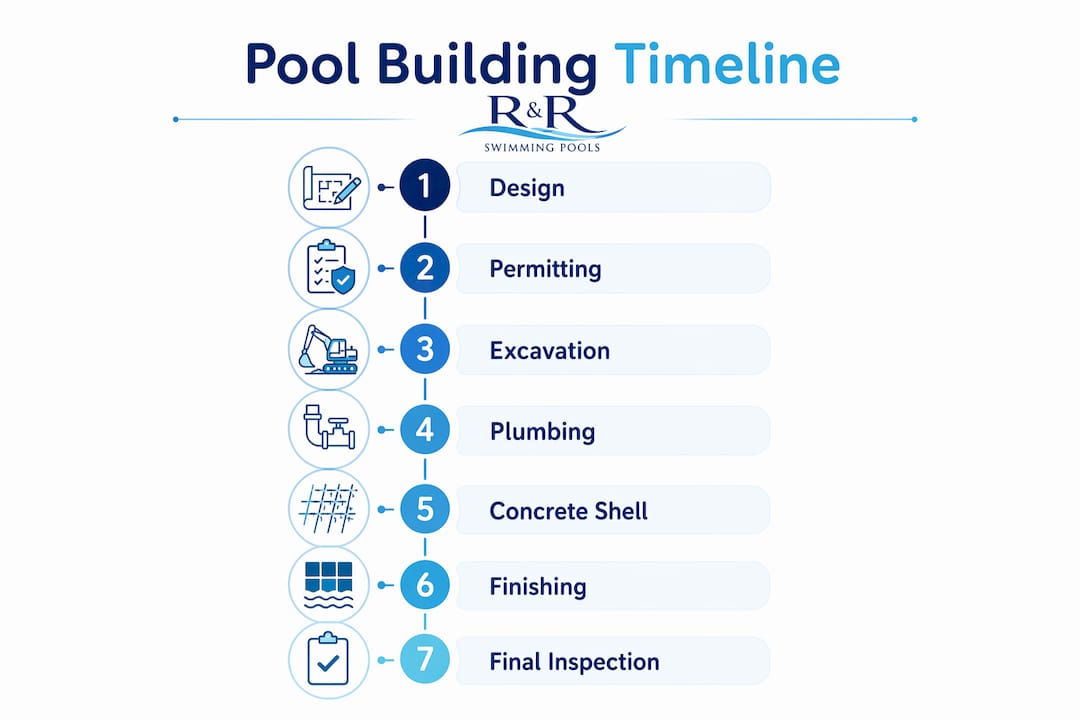
The Florida pool construction process follows seven distinct phases. Each one has a predictable duration, but several carry real risk of delay.
- Design and planning (1–3 weeks). Your builder finalizes dimensions, materials, and features. Changes made here cost nothing but time. Changes made later cost money and weeks.
- Permitting and municipal approvals (2–6 weeks). This is the longest uncontrollable phase in most Florida projects. Municipalities vary widely in their review cycles. If your neighborhood has an HOA, that approval may run consecutively with the city permit, not at the same time, which can double the waiting period.
- Excavation (1–2 weeks). Crews dig the shell and haul away soil. Most homeowners are surprised by how fast this phase moves. Excavation typically wraps in 1–2 weeks on a standard site.
- Structural work and shell application (1–3 weeks). Steel rebar is set, inspected, and then shotcrete or gunite is sprayed to form the shell. The shell then needs 3–5 weeks to cure properly before finishing work begins. Skipping or rushing the cure period causes long-term structural problems.
- Plumbing, electrical, and inspections (1–2 weeks). Pipes, conduit, and equipment pads go in. Municipal inspectors must sign off before the next phase starts. Scheduling these inspections quickly keeps momentum going.
- Tile, decking, and interior finish (3–5 weeks). This phase covers coping, deck material, waterline tile, and the interior plaster or pebble finish. Material lead times and subcontractor availability are the main variables here.
- Final inspection and startup (about 1 week). The pool fills, equipment is balanced, and a final inspection closes the permit. Your builder walks you through water chemistry and equipment operation.
Pro Tip: Ask your builder for a written phase schedule before signing. A reputable contractor should be able to give you target start and end dates for each phase, not just a single completion estimate.
The Florida Swimming Pool Association’s draw schedule structures payment across all seven phases, from contract signing through final fill and startup. That payment framework mirrors the construction sequence and gives you a built-in progress tracker.
How does Florida’s hurricane season affect your pool build?
Weather is the leading uncontrollable timeline factor for any Florida pool project. The state’s hurricane season runs from june through november, and it does not just bring the occasional storm.
- Rain delays accumulate fast. Heavy rainfall stops excavation, delays concrete pours, and pushes back decking work. Hurricane season typically adds 2–4 weeks to mid-year construction starts.
- Concrete and plaster are weather-sensitive. Shotcrete application and interior plaster both require dry conditions. A single rainy week during those phases can set the schedule back by 10 days or more.
- Decking and tile work stall in wet weather. Adhesives and grout need dry curing time. Contractors cannot rush these steps without risking failures that require costly repairs later.
- Scheduling around peak rainfall pays off. Projects that start in january, february, or march have the best chance of completing shell work and finishing phases before the wet season arrives.
Pro Tip: If you start your build in the spring, you can often complete the concrete shell and plumbing phases before june, leaving only finishing work for the rainy season. Finishing phases tolerate brief weather interruptions better than structural phases do.
Florida’s weather challenges are not unique to pool construction. Anyone managing outdoor construction in the state, from roof repairs in Tampa to pool builds in Orlando, learns quickly that buffer scheduling is not pessimism. It is good planning.
What factors most extend a Florida pool construction timeline?
Beyond weather and permitting, several homeowner decisions and site conditions regularly push projects past their original completion dates.
- Mid-construction design changes. Changing a feature after permits are issued requires a full permit revision. That resets the review process and can add weeks to the schedule. Swapping tile colors is fine. Adding a spa or changing pool dimensions is not.
- Groundwater and soil conditions. Florida’s high water table is a real construction variable. Sites with elevated groundwater require specialized dewatering systems during excavation. Poor groundwater planning leads to costly delays and additional construction phases that were never budgeted.
- Material shortages and delivery gaps. Specialty tile, custom coping stone, and certain pool equipment have lead times that fluctuate. Builders who order materials early in the process protect your schedule. Builders who order on demand create gaps.
- Builder administrative capacity. Contractors with dedicated in-house permitting teams reduce administrative delays by 3–4 weeks on average compared to contractors who outsource or handle permits manually. That difference alone can shift your completion date by a full month.
- Inspection scheduling backlogs. Some Central Florida counties have busier building departments than others. Your builder should know the typical inspection wait times in your municipality and schedule accordingly.
The pool permits process in Central Florida varies by county, and understanding your specific jurisdiction’s requirements before you start saves significant time.
How to plan your pool build for a realistic, on-schedule result
A realistic pool building schedule in Florida starts well before construction does. Homeowners who invest time in the planning phase consistently have smoother builds.
- Lock in your design before submitting permits. Every feature you add or change after permit submission costs time. Finalize your pool shape, depth, coping material, interior finish, and any water features before your builder files paperwork.
- Choose a builder with local permitting experience. A contractor who has pulled permits in your specific county knows the reviewers, the common rejection reasons, and the fastest submission formats. That knowledge is worth weeks on your schedule. Randrswimmingpools has built pools across Central Florida since 1985 and carries that local knowledge across every project.
- Start the process in the fall or early winter. A project that begins design and permitting in october or november can break ground in january or february. That timing puts structural phases in the dry season and finishing phases in the early spring.
- Understand your county’s permitting timeline upfront. Ask your builder how long permits typically take in your municipality. Some counties turn permits around in two weeks. Others take six. Knowing this sets your expectations correctly from day one.
- Schedule regular progress walkthroughs. Walk the site at the end of each major phase. You will catch issues early, confirm work matches your design, and stay informed without micromanaging the crew.
- Budget a contingency for timeline risks. Weather delays, inspection backlogs, and material lead times are real. A 10–15% contingency on both budget and timeline gives you room to absorb surprises without stress.
Pro Tip: Ask your builder specifically how they handle dewatering if your site has a high water table. A builder who has a clear answer has dealt with it before. A builder who seems surprised by the question has not.
The step-by-step pool building guide from Randrswimmingpools walks through each construction phase in detail, which helps homeowners track progress and ask the right questions at every stage.
Key Takeaways
A Florida pool build takes 3–5 months total when permitting, construction, and weather buffers are factored in, and early planning decisions determine whether you land at the short or long end of that range.
| Point | Details |
|---|---|
| Total project window | Plan for 3–5 months from design start to swim-ready pool, including permitting. |
| Permitting is the wildcard | Allow 2–6 weeks for permits; HOA approval can extend this further. |
| Start timing matters | Beginning in fall or winter avoids hurricane season delays during structural phases. |
| Design changes cost weeks | Lock in all features before permit submission to avoid restarting the review process. |
| Builder selection drives schedule | Contractors with in-house permitting support save 3–4 weeks on average. |
What I’ve learned after watching hundreds of Florida pool builds
The most common misconception I see is that homeowners expect the visible phases to take the longest. They watch excavation happen in a week and assume the whole project will move that fast. It does not. The phases that take the most time are the ones you cannot see: permit review cycles, concrete cure time, and inspection scheduling.
The second thing I have noticed is that homeowners who stay engaged without micromanaging get better results. A quick walkthrough at the end of each phase, a direct line to your project manager, and a written schedule on the wall of your home office. Those three habits catch 90% of problems before they become expensive.
Weather delays are genuinely unpredictable, but they are also genuinely manageable. The builders who handle them well are the ones who build buffer time into the original schedule rather than promising an aggressive date and then scrambling to explain delays. If a contractor gives you a completion date with zero weather buffer in a june start, that is a red flag, not a selling point.
The custom pool planning guide from Randrswimmingpools reflects this kind of real-world thinking. Planning for what can go wrong is not pessimism. It is how experienced builders protect your investment and your timeline.
— Results
Randrswimmingpools: your Central Florida pool build partner
Planning a pool in Central Florida means navigating permits, weather windows, and construction phases that most homeowners encounter only once. Randrswimmingpools has managed that process for Central Florida homeowners since 1985, with in-house expertise across concrete and fiberglass builds, local permitting, and every phase from design to startup.
The inground pool installation guide covers every construction phase in detail, from permit submission through final water balance. If you are weighing pool types, the best inground pool types resource breaks down your options for 2026. R and R Swimming Pools offers free consultations for homeowners ready to start planning, and the team brings the local knowledge that keeps Central Florida builds on schedule.
FAQ
How long does it take to build a pool in Florida?
Most Florida pools take 8–16 weeks from construction start to completion. Adding permitting, the total project window is typically 3–5 months.
When is the best time to start a pool build in Florida?
Starting the design and permitting process in the fall gives you the best chance of completing structural phases before hurricane season begins in june.
What causes the most delays in Florida pool construction?
Permitting backlogs, mid-construction design changes, and hurricane season rain delays are the three most common causes. Builders with in-house permitting support reduce administrative delays by 3–4 weeks on average.
Does a high water table affect my pool build timeline?
Yes. Sites with elevated groundwater require dewatering systems during excavation. Poor groundwater planning adds cost and extends the excavation phase beyond the standard 1–2 week window.
Can I make changes to my pool design after permits are submitted?
Design changes after permit submission require a full re-submission and restart the municipal review cycle. Permit revisions can add several weeks to your timeline, so finalizing all design decisions before filing is the best approach.
