
TL;DR:
- Central Florida pools typically lose 1/4 to 1/2 inch of water daily due to evapotranspiration from evaporation and transpiration. Using a bucket test helps distinguish normal water loss from leaks, preventing unnecessary repairs. Installing solar covers and windbreaks significantly reduces water loss and conserves resources.
Central Florida pool evapotranspiration is defined as the combined water loss from pool surface evaporation and surrounding plant transpiration, and it causes most homeowners to lose between 1/4 and 1/2 inch of water daily under normal conditions. That number sounds small until you do the math: a standard 500 square foot pool can shed hundreds of gallons every week without a single crack in the shell. The region’s heat, afternoon wind events, and shifting humidity levels make Florida pool water loss more complex than a simple “hot day equals more evaporation” equation. Knowing what drives water loss, and how to tell it apart from a real leak, is the difference between a well-managed pool and an expensive repair bill.
What factors control evaporation rates in Central Florida pools?
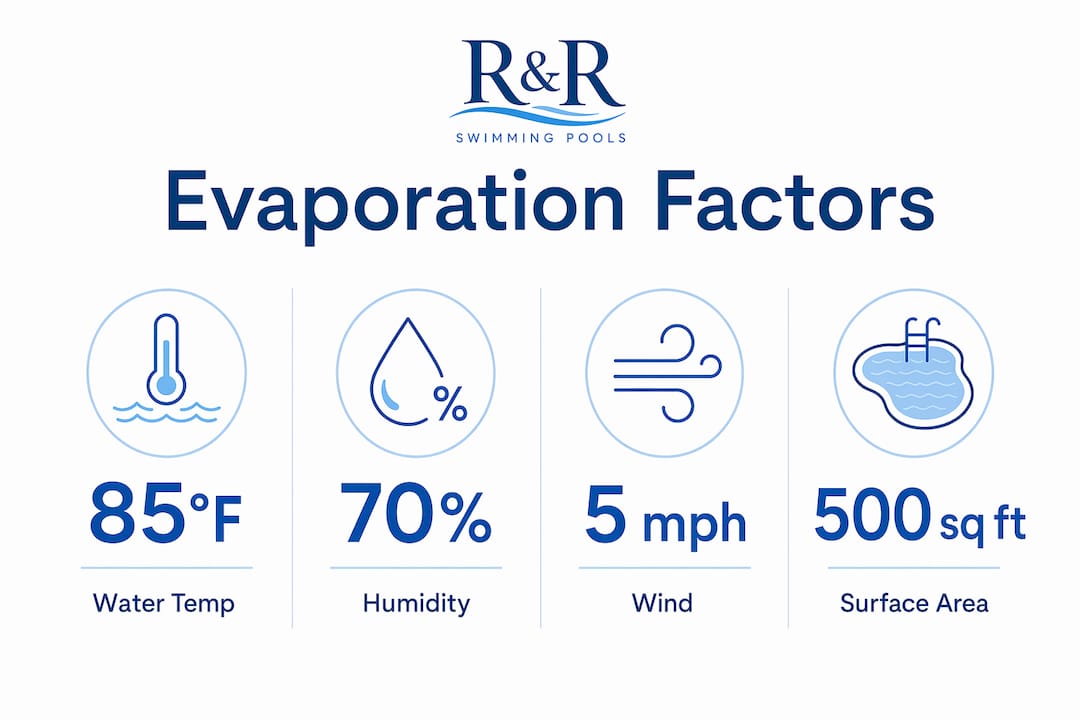
Evaporation in Central Florida pools is driven by five measurable variables, and each one changes throughout the year. Understanding them helps you predict when your pool will lose the most water and plan accordingly.
Air and water temperature
Warmer water evaporates faster. When your pool sits at 85°F on a July afternoon and the air above it is equally warm, the rate of water molecules escaping the surface accelerates sharply. Evaporation accounts for roughly 50% of total pool heat loss in heated pools, which means the hotter you keep your pool, the more water you lose.
Humidity and vapor pressure
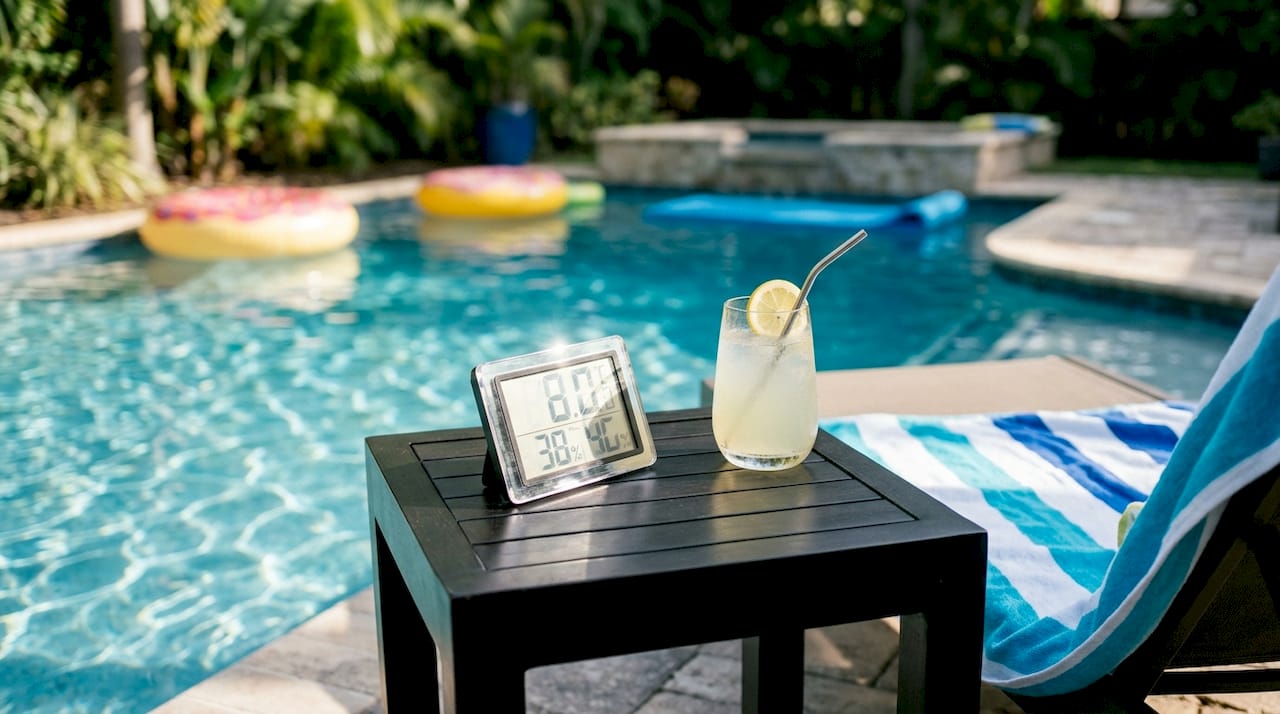
Relative humidity is the most misunderstood factor in Florida pool management. Many homeowners assume that because Florida is humid, evaporation stays low year-round. That assumption is wrong. Humidity can drop to 40% during dry winter cold fronts, and those conditions spike evaporation rates despite cooler air temperatures. The drier the air above the pool surface, the faster water escapes.
Wind speed
Wind removes the thin layer of humid air sitting above the pool and replaces it with drier air, which accelerates evaporation. A 6-foot windbreak placed about 10 feet from the pool can cut evaporation rates by 40–60%. Fences, hedges, and pool landscaping all serve this function when positioned correctly.
Surface area
A larger pool loses more water by volume, even at the same evaporation rate per square foot. A 15,000-gallon pool in mid-summer can lose 80–140 gallons daily from evaporation alone. That volume adds up fast during a drought or a water restriction period.
Seasonal peaks and valleys
- Summer (june through september): Heat, afternoon thunderstorms, and wind events push daily losses toward the high end of the normal range.
- Winter cold fronts: Low humidity and wind combine to cause unexpected evaporation spikes. Many homeowners misread this as a leak.
- Spring and fall: Moderate conditions produce the lowest evaporation rates of the year.
Pro Tip: Track your pool’s water level every Monday morning before adding water. A consistent log over four weeks gives you a reliable personal baseline for your specific pool size and yard conditions.
How to distinguish normal evaporation from pool leaks
Diagnosing water loss correctly is the most practical skill a pool owner can develop. Chasing a leak that does not exist wastes money. Missing a real leak causes structural damage.
The 24-hour bucket test
The 24-hour bucket test is the gold standard for separating evaporation from leaks, and it confirms evaporation in 80% of reported water loss cases. The setup takes five minutes.
- Fill a 5-gallon bucket with pool water to about 1 inch from the top.
- Set the bucket on the first or second pool step so it sits at the same water level as the pool.
- Mark the water level inside the bucket and the pool water level on the bucket’s exterior with a piece of tape.
- Turn off the auto-fill valve and any water features.
- Wait exactly 24 hours, then measure the drop in both the bucket and the pool.
If both levels dropped by the same amount, evaporation is the cause. If the pool dropped significantly more than the bucket, you likely have a leak.
Reading the results
- Under 1/2 inch daily: Normal evaporation range for Central Florida.
- 1/2 inch to 1 inch daily: Borderline. Repeat the test and check for wind or unusually dry conditions.
- Over 1 inch daily: Losses above 1 inch almost always indicate a leak rather than evaporation.
Physical signs of a real leak
Wet or soggy soil around the pool equipment pad, air bubbles in the return jets, and visible cracks in the shell or coping all point to a structural or plumbing problem. Sinking or settling soil near the pool edge is a serious warning sign that water has been escaping underground.
Pro Tip: Run the bucket test twice: once with the pump running and once with it off. If the pool loses more water with the pump on, the leak is likely in the plumbing or equipment, not the shell.
Effective methods to reduce pool evapotranspiration and conserve water
Reducing Florida pool water loss does not require expensive equipment. The most effective strategies are physical barriers and behavioral habits.
Solar pool covers
A solar pool cover is the single most effective tool for cutting evaporation. Solar covers reduce evaporation by 90–95% and cut heating costs by 50–70%. On a standard 500 square foot pool, that translates to saving 50–140 gallons daily during summer. The cover works by blocking the air-water interface where evaporation occurs. Covering the pool every night and during extended periods of non-use pays for the cover within one season in most Central Florida households.
Windbreaks
- Fences: A solid 6-foot fence on the windward side of the pool blocks prevailing breezes effectively.
- Hedges and shrubs: Dense plantings like viburnum or clusia create a natural windbreak. Position them at least 10 feet from the pool edge to avoid turbulence that could increase evaporation instead of reducing it.
- Pergolas and shade structures: These reduce direct sun exposure on the water surface and lower water temperature, both of which slow evaporation.
Windbreak placement matters as much as the windbreak itself. Poor positioning that creates turbulence at water level can actually increase evaporation. Review energy-efficient pool tips for guidance on layout.
Temperature and chemical management
Keeping your pool temperature below 85°F during summer reduces evaporation meaningfully. Every degree of water temperature above ambient air temperature accelerates water loss. Balanced pool chemistry also matters: water that is out of balance tends to require more frequent top-offs and chemical corrections, compounding the cost of evaporation.
Behavioral habits that add up
- Cover the pool whenever it will sit unused for more than 12 hours.
- Check and log water levels weekly, not just when you notice a drop.
- Avoid running water features like fountains or waterfalls during peak wind hours in the afternoon.
- Review pool maintenance tips for a full seasonal checklist.
Stat callout: Average summer evaporation can cause pools to lose 1 to 2 inches of water per week, which equals up to 300–600 gallons weekly for a 500 square foot pool. That volume represents a real cost in water, chemicals, and heating energy.
Seasonal water management for Central Florida pools
Evaporation rates in Central Florida shift significantly across the four seasons, and your maintenance schedule should shift with them.
| Season | Typical daily loss | Key driver | Recommended action |
|---|---|---|---|
| Summer (june–september) | 1/4–3/4 inch | Heat, wind, afternoon storms | Use solar cover nightly, check levels twice weekly |
| Fall (october–november) | 1/8–1/4 inch | Moderate temps, lower wind | Standard weekly checks, reduce heating |
| Winter cold fronts | Up to 1/2 inch | Low humidity (40%), wind | Do not mistake spike for a leak; run bucket test |
| Spring (march–may) | 1/8–1/4 inch | Mild conditions | Ideal time to inspect shell and equipment |
Winter deserves special attention. Low humidity during cold fronts causes evaporation spikes that many homeowners misread as leaks. A pool that loses 3/8 inch overnight during a dry cold front is behaving normally. Running the bucket test before calling a leak detection specialist saves a service call fee.
During drought conditions and local water use restrictions, which Central Florida counties issue periodically, topping off your pool becomes a regulated activity. A solar cover during these periods is not optional. It is the most direct way to stay within water use limits without letting your pool chemistry drift out of range.
Adjusting chemical testing frequency by season also matters. Higher evaporation in summer concentrates chemicals faster, which means pH, alkalinity, and sanitizer levels shift more quickly. Test twice per week in summer and once per week in cooler months to stay ahead of imbalances.
Key Takeaways
Central Florida pool evapotranspiration causes predictable, measurable water loss that homeowners can manage with the right tools, habits, and seasonal awareness.
| Point | Details |
|---|---|
| Normal daily loss range | Central Florida pools typically lose 1/4 to 1/2 inch daily from evaporation under normal conditions. |
| Bucket test is definitive | The 24-hour bucket test confirms whether water loss is evaporation or a leak in most cases. |
| Solar covers cut losses sharply | A solar cover reduces evaporation by 90–95% and cuts heating costs by 50–70%. |
| Winter spikes are normal | Low humidity during cold fronts causes evaporation spikes that are often mistaken for leaks. |
| Windbreaks reduce loss by 40–60% | A correctly placed 6-foot windbreak cuts evaporation rates significantly without major cost. |
What I’ve learned after years of watching Florida pools lose water
Most homeowners I talk to are surprised by two things. First, they are shocked that a pool can lose hundreds of gallons a week without anything being wrong. Second, they are equally surprised that their pool can lose just as much water in january as in july, depending on the weather.
The conventional wisdom is that Florida’s humidity protects pools from heavy evaporation. That is only half true. Humidity matters, but direct sunlight and wind drive significant water loss even when the air feels thick and muggy. A breezy afternoon with 70% humidity still strips water from an uncovered pool at a meaningful rate.
The homeowners who manage their pools best are the ones who treat water level tracking like a utility bill. They check it on a schedule, note the conditions, and build a personal baseline. When something changes, they run the bucket test before calling anyone. That habit alone prevents dozens of unnecessary service calls every year.
My honest advice: buy a solar cover before you buy any other pool accessory. The return on that investment, measured in water saved, chemicals preserved, and heating costs avoided, is faster than almost any other pool upgrade. Pair it with a simple windbreak on the prevailing wind side of your yard, and you have addressed the two biggest drivers of evaporation without touching your equipment.
— Results
Randrswimmingpools can help you build and manage smarter
Central Florida pool owners who plan their pool design with evaporation in mind from the start spend less on water and chemicals every year. Randrswimmingpools has been building custom inground pools across Central Florida since 1985, and that experience shows up in every design decision, from pool orientation to equipment placement.

Whether you are planning a new build or looking to get more out of your existing pool, the inground pool installation guide covers everything from site selection to energy-efficient features that reduce long-term water loss. For homeowners ready to explore custom options built for Florida’s climate, the custom pool planning guide is the right starting point. R and R Swimming Pools offers free quotes and a portfolio of completed projects across the region.
FAQ
What is a normal amount of water loss for a Central Florida pool?
Central Florida pools typically lose between 1/4 and 1/2 inch of water per day from normal evaporation. Losses above 1 inch daily almost always indicate a leak rather than evaporation.
How does the bucket test work for detecting pool leaks?
Place a water-filled bucket on a pool step, mark both water levels, and compare the drop after 24 hours. If the pool drops more than the bucket, a leak is likely.
Why does my pool lose more water in winter during cold fronts?
Low humidity during Florida cold fronts, sometimes dropping to 40%, increases evaporation rates even when temperatures are cool. This is normal and not a sign of a structural problem.
How much water can a solar cover save?
A solar cover reduces evaporation by 90–95% and can save 50–140 gallons daily on a standard 500 square foot pool during summer months.
How do windbreaks reduce pool evaporation?
A 6-foot windbreak placed about 10 feet from the pool blocks prevailing breezes and cuts evaporation rates by 40–60% by preventing dry air from sweeping across the water surface.
