TL;DR:
- R&R Swimming Pools has operated in Central Florida since 1985, building custom concrete and fiberglass inground pools. They handle permitting, inspections, and post-installation support, making them a top local choice for homeowners. Verifying licensure and planning barrier compliance are essential steps before engaging with any pool contractor.
R&R Swimming Pools is the top local alternative to poolbuildersorlandofl.com for Orlando homeowners. Operating in Central Florida since 1985, they build both concrete and fiberglass inground pools, handle permitting, and carry verifiable credentials through Florida DBPR MyFloridaLicense. Before you call anyone, have your property address, preferred pool type, and a rough budget ready.
Why R&R stands out at a glance:
- Service area: Central Florida communities including Orlando, Apopka, Lake County, and surrounding areas
- Pool types: Custom concrete and fiberglass inground pools, plus spas, waterfalls, and backyard features
- License & insurance: Verify the Certified Pool Contractor license at MyFloridaLicense before signing anything
- Permitting: Full permit handling and inspection support, including Florida Building Code compliance and barrier requirements under Florida Statutes §515.29
- Next step: Request a free estimate at randrswimmingpools.com
Table of Contents
- What are the best poolbuildersorlandofl.com alternatives in Orlando?
- How do you verify a pool contractor’s license in Florida?
- What permitting basics should you plan for in Central Florida?
- What should your written pool contract include?
- How long does a custom inground pool take, and what drives the cost?
- Concrete or fiberglass: which suits Central Florida better?
- How do you evaluate and compare pool contractors?
- What questions should you ask during a pool builder consultation?
- Red flags to watch for when choosing a pool builder
- How to book and prepare for your estimate appointment
- R&R Swimming Pools: your next step starts here
- Key Takeaways
What are the best poolbuildersorlandofl.com alternatives in Orlando?
The FSPA buyer’s guide recommends building a shortlist of at least three licensed contractors before committing. Here are vetted options serving Central Florida:
R&R Swimming Pools has built custom inground pools across Central Florida since 1985. Concrete and fiberglass, full permitting, and post-install support are all in-house. For most Orlando homeowners, this is the first call worth making.
Other licensed local contractors worth researching include pool builders listed under the Certified Pool Contractor category on MyFloridaLicense. Search by county to find active licenses in Orange, Seminole, Lake, and Osceola counties. Confirm each contractor’s license status, scope, and insurance before any site visit.
How do you verify a pool contractor’s license in Florida?
Go to MyFloridaLicense and search under the Certified Pool/Spa Contractor category. You can confirm active status, license classification (residential vs. commercial), and any disciplinary history. Credential verification should happen before you review a single proposal. Also ask the contractor for a current certificate of insurance covering general liability and workers’ compensation.
What permitting basics should you plan for in Central Florida?
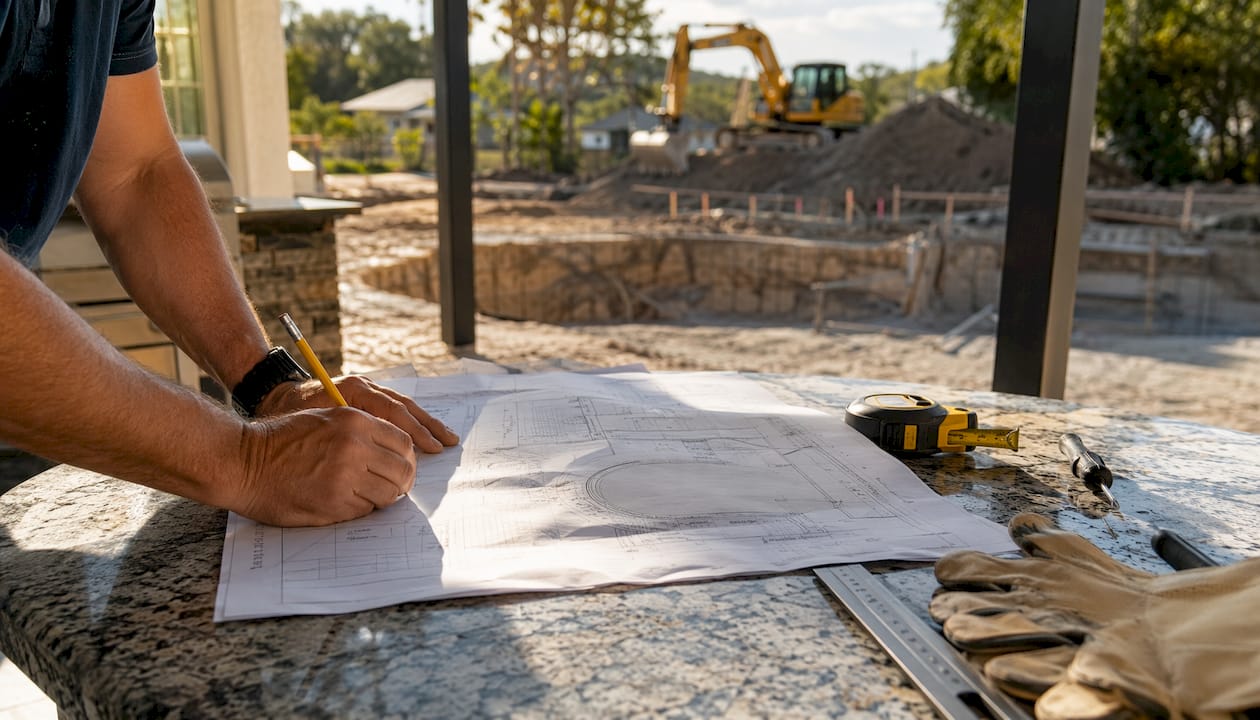
Every inground pool in Florida requires a building permit. Permit packets require detailed plans showing pool dimensions, plumbing and electrical layouts, equipment placement, and barrier design. Inspections cover the shell, plumbing, electrical, and final barrier before the pool can be filled. Barrier compliance is the most common cause of inspection failures. Under §515.29, barriers must be at least 4 feet high, have no climbable gaps, and include self-closing, self-latching gates with the release on the pool side. Plan barrier details during design; retrofitting after construction costs significantly more. A pool screen enclosure can also satisfy certain barrier requirements when properly permitted.
What should your written pool contract include?
A solid contract covers scope, materials, equipment specs, payment schedule, change-order process, and warranties. Hiring guides consistently flag payment schedule and change-order language as the two items homeowners most often regret skipping. Never pay more than 10–15% upfront. Milestone-based payments tied to verified construction stages protect you if work stalls. Get warranty terms in writing for both the shell and equipment. Review a Central Florida pool contract guide before your first estimate appointment.
How long does a custom inground pool take, and what drives the cost?
Most custom inground pools in Central Florida take several months from permit approval to final inspection, depending on design complexity, material availability, and inspection scheduling. Cost factors include pool size and shape, material choice (concrete typically costs more than fiberglass but offers more design flexibility), water features, equipment grade, and site conditions like soil type and access. Get itemized bids, not lump-sum quotes, so you can compare line by line.
Concrete or fiberglass: which suits Central Florida better?
Both work well in Florida’s climate, but they serve different priorities. Concrete pools handle any shape, depth, or feature you want, including freeform designs, vanishing edges, and integrated spas. They take longer to build and require more ongoing surface maintenance. Fiberglass shells install faster, resist algae better due to their smooth surface, and typically have lower long-term chemical costs. Florida’s sandy, shifting soils are generally compatible with both, provided the contractor accounts for soil conditions in the structural design. R&R Swimming Pools builds both, so the recommendation you get is based on your yard and goals, not on what the builder happens to specialize in. See a full breakdown in this concrete vs. fiberglass guide.
How do you evaluate and compare pool contractors?
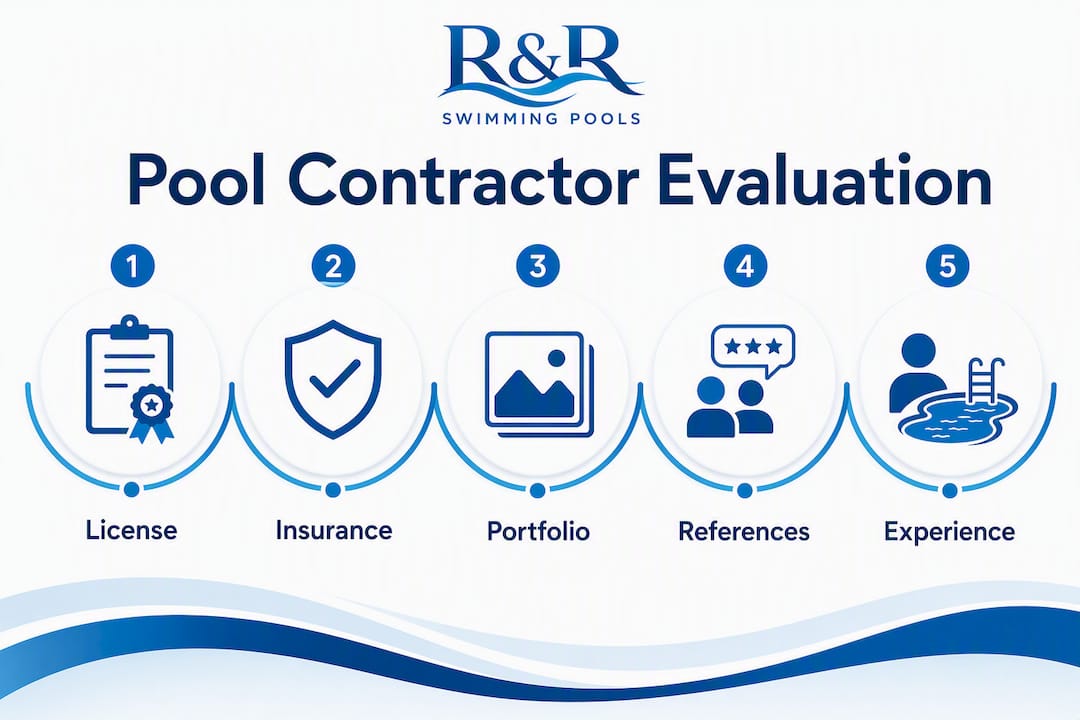
Start with license and insurance, then look at portfolio depth, years in business, and references from completed projects in your county. Online reviews are useful but not decisive. The FSPA recommends a face-to-face consultation as the final filter. Ask specifically about permitting experience in your jurisdiction, because inspection sequencing and local code interpretations vary between Orange, Seminole, and Lake counties.
What questions should you ask during a pool builder consultation?
Ask these before you commit to anything:
- Are you licensed as a Certified Pool Contractor in Florida, and can I verify it on MyFloridaLicense?
- Who pulls the permit, and will you manage all inspections?
- What does the written scope include, and what is explicitly excluded?
- How are change orders handled and priced?
- What warranties cover the shell, finish, and equipment?
- Can you walk me through the inspection sequence for my county?
A builder who hesitates on any of these is worth crossing off the list.
Red flags to watch for when choosing a pool builder
Walk away if a contractor asks for a large upfront deposit before permits are approved, provides only a verbal quote, or cannot produce a license number for immediate verification. Vague timelines (“about 3–4 months, give or take”) without milestone dates are a warning sign. So is a bid that omits barrier installation, electrical, or permitting fees. Bidders who can’t clearly explain permitting and full project scope tend to produce schedule drift and cost overruns. Trust your instincts after the first meeting.
How to book and prepare for your estimate appointment
- Gather your property details: lot dimensions, setbacks, utility locations, and any HOA restrictions.
- Define your priorities: pool type (concrete or fiberglass), approximate size, desired features (spa, waterfall, lighting), and budget range.
- Schedule at least three estimates from licensed contractors to compare scope and pricing.
- Verify each contractor’s license on MyFloridaLicense before the appointment.
- Bring questions from the list above and take notes during each visit.
- Review the written estimate against the contract checklist before signing.
Use this pool planning checklist to make sure nothing gets missed before your first site visit.
R&R Swimming Pools: your next step starts here
R and R Swimming Pools has been building custom inground pools across Central Florida since 1985, covering Orlando, Apopka, Lake County, and surrounding communities. Whether you want a freeform concrete pool with a waterfall or a low-maintenance fiberglass design, the team handles design, permitting, inspections, and post-install support under one roof. That means no chasing separate contractors for barrier compliance or equipment installation.
When you reach out, have your lot info, desired pool dimensions, and budget range ready. The estimator will confirm scope, walk through the permit timeline for your jurisdiction, and provide a written estimate with a clear payment schedule. Start with the custom pool installation guide to see exactly what the build process looks like, then request your free estimate at randrswimmingpools.com.
Key Takeaways
Verify your pool contractor’s Florida DBPR license before reviewing any proposal — it is the single most important early screening step.
| Point | Details |
|---|---|
| License verification first | Check every contractor on MyFloridaLicense under Certified Pool/Spa Contractor before any site visit. |
| Barrier compliance in design | Florida Statutes §515.29 requires barriers at least 4 feet high; plan this during design to avoid costly rework. |
| Written contract essentials | Require scope, milestone-based payment schedule, change-order terms, and shell and equipment warranties in writing. |
| Concrete vs. fiberglass | Concrete offers more design flexibility; fiberglass installs faster and has lower long-term chemical costs. |
| Randrswimmingpools | Central Florida’s custom pool builder since 1985, covering concrete and fiberglass builds with full permitting support. |
