
TL;DR:
- Proper pool lighting installation in Central Florida requires licensed professionals and adherence to local electrical codes.
- Upgrading to LED fixtures offers significant energy savings, longer lifespan, and customizable colors.
- Using sealed or nitrogen-filled housings and ensuring IP68 ratings prevent water intrusion and extend fixture lifespan.
Your pool looks great during the day, but when the sun goes down in Central Florida, poor lighting can turn a beautiful backyard into a safety hazard and a missed opportunity. Outdated incandescent fixtures drain energy, fade fast in Florida’s heat, and leave swimmers in the dark. Whether you’re upgrading an existing setup or planning a brand-new installation, knowing the right steps, materials, and local code requirements makes the difference between a stunning nighttime oasis and an expensive redo.
Table of Contents
- Requirements and materials for pool lighting installation
- Step-by-step pool lighting installation process
- Troubleshooting and common mistakes in pool lighting installation
- Benefits and expected performance from modern pool lighting
- What most guides miss about pool lighting installation
- Explore expert pool solutions for your Florida home
- Frequently asked questions
Key Takeaways
| Point | Details |
|---|---|
| Follow safety codes | Always adhere to NEC Article 680 and Florida Building Code for pool lighting installations. |
| Choose LED fixtures | LED lights offer up to 90% energy savings and superior durability for Florida pools. |
| Prevent water intrusion | Use IP68 rated lights and proper sealing to avoid costly damage from water intrusion and housing cracks. |
| Professional help required | Licensed contractors are essential for compliant and safe pool lighting work. |
| Verify before submersion | Always test new fixtures before fully submerging to ensure functionality and reduce troubleshooting. |
Requirements and materials for pool lighting installation
To prepare for your project, let’s start by reviewing the requirements and materials.
Pool lighting is not a simple DIY task. In Florida, electrical work near water is tightly regulated, and skipping the rules can lead to dangerous situations or failed inspections. Pool lighting installation requires NEC Article 680 compliance and Florida Building Code adherence, including GFCI protection, bonding, and licensed contractors for all electrical work.
What GFCI and bonding actually mean for you:
GFCI stands for Ground Fault Circuit Interrupter. It’s a safety device that cuts power instantly if it detects an electrical leak near water. Bonding means connecting all metal parts of your pool system (lights, ladders, pumps) with a copper wire to equalize voltage. Both are required by code, not optional. Review our pool safety guide Central Florida for a full breakdown of what’s required before any work begins.
Essential materials checklist:
- LED underwater fixtures (IP68 rated for full submersion)
- Light niche housing (the waterproof shell mounted in the pool wall)
- Rubber gasket and marine-grade sealant
- Bonding wire and GFCI-protected breaker
- Conduit for wiring runs
- Pilot screw and mounting hardware
Before purchasing anything, check our pool lighting options list to compare fixture styles, color options, and wattage ratings suited for Central Florida pools.
Typical cost breakdown for LED retrofits:
| Item | Estimated Cost |
|---|---|
| LED fixture (per unit) | $150 to $350 |
| Professional installation (per fixture) | $250 to $550 |
| Total retrofit cost (per fixture) | $400 to $900 |
| GFCI breaker upgrade | $75 to $150 |
| Bonding inspection and correction | $100 to $300 |
Code note: Florida requires a licensed electrical contractor for any wiring connected to pool lighting. Homeowners can assist with non-electrical prep work, but the actual wiring, bonding, and breaker connections must be done by a licensed professional.
Pro Tip: Always buy one extra gasket and a tube of sealant before starting. Gaskets can tear during installation, and you don’t want to pause the job for a hardware run.
Step-by-step pool lighting installation process
With all preparations complete, let’s follow the proper installation process.
Installing pool lighting correctly requires patience and attention to detail. Rushing any step, especially around water and electricity, creates real risks. Here is how the process works from start to finish.
Numbered installation steps:
- Shut off power completely. Go to your breaker panel and turn off the circuit feeding the pool equipment. Use a non-contact voltage tester to confirm zero voltage at the light junction box before touching anything.
- Drain the pool to below the light niche. You don’t need to fully drain the pool, just lower the water level until the niche is exposed and accessible.
- Remove the old fixture. Unscrew the pilot screw (the single screw at the front of the light), pull the fixture out, and uncoil the cord from the niche. Most niches hold several feet of coiled cord for exactly this reason.
- Inspect the niche and conduit. Look for cracks, corrosion, or debris. Clean the niche face where the gasket will seat.
- Install the new light niche if replacing it. Position the pilot screw hole at the 12 o’clock position. This is a code requirement that allows water to drain properly and prevents the cord from pinching.
- Seat the gasket and apply sealant. Place the rubber gasket between the fixture face and the niche. Apply a thin bead of marine-grade sealant around the perimeter for a watertight seal.
- Coil excess cord neatly inside the niche. Leave enough slack so the fixture can be pulled out to the pool deck for future servicing without disconnecting wiring.
- Tighten the pilot screw firmly but not so hard that you crack the housing.
- Restore power and test briefly above water. Confirm the light works before refilling the pool and submerging the fixture.
- Refill the pool and perform a final submersion test. Check for leaks, flickering, or unusual heat from the fixture after 30 minutes of operation.
Following the pool installation steps outlined by experienced contractors ensures each phase connects properly to the next.
LED vs. incandescent: Key installation differences:
| Factor | LED fixture | Incandescent fixture |
|---|---|---|
| Wattage | 12 to 35W typical | 100 to 500W typical |
| Heat output during install | Low, safe to handle quickly | High, requires cooling time |
| Transformer required | Sometimes (12V systems) | No (120V direct) |
| Color options | Full RGB spectrum available | White only |
| Cord compatibility | Often fits existing niche | Standard fit |
Step-by-step installation best practices confirm: turn off power, install the niche with the pilot screw at 12 o’clock, secure with gasket and sealant, coil extra cord, and test briefly before full submersion.
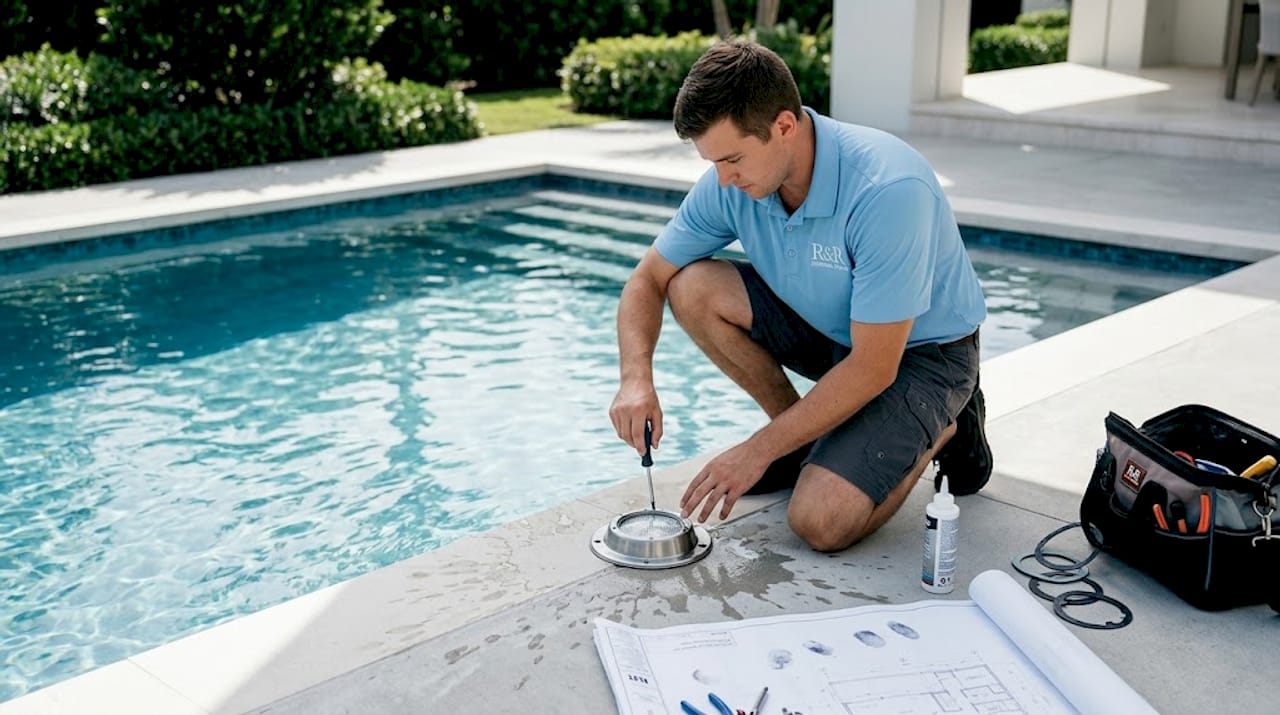
Pro Tip: When testing the new LED fixture above water, limit the test to under 60 seconds. LED pool lights are designed to run submerged, and running them in air for extended periods can cause overheating.
Troubleshooting and common mistakes in pool lighting installation
Even with careful installation, some challenges can arise.
Many homeowners and even some contractors overlook a handful of issues that cause problems months or years after installation. Knowing these pitfalls before you start saves real money and frustration.
Common mistakes and how to avoid them:
- Glare aimed toward the house or seating areas. Always aim fixtures away from where people sit or swim. Glare from improperly aimed lights makes the pool uncomfortable and reduces visibility in the water. Avoid glare by aiming away from the house, use deeper niches for deep ends, specify IP68 for underwater fixtures, and account for thermal expansion which causes housing cracks within 2 to 3 years.
- Using the wrong niche depth for deep-end installations. Standard niches work fine in the shallow end, but the deep end requires a deeper niche to keep the fixture fully submerged at all times. A partially exposed fixture is a code violation and a safety risk.
- Skipping IP68 certification. IP68 is the rating that confirms a fixture is sealed for continuous underwater use. Anything rated lower is not designed for full submersion and will fail. Check LED pool light benchmarking data to verify fixture ratings before purchasing.
- Ignoring thermal expansion. Pool light housings heat up and cool down with water temperature changes. In Central Florida, where summer pool temps can hit 90°F, this cycle is more extreme than in northern states. Air trapped inside the housing expands and contracts, eventually stressing seals and cracking the housing.
- Improper sealant application. Too little sealant leaves gaps for water intrusion. Too much can prevent the gasket from seating flat, which also causes leaks.
Real-world warning: Water intrusion is the leading cause of pool light failure in Florida. Once moisture enters the housing, it damages the LED board and can create electrical hazards. Inspect your fixtures every season for signs of condensation inside the lens.
Understanding how to boost safety and style starts with avoiding these common errors during installation and ongoing maintenance.
Pro Tip: After installation, photograph the light niche area and the coiled cord position. If you ever need to service the fixture, you’ll know exactly how much cord is available and how it was routed, which saves significant time.
Benefits and expected performance from modern pool lighting
Once you’ve installed your lighting, here’s what you should expect and why modern options matter.
Upgrading to LED pool lighting is one of the highest-return improvements you can make to your outdoor space. The benefits go well beyond aesthetics.
Energy and cost performance:
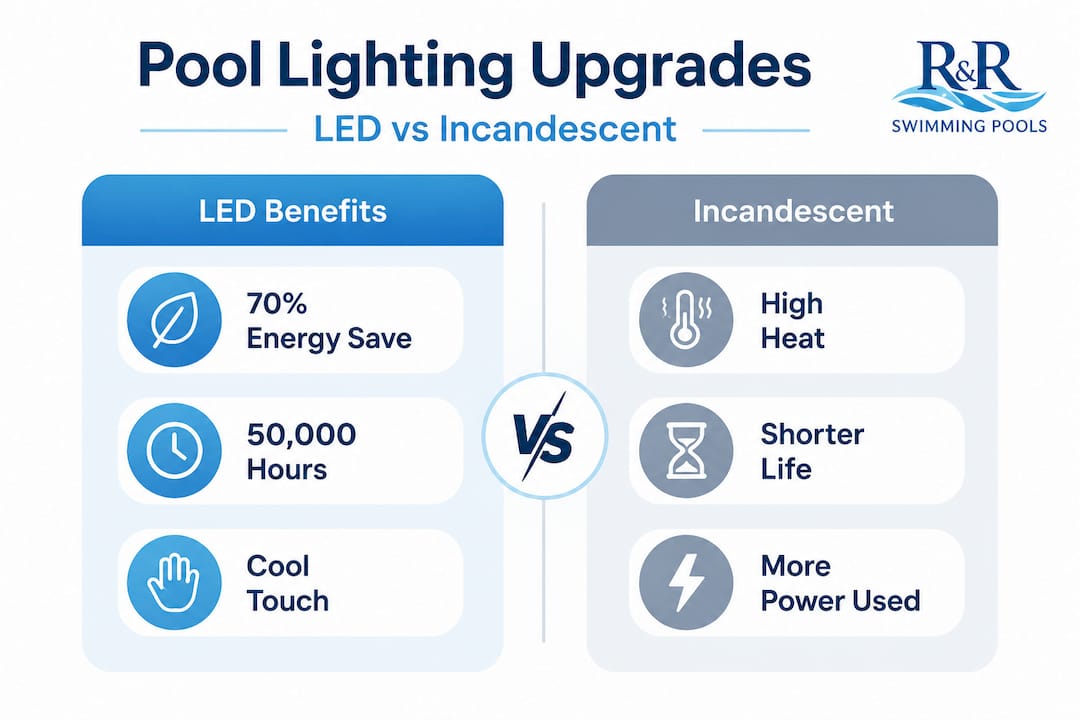
LEDs last up to 50,000 hours at the L70 rating (meaning they still produce 70% of original brightness at that point), deliver 70 to 90% energy savings compared to incandescent fixtures, and cost $400 to $900 per fixture for a retrofit installation.
To put that in perspective: a 500W incandescent pool light running 6 hours per night costs roughly $130 per year in electricity at Florida’s average rate. A comparable 35W LED costs about $9 per year. That’s a savings of over $120 annually per fixture.
Performance comparison:
| Feature | LED | Incandescent |
|---|---|---|
| Lifespan | Up to 50,000 hours | 1,000 to 5,000 hours |
| Energy use | 12 to 35W | 100 to 500W |
| Energy savings vs. incandescent | 70 to 90% | Baseline |
| Color options | Full RGB + white | White only |
| Heat output | Minimal | Significant |
| Replacement frequency | Every 10 to 15 years | Every 1 to 3 years |
Aesthetic and lifestyle benefits:
- Color-changing RGB LEDs allow you to set the mood for parties, holidays, or quiet evenings
- Brighter, more even light distribution improves swimmer visibility and reduces accident risk
- Integrated smart controls let you adjust color and brightness from your phone
- Consistent light output makes your pool more inviting and visually impressive from inside the home
Long-term durability in Florida’s climate:
Florida’s UV exposure, high humidity, and warm water temperatures accelerate wear on pool equipment. Quality LED fixtures with sealed, nitrogen-filled housings (rather than air-filled) resist thermal pumping and maintain performance longer. Review energy efficient pools options that pair LED lighting with other low-energy upgrades for maximum savings.
The LED efficacy benchmarking data confirms that quality fixtures maintain over 90% lumen output for years when properly installed and maintained.
What most guides miss about pool lighting installation
Most installation guides walk you through the steps and stop there. After nearly four decades of building and servicing pools across Central Florida, we’ve seen what happens after the installation is done and the homeowner is left to manage things on their own.
The most overlooked issue is thermal pumping in air-filled housings. When a pool light housing contains air rather than nitrogen or a sealed gel, that air expands during warm afternoons and contracts at night. Over time, this pumping action pulls moisture past the seals, even good ones. LED efficacy reaches 120 lm/W with 92.5% lumen maintenance at three years in quality fixtures, but failures from water intrusion via thermal pumping in air-filled housings can cut that lifespan dramatically.
Central Florida makes this worse than almost anywhere else in the country. Our water temperatures swing from the low 60s in January to the low 90s in August. That’s a 30-degree range that happens twice a year, every year. A fixture that performs fine in a northern climate may fail here in 18 months for exactly this reason.
Our honest recommendation: specify nitrogen-filled or sealed-gel housings when purchasing fixtures. Yes, they cost a bit more upfront. But they outlast air-filled alternatives by years in Florida conditions. It’s not something most online guides mention because it’s not a universal concern, but here, it absolutely is.
We also see homeowners focus heavily on color and brightness while completely ignoring the fixture’s UL 676 listing. UL 676 is the safety standard specifically for underwater luminaires. A fixture without this listing has not been independently tested for the conditions it will face. Check the pool lighting options that meet this standard before you buy.
Finally, don’t assume a licensed electrician who handles residential work is automatically qualified for pool lighting. Pool electrical work is a specialty. The bonding requirements, niche installation, and conduit routing near water are different from standard home wiring. Ask specifically for experience with pool electrical systems before hiring.
Explore expert pool solutions for your Florida home
Ready to take your pool lighting to the next level? Here are resources to make the most of your project.
At R&R Swimming Pools, we’ve been designing and building custom inground pools across Central Florida since 1985. We understand the local climate, the code requirements, and the specific challenges that come with pool lighting in this region.
Whether you’re planning a full new build or upgrading your existing pool’s lighting system, our inground pool installation guide walks you through every phase of the process. Want to go deeper on pool features, maintenance, and upgrades? Our Pool School resource library covers everything Central Florida homeowners need to know. Contact us today for a free quote and let’s design an outdoor space you’ll love after dark.
Frequently asked questions
Is it necessary to hire a licensed contractor for pool lighting installation?
Yes, Central Florida homeowners must hire licensed contractors for electrical pool lighting work because NEC Article 680 and Florida Building Code require licensed professionals for all pool electrical connections, including GFCI protection and bonding.
What type of pool light is best for energy savings and durability in 2026?
LED pool lights are the clear choice, offering 70 to 90% energy savings over incandescent fixtures and lasting up to 50,000 hours, making them far more cost-effective over time.
How can I prevent water intrusion and housing cracks in pool lights?
Use IP68 rated fixtures with proper gaskets and sealant, and choose nitrogen-filled or sealed-gel housings to minimize water intrusion and cracking from thermal expansion cycles.
What safety protections are mandatory for pool lighting installations?
GFCI-protected circuits and bonding are both mandatory under NEC Article 680 and Florida Building Code to prevent electrical shock hazards in and around pool water.
What are the typical costs to retrofit a pool with LED lights?
Retrofit costs range from $400 to $900 per fixture, depending on the fixture type, niche condition, and complexity of the electrical work involved.
