
TL;DR:
- Pool pumps are essential for water circulation, filtration, and maintaining water quality and safety.
- Variable-speed pumps are the most efficient and cost-effective choice for Central Florida pools.
- Proper pump sizing and professional guidance prevent energy waste, equipment damage, and poor water clarity.
Most Central Florida homeowners assume any pool pump will get the job done. Pick one, plug it in, and the water stays clean. That assumption costs people real money every year. The truth is that pool pump selection directly affects your energy bills, water quality, and how long your pool equipment lasts. Florida’s heat, humidity, and year-round swim season put unique demands on your system that a generic pump choice simply won’t handle well. This guide walks you through what a pool pump actually does, which type fits your situation, how to size it correctly, and how to keep it running efficiently for years to come.
Table of Contents
- What is a pool pump and why does it matter?
- Types of pool pumps: Find the perfect fit
- How to size a pool pump: Avoid costly mistakes
- Maintaining and upgrading your pool pump for long-term savings
- Why pool pump decisions in Central Florida need expert guidance
- Ready to upgrade your pool? Connect with local experts
- Frequently asked questions
Key Takeaways
| Point | Details |
|---|---|
| Pool pump function | A pool pump circulates and filters water to keep your pool clean and safe. |
| Choosing the right type | Single-, dual-, and variable-speed pumps each offer different benefits for Florida homeowners. |
| Proper sizing | Matching pump size to pool volume prevents wasted energy and ensures healthy water. |
| Regular maintenance matters | Timely upkeep and knowing when to upgrade can save you money long-term. |
What is a pool pump and why does it matter?
Think of your pool pump as the heart of your entire backyard water system. Without it, nothing moves. Water sits still, chemicals clump in one spot, algae takes hold, and your filter becomes useless. The pump is what keeps everything working together as a system.
Here’s the basic process: the pump draws water from your pool through the skimmer and main drain, pushes it through the filter to remove debris and contaminants, then returns the cleaned water back into the pool. That cycle repeats constantly while the pump runs. Proper water circulation and filtration depend entirely on this process functioning correctly.
When a pump is poorly chosen or starts failing, the consequences show up fast. Green or cloudy water is usually the first sign. Then come the higher chemical costs because unevenly circulated water requires more product to stay balanced. Eventually, you’re looking at equipment damage and repair bills that could have been avoided.
Here’s what your pool pump powers every time it runs:
- Filtration: Pushes water through the filter to remove dirt, debris, and bacteria
- Chemical distribution: Keeps sanitizers like chlorine evenly spread throughout the water
- Heating: Circulates water through a heater or solar panels so temperature stays consistent
- Feature operation: Powers waterfalls, jets, and spa functions that require flow
- Algae prevention: Keeps water moving so algae can’t settle and bloom
Pro Tip: Run your hand near the return jets while the pump is on. If the flow feels weak or uneven, your pump may be undersized, clogged, or losing efficiency.
“A pool without proper circulation is just a large container of standing water. The pump is what separates a safe, enjoyable pool from a health hazard.”
For Central Florida homeowners especially, this matters year-round. You’re not closing your pool in October like someone in Ohio. Your pump works 12 months a year, which means wear, energy consumption, and maintenance needs are all amplified. Staying on top of pool maintenance tips from the start saves you significantly over time.
Types of pool pumps: Find the perfect fit
Not all pool pumps are built the same, and the differences go well beyond price. There are three main types you’ll encounter when shopping for an inground pool pump, and each one suits a different situation.
Single-speed pumps run at one fixed speed, all the time. They’re the oldest and most basic design.
- Pros: Lower upfront cost, simple to operate
- Cons: High energy consumption, loud, no flexibility
- Best for: Older pools where budget is the only concern, or short-term solutions
Dual-speed pumps offer two settings: high for heavy filtration needs and low for everyday circulation.
- Pros: More efficient than single-speed, moderate price
- Cons: Still limited compared to variable-speed, less precise control
- Best for: Homeowners wanting a step up without the full variable-speed investment
Variable-speed (VS) pumps use a permanent magnet motor that adjusts speed based on demand. They’re the gold standard for modern inground pools.
- Pros: Dramatically lower energy bills, quieter operation, longer lifespan, programmable
- Cons: Higher upfront cost
- Best for: Any new pool installation or upgrade in Central Florida
| Pump type | Energy efficiency | Noise level | Upfront cost |
|---|---|---|---|
| Single-speed | Low | High | Low |
| Dual-speed | Moderate | Moderate | Moderate |
| Variable-speed | High | Low | Higher |
Florida has increasingly pushed toward variable-speed pumps through energy codes and utility incentive programs. Many local utilities offer rebates when you switch to a VS model. Beyond rebates, the monthly savings on your electric bill often recover the cost difference within two to three years.
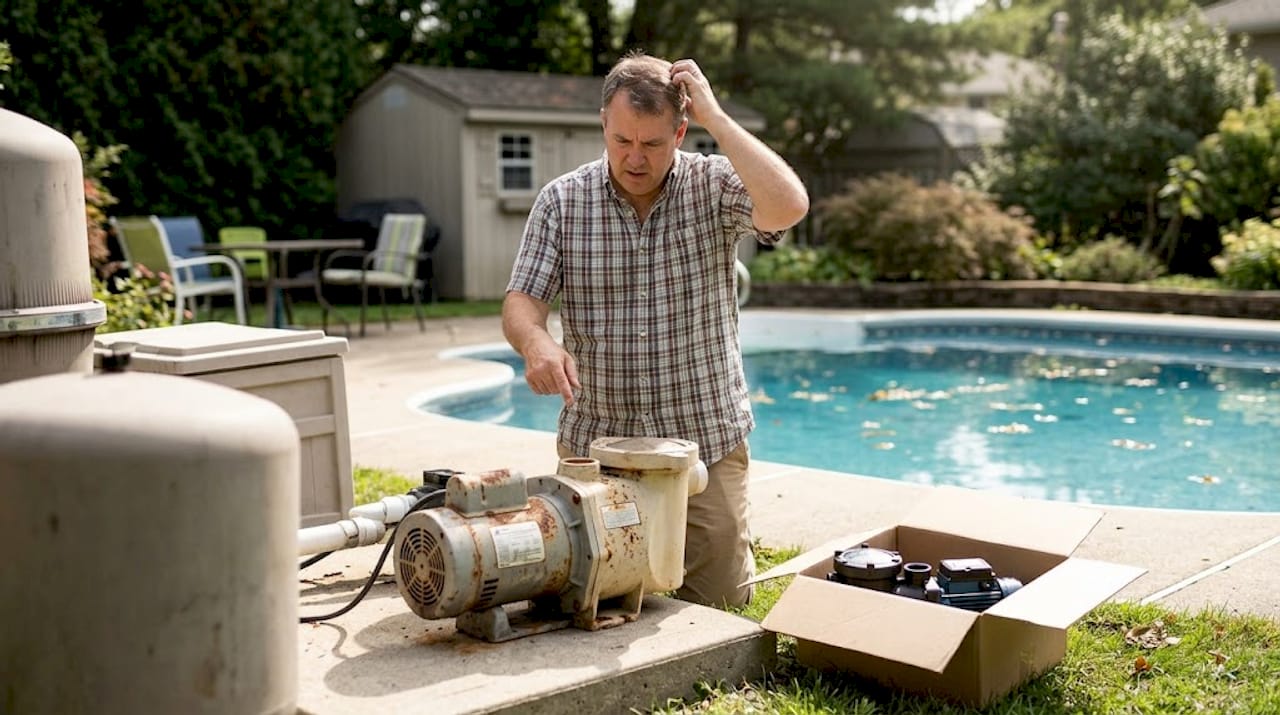
One thing homeowners often get wrong: oversizing your pump wastes energy and creates unnecessary wear on your plumbing and filter. Bigger is not better when it comes to pool pumps.
Pro Tip: Florida’s energy codes may already require a variable-speed pump for new pool installations. Check with your contractor before purchasing any pump to confirm local requirements and available utility rebates.
If you’re building a new pool or considering a renovation, exploring energy-efficient pool options early in the planning process puts you in a much stronger financial position long term.
How to size a pool pump: Avoid costly mistakes
Choosing the wrong pump size is one of the most common and expensive mistakes Central Florida pool owners make. Too small and your water stays dirty. Too large and your energy bills climb while your equipment wears out faster.
Let’s break down the key terms first:
- GPM (gallons per minute): The rate at which your pump moves water
- Turnover rate: How long it takes the pump to circulate your entire pool volume once
- Horsepower (HP): The motor’s power output, which affects flow rate
The goal is to achieve a full water turnover every 6 to 8 hours. That’s the industry standard for keeping water clean and safe.
Here’s how to calculate what you need:
- Find your pool’s volume in gallons (length x width x average depth x 7.5 for rectangular pools)
- Divide by 8 to get the gallons per hour needed for an 8-hour turnover
- Divide by 60 to convert to GPM
- Match that GPM to a pump’s flow rate at your system’s resistance level
- Factor in extras like waterfalls, spas, or solar heaters that add resistance
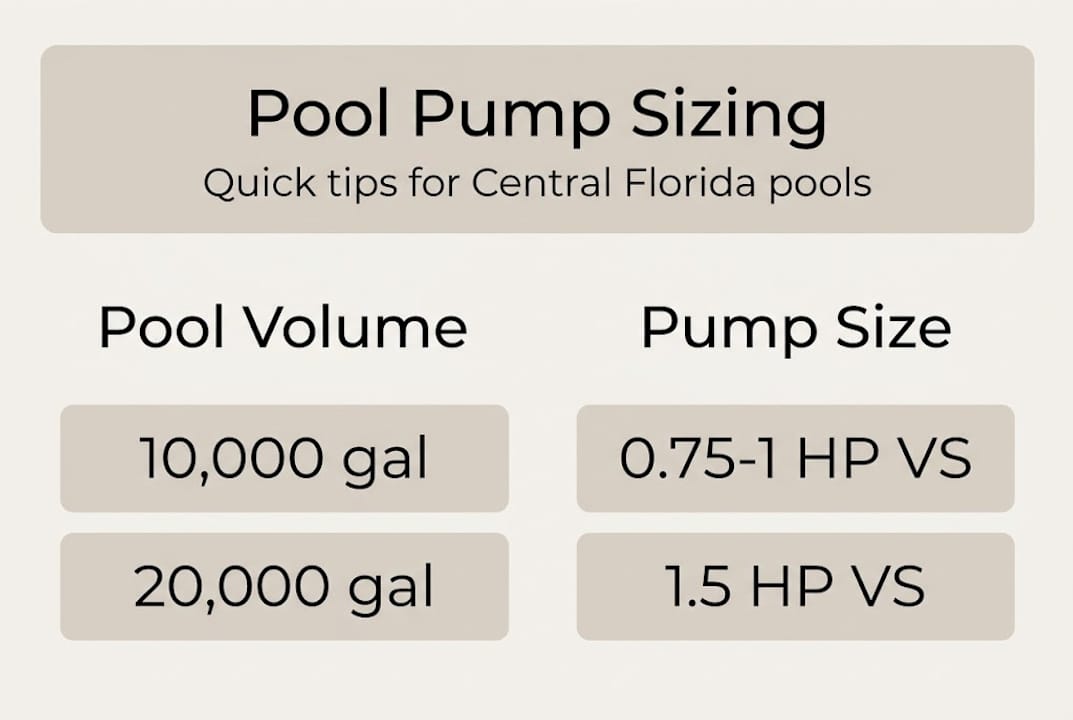
For example, a 20,000-gallon pool requires roughly 42 GPM and pairs well with a 1.5 HP variable-speed pump running at a lower speed setting for most of the day.
| Pool volume | Recommended GPM | Suggested pump size |
|---|---|---|
| 10,000 gallons | ~21 GPM | 0.75 to 1 HP VS pump |
| 20,000 gallons | ~42 GPM | 1.5 HP VS pump |
| 30,000 gallons | ~63 GPM | 2 to 2.5 HP VS pump |
| 40,000 gallons | ~83 GPM | 2.5 to 3 HP VS pump |
Keep in mind that a variable-speed pump running at lower RPMs can often outperform a larger single-speed pump while using a fraction of the electricity. That’s the real advantage of modern pump technology.
For Central Florida homeowners adding features like a spa or waterfall, factor those into your calculations. Your contractor should account for total dynamic head (the resistance your pump works against) when recommending a specific model. Exploring energy-saving pool upgrades alongside your pump selection helps you build a system that works efficiently as a whole.
Maintaining and upgrading your pool pump for long-term savings
Once you have the right pump installed, keeping it in good shape is straightforward, but it does require attention. Florida’s climate adds stress that homeowners in cooler states don’t deal with: intense heat, high humidity, and year-round operation all accelerate wear.
Here are the signs your pump may need service or replacement:
- Loud or grinding noise from the motor housing
- Visible leaks around the pump seal or housing
- Weak water flow from return jets despite the pump running
- Tripping breakers or electrical issues when the pump starts
- Sudden spike in energy bills without a change in usage
- Water clarity problems that chemicals alone can’t fix
Pro Tip: Schedule a professional pump inspection once a year, ideally before peak summer season. Most pump failures are predictable with early detection, and a quick service call is far cheaper than an emergency replacement.
For Florida pools specifically, running your pump during off-peak electricity hours (typically late night to early morning) can reduce your utility costs significantly. Many variable-speed pumps have built-in timers that automate this without any daily effort on your part.
Upgrading to a properly sized VS pump improves both efficiency and safety, particularly for older pools still running single-speed motors. The energy savings alone often justify the upgrade within a few seasons.
“In Florida’s climate, a pump that’s even slightly undersized or poorly maintained works twice as hard and fails twice as fast. Proactive care is always the smarter investment.”
Stay consistent with energy-saving pool tips and keep up with pool pump maintenance to extend your equipment’s lifespan well beyond the average.
Why pool pump decisions in Central Florida need expert guidance
Here’s something most online guides won’t tell you: the math alone won’t save you. You can calculate GPM perfectly, read every spec sheet, and still end up with the wrong pump for your specific backyard setup.
We’ve seen it happen repeatedly over our decades working in Central Florida. A homeowner sizes a pump based on pool volume but forgets to account for a long pipe run, a tight elbow fitting, or a solar heater that adds significant resistance. The result is a pump that struggles from day one.
Florida also has HOA rules, local permitting requirements, and utility rebate programs that change regularly. A pump that qualifies for a rebate today might not qualify next season. Regulations around variable-speed requirements have tightened, and they’ll likely continue to do so.
Professional installers don’t just bring experience. They bring current knowledge of what’s required, what’s available, and what will actually perform in your specific conditions. That’s not something a website calculator can replicate.
Pro Tip: Before purchasing any pump, ask your contractor about current utility rebates and upcoming regulation changes in your county. Timing your upgrade right can save you hundreds of dollars.
For custom pool owners especially, reading through custom pool maintenance tips from experienced local professionals gives you a foundation that generic advice simply can’t match.
Ready to upgrade your pool? Connect with local experts
Choosing the right pool pump is just one piece of building or renovating a pool that performs well for years. Getting that choice right from the start means lower bills, cleaner water, and fewer headaches down the road.

At R&R Swimming Pools, we’ve been helping Central Florida homeowners make smart pool decisions since 1985. Whether you’re starting fresh or upgrading an existing system, our team can walk you through every option. Visit our Pool School to learn more about pool systems, or explore best inground pool types to plan your next project. Ready to talk specifics? Our inground pool installation guide is a great place to start before scheduling your free consultation.
Frequently asked questions
How do I know if my pool pump is the right size?
Match the pump’s GPM to your pool’s volume for a 6 to 8 hour turnover. Oversizing wastes energy while undersizing leads to poor water quality and algae problems.
What’s the difference between single-speed and variable-speed pool pumps?
Variable-speed pumps adjust their flow rate to match demand, using far less energy and running much quieter than single-speed models that operate at one fixed, high-power setting.
When should I replace my pool pump?
Replace your pump if it’s making grinding noises, leaking, tripping breakers, or if your energy bills have climbed unexpectedly. Newer variable-speed models offer better efficiency and longer warranties.
Why is circulation so important for my pool?
Proper water circulation keeps sanitizers evenly distributed, prevents algae from settling, and ensures your filter can actually do its job throughout the entire pool volume.
