
TL;DR:
- Shotcrete pools use pre-mixed concrete sprayed over rebar for a strong, flexible shell.
- Proper moist curing for at least 7 days is essential for long-term durability.
- They offer superior customization and durability compared to fiberglass and vinyl pools.
Most homeowners shopping for a custom pool hear the word “concrete” and assume all concrete pools are built the same way. They’re not. Shotcrete pools represent a specific construction method that produces a stronger, more flexible shell than traditional poured concrete, and they’re the reason so many luxury backyards across Central Florida look the way they do. If you’ve been trying to figure out whether a shotcrete pool is right for your home, this article walks you through exactly what it is, how it’s built, and why it consistently outperforms other pool types for long-term value.
Table of Contents
- What is a shotcrete pool?
- How is a shotcrete pool built?
- Shotcrete vs other pool types: what sets it apart
- Why Central Florida homeowners choose shotcrete pools
- Shotcrete pools: what most people overlook
- Ready to create your custom shotcrete pool?
- Frequently asked questions
Key Takeaways
| Point | Details |
|---|---|
| Shotcrete pools explained | Shotcrete pools are custom-shaped concrete pools built by spraying high-strength concrete over a steel frame and curing it for durability. |
| Building process matters | Professional construction and proper curing create lasting value and reliability for shotcrete pools, especially in tough climates. |
| Compare pool types carefully | Shotcrete offers the most design flexibility and strength, outperforming fiberglass and vinyl options in long-term value. |
| Local expertise counts | Partnering with a Central Florida shotcrete pool expert ensures you get a pool that fits your vision and stands the test of time. |
What is a shotcrete pool?
A shotcrete pool is a custom inground pool built by spraying a pre-mixed concrete blend at high velocity over a steel rebar framework. The result is a dense, tightly bonded shell that conforms to virtually any shape you can design. This is not the same as pouring concrete into a mold. The spraying process compresses the material as it’s applied, which eliminates voids and creates a more uniform structure.
Many homeowners confuse shotcrete with gunite, and the distinction matters. Both methods use pneumatic pressure to apply concrete over a rebar grid, which is why both fall under the category of concrete pool building. The key difference is that shotcrete arrives at the job site already mixed with water, while gunite is a dry mix that combines with water at the nozzle. Shotcrete tends to produce a more consistent mix quality because the water ratio is controlled before application.
Here’s a quick look at how shotcrete compares to gunite in the construction process:
| Feature | Shotcrete | Gunite |
|---|---|---|
| Mix type | Pre-mixed (wet) | Dry mix, water added at nozzle |
| Consistency | Highly uniform | Depends on nozzle operator |
| Curing time | 7+ days moist | 7+ days moist |
| Shape flexibility | Excellent | Excellent |
| Common use | Custom luxury pools | Custom pools, repairs |
The gunite pool construction process shares many steps with shotcrete, but the pre-mixed nature of shotcrete gives builders tighter control over the final product. A typical shotcrete shell is 3.5 to 6 inches thick, built up in layers and then cured for at least 7 days under moist conditions to reach full strength.
Key advantages of the shotcrete method include:
- True custom shaping on-site, including curves, benches, and integrated spas
- Consistent shell density due to pre-mixed concrete
- Strong bond between layers because of high-velocity application
- Adaptability to irregular backyard terrain
- Long service life when properly cured and maintained
Pro Tip: Ask your builder specifically about their curing protocol. A contractor who skips or shortens the 7-day moist curing window is cutting corners that will cost you in repairs down the road.
How is a shotcrete pool built?
Now that you know what a shotcrete pool is, let’s break down exactly how it gets built, from bare backyard to finished shell. The process is methodical, and each step directly affects the quality of the final product.
- Site assessment and excavation. Your builder evaluates the terrain, soil type, and any underground utilities before a single shovel hits the ground. In Central Florida, sandy soil and high water tables require careful planning. Excavation is shaped to match your pool design exactly.
- Rebar framework installation. Steel rebar is bent, tied, and positioned to form the skeleton of your pool. This grid determines the shape and provides the tensile strength that concrete alone cannot deliver. Spacing and gauge matter here, and experienced builders follow strict standards.
- Plumbing and electrical rough-in. Before any concrete is applied, all return lines, main drains, skimmer connections, and conduit for lighting are set in place. This step requires coordination between the pool builder and licensed subcontractors.
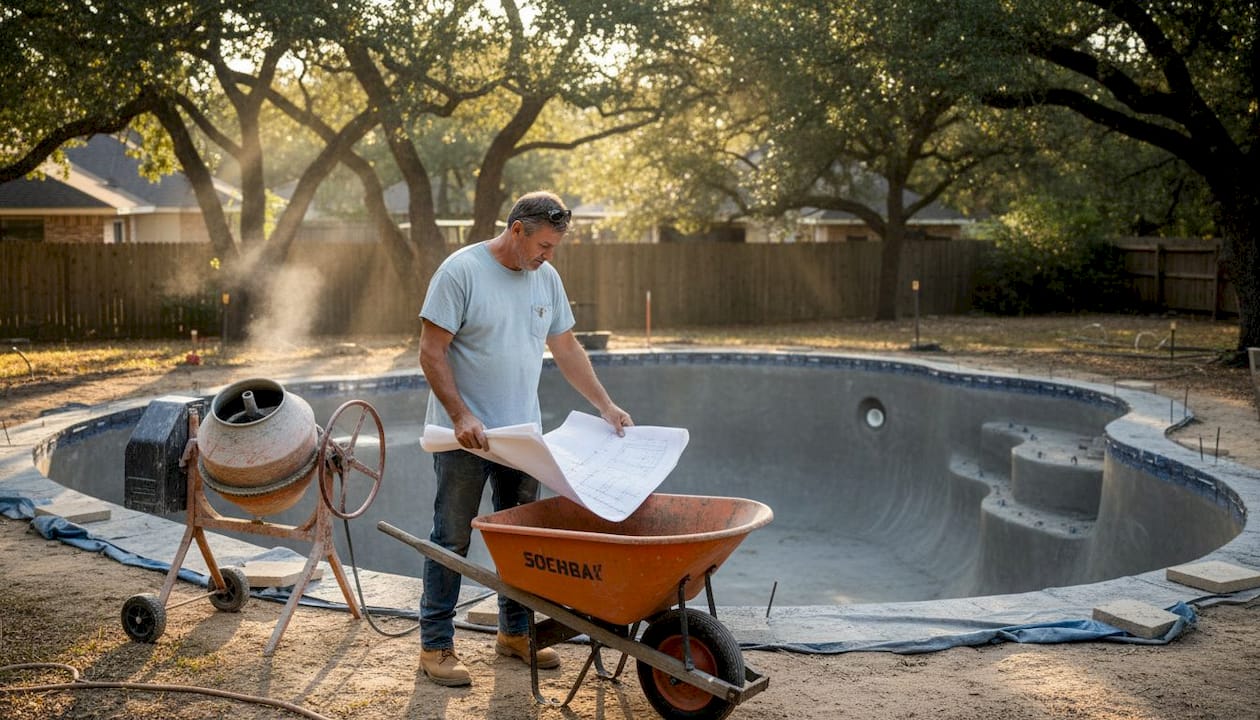
- Shotcrete application. A crew uses a high-pressure hose to spray the pre-mixed concrete over the rebar framework. After installing the steel rebar grid and plumbing, shotcrete is sprayed in layers to build a 3.5 to 6 inch thick shell, shaped on-site, then cured for at least 7 days moist. The nozzle operator sculpts the surface as they go, which is why skilled labor is non-negotiable.
- Moist curing. The shell is kept wet for a minimum of 7 days. This slows the hydration process and allows the concrete to reach its full compressive strength. Rushing this step causes cracking and weakens the structure.
- Finishing work. After curing, the interior surface is prepared for plaster, pebble finish, or tile. Coping, decking, and any water features are installed during this phase.
Good pool build preparation before excavation begins can shave weeks off your timeline and prevent costly surprises. A detailed step-by-step pool building process helps homeowners understand what to expect at each phase and how to stay informed without slowing down the crew.
Pro Tip: Visit your job site during the shotcrete spray day if your builder allows it. Watching the shell take shape in real time gives you a clear picture of the craftsmanship going into your investment.
Shotcrete vs other pool types: what sets it apart
With an understanding of how shotcrete pools are built, it’s key to see how this method compares to other popular choices. Most homeowners are weighing three options: shotcrete, fiberglass, and vinyl liner pools.
| Pool type | Design flexibility | Lifespan | Upfront cost | Maintenance |
|---|---|---|---|---|
| Shotcrete | Very high | 30+ years | Higher | Resurfacing every 10-15 yrs |
| Fiberglass | Limited shapes | 25+ years | Moderate | Low, gel coat may fade |
| Vinyl liner | Low | 10-20 years | Lower | Liner replacement every 7-10 yrs |
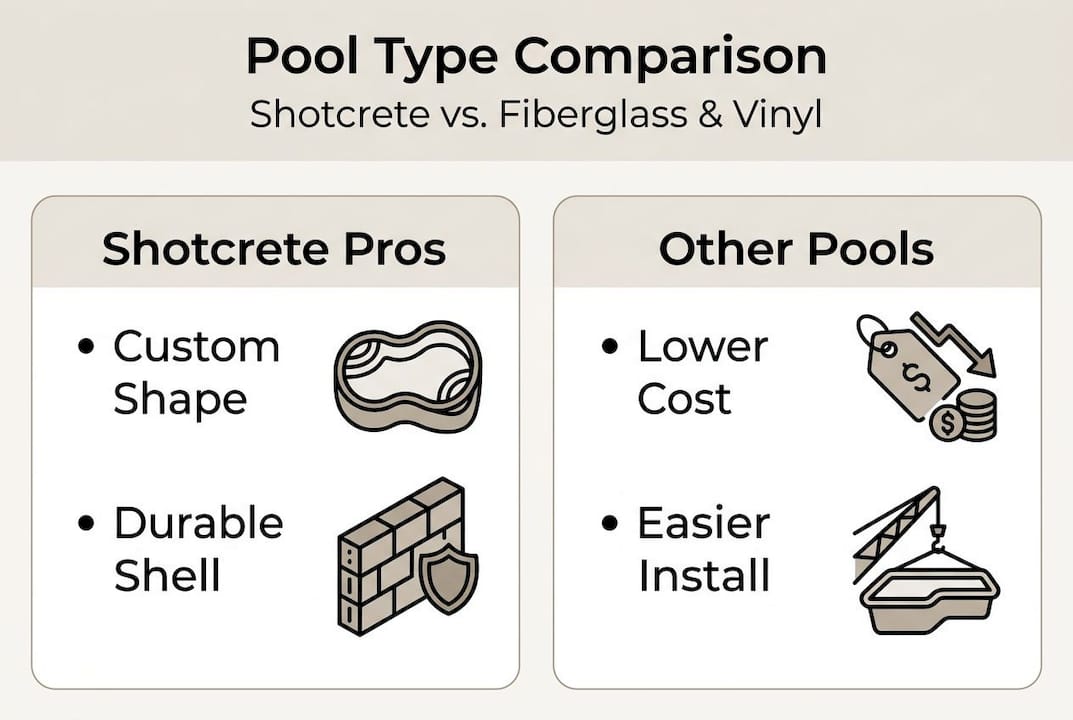
Fiberglass pools install quickly, sometimes in as little as a week, because the shell arrives pre-formed from a factory. But that speed comes at a cost: you’re choosing from a catalog of fixed shapes and sizes. If your backyard is oddly shaped, slopes, or you want a custom spa attached at a specific angle, fiberglass simply won’t work. The concrete pool advantages in Florida are especially clear when you factor in the state’s intense UV exposure, which can fade and oxidize fiberglass gel coats over time.
Vinyl liner pools are the most affordable entry point, but they carry ongoing costs that add up. Liners need replacement every 7 to 10 years, and punctures or tears can happen from toys, pets, or rough edges. Shape options are limited, and the liner surface doesn’t hold up well to aggressive water chemistry.
“Shotcrete pools are built with a thick, custom-shaped shell, offering greater design flexibility” compared to factory-formed alternatives.
Key reasons homeowners choose shotcrete over other types:
- No shape restrictions. Freeform designs, beach entries, and multi-level pools are all possible.
- Integrated features. Spas, grottos, and tanning ledges are built as part of the shell, not added on.
- Resurfacing options. When the interior surface wears, you resurface rather than replace the entire pool.
- Long-term value. A well-built shotcrete pool outlasts most fiberglass pool alternatives and holds its structural integrity for decades.
Why Central Florida homeowners choose shotcrete pools
Understanding the technical benefits is helpful, but here’s why your Central Florida neighbors decide on shotcrete for their luxury backyards. Florida’s climate is demanding. Summer heat regularly pushes past 95 degrees, afternoon thunderstorms are routine, and the ground shifts seasonally due to moisture changes in sandy soil. Your pool needs to handle all of it.
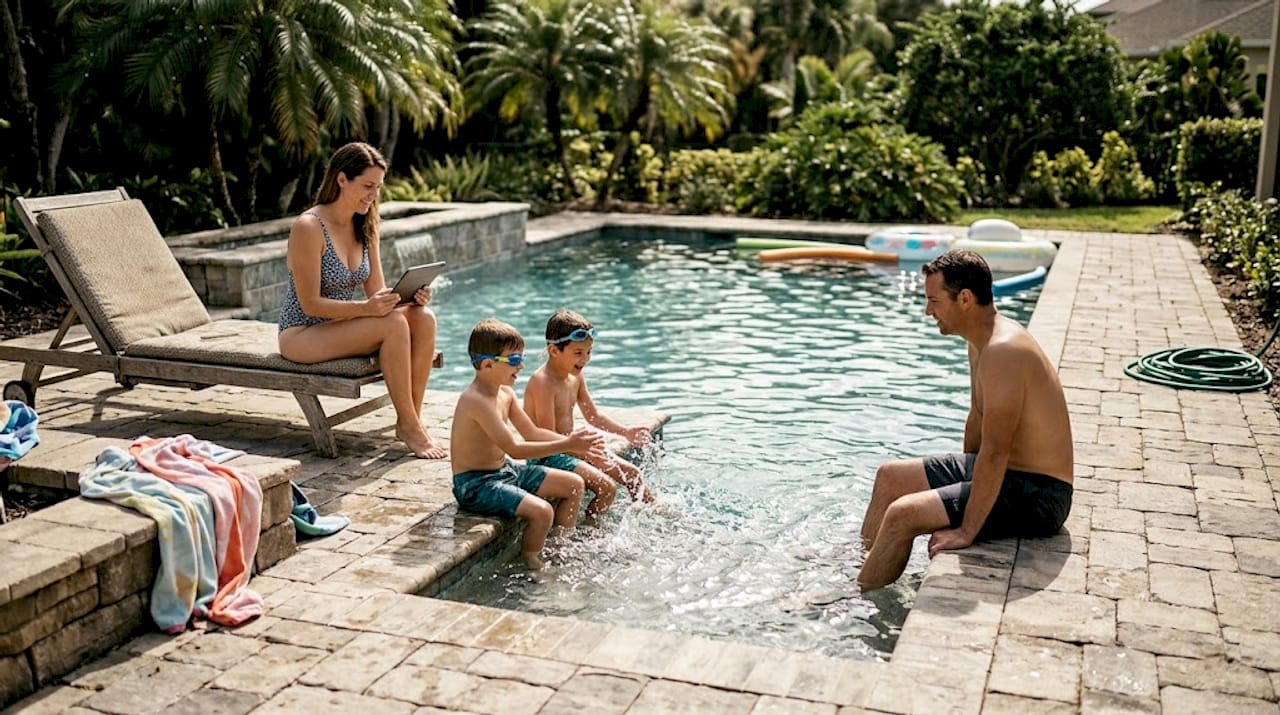
Shotcrete pools, cured correctly, deliver superior durability needed to withstand regional weather. The thick shell resists ground movement better than thinner alternatives, and the concrete material is not affected by UV exposure the way fiberglass is.
Luxury features are another major driver. Central Florida homeowners increasingly want pools that function as outdoor living spaces, not just places to swim. Shotcrete makes it straightforward to build:
- Attached spas with spillover waterfalls
- Tanning ledges for lounging in shallow water
- Sun shelves with umbrella sleeves built in
- Custom benches and steps integrated into the pool shape
- Grottos and water features that require complex curves
A custom pool planning guide can help you map out which features make sense for your yard size and how they affect your total project cost. Many homeowners who visit pool school resources before their first builder meeting arrive better prepared to ask the right questions and avoid scope creep.
From a home value perspective, a custom shotcrete pool adds meaningful curb appeal and resale value in Central Florida’s competitive real estate market. Buyers in this region expect outdoor living spaces, and a well-designed pool with premium features consistently stands out in listings.
Pro Tip: Before your design consultation, take photos of backyard pools you admire online or in your neighborhood. Specific visual references help your builder understand your style faster than descriptions alone.
Shotcrete pools: what most people overlook
After nearly four decades of building custom pools across Central Florida, we’ve seen a pattern that most guides don’t address: homeowners spend a lot of energy comparing pool types but very little time evaluating builder quality. That’s a mistake that costs more than any material upgrade.
The curing process is the most commonly shortcut step in pool construction. When a builder rushes the 7-day moist curing window to move to the next job, the concrete never reaches its rated compressive strength. You won’t see the damage immediately, but you’ll feel it in cracking, surface delamination, and structural repairs within 5 to 10 years.
There’s also a myth worth addressing: not all “custom” concrete pools are equally custom. Some builders offer a handful of pre-drawn shapes and call them custom because they’re made from concrete. A genuinely custom shotcrete pool is designed around your specific yard, your lifestyle, and your aesthetic preferences, not adapted from a template.
The step-by-step pool building process should be transparent from day one. Any builder who can’t walk you through each phase in plain language, or who discourages questions about curing and inspection, is not the right partner for a long-term investment of this size. Choose experience, choose accountability, and the pool will take care of itself for decades.
Ready to create your custom shotcrete pool?
If you’re inspired to bring your backyard vision to life, here’s how to get started with a local expert. R&R Swimming Pools has been designing and building custom inground pools across Central Florida since 1985, and we know what it takes to build a pool that performs beautifully for 30 years or more.
Explore your options by reviewing the best inground pool types available for Central Florida backyards, or walk through our custom pool design process to understand what happens between your first call and your first swim. When you’re ready to talk specifics, our team is available to discuss your yard, your budget, and your vision. Visit our custom concrete pool options page to see what’s possible and schedule a free consultation.
Frequently asked questions
How long does it take to build a shotcrete pool?
A shotcrete pool typically takes 8 to 12 weeks from excavation to the first swim, depending on weather and design complexity. The 7-day curing requirement alone is built into that timeline and cannot be skipped.
Is shotcrete better than gunite for pools?
Shotcrete offers excellent strength and consistent quality because the mix is controlled before it reaches the job site, while gunite is also durable when installed by professionals. Both methods involve spraying concrete over a rebar grid and are valid choices for custom pools.
Are shotcrete pools more expensive than fiberglass or vinyl pools?
Shotcrete pools generally carry a higher upfront cost than fiberglass or vinyl options, but they offer more design freedom and a longer lifespan. A custom-shaped concrete shell built correctly can last 30 or more years with standard maintenance.
How thick is a shotcrete pool shell?
Shotcrete pool shells are typically between 3.5 and 6 inches thick, which gives them the structural strength to handle ground movement and heavy use over decades.
