
TL;DR:
- Modern energy-efficient pools can save Florida homeowners $500 to $1,200 annually.
- Upgrading to variable-speed pumps, LED lighting, heat pumps, pool covers, and automation maximizes savings.
- Utility rebates and proper system management are key to achieving maximum efficiency and cost reduction.
Most Central Florida homeowners assume a pool automatically means sky-high electric bills. That assumption is outdated. Modern energy-efficient pools can slash utility costs dramatically, with variable-speed pumps saving $500-1,200 every year for Florida homeowners. In this guide, you’ll learn exactly which technologies drive those savings, which rebates and incentives are available right now, and how to avoid the common mistakes that leave money on the table. Whether you’re planning a new pool or upgrading an existing one, the numbers make a compelling case.
Table of Contents
- How much do energy efficient pools really save?
- Best technologies for energy efficient pools
- Rebates, regulations, and incentives in Central Florida
- Common pitfalls and how to maximize energy savings
- What most pool owners get wrong about energy efficiency
- Ready to build your energy-efficient dream pool?
- Frequently asked questions
Key Takeaways
| Point | Details |
|---|---|
| Dramatic cost savings | Energy efficient pools can lower annual utility bills by $500 to $1,200 for Central Florida homeowners. |
| Smart tech delivers results | Variable-speed pumps, heat pumps, LED lighting, pool covers, and automation offer the highest efficiency gains. |
| Incentives speed up ROI | Florida rebates and new regulations make upgrading to efficient pool equipment more affordable and rewarding. |
| Proper setup matters | Programming and maintaining systems correctly is crucial to realizing the full benefits of energy efficient upgrades. |
How much do energy efficient pools really save?
Let’s start with real numbers, because the savings are more dramatic than most people expect. The biggest driver of pool energy costs is the pump. Pumps account for 50-70% of total pool energy consumption, and Florida’s year-round swimming season means that meter is always running. That’s why upgrading the pump is the single highest-impact move you can make.
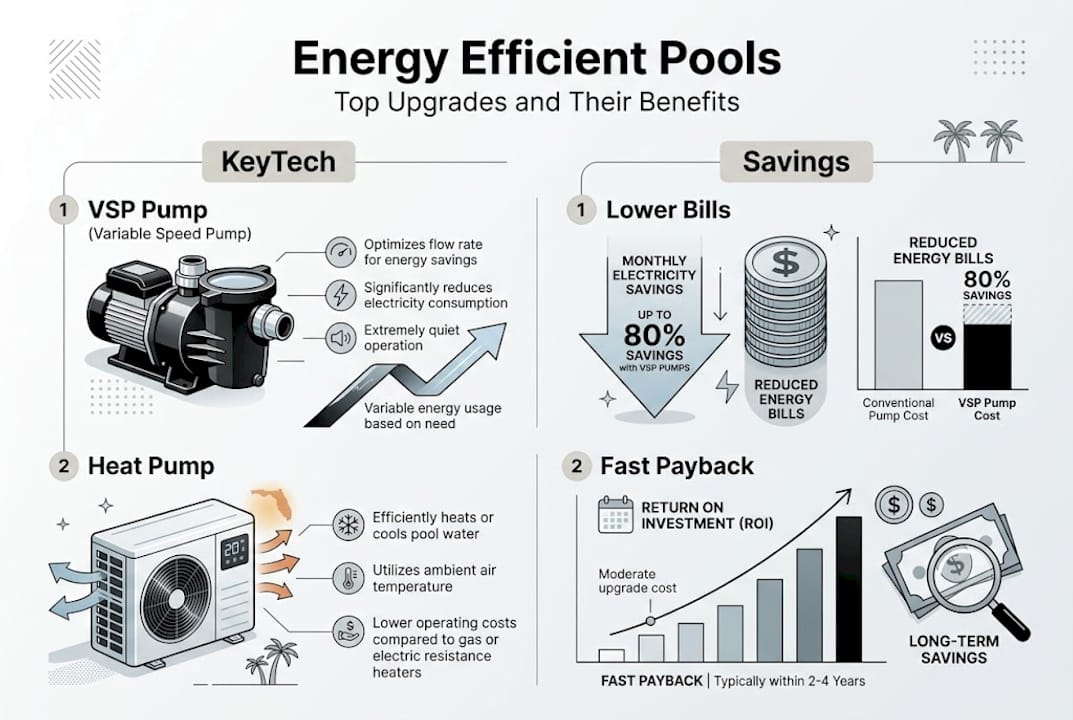
Switching from a traditional single-speed pump to a variable-speed pump (VSP) is where the transformation begins. VSPs reduce energy use by 50-90%, with most homeowners recouping the cost in just one to two years. After that, the savings are pure gain.
| Upgrade | Avg. annual savings | Typical payback period |
|---|---|---|
| Variable-speed pump | $500-$1,200 | 1-2 years |
| LED pool lighting | $100-$200 | 1-3 years |
| Heat pump heater | $300-$700 | 3-5 years |
| Pool cover | $150-$400 | Less than 1 year |
| Automation system | $200-$500 | 2-4 years |
Here’s what makes Central Florida especially interesting. Because the climate allows swimming ten to twelve months a year, every efficiency upgrade gets used far more than it would in a northern state. A homeowner in Minnesota might run their pool five months a year. You run yours year-round. That means the savings from energy upgrades compound faster and the payback periods shrink.
Key components that deliver the most savings:
- Variable-speed pump: The single biggest opportunity, cutting pump energy by up to 90%
- LED lighting: Replaces energy-hungry incandescent or halogen bulbs at a fraction of the wattage
- Heat pump heater: Far more efficient than gas or electric resistance for maintaining water temperature
- Automation system: Optimizes run times so equipment only works when needed
- Pool cover: Reduces heat loss and evaporation, cutting heating and water costs
When you stack these pool upgrades for Florida together, total annual savings can easily exceed $1,500 for a typical residential pool. That’s real money back in your pocket every single year.
Best technologies for energy efficient pools
Now that you know how much you can save, here’s how those savings actually happen. Each technology targets a specific energy drain, and together they create a pool that runs lean without sacrificing any comfort.
1. Variable-speed pumps (VSPs)
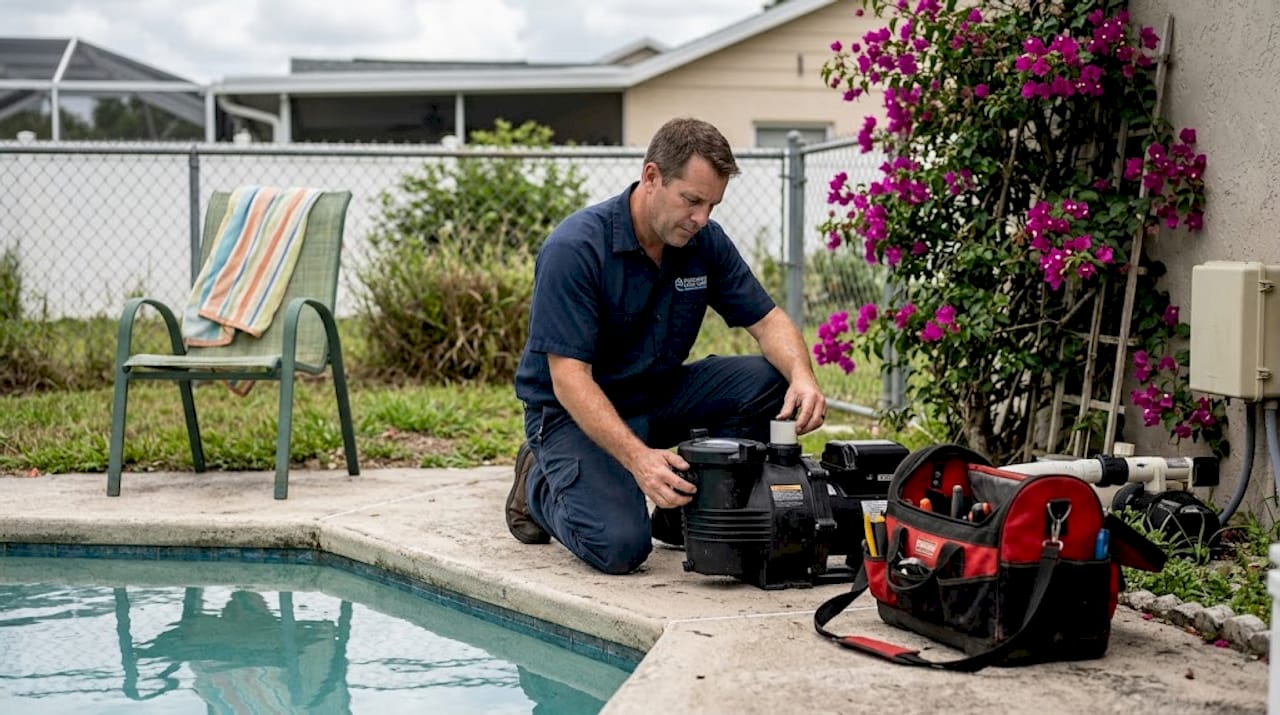
Traditional single-speed pumps run at full power all the time, even when the pool only needs gentle circulation. VSPs use permanent magnet motors that can dial down to the exact speed required for each task, whether that’s filtration, heating, or running a waterfall. The result is dramatically lower electricity draw during the hours when full power simply isn’t needed.
2. Heat pumps
Heat pumps don’t generate heat. They move it, pulling warmth from the surrounding air and transferring it to your pool water. This process has a coefficient of performance (COP) of 5 to 7, meaning for every unit of electricity consumed, you get five to seven units of heat. Gas heaters and electric resistance heaters can’t come close to that ratio. Florida’s warm climate makes heat pumps especially effective here.
3. Solar pool heating
Solar panels on a south-facing roof can heat your pool for almost nothing once installed. Florida’s sunshine makes this one of the most cost-effective long-term options available. The upfront cost is higher, but operating costs are near zero.
4. LED lighting
LED lighting reduces wattage by 80% or more compared to traditional pool lights, and LEDs last tens of thousands of hours longer. You get better color options and lower bills at the same time. Check out the full range of LED lighting options available for Central Florida pools.
5. Pool covers and automation
Pool covers cut evaporation by 70%, which directly reduces heating costs and water loss. Automation systems tie everything together, scheduling pumps, heaters, and lights to run only when needed. Learn more about pool cover types and the pool heating benefits that come with modern systems.
| Technology | Energy savings | Avg. installed cost | Best for |
|---|---|---|---|
| Variable-speed pump | 50-90% | $800-$1,500 | All pools |
| Heat pump heater | 60-75% vs. gas | $2,000-$4,000 | Year-round heating |
| Solar heating | 80-100% operating | $3,000-$6,000 | Long-term savings |
| LED lighting | 80%+ | $300-$800 | All pools |
| Automation system | 20-40% overall | $1,500-$3,000 | Tech-forward owners |
Pro Tip: Pair your VSP with an automation system from day one. The automation controller programs the pump to run at low speed for most of the day and ramp up only for specific tasks. This combination consistently delivers the top end of the energy savings range.
Rebates, regulations, and incentives in Central Florida
Understanding the technology is key, but incentives and regulations can make energy upgrades even more attractive financially. The good news is that both the government and local utilities are actively pushing homeowners toward efficient equipment.
Florida utilities currently offer meaningful rebates for qualifying upgrades. Florida utilities offer $200-400 for variable-speed pump installations and $50-150 for LED lighting upgrades. These rebates reduce your out-of-pocket cost and shrink the payback period even further.
On the regulatory side, the Department of Energy has updated its standards for pool pumps. DOE regulations now mandate VSPs with a water energy factor (WEF) of 3.8 to 12 or higher, and single-speed pumps are being phased out of production. This means if your current pump fails and needs replacing, a VSP is likely your only compliant option anyway. Getting ahead of this now, before a breakdown forces your hand, puts you in control of the timing and budget.
Here’s how to take full advantage of available incentives:
- Contact your utility provider before purchasing equipment. Duke Energy Florida, OUC, and TECO all have energy efficiency programs with varying rebate amounts and eligibility rules.
- Keep all receipts and installation documentation. Most rebate programs require proof of purchase and professional installation.
- Check federal tax credit eligibility. Solar pool heating systems may qualify for the federal residential clean energy credit.
- Ask your pool contractor about rebate-eligible equipment at the time of installation. Bundling upgrades often qualifies for higher total rebates.
- Apply promptly. Rebate programs have annual funding caps and sometimes run out before year end.
Pro Tip: Some utility rebate programs require pre-approval before the installation happens. Call your utility company first, before scheduling any work, to avoid missing out on money that was yours to claim.
If budget is a concern, explore financing pool upgrades to spread the cost while still capturing the rebates and long-term savings immediately.
Common pitfalls and how to maximize energy savings
With rebates and incentives covered, it’s time to make sure you actually realize all these savings and avoid the traps that quietly erode your return.
The most common mistake homeowners make is treating a VSP like a single-speed pump: they install it and run it at high speed all day. That completely cancels out the efficiency advantage. VSPs need proper programming and automation integration to deliver their full savings potential. Without it, you’ve paid for a premium pump and are getting single-speed results.
Here are the most important steps to maximize every energy dollar:
- Program your VSP correctly. Set low speeds (around 1,500-1,800 RPM) for filtration cycles and reserve high speeds for short bursts when running features like waterfalls or cleaners.
- Use your pool cover consistently. Every night you skip the cover, you lose heat and water to evaporation. That’s money gone.
- Orient solar panels properly. Solar heating needs south-facing roof space with minimal shading to perform as advertised. A poorly placed solar system can underperform significantly.
- Schedule heating during off-peak hours. Running your heat pump during lower-rate electricity periods reduces costs further.
- Maintain equipment regularly. Dirty filters force pumps to work harder, burning more energy. A clean filter can reduce pump energy draw noticeably.
“The difference between a pool that saves $400 a year and one that saves $1,200 a year often comes down to how well the equipment is set up and maintained, not what brand was installed.”
Also worth noting: heat pumps are less efficient below 50°F, but that temperature is rare in Central Florida, so this limitation almost never applies here. For more practical guidance, review these pool energy savings tips tailored to local conditions. You can also explore heating pools in Florida to understand exactly when heating pays off most.
What most pool owners get wrong about energy efficiency
After nearly four decades building pools in Central Florida, we’ve noticed a pattern. Homeowners invest in the right equipment, install it correctly, and then assume the work is done. They expect the savings to show up automatically. Sometimes they do. But the clients who consistently report the best energy efficiency results are the ones who stay engaged with their system.
The uncomfortable truth is that buying a VSP is only half the equation. The other half is attention. Small tweaks, like adjusting run schedules seasonally or cleaning filters on a consistent schedule, often double the real-world return compared to a set-it-and-forget-it approach. We’ve seen clients with modest equipment setups outperform neighbors with premium gear simply because they paid attention.
Conventional wisdom says buy the best equipment and you’re done. Our experience says the best equipment plus consistent, informed management is what actually moves the needle. The good news is that once you understand your system, the ongoing effort is minimal.
Ready to build your energy-efficient dream pool?
The savings are real, the technology is proven, and Central Florida’s climate makes every upgrade work harder for you than it would almost anywhere else in the country. If you’re thinking about a new pool or upgrading your current setup, the right guidance makes all the difference.
At R&R Swimming Pools, we’ve been designing and building custom inground pools across Central Florida since 1985. We know which upgrades deliver the fastest payback in this specific climate and can help you navigate rebates, equipment choices, and design options. Start with our inground pool installation guide, explore the expert guide to inground pools, or compare the best inground pool types to find the right fit for your backyard and budget. Your first step is a free quote.
Frequently asked questions
How much can I expect to save annually with an energy efficient pool in Central Florida?
Most homeowners save $500 to $1,200 each year by upgrading pumps and lighting, with year-round pool use in Florida amplifying those savings compared to northern states.
What are the top upgrades for pool energy efficiency?
Variable-speed pumps, heat pumps, LEDs, pool covers, and automation systems are the five upgrades that consistently deliver the highest return on investment.
Are there rebates or incentives for upgrading my pool equipment?
Yes. Florida utilities offer $200-400 for variable-speed pump installations and $50-150 for LED lighting, with some federal credits available for solar heating systems.
What is the difference between single-speed and variable-speed pumps?
Variable-speed pumps use permanent magnet motors that adjust to the exact speed needed, cutting energy use by up to 90% compared to single-speed models that run at full power constantly.
How do I maximize my energy efficient pool’s savings?
Program your VSP for low-speed filtration cycles, use covers and automation consistently, and maintain equipment on a regular schedule to keep everything running at peak efficiency.