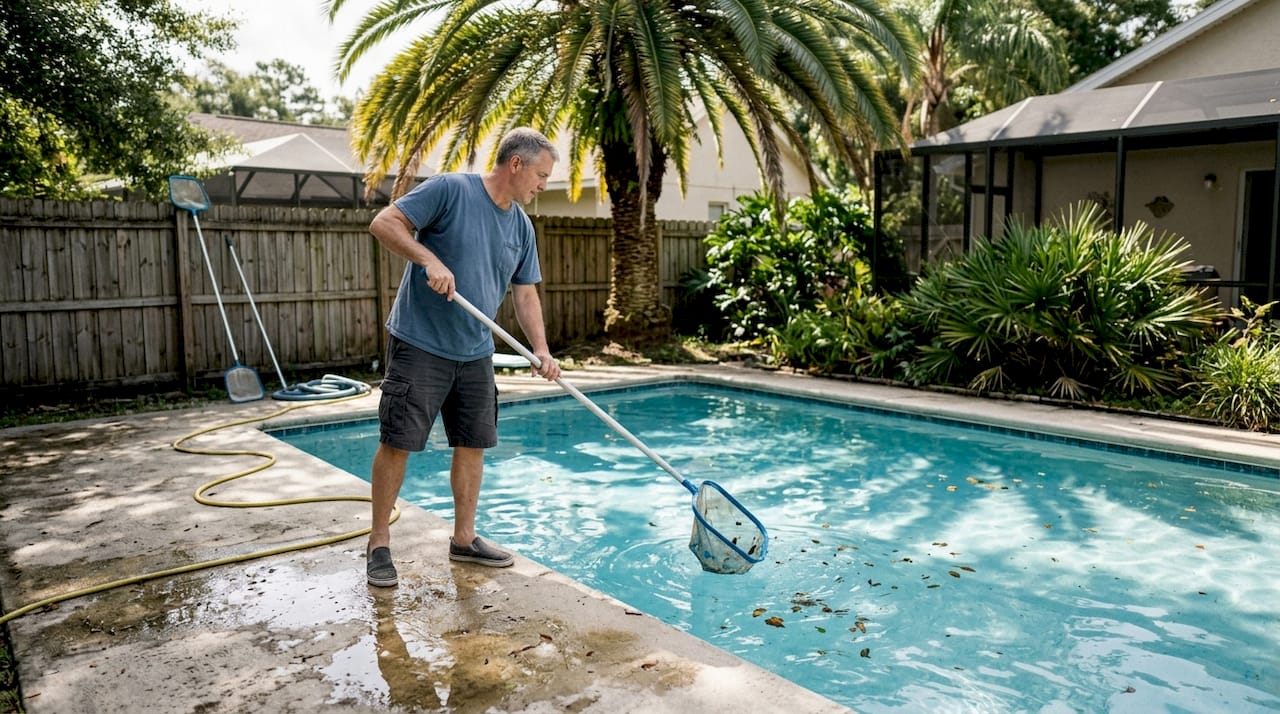
Central Florida homeowners often underestimate how their subtropical environment punishes swimming pools. While northern states winterize and rest their equipment, your pool runs year-round under relentless sun, torrential summer rains, and hurricane debris. Many assume occasional skimming suffices, but Central Florida’s climate demands continuous vigilance. Without regular maintenance, you risk algae blooms, equipment failure, and repair bills that dwarf preventative care costs. This guide reveals why consistent upkeep protects your investment, extends your pool’s lifespan, and keeps water safe for family enjoyment.
Table of Contents
- Central Florida’s Climate And Its Impact On Pool Maintenance
- Essential Pool Maintenance Tasks And Schedules For Homeowners
- Preventing Algae Growth And Prolonging Equipment Life
- Cost Benefits And Long-Term Savings Of Consistent Pool Upkeep
- Discover Expert Pool Installation And Maintenance Support
- Frequently Asked Questions
Key takeaways
| Point | Details |
|---|---|
| Climate drives maintenance | Year-round heat, UV exposure, and wet season rains accelerate chemical depletion and algae growth |
| Routine prevents costly repairs | Weekly chemical balancing and equipment checks avoid pump failures and filter replacements |
| Scheduled care saves money | Monthly maintenance costs far less than emergency green pool recovery or equipment overhauls |
| Tailored approach essential | Central Florida’s unique environment requires customized schedules beyond generic pool care advice |
Central Florida’s climate and its impact on pool maintenance
Your pool faces environmental stressors unknown to most of the country. Year-round warmth, intense UV, and hurricane season create a perfect storm for maintenance challenges. Temperatures rarely drop below 70°F, meaning your pool never gets a break from algae-friendly conditions. The sun’s UV rays degrade chlorine stabilizers faster than in northern climates, forcing you to add cyanuric acid more frequently.
Central Florida’s wet season from June through September brings another layer of complexity. Afternoon thunderstorms dump inches of rain weekly, diluting your carefully balanced chemicals. Rainwater raises pH levels, reduces chlorine effectiveness, and introduces phosphates that feed algae blooms. You’ll test and adjust chemistry twice as often during these months compared to winter.
Storms deposit more than water. Wind-blown debris, pollen, and runoff from landscaping carry organic matter and nutrients into your pool. Hurricanes can overwhelm even covered pools with leaves, branches, and sediment. This organic load consumes sanitizer rapidly and creates hiding spots for algae spores.
The dry season offers no reprieve, just different challenges. Lower humidity increases evaporation rates, concentrating dissolved solids and hardening water. Your equipment runs constantly to maintain circulation, putting wear on pumps, filters, and heaters. Without winter shutdowns to inspect and repair, problems compound until something breaks.
Understanding pool maintenance importance in Central Florida means accepting your pool needs attention every single week. Skipping even one chemical check during summer can trigger an algae bloom requiring days of recovery work.
Pro Tip: Keep a weather log alongside your maintenance records. Tracking rainfall and storm events helps you anticipate when extra chemical adjustments will be needed.
These environmental factors make generic maintenance advice useless. Your pool’s needs shift with each season’s unique stressors, demanding a customized approach that accounts for Central Florida’s relentless climate.
Essential pool maintenance tasks and schedules for homeowners
Successful pool care follows a tiered schedule matching task urgency to frequency. Daily, weekly, and annual tasks work together to maintain water quality and equipment health. Miss one tier, and problems cascade quickly.
Daily tasks take five minutes but prevent hours of corrective work. Skim surface debris before it sinks and decays. Check your pump basket for clogs that reduce circulation. Listen to equipment for unusual sounds indicating bearing wear or cavitation. Run your hand along the waterline to feel for developing algae films.
Weekly maintenance demands more time but delivers the biggest impact:
- Brush all pool surfaces, especially corners and steps where algae hides
- Vacuum the floor to remove settled debris and prevent staining
- Test water chemistry and adjust to target ranges
- Backwash or clean filters when pressure rises 8-10 psi above baseline
- Inspect visible equipment for leaks, cracks, or loose connections
Chemical balance matters most. Maintain pH between 7.2 and 7.8 for swimmer comfort and sanitizer efficiency. Keep free chlorine at 1 to 3 ppm to kill bacteria and algae. Test alkalinity, calcium hardness, and cyanuric acid monthly to prevent scaling or corrosion.
Bi-weekly and monthly tasks focus on equipment health. Clean cartridge filters every two weeks during heavy use. Inspect salt cells for calcium buildup if you use a salt system. Check tile and coping for loose sections before they fall and damage your pool finish.
Annual professional inspections catch problems invisible to homeowners. Technicians pressure test plumbing, measure pump flow rates, and verify heater combustion. They spot worn seals, corroded pipes, and failing motors before catastrophic failures occur. This preventative approach saves thousands compared to emergency repairs.
Pro Tip: Set phone reminders for each maintenance tier. Consistency matters more than perfection. A pool maintained adequately every week outperforms one serviced intensively once monthly.
High-use periods like summer require tighter schedules. Test chemistry three times weekly when kids swim daily. Shock your pool weekly to oxidize organic waste chlorine can’t eliminate alone. Understanding why maintenance matters helps you adjust schedules to actual pool conditions rather than arbitrary calendars.
Preventing algae growth and prolonging equipment life
Algae represents your pool’s most persistent enemy. Three common types plague Central Florida pools: green algae that clouds water overnight, yellow mustard algae resistant to normal chlorine levels, and black algae with roots penetrating plaster. Each thrives when sanitizer drops or phosphates accumulate.
Maintaining proper sanitizer residuals and controlling phosphates below 500 parts per billion prevents blooms before they start. Brush weekly to disrupt algae colonies attempting to establish on surfaces. Shock monthly even when water looks clear to eliminate microscopic spores.
Green pool recovery differs dramatically from routine maintenance. Once algae takes hold, you need shocking to 10-30 ppm chlorine, continuous filtration for days, and possible draining if cyanuric acid exceeds 100 ppm or total dissolved solids climb too high. This intensive process costs hundreds in chemicals and labor, far exceeding weekly maintenance expenses.
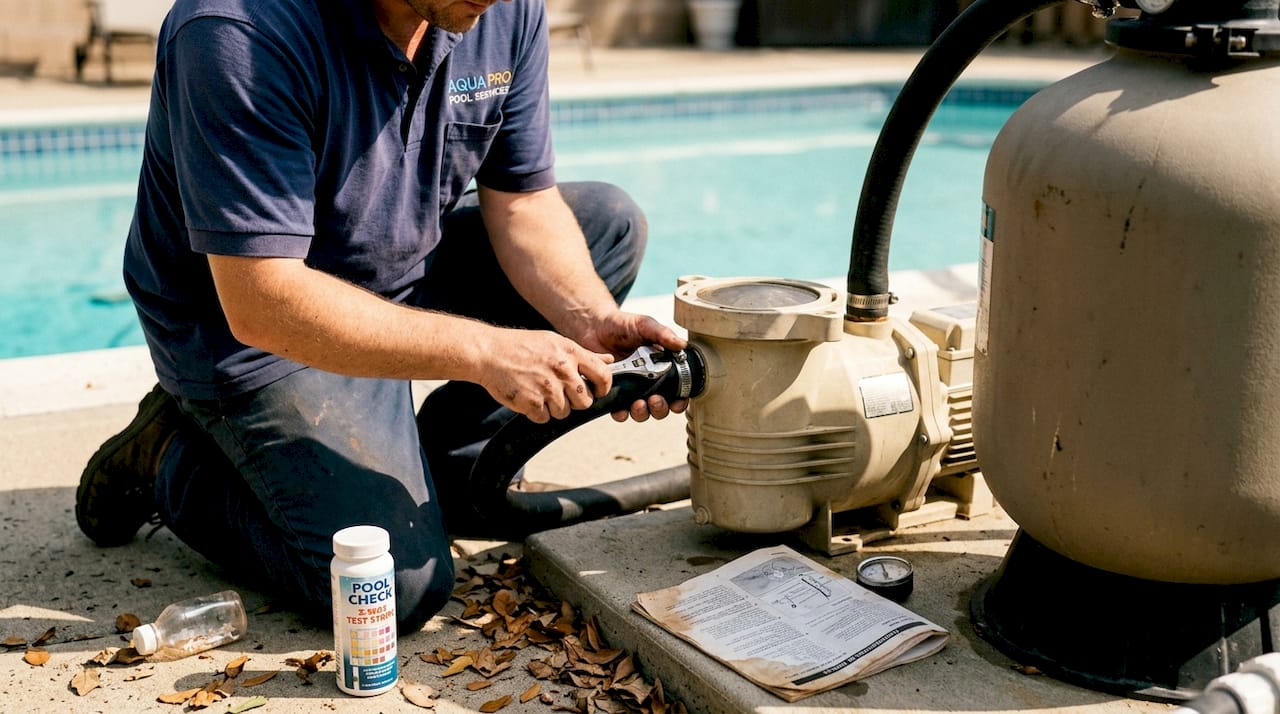
Your equipment suffers when maintenance lapses. Pumps running against clogged filters overheat and burn out motors. Heaters scale internally when calcium hardness rises unchecked, reducing efficiency and requiring acid flushes. Salt cells encrusted with calcium stop producing chlorine, leaving your pool vulnerable.
| Maintenance Impact | Well-Maintained | Neglected |
| — | — |
| Pump lifespan | 8-12 years | 3-5 years |
| Filter efficiency | 95%+ particle removal | 60-70% removal |
| Heater performance | Maintains set temperature | Struggles, higher energy cost |
| Surface condition | Smooth, stain-free | Etched, stained, rough |
Water chemistry directly affects equipment longevity. Hard water with 200-400 ppm calcium stays balanced, but higher levels cause scaling. Low pH corrodes metal components and etches plaster. High pH reduces sanitizer effectiveness and clouds water with precipitated minerals.
Water loss confuses many homeowners. Central Florida’s heat causes significant evaporation, but leaks waste thousands of gallons monthly. The bucket test distinguishes normal evaporation of 0.5 to 1.5 inches weekly from problematic leaks requiring professional detection.
Pro Tip: Mark your skimmer water level with a grease pencil. Check it weekly at the same time of day. Consistent drops exceeding 2 inches weekly signal potential leaks worth investigating.
Consistent maintenance protects your investment by keeping water chemistry stable and equipment operating within design parameters. Small daily efforts prevent the cascading failures that destroy pools and drain bank accounts.
Cost benefits and long-term savings of consistent pool upkeep
Pool ownership costs money, but maintenance expenses pale compared to neglect. Monthly costs for inground pools range from $100 to $210 for professional service or $50 to $60 for DIY chemical and supply purchases. Annual spending totals $1,200 to $5,000 depending on pool size, equipment, and service level.
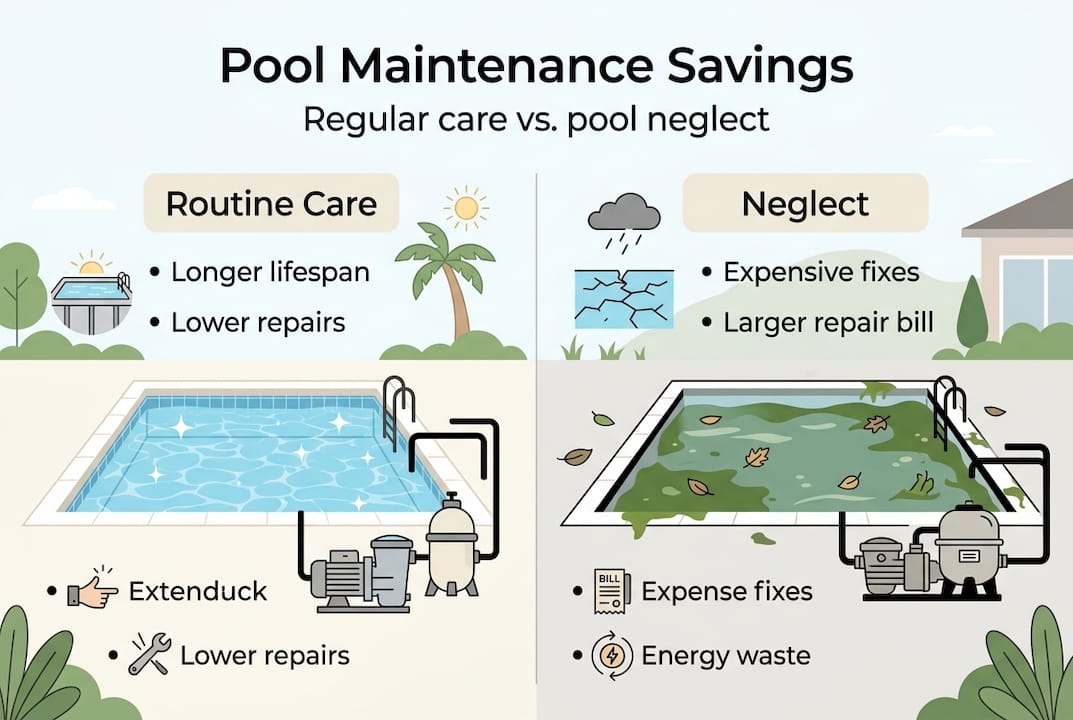
DIY maintenance saves substantially but demands time and knowledge. You’ll spend $600 to $720 yearly on chemicals, test kits, and supplies versus $1,200 to $2,520 for weekly professional service. The labor savings come with responsibility for catching problems early and maintaining consistent schedules.
| Expense Category | DIY Annual Cost | Professional Annual Cost |
|---|---|---|
| Chemicals and supplies | $600-720 | Included in service |
| Weekly service | $0 | $1,200-2,520 |
| Equipment repairs | $300-1,000 | $300-1,000 |
| Annual professional inspection | $150-300 | Often included |
| Total | $1,050-2,020 | $1,500-3,520 |
Regular maintenance prevents repairs costing far more than routine care:
- Pump replacement: $800 to $1,500 installed
- Filter replacement: $400 to $1,200 depending on type
- Heater repair: $300 to $2,000 for parts and labor
- Replastering from chemical damage: $5,000 to $10,000
- Green pool recovery: $300 to $800 for shocking and cleaning
Well-maintained pools last 30-plus years with original equipment receiving timely repairs and replacements. Neglected pools need major renovations within 15 years as surfaces deteriorate and equipment fails prematurely. The financial advantage of consistent care compounds over decades.
Energy costs also respond to maintenance quality. Clean filters reduce pump runtime by maintaining proper flow rates. Balanced chemistry helps heaters work efficiently without fighting scale buildup. Energy-efficient upgrades paired with good maintenance cut utility bills 30 to 50 percent.
Insurance considerations matter too. Some policies require proof of regular maintenance to cover equipment failures or liability claims. Documentation protects you if a guest injury or property damage dispute arises. Keep receipts, test logs, and service records organized.
The math favors prevention overwhelmingly. Spending $2,000 annually on maintenance and minor repairs beats a single $8,000 replastering job or $5,000 equipment overhaul. Your pool remains swimmable, safe, and attractive rather than becoming a neglected liability.
Pro Tip: Budget 1-2% of your pool’s replacement value annually for maintenance and repairs. This realistic planning prevents financial surprises and ensures funds exist for necessary care.
Understanding why maintenance matters financially helps you view weekly tasks as investments rather than chores. Every chemical test and equipment check protects thousands in future expenses.
Discover expert pool installation and maintenance support
Whether you’re planning a new pool or maintaining an existing one, professional guidance maximizes your investment. R & R Swimming Pools brings over 35 years of Central Florida experience to custom inground pool design, installation, and ongoing care. Their expertise helps you avoid common pitfalls and enjoy worry-free pool ownership.
Explore comprehensive installation guides for Central Florida covering every step from design to startup. Learn how proper construction and equipment selection impact long-term maintenance needs. Understanding maintenance importance from the planning stage ensures your pool design supports easy care.
Busy homeowners appreciate professional maintenance services that handle weekly tasks, seasonal adjustments, and equipment monitoring. Expert technicians catch developing problems during routine visits, preventing emergencies that disrupt your schedule. Review custom pool planning resources to discover how design choices affect maintenance requirements and costs.
Frequently asked questions
Why does Central Florida require more pool maintenance than other regions?
The subtropical climate runs pools year-round without winter breaks for equipment rest or algae dormancy. Heavy wet season rainfall dilutes chemicals weekly, while constant UV exposure degrades stabilizers faster than northern climates experience. Hurricane debris and phosphate-rich runoff create additional challenges requiring vigilant monitoring.
How does regular maintenance extend my pool’s lifespan?
Consistent chemical balance prevents surface etching, staining, and deterioration that require expensive replastering. Equipment operating with clean filters and proper water chemistry lasts twice as long as neglected components. Professional inspections catch small issues before they cascade into major failures, protecting your investment for decades.
What signs indicate my pool needs immediate maintenance attention?
Cloudy or discolored water signals chemical imbalance or algae growth requiring prompt correction. Equipment making unusual noises or running constantly indicates mechanical problems. Visible algae on surfaces, rapid water loss exceeding normal evaporation, or difficulty maintaining chemical levels all demand immediate professional evaluation.
Can I reduce maintenance costs without sacrificing pool health?
DIY chemical testing and balancing cuts professional service costs by 50 percent while maintaining water quality. Investing in quality test kits, learning proper techniques, and maintaining consistent schedules delivers professional results. Reserve professional services for equipment inspections, repairs, and seasonal tasks requiring specialized knowledge or tools.
How often should I schedule professional pool inspections?
Annual comprehensive inspections catch developing equipment problems and verify proper operation of all systems. Schedule inspections before summer’s heavy use period to address issues proactively. Additional inspections after major storms or when planning renovations ensure your pool remains safe and efficient year-round.
