
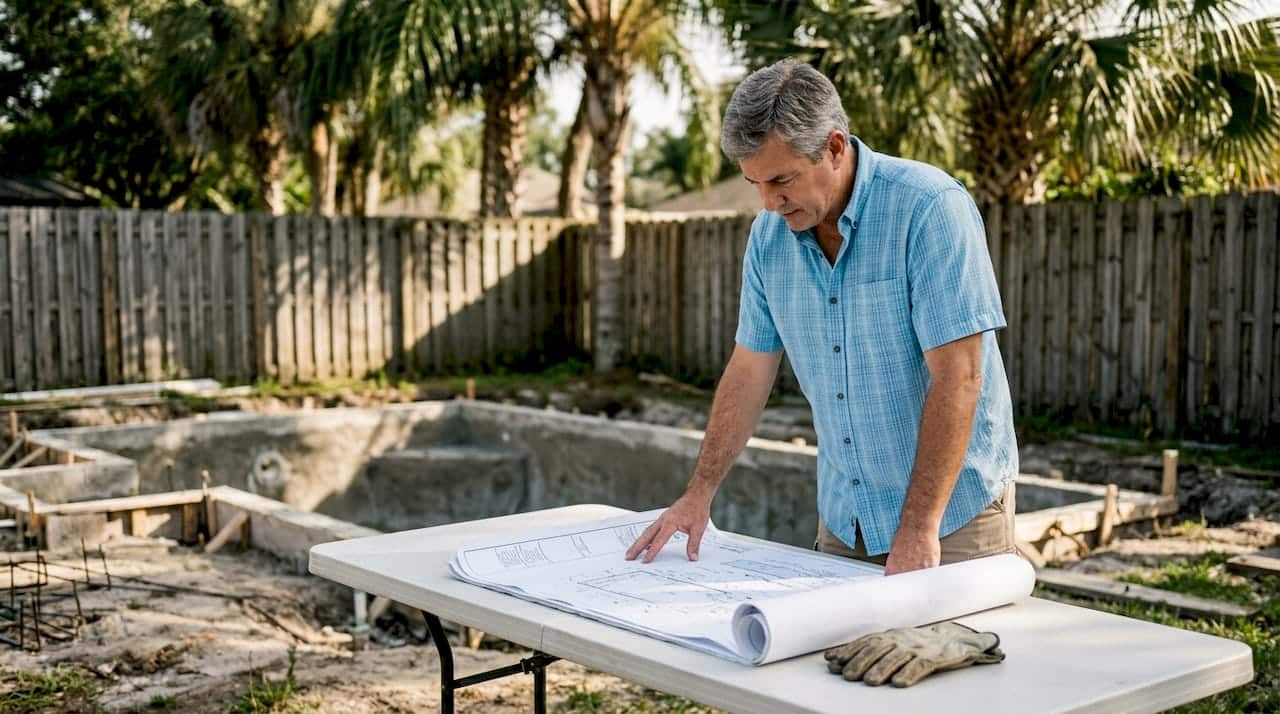
Building or renovating a pool in Central Florida involves more than choosing the perfect design. Many homeowners discover too late that skipping the permitting process leads to expensive fines, insurance complications, and even legal liens on their property. Understanding pool permitting requirements protects your investment and ensures your project meets safety standards. This guide walks you through exactly when permits are required, what the process involves, and how to navigate Central Florida’s specific regulations successfully.
Table of Contents
- Key takeaways
- Understanding pool permitting basics in Central Florida
- When do you need a pool permit for renovations and repairs?
- How custom features affect pool permitting complexity
- Navigating the Central Florida pool permitting process successfully
- How R & R Swimming Pools helps Central Florida homeowners with permits
- Frequently asked questions about pool permitting
Key Takeaways
| Point | Details |
|---|---|
| Pool permits required | Most new pools and major renovations in Central Florida must obtain permits before work begins. |
| Renovations may need permits | Resurfacing or other renovations that involve structural changes require permits in most cases. |
| Noncompliance penalties | Skipping permits can trigger fines, stop work orders, liens, insurance problems, and complications when selling. |
| Understand permitting timeline | Expect a two to four week process from application to approval, with inspections at key milestones. |
Understanding pool permitting basics in Central Florida
Pool permitting is the official approval process required by local government before you can legally construct or modify an inground swimming pool. This system exists to ensure safety, code compliance, and legal authorization for all pool projects. Without proper permits, you risk serious financial and legal consequences that far exceed the cost of compliance.
Central Florida’s permitting process follows a clear sequence. First, you submit detailed construction plans to your local building department. Officials review these plans against current building codes, zoning regulations, and safety standards. You pay required fees based on project scope and value. Once approved, inspectors visit your property at specific construction milestones to verify compliance.
The types of projects requiring permits are broader than most homeowners expect:
- New inground pool installations of any size or material
- Major structural alterations to existing pools
- Deck expansions or replacements exceeding certain square footage
- Electrical work for pool equipment, lighting, or heating systems
- Plumbing modifications affecting pool circulation or drainage
Central Florida counties enforce building codes rigorously because pools present unique safety hazards. Each jurisdiction maintains slightly different requirements, so what applies in Orange County might differ from Seminole or Lake County regulations. Your local building department issues permits and conducts inspections throughout construction.
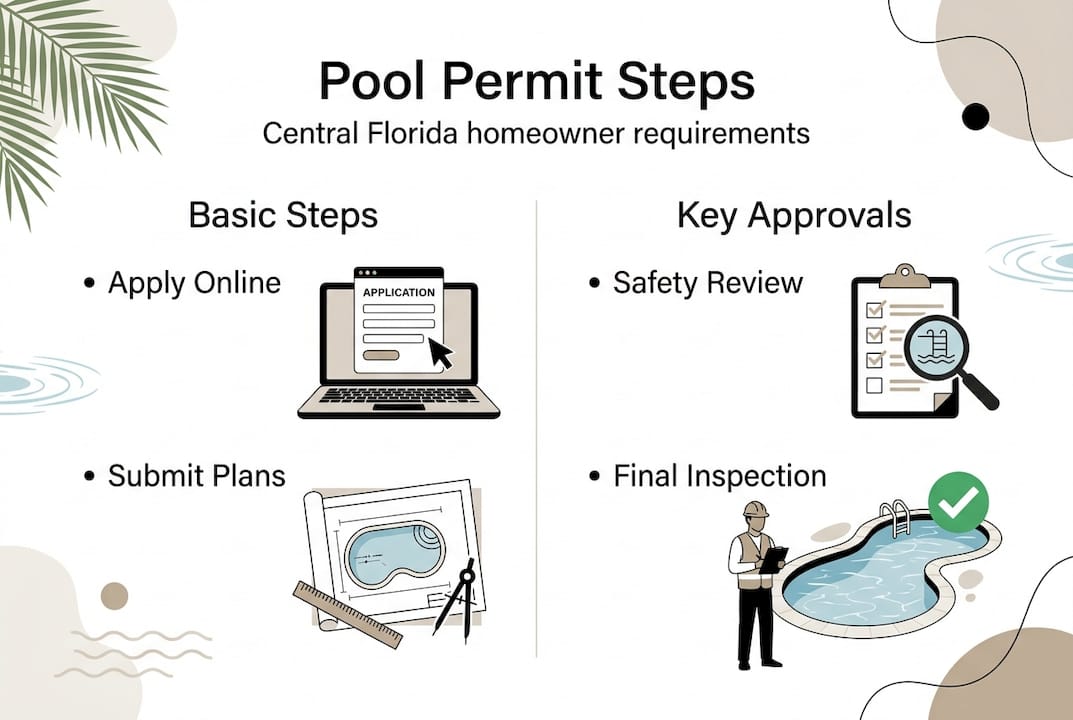
The permitting timeline varies but typically takes two to four weeks from application to approval. Complex projects with custom features require additional engineering review, extending this period. Understanding pool inspection requirements helps you prepare for mandatory site visits that occur during excavation, steel placement, plumbing installation, and final completion.
When do you need a pool permit for renovations and repairs?
The line between routine maintenance and renovation requiring permits confuses many homeowners. Maintenance includes chemical balancing, filter cleaning, and minor equipment repairs that don’t alter the pool’s structure or systems. Renovations involve changes to the pool’s physical configuration, major equipment upgrades, or structural modifications.
Resurfacing often needs permits if it involves structural changes, and consultation with your local building department is always recommended before starting work. What seems like a simple cosmetic update can trigger permit requirements if it affects the pool shell’s integrity.
Common renovation types requiring permits include:
- Complete pool resurfacing or replastering
- Tile replacement involving structural substrate work
- Coping stone replacement or deck reconstruction
- Equipment upgrades requiring new electrical or plumbing connections
- Adding steps, benches, or other built-in features
- Installing new pool heaters or automation systems
The risks of non-compliance extend beyond immediate fines. Building departments can issue stop-work orders that halt your project indefinitely. Your homeowner’s insurance might deny claims related to unpermitted work. When selling your property, title companies often require proof that all improvements were properly permitted, potentially derailing your sale.
Pro Tip: Maintain a dedicated folder with copies of all permits, inspection reports, and approval documents. Future buyers will appreciate this documentation, and it protects you if questions arise about your pool’s legal status.
Before starting any pool renovation project, contact your local building department. Describe your planned work in detail and ask specifically whether permits are required. This five-minute phone call can save thousands in fines and project delays. Even experienced contractors sometimes misjudge permit requirements, so verify independently.

Keep records of these consultations, including the name of the official you spoke with and the date. If your project involves pool resurfacing, ask about inspection timing since some municipalities require mid-project visits to verify proper surface preparation.
How custom features affect pool permitting complexity
Adding custom elements transforms a standard pool into a backyard resort, but these enhancements significantly increase permitting complexity. Features like waterfalls, grottos, fire bowls, and integrated spas require additional engineering documentation and specialized inspections. Custom pool features increase engineering needs and permit complexity in Central Florida.
The permitting process for custom features follows these steps:
- Hire a licensed engineer to design structural elements and create stamped drawings
- Submit detailed plans showing all custom features with specifications and materials
- Wait for plan review, which takes longer than standard pool permits
- Address any revision requests from building officials
- Schedule additional inspections specific to custom installations
- Obtain final approval after demonstrating proper installation
Different custom features trigger varying permit requirements:
| Custom Feature | Typical Permit Requirements | Additional Considerations |
|---|---|---|
| LED lighting systems | Electrical permit, licensed electrician required | Must meet underwater wiring codes |
| Rock waterfalls | Structural permit, engineering drawings | Weight distribution calculations needed |
| Attached spas | Plumbing and electrical permits | Separate heating system approval |
| Fire features | Gas line permit, fire safety inspection | Minimum clearances from combustibles |
| Slides | Structural permit, safety certification | Deck reinforcement often required |
| Automation systems | Electrical permit | Integration with existing pool equipment |
The additional costs for permitting custom features range from $500 to $3,000 depending on complexity. Engineering fees typically run $1,500 to $5,000 for detailed structural calculations and stamped plans. Timeline extensions of two to six weeks are common as officials review specialized designs more carefully.
Pro Tip: Discuss all desired custom pool features with your contractor during initial planning. Incorporating them into original permit applications is faster and cheaper than adding them later through permit amendments.
Understanding the full scope of custom pool installation requirements early prevents budget surprises and schedule delays. Experienced contractors factor permitting time into project timelines, but homeowners who add features mid-construction often face frustrating waiting periods.
Navigating the Central Florida pool permitting process successfully
Securing pool permits efficiently requires preparation and attention to detail. Following this systematic approach minimizes delays and ensures compliance:
- Contact your local building department to confirm specific requirements for your jurisdiction
- Hire a licensed pool contractor who will prepare or coordinate permit applications
- Gather property surveys, plot plans, and any homeowner association approvals needed
- Submit complete application packages with all required drawings, specifications, and fees
- Respond promptly to any requests for additional information or plan revisions
- Schedule inspections at required construction milestones without delay
- Address any inspection failures immediately to keep your project moving forward
- Obtain final approval and certificate of occupancy before using your pool
Preparing documentation properly accelerates approval. Building departments need site plans showing pool location, setbacks from property lines, and existing structures. Engineering plans must include structural details, equipment specifications, and electrical schematics. Licensed professionals must stamp these documents certifying they meet code requirements.
Common mistakes that delay or derail permitting include:
- Submitting incomplete applications missing required attachments
- Failing to verify setback requirements before finalizing pool placement
- Starting construction before receiving permit approval
- Missing scheduled inspections or failing to call for inspections on time
- Making changes to approved plans without obtaining permit amendments
- Using unlicensed contractors whose work won’t pass inspection
Communication with local authorities and your contractor prevents misunderstandings. Ask questions when requirements seem unclear. Building officials would rather explain regulations upfront than issue violations later. Your contractor should have established relationships with local inspectors and understand their specific preferences.
Non-compliance risks include fines, liens, and insurance complications, so always obtain proper permits. Enforcement actions can force you to remove unpermitted work entirely, wasting your entire investment. Understanding the complete pool remodeling process helps you appreciate why permitting matters.
Familiarize yourself with the pool inspection process so you know what inspectors look for at each stage. Being present during inspections lets you ask questions and understand any issues requiring correction. This knowledge helps you evaluate whether your contractor is performing quality work that will pass official scrutiny.
How R & R Swimming Pools helps Central Florida homeowners with permits
Navigating pool permitting can feel overwhelming, especially for first-time pool owners. R & R Swimming Pools has guided Central Florida homeowners through this process since 1985, handling permit applications and inspections as part of comprehensive pool installation services. Their experience with local building departments across Orange, Seminole, Lake, and surrounding counties ensures your project moves smoothly from concept to completion.
Their team manages all permitting paperwork, coordinates required inspections, and addresses any issues that arise during the approval process. This expertise proves invaluable when dealing with complex custom features or challenging site conditions. Whether you’re planning a new inground pool installation or exploring options through their custom pool planning guide, R & R Swimming Pools handles the regulatory requirements while you focus on design choices. They also offer flexible pool financing options to make your dream pool achievable within your budget.
Frequently asked questions about pool permitting
What is pool permitting?
Pool permitting is the official governmental approval process required before constructing or significantly altering an inground swimming pool. Local building departments review your plans to ensure they meet safety codes, zoning regulations, and construction standards. This process protects homeowners, future buyers, and the community by verifying pools are built correctly and safely.
How long does the pool permit application process take?
Typical permit applications take two to four weeks for approval in most Central Florida counties. Complex projects with custom features or challenging site conditions may require six to eight weeks. Timeline depends on application completeness, current department workload, and whether plan revisions are needed. Submitting thorough documentation upfront speeds approval significantly.
Do I need permits for minor pool repairs?
Minor maintenance like replacing a pump, cleaning filters, or balancing chemicals typically doesn’t require permits. However, repairs involving electrical work, plumbing modifications, or structural changes usually need approval. The safest approach is calling your local building department to describe planned work and confirm whether permits are necessary before starting any project.
What happens if I don’t get required pool permits?
Skipping required permits can result in immediate fines ranging from $500 to $5,000 or more. Building departments may place liens on your property preventing sale until violations are corrected. Your homeowner’s insurance might deny claims related to unpermitted work. You could be forced to remove unpermitted improvements entirely, losing your entire investment plus facing additional penalties.
How do I verify permit requirements with my local building department?
Contact your county or city building department directly by phone or visit their office. Describe your planned pool project in detail, including size, features, and any renovations. Ask specifically what permits are required and what documentation you need to submit. Request this information in writing when possible, and note the date and name of the official you consulted for your records.
