
Your pool might be the biggest feature in your backyard, but here’s what most Central Florida homeowners overlook: the finish inside that pool matters more than almost any other design decision you’ll make. It shapes the water color, the feel under your feet, how often you’ll need repairs, and yes, what your home is worth. Most people spend months choosing the pool’s shape and size, then rush through the finish selection in minutes. That’s a costly mistake. This guide walks you through every major finish type, how each one affects your property value and daily enjoyment, and what proper installation actually looks like.
Table of Contents
- Understanding pool finishes: Types, features, and functions
- Visual impact: How pool finishes shape style and atmosphere
- Value and return on investment: Pool finishes as a smart home upgrade
- What to expect: Pool finish installation, standards, and maintenance essentials
- Our perspective: Why the right finish is the real secret to pool enjoyment and value
- Ready to transform your pool? Get expert help in Central Florida
- Frequently asked questions
Key Takeaways
| Point | Details |
|---|---|
| Pool finish type matters | Your choice of finish transforms both the look and value of your pool. |
| Improved value and ROI | Upgrading finishes can boost Central Florida property values by 5–15 percent. |
| Professional installation is key | Following industry standards ensures durability and protects your investment. |
| Routine care extends life | Proper maintenance keeps a pool finish beautiful and long-lasting. |
Understanding pool finishes: Types, features, and functions
A pool finish is the final interior layer applied to the shell of your pool. It’s the surface you see, touch, and swim against every single day. Beyond looks, it protects the structural shell from water penetration, chemical exposure, and the wear that comes with years of use.
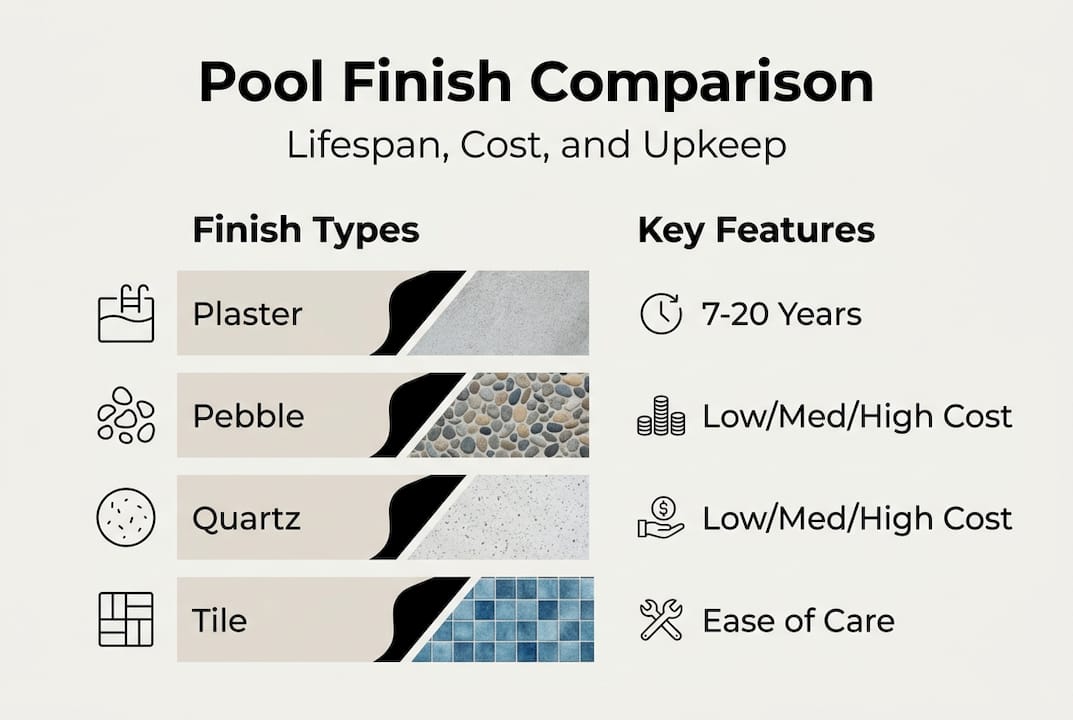
When you’re exploring the best pool finish options for your Central Florida home, you’ll encounter four main categories:
- Plaster: The most traditional and affordable option. Standard white plaster gives pools that classic look, but it’s the least durable, typically lasting 7 to 10 years before needing resurfacing.
- Quartz aggregate: A step up in both durability and visual appeal. Quartz crystals are blended into the plaster mix, creating a surface that resists staining, holds color better, and lasts 12 to 15 years.
- Pebble aggregate: The premium choice for longevity. Small river pebbles are embedded in the surface, creating a natural, textured look with lifespans reaching 20 years or more.
- Glass tile: The highest-end option. Individual glass tiles are set by hand, offering unmatched brilliance and customization, though at a significantly higher cost.
Here’s a quick comparison to help you see the differences at a glance:
| Finish type | Avg. lifespan | Relative cost | Maintenance level |
|---|---|---|---|
| Plaster | 7 to 10 years | Low | High |
| Quartz aggregate | 12 to 15 years | Moderate | Medium |
| Pebble aggregate | 20+ years | High | Low |
| Glass tile | 25+ years | Premium | Low |
One thing that often surprises homeowners is how much the installation process itself affects finish performance. PHTA/ANSI standards govern plastering and other finish applications, meaning there are industry-recognized benchmarks for surface preparation, application technique, and curing procedures. Choosing a contractor who follows these standards isn’t optional if you want your finish to last.
Pro Tip: Always ask your pool contractor which specific PHTA/ANSI standards they follow during installation. If they can’t answer clearly, that’s a red flag worth taking seriously.
Visual impact: How pool finishes shape style and atmosphere
Once you know the types, it’s important to consider how your finish choice transforms the look and feel of your outdoor space. This is where the real magic happens, and where homeowners often underestimate how dramatic the difference can be.
The color and texture of your pool finish directly control the perceived color of your water. A white plaster finish produces that classic turquoise blue. A gray or black pebble finish creates deep, dramatic water that looks almost like a natural lagoon. A light quartz blend brightens the water to a vivid aqua. You’re not just picking a surface material. You’re picking the entire mood of your backyard.
Textured finishes like pebble and quartz also add a layer of practical benefit that smooth plaster can’t match. The natural grip of pebble surfaces reduces slip risk, which matters especially if you have kids or older family members using the pool regularly. That tactile dimension also makes the pool feel more organic and resort-like underfoot.
Here’s how different finish choices tend to align with design goals:
| Design goal | Best finish match |
|---|---|
| Classic Florida look | White or off-white plaster |
| Modern, sleek aesthetic | Gray quartz or dark pebble |
| Natural, lagoon-style feel | Earth-tone pebble aggregate |
| High-end resort atmosphere | Glass tile accents or full tile |
Matching your finish to your home’s architecture is a detail that separates a good pool from a great one. A Mediterranean-style home pairs naturally with warm-toned quartz or pebble. A contemporary home with clean lines benefits from the precision of glass tile or a smooth dark quartz.
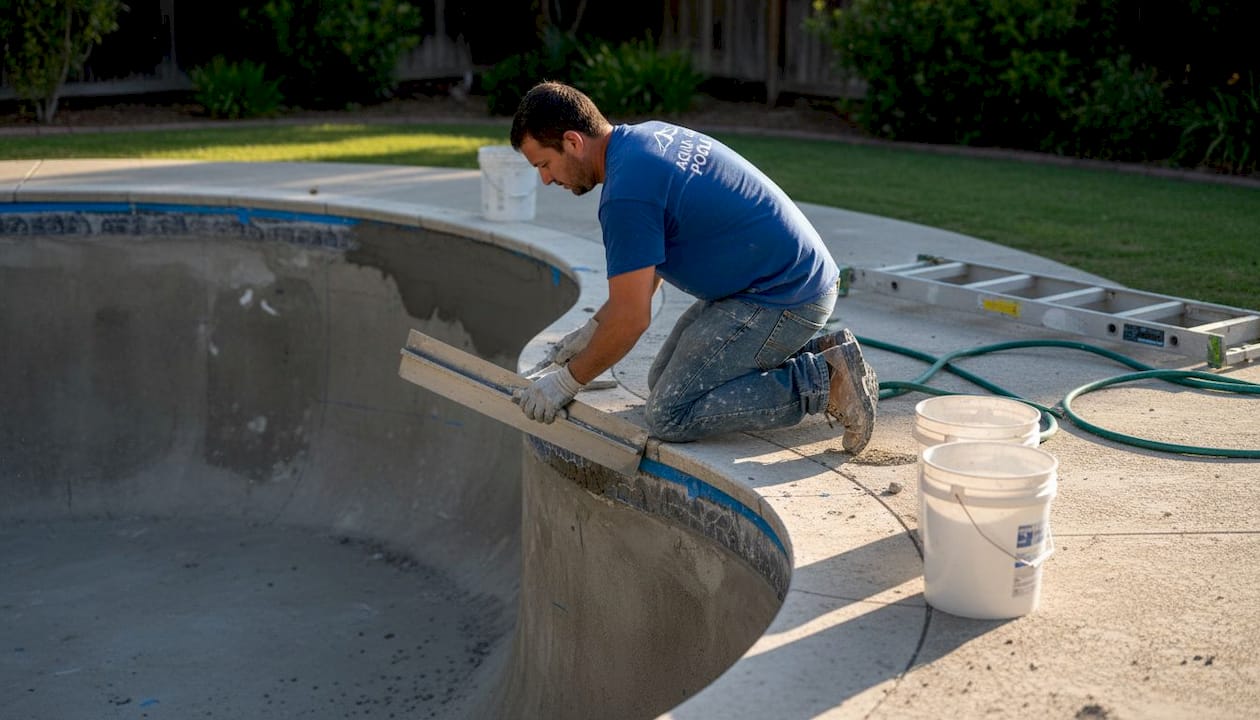
The installation process for visual finishes follows a structured sequence: surface preparation including chipping or sandblasting the old finish and repairing any cracks, then applying the base coat with aggregates, troweling and polishing, and finally curing with balanced water chemistry maintained at a Calcium Saturation Index (CSI) of +0.5 for the first 30 days. Skipping or rushing any of these steps shows up in the finished surface within a year or two.
If you’re considering a full backyard transformation, exploring luxurious pool remodeling options can help you see how finish upgrades fit into a larger renovation plan.
Value and return on investment: Pool finishes as a smart home upgrade
Beyond good looks, your pool’s finish can directly affect your equity and sale prospects. This is the part most homeowners don’t think about until they’re already listing their home.
Upgrading to a quartz or pebble finish can boost property value 5 to 15% in Florida, which translates to $25,000 to $40,000 on a $500,000 home. That’s not a small number. And the ROI on inground pool upgrades, including finish improvements, typically lands between 50 and 70 percent, which compares favorably to many kitchen and bathroom remodels.
Here’s what that looks like in a practical sequence:
- Assess your current finish: Staining, roughness, and visible cracks signal it’s time for an upgrade.
- Choose a finish that fits your market: In Central Florida, quartz and pebble finishes resonate strongly with buyers.
- Work with a licensed contractor: Proper installation protects your investment and your warranty.
- Document the upgrade: Keep records of materials and installation for future buyers or appraisers.
One of the less obvious benefits is speed of sale. Homes with upgraded pool finishes sell up to 14 days faster in Florida markets. For sellers, that’s two fewer weeks of carrying costs, showings, and uncertainty.
Pro Tip: If you’re planning to sell within three to five years, a quartz finish upgrade often delivers the best balance of upfront cost and resale return in the Central Florida market.
“A well-maintained, visually striking pool finish is one of the first things buyers notice and one of the last things they forget when making an offer.”
Understanding design impact on home value helps you make smarter decisions before you commit to a finish type. And if you’re already a pool owner, learning about pool maintenance and property value shows why upkeep is just as important as the initial upgrade. For a broader view, the ways to boost pool value go well beyond the finish itself.
What to expect: Pool finish installation, standards, and maintenance essentials
With so much at stake, here’s what you need to know about what actually happens when updating or installing a pool finish.
Professional installation follows a clear sequence, and each step matters:
- Surface preparation: The old finish is chipped or sandblasted away. Any cracks or structural issues in the shell are repaired before any new material goes on.
- Base coat application: The new finish material, whether plaster, quartz aggregate, or pebble, is applied in layers and carefully troweled or polished to the correct texture.
- Curing: The pool is filled and water chemistry is balanced according to PHTA/ANSI plastering standards, with a CSI of +0.5 maintained for the first 30 days to protect the new surface.
Skipping the curing phase is one of the most common and costly mistakes homeowners make when they try to rush back into the pool. Improper curing causes surface discoloration, early cracking, and finish failure within just a few years.
Ongoing maintenance is straightforward but non-negotiable:
- Brush the pool walls and floor weekly during the first month after installation
- Test and balance water chemistry at least twice per week
- Schedule annual inspections to catch early signs of wear or chemical imbalance
- Avoid abrasive cleaning tools that can scratch or erode the surface
For a full walkthrough of what professional installation involves, the custom pool installation guide covers the process from start to finish. If you’re renovating an existing pool, the pool renovation checklist gives you a step-by-step framework. Pool safety is another consideration worth reviewing, including resources like protecting your family with pool covers as part of your overall pool management plan.
Pro Tip: During the first 30 days after a new finish installation, run your pool pump continuously and test water chemistry daily. This single habit prevents the majority of early finish failures.
Our perspective: Why the right finish is the real secret to pool enjoyment and value
After nearly four decades building pools across Central Florida, we’ve seen one pattern repeat itself more than any other. Homeowners obsess over square footage, water features, and lighting, then treat the finish as an afterthought. It’s the last decision they make and often the least researched.
That’s backwards. The finish is the one element you interact with every single time you use the pool. It affects how the water looks on a Tuesday afternoon, how safe the surface feels for your kids, and what a buyer thinks when they walk into your backyard three years from now.
We’ve also seen the consequences of cutting corners on installation. A finish applied without proper surface prep or rushed through the curing phase will fail early, and that repair bill often costs more than doing it right the first time would have.
The homeowners who get the most out of their pools are the ones who treat the finish decision with the same seriousness as the pool design itself. Exploring the remodeling benefits for pool owners is a great starting point for understanding how much a finish upgrade can genuinely change your day-to-day experience.
Ready to transform your pool? Get expert help in Central Florida
Choosing the right pool finish is one of the most impactful decisions you can make for your Central Florida home, and it doesn’t have to be complicated when you have the right guidance.
At R&R Swimming Pools, we’ve been helping Central Florida homeowners make smart, lasting finish choices since 1985. Whether you’re starting from scratch or upgrading an existing pool, our pool planning guide walks you through every decision point. Our pool school gives you the knowledge to maintain your investment confidently. And if you’re ready to move forward, our inground pool installation guide shows exactly what to expect from start to finish. Reach out today for a free consultation.
Frequently asked questions
What is the most durable pool finish for Florida pools?
Pebble and quartz finishes offer the highest durability and best resistance to Florida’s climate, with pebble surfaces lasting 20 or more years under proper care.
How much value does a new pool finish add to a Central Florida home?
A quality pool finish upgrade can increase property values by 5 to 15 percent, which equals $25,000 to $40,000 on a $500,000 home in Florida.
Are there standard procedures for installing pool finishes?
Yes, professional installations follow PHTA/ANSI plastering standards for surface preparation, material application, and the critical 30-day curing process.
Can changing my pool’s finish help sell my home faster?
Yes, homes with upgraded pool finishes sell up to 14 days faster in Florida markets, reducing carrying costs and time on market for sellers.
What maintenance is required for new pool finishes?
Routine brushing, balanced water chemistry, and periodic inspections are essential, especially during the first 30 days of curing when the finish is most vulnerable.
