
TL;DR:
- Pool permits are essential to protect safety, legal, and resale interests in Central Florida.
- Work like new construction, resurfacing, and adding features requires permits, while cosmetic updates usually do not.
- Proper understanding and compliance with county and HOA rules prevent project delays, fines, and legal issues.
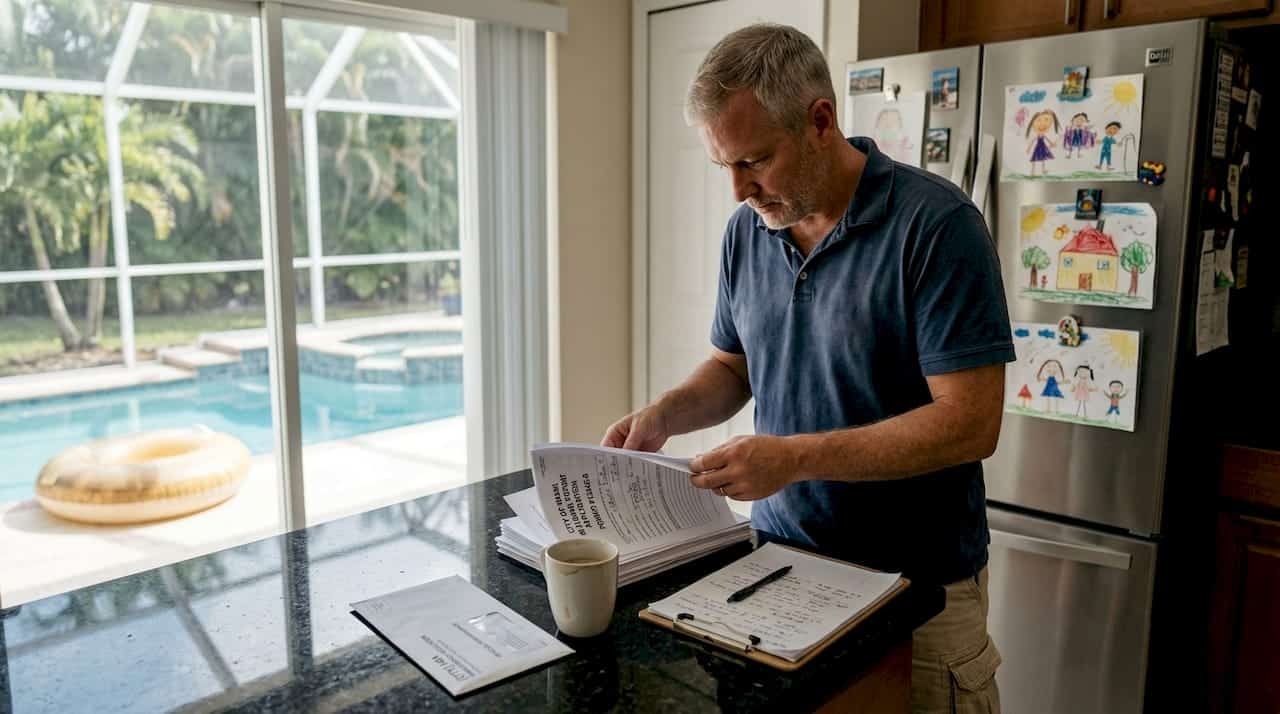
Pool permits trip up more Central Florida homeowners than you’d expect. A backyard project that looks straightforward on paper can stall for weeks, generate fines, or even require costly teardowns when the permitting process gets skipped or misunderstood. What surprises most people is that the rules don’t just apply to new pool construction. Even certain upgrades and renovations trigger formal approval requirements. This guide walks you through exactly what triggers a permit, how the process works across Seminole, Osceola, Lake, and Orange counties, what inspectors look for, and how to avoid the most common mistakes that delay projects and cost homeowners money.
Table of Contents
- Why pool permits matter for Central Florida homes
- What work requires a pool permit in Central Florida?
- The permitting process: Steps, county differences, and contractor roles
- Inspections and safety standards: Getting to final approval
- A pool professional’s take: What most homeowners miss about permits
- Ready to start? Get expert help with pool permits and planning
- Frequently asked questions
Key Takeaways
| Point | Details |
|---|---|
| Permit rules vary by county | Each Central Florida county and city has its own pool permitting requirements and processes. |
| Most pool work needs permits | Structural changes, new builds, and equipment upgrades nearly always require permits and inspections. |
| Safety standards must be met | Florida law mandates barriers, electrical safety, and anti-entrapment features for all pools. |
| Hiring licensed contractors is crucial | Only licensed pool professionals can handle permits correctly and keep your project on track. |
| Skipping permits carries big risks | Unpermitted pools can mean fines, delays, resale problems, and safety hazards. |
Why pool permits matter for Central Florida homes
A pool permit isn’t just bureaucratic paperwork. It’s the legal mechanism that protects your investment, your family’s safety, and your home’s resale value. Florida law requires permits for pool construction and major pool work, and local counties enforce those rules with real consequences for violations.
Skipping a permit can lead to:
- Stop-work orders that freeze your project mid-construction
- Fines that accumulate daily until compliance is achieved
- Insurance problems if your carrier discovers unpermitted work
- Title issues when you try to sell your home
- Forced removal or modification of non-compliant structures
Many homeowners assume that if the work looks good and functions well, nobody will check. That’s a costly assumption. Counties across Central Florida actively track renovation and construction activity, and buyers’ home inspectors routinely flag unpermitted pool work during real estate transactions.
One critical thing most people miss before starting is checking HOA restrictions alongside county rules. Your homeowners association may impose setback distances, fence requirements, or design limitations that go beyond what the county mandates. Violating HOA rules can result in separate fines and legal disputes, even when your county permit is perfectly valid.
“Inspections for new pools follow a strict sequence, and failures are common for barriers, electrical systems, and drainage.”
There’s also an important distinction between cosmetic updates and work that structurally or mechanically changes the pool. Repainting a pool deck or replacing a light fixture with an identical model may not require a permit. But modifying electrical wiring, adding a heater, or changing the pool shell crosses into permitted territory. The line isn’t always obvious, and that’s where understanding the pool permitting steps early in your planning makes a real difference.
Pro Tip: Before you call a contractor, spend 15 minutes checking your county’s development services website and your HOA documents. Knowing your constraints upfront saves weeks of back-and-forth later.
Every county in Central Florida has its own portal, fee schedule, and inspection sequence. What clears in Orange County may have an additional requirement in Seminole. Reviewing Central Florida permit requirements before signing any contracts keeps your project on track from the start.
What work requires a pool permit in Central Florida?
Not every pool-related task triggers the permitting process, but the list of work that does is longer than most homeowners expect. Understanding the difference between routine maintenance and a regulated renovation is one of the most practical things you can do before starting any pool project.
Work that requires a permit includes:
- New inground pool construction (concrete or fiberglass)
- Major structural repairs to the pool shell
- Plumbing system modifications or replacements
- Electrical upgrades, including new lighting systems
- Adding equipment such as heaters, heat pumps, or variable-speed pumps
- Installing features like water slides, waterfalls, or spa additions
- Pool resurfacing, which involves structural contact with the shell
Work that is typically exempt from permits:
- Replacing pool tiles or grout in kind
- Cosmetic deck repairs that don’t alter drainage or structure
- Swapping out equipment with identical models (same specs, same location)
- Minor aesthetic changes that don’t affect plumbing or electrical
| Work type | Permit required? |
|---|---|
| New pool construction | Yes |
| Pool resurfacing | Yes |
| Adding a heater or slide | Yes |
| Structural plumbing repair | Yes |
| Tile/grout replacement | Usually no |
| Identical equipment swap | Usually no |
| Cosmetic deck work | Usually no |
As renovations requiring permits include structural changes, resurfacing, and adding features like heaters or slides, even work that feels minor can fall into regulated territory. Resurfacing is a common surprise because homeowners see it as a cosmetic fix, but the process involves altering the pool shell surface, which inspectors and title companies treat as structural.
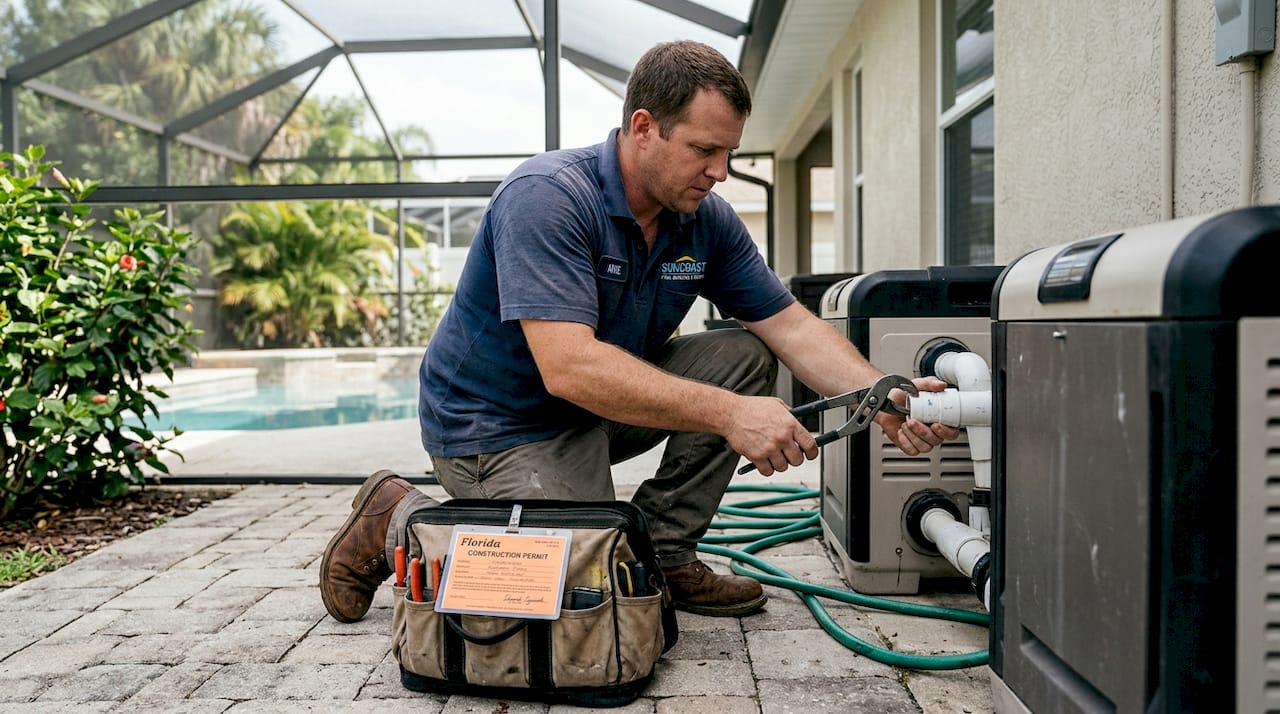
In Osceola County specifically, any above-ground pool that exceeds 24 inches in depth requires a permit. That catches a lot of families off guard when setting up what they consider a temporary or seasonal pool.
Pro Tip: If you’re planning to sell your home within the next five to ten years, document every pool improvement with its permit number. Buyers and their lenders will ask, and having clean records is a genuine competitive advantage.
Familiarizing yourself with the full pool renovation steps before you start helps you map each phase of your project against permit triggers, so nothing catches you off guard mid-project.
The permitting process: Steps, county differences, and contractor roles
Once you’ve confirmed your project needs a permit, the next question is how the process actually unfolds. The general framework is similar across Central Florida, but each county has its own portal, fee structure, and timeline.
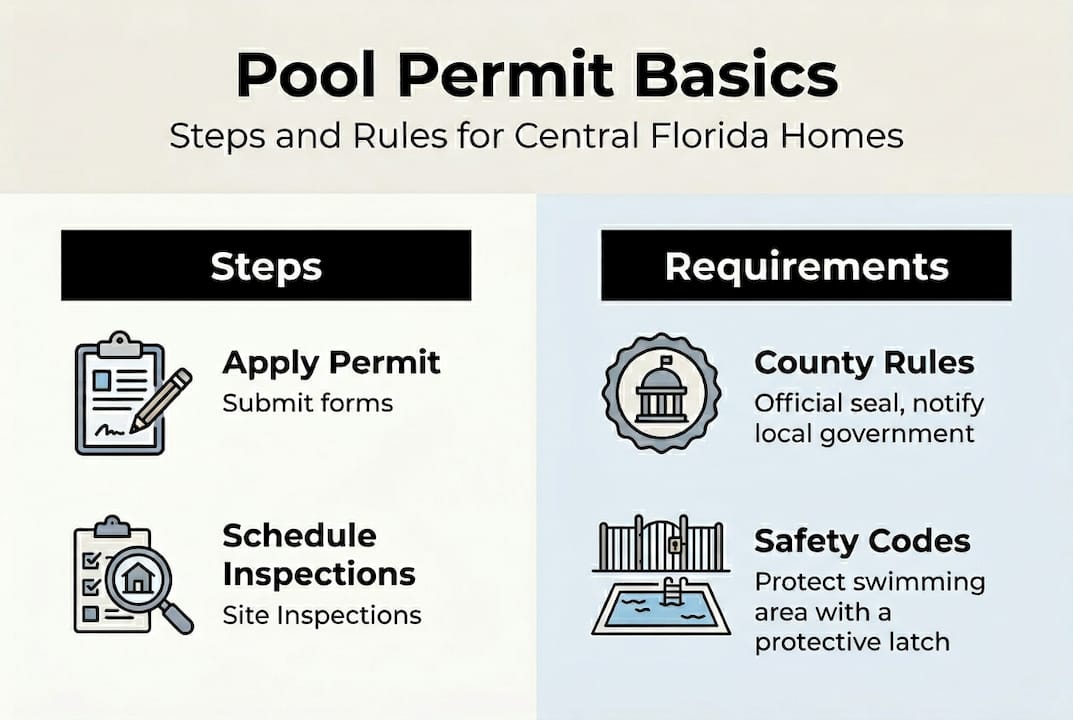
Typical permitting steps for a pool project:
- Design and engineering plans are prepared (licensed engineer or architect may be required)
- Contractor submits permit application with plans to the county
- County reviews plans for zoning compliance, setbacks, and building code adherence
- Permit is issued after approval
- Construction begins, with inspections at designated phases
- Final inspection and approval closes the permit
As outlined for Seminole County pool permits, permits run through Development Services, Osceola County uses an online portal, and Lake and Orange counties follow similar county-specific processes. Contractors must hold a CPC (Certified Pool/Spa Contractor) license issued by the Florida DBPR (Department of Business and Professional Regulation).
| County | Submission method | Key notes |
|---|---|---|
| Seminole | Development Services office/portal | Strict inspection sequence |
| Osceola | Online portal | Above-ground pools over 24 in. need permit |
| Orange | Online portal | Zoning and setback review required |
| Lake | County building department | Contact county directly for fee schedule |
One of the most important things to understand is who is responsible for filing. Your licensed contractor typically applies for the permit on your behalf, but as the homeowner, you remain legally responsible for ensuring permits are properly filed and closed. This is not a technicality. If your contractor files and then disappears before the final inspection, the open permit becomes your problem.
Always verify that the contractor you hire has an active CPC license. You can look this up through the DBPR’s online database in minutes. Knowing how to select qualified contractors before signing anything protects you from permit complications down the road.
Setback rules also vary by county and parcel. Your pool must maintain minimum distances from property lines, easements, septic systems, and utility lines. Check these requirements before any design work is finalized. Refer to the full pool installation process for a detailed breakdown of how each phase connects to permit milestones.
Inspections and safety standards: Getting to final approval
Submitting your permit application is just the beginning. The inspection sequence is where projects either move smoothly to completion or hit frustrating delays. Understanding what inspectors check at each phase helps you prepare and avoid the most common failures.
Standard pool inspection sequence in Central Florida:
- Layout and pre-pour inspection — Confirms pool placement, setbacks, and steel reinforcement before concrete is poured
- Rough-in inspection — Reviews plumbing and electrical rough work before it’s enclosed
- Shell inspection — Examines the pool shell after gunite or fiberglass installation
- Decking and barrier inspection — Confirms deck structure and required safety barriers are in place
- Final inspection — Full review of all systems, safety features, and code compliance before approval
The most common reasons projects fail inspections include:
- Barrier height below 4 feet (Florida law requires a minimum of 4 feet)
- Self-latching gates not functioning correctly or installed too low
- Missing or improperly installed GFCI (ground fault circuit interrupter) electrical protection
- Drainage that doesn’t meet county specifications
- Anti-entrapment drain covers not installed or not certified
Florida law is specific about safety features. As required by Florida pool safety standards, barriers must meet the 4-foot height requirement under Florida Statute 515, gates must be self-latching, GFCI protection is mandatory for all pool electrical, and anti-entrapment drain covers are required. Beyond those baseline requirements, the law also mandates at least one additional drowning prevention feature, such as a door alarm, pool alarm, or safety cover.
“Safety requirements include 4-ft barriers with self-latching gates, GFCI electrical protection, anti-entrapment drains, and one mandatory drowning prevention feature.”
Knowing the full list of required pool safety features before construction begins means you won’t be scrambling to add components at the final inspection. It also helps to understand the licensed builder’s role in safety, since a qualified contractor will have these requirements built into their process from day one.
Pro Tip: Schedule your final inspection only after every safety feature, including gate hardware, drain covers, and alarms, has been fully installed and tested. One missing component sends the inspector back and adds days or weeks to your timeline.
A pool professional’s take: What most homeowners miss about permits
After four decades of building pools across Central Florida, the pattern is clear. The delays that frustrate homeowners most are almost never about the pool itself. They’re about overlooked paperwork, missed HOA approvals, or underestimating how detailed electrical and plumbing inspections actually are.
Many homeowners assume that small changes won’t draw scrutiny. They resurface the pool, swap a pump, or add a feature without pulling a permit because it feels too minor to matter. Then they go to sell the house and the title company flags open or missing permits. Suddenly, a quick sale becomes a legal and financial headache.
Unpermitted work can also void your homeowner’s insurance coverage for pool-related incidents. That’s a risk most people don’t consider until something goes wrong. The cost of doing it right the first time is always less than fixing it after the fact.
Our honest advice is to treat permit research as part of your project budget, not an afterthought. And when selecting a contractor, ask specifically about their permit experience in your county. Knowing why licensed builders matter comes down to this: an experienced builder has done the permit process dozens of times in your specific county and knows exactly what inspectors expect at each phase.
Ready to start? Get expert help with pool permits and planning
Navigating pool permits in Central Florida doesn’t have to feel overwhelming when you have the right support.

At R&R Swimming Pools, we’ve been handling every aspect of pool permitting for Central Florida homeowners since 1985. Our team knows the specific requirements for Seminole, Osceola, Orange, and Lake counties inside and out. Whether you’re starting from scratch or renovating an existing pool, our custom pool installation guide gives you a detailed roadmap. For homeowners who want to stay informed throughout the process, our local pool school provides ongoing education. And if budget is a consideration, explore our flexible pool financing options to make your dream pool a reality without the stress.
Frequently asked questions
Do I need a permit for pool resurfacing or adding a heater?
Yes. Both resurfacing and adding equipment like heaters are regulated work. As noted in pool repair permit guidance, structural changes, resurfacing, and new features all require permits in most Central Florida counties.
What are the main reasons pool permits or final inspections fail?
Barrier height, missing self-latching gates, GFCI electrical problems, and drainage issues are the most frequent causes. These inspection failures are avoidable when a licensed contractor prepares properly before each inspection phase.
Does an above-ground pool need a permit?
In most Central Florida counties, yes, if the pool exceeds 24 inches in depth. Osceola County specifically requires permits for above-ground pools over that threshold.
Who pulls the pool permit — the homeowner or the contractor?
Your licensed contractor typically files the permit application, but the homeowner remains responsible for compliance. As outlined in Seminole County permit guidance, contractors must hold a valid state license, but the permit obligation ultimately rests with the property owner.
