
TL;DR:
- Upgrading an old pool improves safety, aesthetics, energy efficiency, and resale value.
- Permits and licensed contractors are essential for legal, safe, and long-lasting renovations.
- Proper post-renovation care ensures durability and prevents costly damage or issues.
Your backyard pool should be the centerpiece of summer — not an eyesore you avoid. Many Central Florida homeowners are stuck with pools built decades ago: faded plaster, outdated equipment, no lighting, and zero personality. The good news? A well-planned pool upgrade can restore your enjoyment, raise your home’s value, and turn that tired shell into a custom retreat. This guide walks you through every stage of the upgrade process, from inspecting what you have, to navigating permits, to picking modern features that make sense for Florida living.
Table of Contents
- Assessing your current pool and setting your goals
- Permitting and compliance in Central Florida
- Step-by-step pool upgrade process
- Modernizing your pool: popular upgrades and features
- Inspecting, troubleshooting, and maintaining your upgraded pool
- Hard-won lessons from years of Central Florida pool upgrades
- Ready for your dream pool? Get expert help
- Frequently asked questions
Key Takeaways
| Point | Details |
|---|---|
| Proper assessment first | Start with a thorough inspection and clear goals before upgrading your pool. |
| Permitting is essential | Most upgrades require county permits and licensed contractors in Central Florida. |
| Upgrade boosts value | Resurfacing and modern features dramatically improve both enjoyment and home value. |
| Quality finish matters | Choose the right surface material and follow proper cure steps for long-lasting results. |
| Ongoing care needed | Maintenance and chemistry management are vital to keep your new pool looking great. |
Assessing your current pool and setting your goals
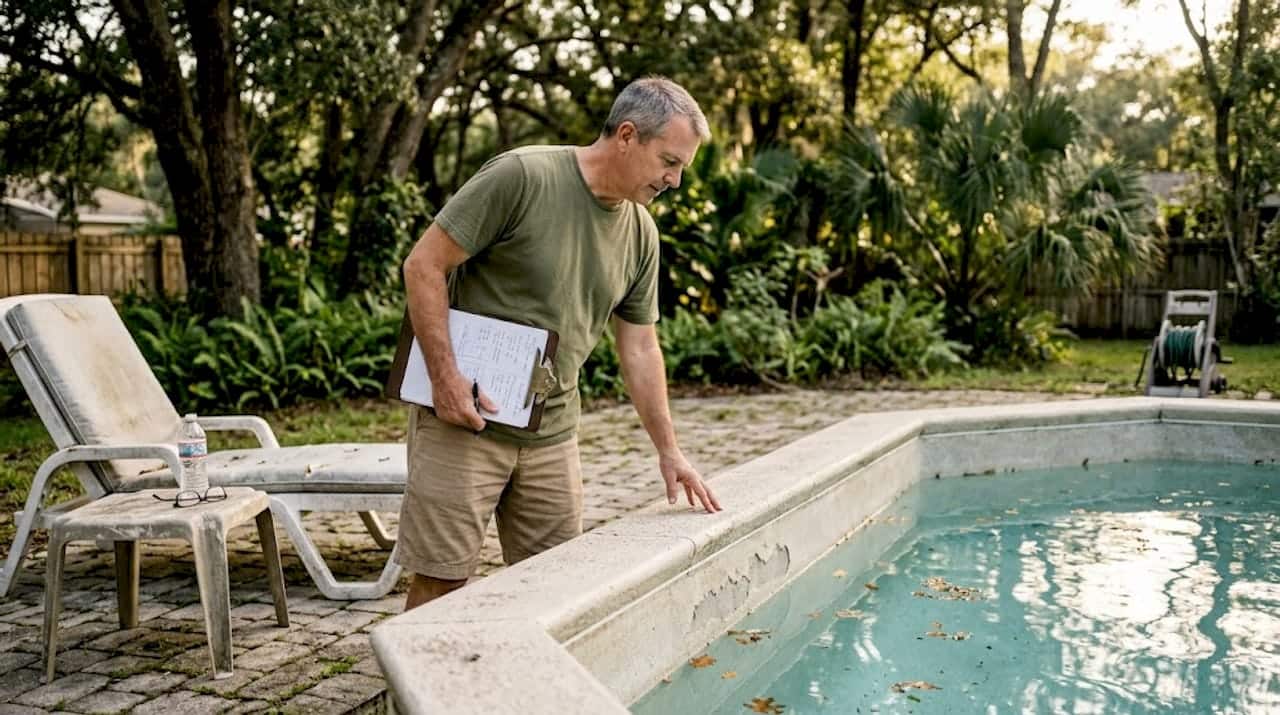
Before you call a single contractor, spend an afternoon really looking at your pool. You are not just checking if the water is blue. You are identifying every area that needs attention so you can build a realistic upgrade plan.
Start with the surface. Run your hand along the walls and floor. Do you feel rough patches, sharp spots, or see chalky white streaks? Those are signs the plaster or finish is breaking down. Resurfacing lifespans vary significantly by material in Florida’s heat and humidity — plaster, quartz, and pebble all age differently. Choosing the right replacement material matters, so explore best finish options before committing.
Next, check your equipment. Is the pump loud, slow, or old? Are the returns pushing water evenly? Look at the coping (the edge around the pool) for cracks or lifting tiles. Test your lights — most older pools have just one dim incandescent bulb, if that.
Here is a quick-reference table to help you match what you see to possible solutions:
| Issue observed | Likely cause | Potential solution |
|---|---|---|
| Rough or stained surface | Aging plaster or quartz | Resurfacing |
| Cracked coping or tiles | Ground movement or age | Coping replacement |
| Dim or non-working lights | Old incandescent fixtures | LED conversion |
| Weak water circulation | Aging pump/filter | Equipment upgrade |
| No remote control | No automation system | Automation install |
Once you have documented problems, write down your upgrade goals. Common priorities include:
- Safety upgrades: Better lighting, drain covers, updated barriers
- Aesthetic improvements: New finish, tile, coping, water features
- Energy efficiency: Variable-speed pump, LED lighting, solar heater
- New features: Spa, waterfall, automation, sun shelf
- Resale value: Modern finishes and features that buyers notice
Use a downloadable renovation checklist to keep your goals organized and share them clearly with contractors.
Pro Tip: Take photos of every problem area before work begins. These images speed up contractor conversations, document the starting condition, and make before/after comparisons incredibly satisfying.
Permitting and compliance in Central Florida
With your goals mapped out, you need to understand what the county requires before a single shovel hits the ground. Skipping this step is the number one mistake homeowners make — and it is expensive.
Permits are required for pool upgrades involving structural changes, electrical work, plumbing modifications, or resurfacing. Only CPC-licensed contractors can legally perform this work in Central Florida. Your county building department handles all applications and inspections.
Here is a comparison of common upgrades and their typical permit requirements:
| Upgrade type | Permit required? | Inspection needed? |
|---|---|---|
| Resurfacing only | Often yes | Yes, final |
| Electrical/LED lighting | Yes | Yes |
| New plumbing/spa addition | Yes | Yes, multiple stages |
| Coping or tile replacement | Sometimes | Varies |
| Automation system | Yes | Yes |
The permit process generally follows these steps:
- Your licensed contractor submits the application with project plans
- The county reviews and approves (typically 2-6 weeks depending on scope)
- Work begins after permit is posted on-site
- Inspections happen at required stages — electrical rough-in, plumbing, final
- Final inspection and permit closure
See the full permit requirements for your specific county, and understand what each phase of the inspection process involves.
Important: Homeowners who skip permits or hire unlicensed workers risk fines, forced removal of completed work, failed home sales, and serious safety hazards. It is never worth the shortcut.
Always verify your contractor holds a current CPC (Certified Pool Contractor) license through the Florida Department of Business and Professional Regulation before signing anything.
Step-by-step pool upgrade process
Once permits are approved and your contractor is scheduled, the physical upgrade begins. Here is what a full pool resurfacing and upgrade sequence looks like from start to finish.
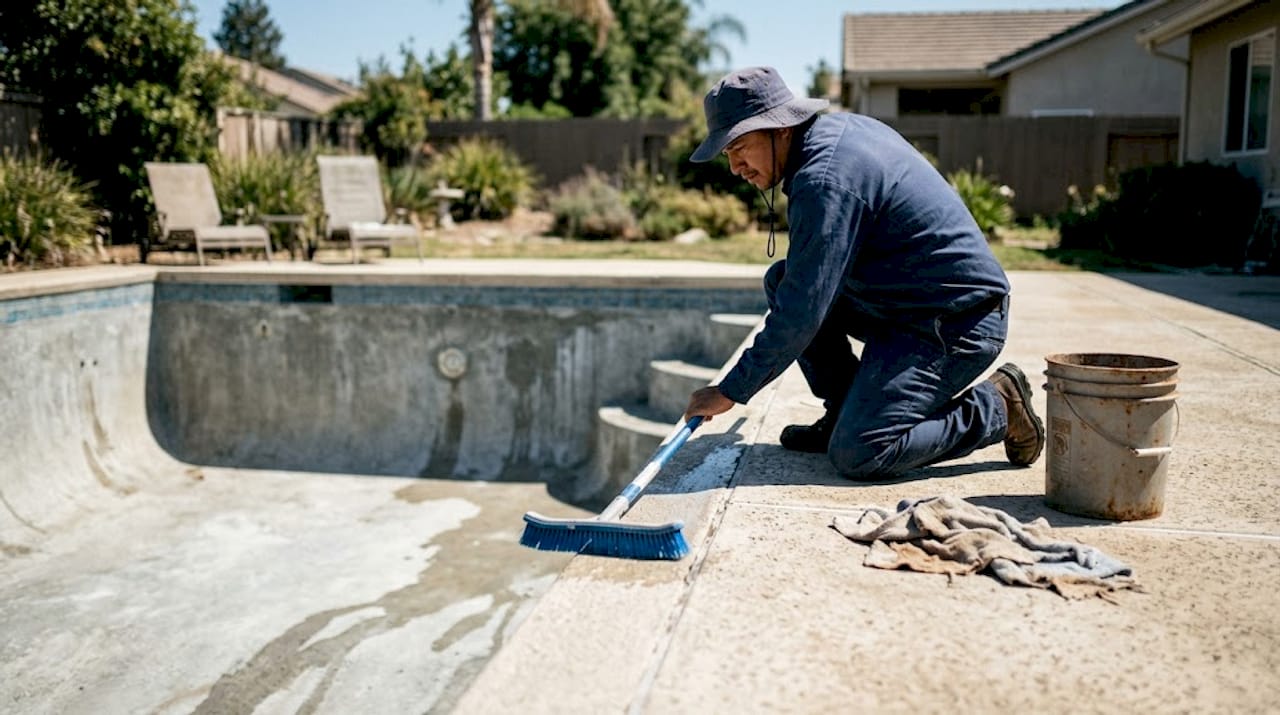
- Drain the pool completely using submersible pumps, with attention to dry-out time in Florida’s humidity
- Surface preparation — old plaster is chipped or bead-blasted off the shell; acid washing removes remaining residue and opens the concrete pores
- Structural inspection — your contractor examines the shell for cracks, soft spots, or plumbing leaks that must be addressed before finishing
- Crack and repair work — hydraulic cement fills structural cracks; plumbing leaks are patched
- New finish application — plaster, quartz, or pebble aggregate is troweled on in layers
- Feature installations — new tile, coping, lighting, spa jets, or water features go in at this stage
- Refill and startup — the resurfacing sequence requires a 28-day startup with daily brushing and careful chemistry balancing
When it comes to surface finishes, lifespan matters in Central Florida’s climate. Plaster finishes typically last 5 to 10 years, quartz extends to 10 to 15 years, and pebble finishes can reach 15 to 25 years with proper care. Choosing the right material now saves you money in the long run. Read more about boosting value with new finish to weigh your options.
For larger projects that include new features or equipment, your custom installation guide will walk you through the added steps involved in building out those elements.
Pro Tip: During the 28-day startup, do not skip a single day of brushing. The calcium in fresh plaster needs to be distributed evenly. Missing even two or three days can cause permanent streaking or blotching in the finish.
Modernizing your pool: popular upgrades and features
Once the structure is solid and the new surface is curing, it is time to think about what makes your pool yours. This is the fun part.
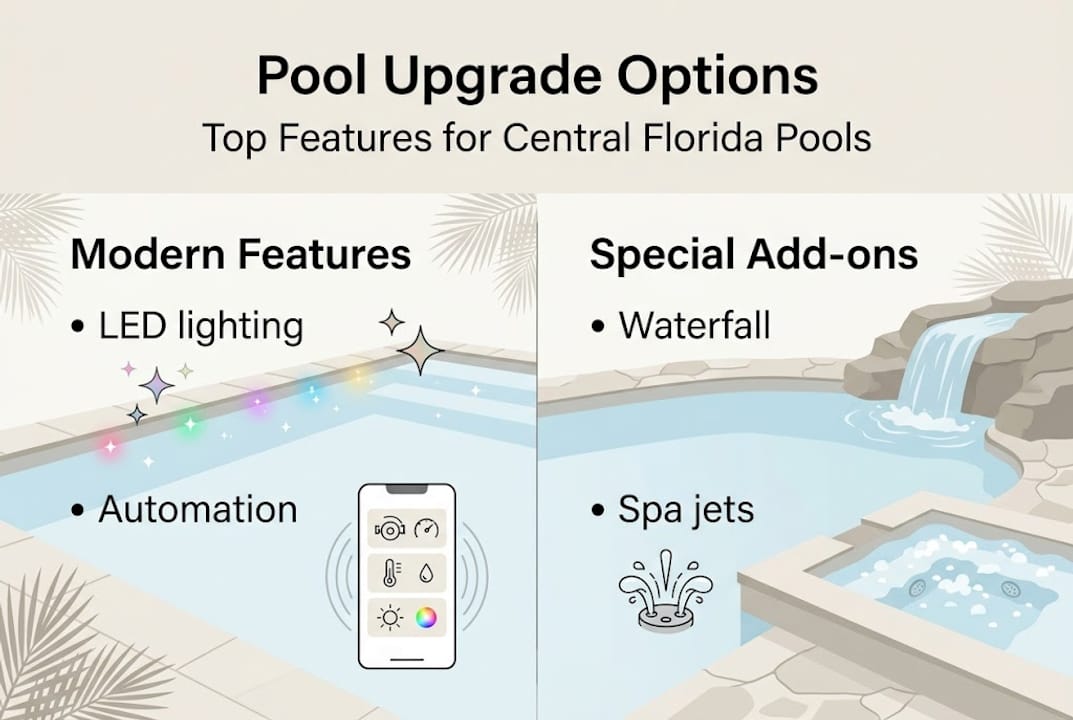
Adding features like LED lighting, spas, automation, or water features is one of the most impactful ways to modernize an older pool. And in Central Florida, where pools are used nearly year-round, these upgrades pay off in daily enjoyment.
Here are the top upgrades Central Florida homeowners are choosing right now:
- LED color lighting: Energy-efficient, dramatic, and long-lasting — a must for evening swims
- Automation systems: Control your pump, lights, heater, and water features from your phone
- Spa or hot tub addition: Extends pool use into cooler months and adds significant resale appeal
- Water features: Waterfalls, deck jets, bubblers, and scuppers add motion, sound, and style
- Variable-speed pumps: Required by law in new Florida pools, and a major energy saver in upgrades
- Sun shelf or tanning ledge: A shallow platform for lounging — popular with families
Here is a quick feature/benefit summary to help you prioritize:
| Feature | Primary benefit | Maintenance level |
|---|---|---|
| LED lighting | Aesthetics + energy savings | Low |
| Automation system | Convenience + efficiency | Low |
| Spa | Comfort + resale value | Medium |
| Water feature | Ambiance + visual appeal | Medium |
| Variable-speed pump | Energy savings | Low |
Browse real examples of upgrades that Central Florida homeowners have completed, or dig into smart renovation ideas tailored for the Florida climate and lifestyle.
Inspecting, troubleshooting, and maintaining your upgraded pool
The upgrade is done. Now protect what you have invested. The first 30 days after resurfacing are critical, and the habits you build now determine how long your new pool lasts.
Here is a post-upgrade inspection sequence to follow:
- Day 1 to 7: Check water chemistry daily — pH, alkalinity, and calcium hardness need to stay in tight ranges during early cure
- Day 7 to 14: Brush walls and floor every day; look for streaks, rough patches, or discoloration that may signal issues
- Day 14 to 28: Continue monitoring chemistry; inspect all new equipment — spa jets, lighting, automation — for proper function
- 30-day mark: Conduct a full inspection of the surface, coping, tile, and equipment before signing off with your contractor
Finish cure and chemistry must be managed daily for the first 28 days — this is not optional. Skipping it risks permanent damage to your new surface.
Common issues and how to handle them:
- Cloudy water: Usually chemistry imbalance; test and adjust before assuming a filter problem
- White staining: Calcium scaling from high pH; lower pH and brush aggressively
- Brown or green tinting: Algae early growth; shock the pool and check filtration
- Hairline surface cracks: Normal in plaster during cure; monitor for widening
- Equipment not running: Check breaker first, then call your contractor
Use the final inspection checklist to verify every element of your upgrade before your contractor closes out the job, and consider registering for a pool care class to build confidence managing your pool long-term.
Pro Tip: If your water turns cloudy within the first week, do not drain it. Add a clarifier, retest chemistry, and brush twice daily. Draining a freshly plastered pool prematurely can cause the surface to crack or pop.
Hard-won lessons from years of Central Florida pool upgrades
After decades of building and renovating pools across Central Florida, we have learned that the checklist alone does not guarantee a great outcome. What separates a pool that lasts 20 years from one that needs attention in five is usually not the materials — it is the decisions made before the work begins and in the 30 days after.
Permitting is not red tape. It is protection. Every time a homeowner skips a permit to save a few weeks, they are gambling with their home’s resale value and their family’s safety. We have seen buyers walk away from homes specifically because of unpermitted pool work.
Customization is also more functional than people realize. Clients often think adding a spa or water feature is purely cosmetic. But in Central Florida’s climate, a spa extends your swim season by months. Automation means your pump runs on an optimized schedule, cutting your electric bill. These are practical, daily-life improvements.
The real surprise? Most homeowners underestimate the importance of the chemical startup. You can invest $30,000 in a beautiful new surface and ruin it in 28 days by skipping a single step. Follow the step-by-step renovation wisdom and trust the process — it exists for good reason.
Ready for your dream pool? Get expert help
Now that you understand the full process, working with an experienced local team makes every step smoother, faster, and more likely to deliver exactly what you envisioned.
At R&R Swimming Pools, we have been building and renovating pools across Central Florida since 1985. Whether you are just starting to plan or ready to break ground, our team handles permits, design, installation, and startup from beginning to end. Explore our full renovation process guide to see exactly how we work, compare best inground pool types for your yard, or sign up for Pool School to get hands-on guidance for caring for your upgraded pool. Your backyard deserves better — and we are ready to build it.
Frequently asked questions
How long does pool resurfacing last in Central Florida?
In Florida, plaster finishes last 5-10 years, quartz 10-15 years, and pebble 15-25 years with proper maintenance and chemistry management.
Do I need a permit to upgrade my pool in Central Florida?
Yes. Permits are mandatory for most major pool work, and only CPC-licensed contractors can legally pull permits and perform the upgrades.
What are the best upgrades to modernize an older pool?
LED lighting, automation systems, water features, energy-efficient pumps, and modern surface finishes are the top choices, with LED lights and spas delivering the strongest combination of daily value and resale appeal.
How soon can I swim after resurfacing my pool?
Surface finishes require 28 days of curing and chemistry management before regular use — always follow your contractor’s specific startup instructions.
What happens if I skip inspections or use an unlicensed contractor?
Skipping permits or hiring unlicensed contractors can result in fines, forced removal of completed work, failed home sales, and safety hazards that put your family at risk.