TL;DR:
- Proper filtration physically removes debris and microbes, preventing cloudiness and health risks.
- Different filter types vary in particle size removal, maintenance, and cost, affecting water clarity.
- Correct sizing and regular maintenance of filters are essential for clean, safe, and cost-effective pools.
Most Central Florida homeowners pour money into chlorine, shock treatments, and algaecides, assuming chemicals are what keep a pool safe and sparkling. The truth is more surprising. Your filtration system does the heavy lifting that no chemical can replicate. It physically pulls debris, microorganisms, and invisible particles out of the water before your sanitizers ever get involved. In a climate like Central Florida’s, where afternoon storms, pollen, and year-round swimming keep your pool working overtime, understanding how filtration systems work is not optional. It is the foundation of a pool that stays clean, safe, and cost-effective for years.
Table of Contents
- Why filtration matters: More than just clear water
- Types of pool filtration systems and how they compare
- sizing and turnover: Getting filtration right for your pool
- maintaining your system: Keys to performance and water quality
- The real-world lesson: Why filtration deserves more attention
- Take the next step to a sparkling pool
- frequently asked questions
Key Takeaways
| Point | Details |
|---|---|
| Filtration is essential | A proper filtration system is the backbone of pool cleanliness and safety. |
| Choose the right filter | Different filter types serve different needs; sand, cartridge, and DE all have unique benefits. |
| Correct sizing matters | Filter size and turnover rates must match your pool for effective cleaning and long equipment life. |
| Maintenance is ongoing | Regular cleaning maximizes filter effectiveness and water quality. |
| Filtration reduces chemical dependency | Efficient filtration means less need for chemical intervention, saving you time and money. |
Why filtration matters: More than just clear water
When you look at a pool and see clear, blue water, your first instinct might be to credit the chlorine. But clarity is only part of the picture. A filter’s real job is removing what you cannot see: microscopic algae spores, bacteria, fine dust, sunscreen residue, and organic debris that chemicals alone cannot fully handle. Pool maintenance importance in Central Florida goes well beyond surface skimming.
Pool filtration systems work by cycling water through a filtering medium that traps particles before returning clean water to the pool. Without proper filtration, those particles accumulate, stress your pump, cloud your water, and create the perfect breeding ground for bacteria and algae. As the pool filter sizing calculator resource makes clear, filtration ensures contaminants are physically removed, supplementing what chemicals miss. That is the key word: supplementing. The filter does the work first.
In Central Florida, this becomes even more critical. Higher annual rainfall means more runoff flows into uncovered pools. Oak pollen seasons, frequent afternoon thunderstorms, and a longer swim season all push debris loads higher than what you’d see in drier climates. A filter that is undersized or neglected simply cannot keep up.
There are also real health consequences to poor filtration. The CDC recognizes recreational water illnesses (RWIs) as a legitimate concern in public and private pools. While chlorine kills many pathogens, some microbes are chlorine-resistant and can only be reliably controlled when filtration removes them from the water column entirely.
Filtration also protects your pool’s physical structure. When debris lingers, it stains plaster, clogs jets, and accelerates the wear of pump seals and other components. Think of your filtration system the same way you think of an engine air filter in a car. It protects everything downstream.
A pool without proper filtration is like a coffee maker without a filter. You end up with a cup full of grounds no matter how good your beans are.
- Physical debris removal (leaves, insects, sunscreen)
- Fine particle removal (dust, pollen, microscopic algae)
- Protection against recreational water illnesses
- Extended life for pool surfaces and equipment
- Cost savings on chemical use over time
Now that you know filtration is the unsung hero, let’s break down how different systems achieve cleaner water.
Types of pool filtration systems and how they compare
There are three main types of pool filters on the market. Each uses a different method to trap particles, and each comes with its own trade-offs in terms of cost, maintenance, and filtration quality. Understanding the differences helps you make a decision that fits your pool, your budget, and your lifestyle.
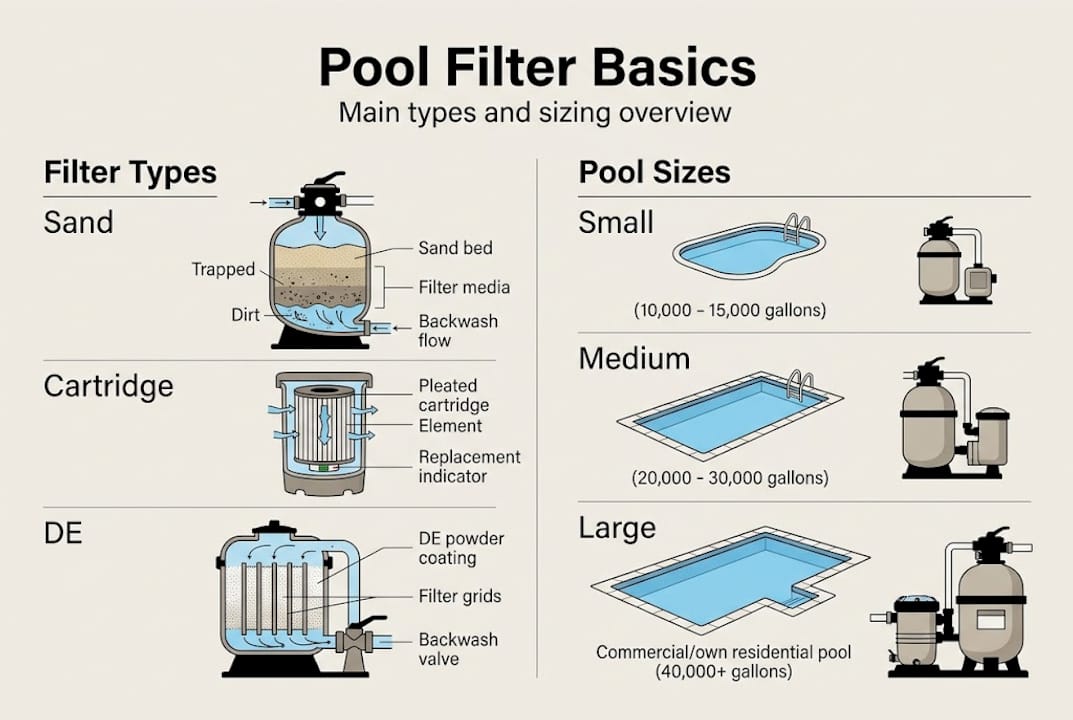
1. Sand filters use specially graded sand to trap particles as water passes through the tank. They are the most common type and among the easiest to maintain. When the filter gets dirty, you backwash it by reversing the water flow to flush debris out. Sand filters typically catch particles down to about 20-40 microns.
2. Sand filters are reliable but not the finest option. If you want better water clarity without complex upkeep, a cartridge filter is worth considering.
3. DE (diatomaceous earth) filters use fossilized algae powder as a filtering medium and catch particles as small as 2-5 microns. They produce the clearest water of the three types, but they require more involved maintenance including annual teardowns and careful handling of DE powder.
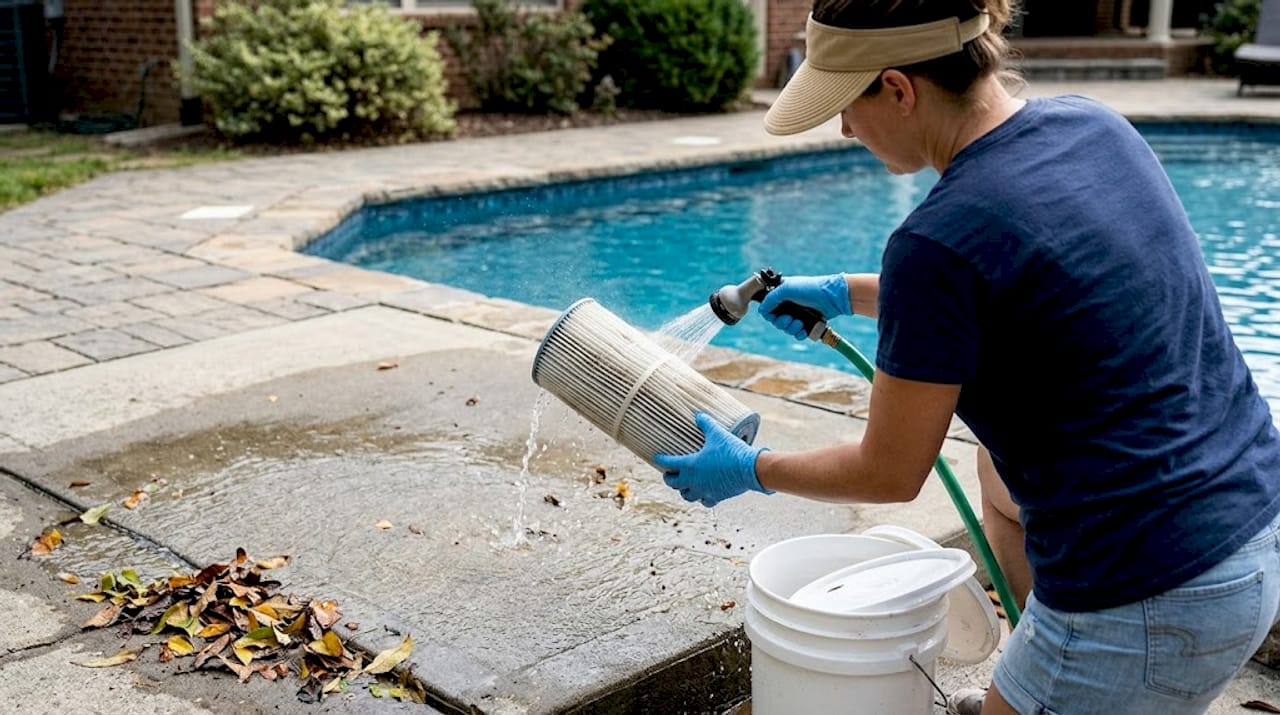
Cartridge filters fall in the middle. They filter down to about 10-15 microns, require no backwashing, and use less water overall. You simply remove and rinse the cartridge, which makes them a popular choice for homeowners who want effective filtration without a complicated process. Per pool filter types explained, matching your filter type to your pool usage patterns is one of the most important decisions you will make.
The pool filter sizing calculator standards under NSF/ANSi 50 define flow rate benchmarks: sand filters run at 15-20 GPM per square foot, DE filters at 2 GPM per square foot, and cartridge filters require 0.375 square feet per GPM. These numbers define the minimum size your filter must be to handle your pool’s volume effectively.
| Filter type | Flow rate standard | Filter quality | maintenance effort | relative cost |
|---|---|---|---|---|
| Sand | 15-20 GPM/ft² | 20-40 microns | Low (backwash) | Low |
| cartridge | 0.375 ft²/GPM | 10-15 microns | Medium (rinse) | Medium |
| DE | 2 GPM/ft² | 2-5 microns | High (teardown) | Higher |
Pro tip: If your family uses the pool daily or you have young children, the investment in a DE or cartridge filter pays off in noticeably cleaner, safer water and lower chemical bills.
With a clearer idea of why filtration matters, it’s time to compare systems and decide what fits your home best.
sizing and turnover: Getting filtration right for your pool
Choosing the right filter type is step one. Getting the size right is where homeowners most often go wrong. An undersized filter cannot keep pace with your pool’s water volume, leaving contaminants behind. An oversized filter costs more upfront and may not be necessary. The goal is to match your filtration capacity to your actual pool size and usage.
The concept that ties all of this together is the turnover rate: how long it takes your pump and filter system to cycle all of the water in your pool through the filter once. The pool filter sizing calculator notes the CDC model code recommends a 6-hour turnover for residential pools. That means all the water in a 20,000-gallon pool should pass through your filter at least once every six hours.
| Pool volume (gallons) | Required flow rate (GPH) | Min. sand filter size | min. cartridge filter | min. de filter |
|---|---|---|---|---|
| 10,000 | 1,667 | 0.75 ft² | 74 ft² | 14 ft² |
| 20,000 | 3,334 | 1.5 ft² | 148 ft² | 28 ft² |
| 30,000 | 5,000 | 2.25 ft² | 222 ft² | 42 ft² |
For Central Florida homeowners, it pays to size up slightly. Our region sees more debris, pollen, and storm runoff than the national average, which taxes your system more frequently. A filter running at or near its rated maximum gets dirty faster and needs cleaning more often. A little extra capacity creates a buffer that protects performance. Check out Central Florida pool tips for regional-specific guidance.
Pro tip: Always cross-reference your pump’s flow rate with your filter’s rated capacity before purchasing. A high-powered pump paired with an undersized filter is one of the most common and easily avoidable mistakes we see during new pool installations.
maintaining your system: Keys to performance and water quality
The best filtration system in the world will underperform if you do not maintain it. This is where a lot of pool owners get stuck. They install a great filter, ignore it for months, and then wonder why their water is turning green. Regular maintenance is the bridge between having a good system and actually experiencing clean water every time you swim.
Regular maintenance schedules keep pool filtration systems at peak efficiency. Here is what that looks like across each filter type:
Weekly tasks:
- Check the filter pressure gauge. A rise of 8-10 PSI above baseline means cleaning is needed.
- Clear debris from the pump basket and skimmer.
- Monitor water flow back into the pool. Strong return jets signal a clean filter.
Monthly tasks:
- Sand filters: Check condition of sand media, look for channeling.
- cartridge filters: Remove and rinse the cartridge with a garden hose.
- DE filters: Check DE powder levels and top off after backwashing.
seasonal tasks:
- Full cartridge replacement (annually or as needed).
- DE filter teardown and deep cleaning.
- Professional inspection of O-rings, valves, and multiport assemblies.
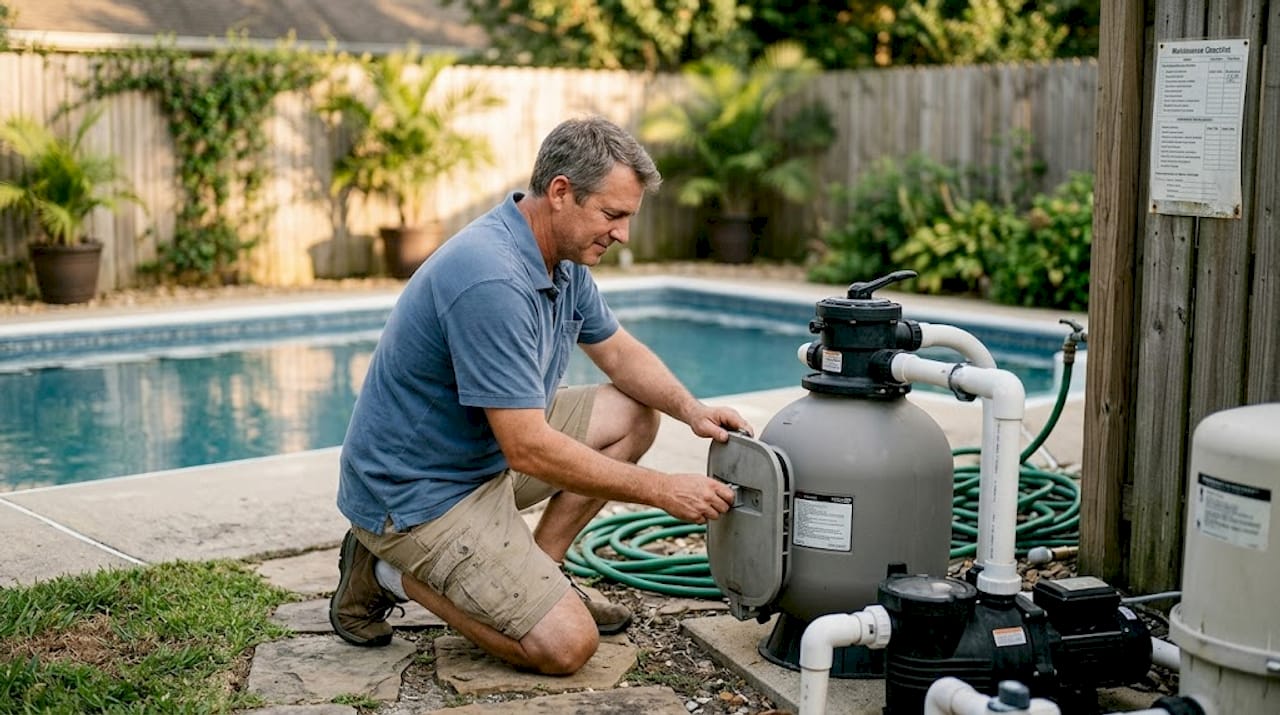
Central Florida adds specific challenges. Summer storms can dump large amounts of organic material into your pool in minutes. Oak pollen in spring coats the surface and clogs filters quickly. During these high-load periods, check your system weekly rather than monthly. You can also explore options for upgrading an existing pool if your current setup is not keeping up with seasonal demands.
For homeowners who want detailed, step-by-step care routines, custom pool maintenance tips offer practical checklists built around real Central Florida conditions.
Pro tip: Do not wait for cloudy water to act. By the time your water turns hazy, the filter is already overwhelmed. Stay ahead of it with consistent, preventive upkeep.
The real-world lesson: Why filtration deserves more attention
After nearly four decades of building and maintaining pools in Central Florida, we have noticed a consistent pattern. Most homeowners come to us frustrated about water quality and their first question is always, “What chemicals should I add?” Very rarely does anyone ask, “Is my filter the right size?” or “When did I last clean it?”
This is understandable. Chemical treatments are visible and immediate. You pour something in, and you feel like you have done something. Filter maintenance is invisible until something goes wrong.
Here is the uncomfortable truth we share with every new pool owner: the importance of regular pool care is almost always rooted in filtration, not chemistry. When we diagnose persistent algae problems, recurring cloudy water, or high chemical consumption, a dirty or undersized filter is the culprit in the majority of cases.
A well-maintained filtration system also saves real money over time. When your filter catches debris efficiently, your sanitizers work more effectively at lower doses. That compounds into significant savings on chemicals across a pool’s lifetime.
Shift your mindset. Put “check the filter” at the top of your pool maintenance checklist, not at the bottom.
Take the next step to a sparkling pool
Ready to get more from your pool with less effort and fewer chemical headaches? The right filtration system, properly sized and consistently maintained, changes everything about the ownership experience.
At R&R Swimming pools, we have been helping Central Florida homeowners design and build pools since 1985, and filtration planning is built into every project from day one. Whether you are starting fresh with our inground pool installation guide or exploring options with our custom pool installation guide, expert guidance is available every step of the way. Visit Pool School for hands-on resources, how-to guides, and everything you need to keep your pool running at its best year-round.
frequently asked questions
How often should I clean my pool filter in Central Florida?
Clean your filter every 4-6 weeks under normal conditions, but increase to weekly checks during heavy rain, storm season, or spring pollen periods because Central Florida climate demands more frequent maintenance than most regions.
Which filter type is best for residential pools in Central Florida?
Cartridge filters are the most practical choice for the majority of Central Florida homes because they offer fine filtration with less water waste and no backwashing requirements, making upkeep straightforward.
What happens if my filter is too small for my pool?
An undersized filter cannot turn your pool’s full water volume over in the recommended 6-hour window, so contaminants accumulate, water turns cloudy, and proper filter sizing becomes essential to preventing long-term equipment strain.
Does a good filtration system reduce chlorine use?
Yes. When your filter physically removes debris, bacteria, and organic waste efficiently, your chlorine does not have to work as hard, which means filtration and chemicals together use fewer sanitizers than chemistry alone ever could.
