
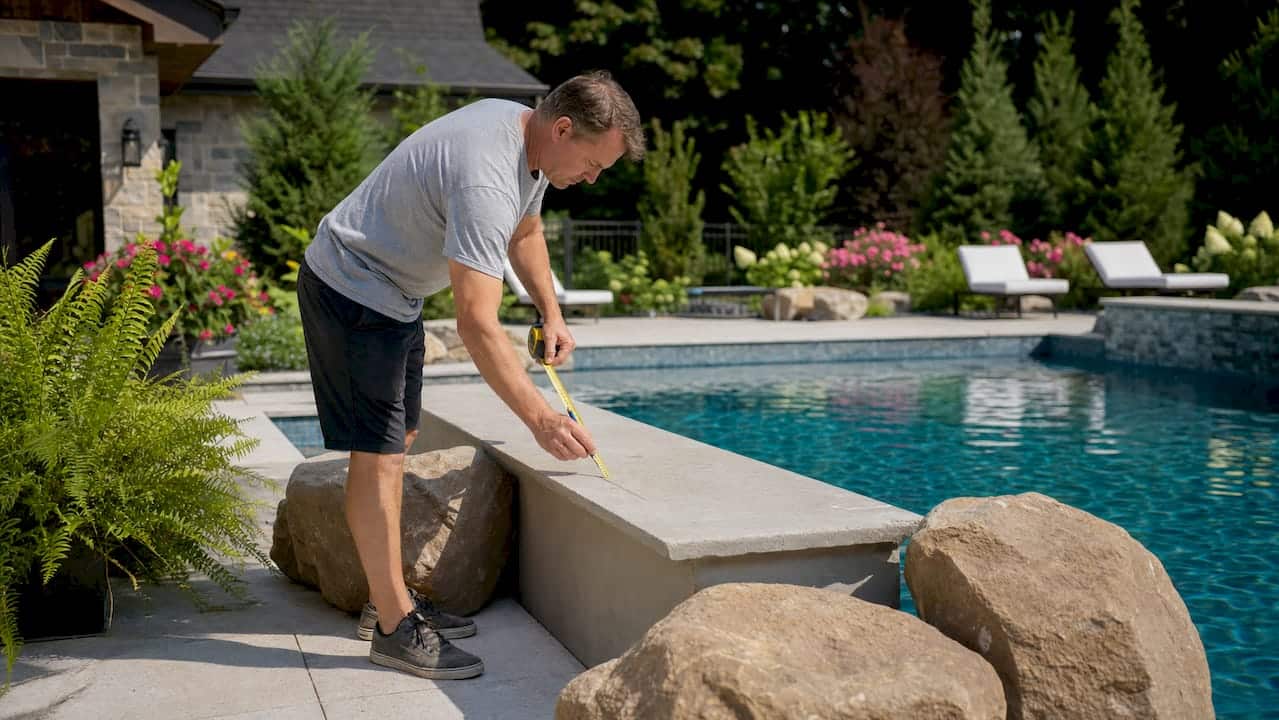
TL;DR:
- Adding a pool waterfall enhances water movement and aesthetics while discouraging algae growth and improving chemical distribution. Proper site planning, correct plumbing and electrical installation, and finishing with natural materials create a reliable, visually appealing feature. Expert guidance is essential to prevent common mistakes and ensure safety, longevity, and beauty in your backyard water feature.
Adding a pool waterfall means installing a water feature that draws from your pool’s circulation system and cascades water back into the pool, combining aesthetics with improved water movement. Knowing how to add pool waterfalls correctly requires planning your site, sizing your plumbing, meeting NEC electrical codes, and finishing the structure to blend with your backyard. The benefits of pool waterfalls go beyond looks: moving water discourages algae growth, improves chemical distribution, and adds the kind of ambient sound that turns a backyard into a retreat. Whether you choose a prefabricated waterfall kit or a custom concrete structure, the core process follows the same sequence: site prep, plumbing, electrical, and finishing.
What materials and tools do you need to add pool waterfalls?
The right materials determine whether your waterfall runs quietly for years or causes pump headaches after one season. DIY waterfall kits include a molded shell, a spout or lip, a suction tube, and all necessary fittings. Custom builds use natural stone, concrete block, or manufactured rock panels assembled on a rebar frame.
Core plumbing materials:
- Schedule 40 PVC pipe, 1.5-inch or 2-inch diameter for the feed line
- PVC fittings: elbows, couplings, and tees
- Ball valves and unions for service access and flow adjustment
- Waterproof sealant and primer for all PVC joints
Electrical components:
- GFCI outlets and breakers rated for outdoor wet locations
- Metallic conduit for running wiring near the pool
- Wet location electrical boxes
- Bonding wire and grounding hardware per NEC Article 680
Tools you will need:
- Cordless drill and hole saw bits
- Shovels and a tamper for excavation
- A 4-foot level for checking structure alignment
- Electrical fish tape or snake for pulling wire through conduit
Finishing materials:
- White or natural gravel for base coverage
- Decorative stones and boulders for framing
- Native plants or tropical shrubs for a natural look
- Submersible LED lights for nighttime effect
Pro Tip: Before you buy anything, lay out every component from the kit on a flat surface and cross-check against the manufacturer’s parts list. Missing a union or the wrong elbow size will cost you a full extra trip to the supply house.
How do you choose the best location for a pool waterfall?
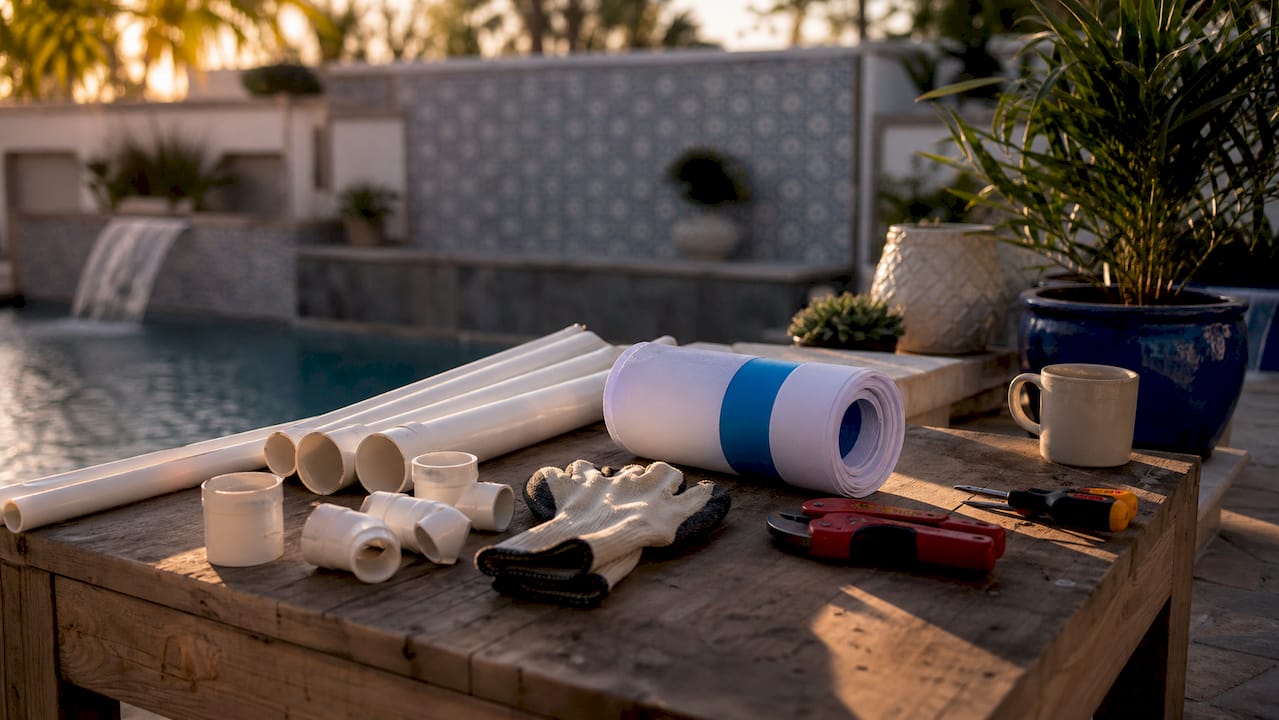
Location determines how well the waterfall functions and how natural it looks. The best spot sits close to your existing pool plumbing to minimize the length of the feed line and reduce pressure loss. Proximity to the pool’s return lines or pump room cuts both material cost and installation time.
Follow these steps to prepare your site:
- Identify the plumbing path. Trace where your pool’s main pump and return lines run. The waterfall feed line needs a clear, direct route from the pump to the waterfall structure with as few bends as possible.
- Check the pool water level. The suction tube on the waterfall must sit below the pool’s waterline at all times. If the intake rises above the surface, air enters the pump and causes sputtering, a common air entrainment problem that is easy to prevent and hard to fix after installation.
- Clear a 3-foot radius around the installation zone. Remove roots, rocks, and debris. A clean, level base prevents the structure from shifting after the first season.
- Excavate to kit or design specifications. Most kits specify exact depth and width for the base pad. Custom builds require a footing that matches the weight of the stone or concrete you plan to use.
- Level the ground. Use a 4-foot level across the base in two directions. An unlevel base causes water to sheet to one side instead of flowing evenly over the lip.
- Mark the electrical and plumbing trenches. Dig separate trenches for PVC pipe and conduit, keeping them at the depths required by your local code.
Pro Tip: Use construction stakes and bright ribbon to mark the exact footprint of the waterfall before you dig a single shovelful. This prevents you from excavating too wide and wasting backfill material.
How do you install pool waterfall plumbing and electrical systems?
Plumbing and electrical work are where most DIY waterfall projects either succeed or fail. Proper plumbing and electrical integration is what separates a waterfall that runs reliably for a decade from one that trips breakers and strains your pump.
Plumbing installation steps
- Cut and dry-fit the entire PVC run from the pump to the waterfall before gluing anything. Confirm every fitting aligns and the pipe reaches the spout connection point.
- Install ball valves and unions at the pump connection and at the base of the waterfall. Ball valves let you balance flow between the waterfall and other returns. Unions allow you to disconnect the waterfall for service without cutting pipe.
- Glue all joints using PVC primer followed by Schedule 40 cement. Hold each joint for 30 seconds and allow a full cure time before pressurizing.
- Connect to the pump. You can tie into the main pump using a tee fitting and a dedicated valve, or use a separate dedicated pump for the waterfall. Dedicated pump setups give you independent flow control and protect your main filtration system from pressure imbalances.
- Position the suction tube so the intake end sits at least 2 inches below the pool waterline. This single step prevents the most common waterfall failure.
Safety note: Undersized plumbing is the leading cause of pump strain in waterfall installations. The Waterway Plastics Aqua Fall manual specifies a minimum of 1.5-inch Schedule 40 PVC, with 2-inch or larger required for higher-flow models. Never downsize to save money on pipe.
Electrical installation steps
Pool waterfall circuits must comply with NEC Article 680, which requires GFCI protection on all pump, lighting, and receptacle circuits near the pool. Bonding all metal components within 5 feet of the water is mandatory, not optional.
- Run all wiring inside metallic conduit from the panel to the waterfall location.
- Install a GFCI breaker at the panel and a GFCI outlet at the wet location box near the waterfall.
- Bond the pump motor, any metal fittings, and the waterfall structure itself to the pool’s bonding grid.
- Hire a licensed electrician for all wiring connections. GFCI protection reduces shock risk but does not eliminate it if wiring is done incorrectly.
Pro Tip: Test the system with the pump running before you backfill any trenches. Watch the suction tube for bubbles, check every glued joint for drips, and confirm the GFCI trips correctly when tested. Fixing a buried leak costs far more than a 20-minute pre-backfill check.
How do you finish a pool waterfall and keep it running well?
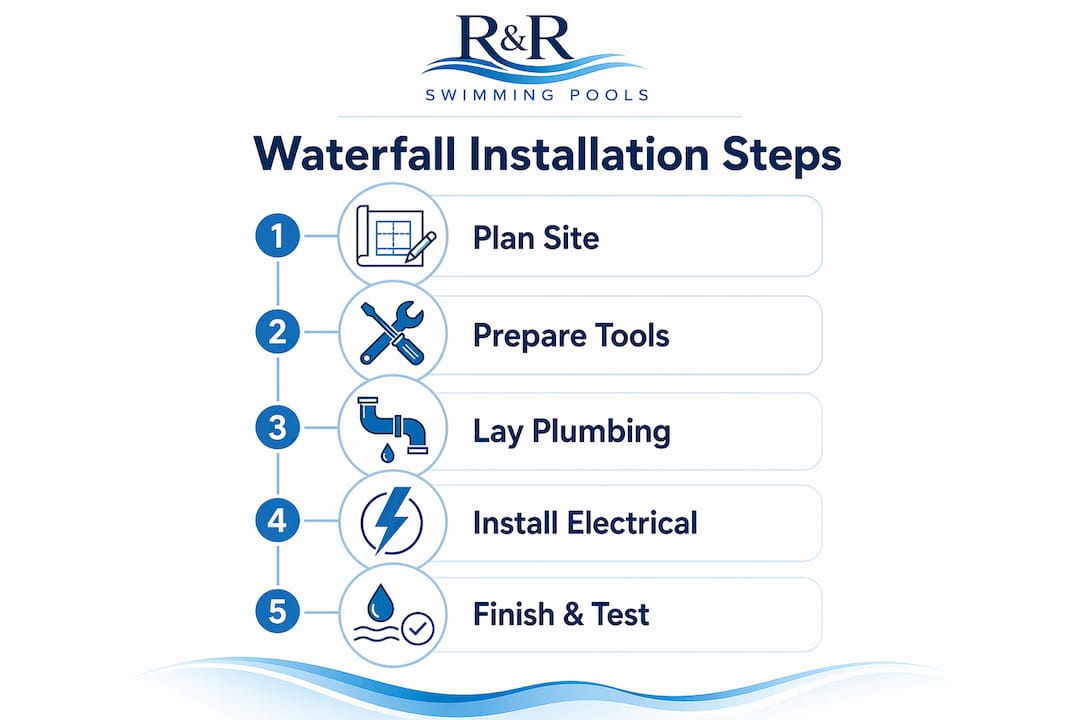
The finishing stage is where a functional structure becomes a feature your backyard is built around. Start by placing decorative boulders and stones around the base of the waterfall to frame it and hide the plumbing connections. Use white gravel or river rock to fill gaps and create a clean transition between the structure and the pool deck.
Finishing and maintenance checklist:
- Add plants. Ornamental grasses, bird of paradise, or tropical palms planted within 2–3 feet of the waterfall soften the structure and create a natural look. For Central Florida homeowners, Randrswimmingpools recommends species that tolerate splash and humidity. The pool landscaping guide from Randrswimmingpools covers plant selection in detail.
- Install LED lighting. Submersible or above-water LED spotlights aimed at the waterfall face create dramatic nighttime effects. Color-changing LEDs let you match the mood to the occasion.
- Pair with other water features. A waterfall combined with a spa spillover or deck bubblers creates layered sound and movement. Randrswimmingpools has built spa and pool combos across Central Florida that use this exact approach.
- Check plumbing monthly. Look for drips at unions and fittings, especially after the first 30 days of operation when joints settle.
- Clean the spout lip seasonally. Calcium and algae build up on the waterfall lip and disrupt the flow pattern. A stiff brush and a diluted acid wash restore the smooth sheet effect.
- Balance water chemistry. Moving water accelerates chlorine off-gassing. Test your pool chemistry weekly during the first month after installation and adjust accordingly.
Pro Tip: Schedule a full inspection of the pump, plumbing connections, and electrical bonding every spring before peak swim season. Catching a loose bonding wire or a weeping union in April costs far less than an emergency repair in July.
What are the most common pool waterfall installation mistakes?
Most waterfall problems trace back to a handful of preventable errors. Knowing them before you start saves you from the most expensive repairs.
- Suction tube above the waterline. This is the single most common mistake. Air entering the pump causes sputtering, cavitation, and eventual pump damage. Always confirm the intake is submerged before running the system.
- Undersized feed line. Using 1-inch PVC instead of the required 1.5-inch or 2-inch pipe reduces flow dramatically and forces the pump to work harder. The mismatch between pump capacity and pipe size is the leading cause of DIY waterfall failures.
- Skipping GFCI and bonding requirements. Ignoring NEC 680 electrical rules creates serious shock hazards. No aesthetic result is worth that risk.
- Installing on an unlevel base. Water follows gravity. A base that is even slightly off-level sends the entire flow to one side of the spout.
- No service access. Installing plumbing without unions means cutting pipe every time you need to service the pump or waterfall. Always install unions at both ends of the feed line.
When you encounter poor flow, check pipe sizing and valve positions first. When you see electrical faults, call a licensed electrician. For structural problems like cracking or shifting, contact a pool contractor. The costs and code rules for Central Florida waterfall installations vary by county, so verify local permit requirements before breaking ground.
Key takeaways
A successful pool waterfall installation depends on correctly sized plumbing, code-compliant electrical work, and a level, well-prepared site.
| Point | Details |
|---|---|
| Use correct pipe sizing | Minimum 1.5-inch Schedule 40 PVC prevents pump strain and poor flow. |
| Submerge the suction tube | Keep the intake below the waterline to prevent air entrainment and pump sputtering. |
| Meet NEC 680 electrical code | Install GFCI protection and bond all metal within 5 feet of the pool. |
| Hire a licensed electrician | Pool wiring requires qualified installation; GFCI alone does not make improper wiring safe. |
| Finish with plants and lighting | Decorative stone, native plants, and LED lighting turn a functional structure into a backyard focal point. |
What i have learned after watching hundreds of waterfall installs
The waterfall projects that go wrong almost always share one trait: the homeowner or contractor treated the electrical work as an afterthought. I have seen beautiful stone structures with perfectly balanced flow get condemned by an inspector because the bonding wire was skipped or the conduit run was done in non-metallic sheathing. NEC Article 680 exists because pool water and electricity are genuinely dangerous together, and no amount of visual appeal changes that math.
The second pattern I notice is that people underestimate how much the plumbing design affects the finished look. The Jandy Sheer Descent produces a glass-smooth sheet of water because the feed configuration and pipe sizing are precisely matched to the spout geometry. Change the pipe size or add an extra elbow and the sheet breaks into a spray. Good waterfall design is as much hydraulics as it is aesthetics.
My honest recommendation: do the site prep and finishing work yourself if you enjoy that kind of project. But bring in a licensed electrician for the wiring and a certified pool contractor to spec the plumbing. The money you spend on those two professionals is the cheapest insurance you can buy for a feature you want to enjoy for 20 years.
— Randrswimmingpools
Let Randrswimmingpools handle your waterfall installation
R and R Swimming Pools has been building custom inground pools and water features across Central Florida since 1985. The team designs waterfall systems that are sized correctly from day one, wired to code, and finished to match your backyard vision.

Whether you are adding a waterfall to an existing pool or planning a new build with water features included, Randrswimmingpools offers personalized consultations and a detailed inground pool installation guide to walk you through every stage. You can also explore the full custom pool design process to see how waterfall features integrate into a complete pool project. Contact Randrswimmingpools today for a free quote and start turning your backyard into the outdoor space you have been planning.
FAQ
What pipe size is required for a pool waterfall feed line?
The minimum is 1.5-inch Schedule 40 PVC, with 2-inch or larger required for higher-flow waterfall models. Using undersized pipe reduces flow and strains the pump.
Do pool waterfalls need GFCI protection?
Yes. NEC Article 680 requires GFCI protection on all pump, lighting, and receptacle circuits near pools. Bonding all metal within 5 feet of the water is also mandatory.
Can i install a pool waterfall myself?
The site prep, plumbing assembly, and finishing work are manageable as a DIY project. Electrical connections must be done by a licensed electrician to meet code and ensure safety.
How do i stop my pool waterfall from sputtering?
Sputtering is caused by air entering the pump through a suction tube that sits above the pool waterline. Reposition the intake so it stays submerged at least 2 inches below the water surface.
What is the cost to add a pool waterfall?
Cost varies widely based on design complexity, materials, and labor. Prefabricated kits run less than custom stone builds, and permit and electrical costs depend on your local jurisdiction. Randrswimmingpools provides free quotes for Central Florida homeowners.
