TL;DR:
- Effective pool budgeting in Central Florida requires accounting for all costs before construction begins. Homeowners should include site prep, permits, landscaping, maintenance, and equipment in their budget to avoid overruns. Using a phased build helps manage expenses and adapt plans based on yard conditions and priorities.
Effective pool project budgeting means accounting for every cost before a single shovel hits the ground. Central Florida homeowners face a unique mix of sandy soil, high water tables, and year-round pool use that makes thorough upfront planning non-negotiable. A concrete pool runs $50,000 to $120,000, fiberglass falls between $40,000 and $100,000, and vinyl liner pools land at $40,000 to $65,000, according to 2026 pricing data. Those numbers only tell part of the story. Site prep, permits, landscaping, and ongoing maintenance all add to the real total, and missing any one of them is the fastest way to blow your budget.
1. Pool project budgeting tips: start with the full cost picture
The single biggest pool project budgeting mistake is treating the pool shell as the whole project. Ignoring the backyard renovation scope including hardscaping and landscaping is the most common reason homeowners run short. A realistic budget covers construction, permits, equipment, decking, landscaping, and at least one year of maintenance costs before you sign any contract.
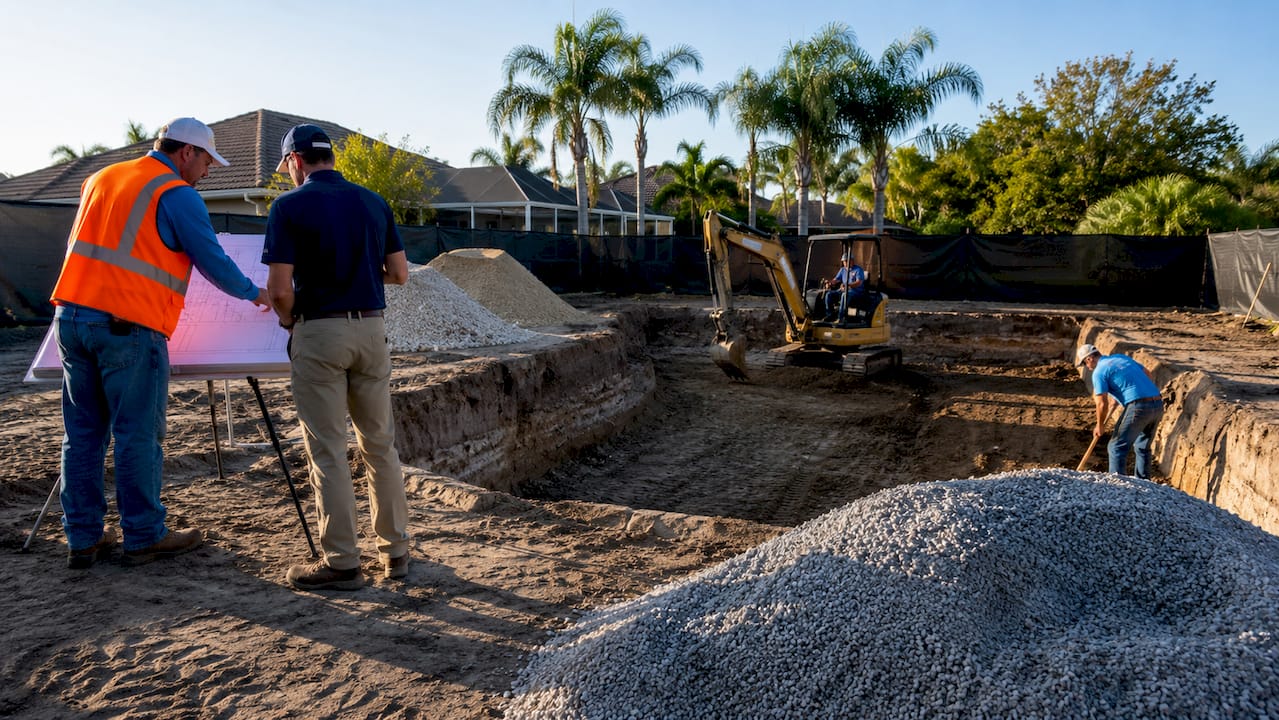
Treating your pool build as a phased backyard renovation gives you far better budget clarity. You can separate must-haves from nice-to-haves at each phase, which keeps spending under control. Randrswimmingpools recommends this phased approach to every Central Florida homeowner starting the planning process.
2. How do pool types and design choices influence your budget?
Pool type is the single largest variable in your cost factors for pools. Each material carries different upfront costs, maintenance demands, and design flexibility.
- Concrete pools cost $50,000 to $120,000. They offer the most design freedom, including custom shapes, depths, and finishes. They also require resurfacing every 10–15 years and have higher chemical demands.
- Fiberglass pools run $40,000 to $100,000. They install faster, resist algae better than concrete, and have lower long-term chemical costs. Shape options are limited to manufacturer molds.
- Vinyl liner pools fall between $40,000 and $65,000. They are the most affordable upfront but require liner replacement every 7–10 years, which adds to lifetime cost.
Size directly drives price. A 12×24 foot pool costs far less than a 16×32 foot pool in both materials and labor. Adding features like a spa, waterfall, or tanning ledge can add $5,000 to $20,000 or more to any base price.
Pro Tip: Choose your pool size based on your actual yard dimensions and how you plan to use it. Oversizing for aesthetics is one of the most common ways Central Florida homeowners overspend.
3. What site preparation and labor factors add to your pool budget?
Labor and site preparation represent 25% to 50% of your total budget depending on site complexity. That range is wide because Central Florida yards vary dramatically in soil type, drainage, and access. Ignoring site conditions during planning is how projects go over budget mid-build.
The most common site challenges in Central Florida include:
- High water tables. Many Central Florida lots sit near lakes or wetlands. High groundwater requires dewatering during excavation, which adds cost and time.
- Sandy or unstable soil. Sandy soil can shift during and after construction, requiring additional structural reinforcement for concrete pools.
- Rocky ground or tree roots. Unexpected underground obstacles increase excavation time and equipment costs.
- Poor drainage. Inadequate yard drainage can cause deck flooding and requires correction before pool installation begins.
- Utility conflicts. Underground utilities sometimes need relocation, which triggers additional permits and contractor fees.
Permitting timelines in Florida typically run 4 to 8 weeks. Missing inspection checkpoints can delay construction by additional weeks and trigger contractor standby fees. Build permit timelines into your project schedule from day one.
Pro Tip: Schedule a professional site evaluation before finalizing your budget. Pre-build assessments can save thousands by flagging drainage problems, soil issues, and setback violations before they become mid-project emergencies.
4. Which pool equipment and safety features should you budget for?
Equipment is a non-negotiable budget line that many homeowners underestimate. A complete equipment package covers the pump, filter, heater or heat pump, automation system, and sanitization equipment. Safety features like fencing, pool covers, and alarms are separate costs that Florida law often requires.
Key equipment budget items include:
- Variable-speed pumps. These cost more upfront than single-speed models but use significantly less electricity. Energy-efficient equipment reduces long-term utility costs, making the higher purchase price worthwhile over a pool’s lifespan.
- Pool heaters or heat pumps. Central Florida’s mild winters make heat pumps a popular choice. They cost more to install than gas heaters but are cheaper to run month to month.
- Automation systems. Smart controllers let you manage lighting, temperature, and filtration from your phone. They add $1,000 to $3,000 but reduce energy waste through scheduling.
- Safety fencing and covers. Florida law requires barrier fencing around residential pools. Budget $1,500 to $5,000 for compliant fencing depending on yard size and material. Pool covers add another $500 to $3,000. Learn more about safety feature costs before finalizing your equipment list.
The long-term value of quality equipment outweighs the short-term savings of budget alternatives. A cheap pump that fails in three years costs more than a quality variable-speed unit that runs for a decade.
5. How do landscaping and outdoor features affect your total budget?
The pool shell is only the beginning of your outdoor space. Decking, patios, lighting, fencing, and landscaping restoration are separate costs that add up fast. Optional outdoor features like decking, lighting, and landscaping can add $3,000 to $10,000 or more to your total project cost.
Central Florida homeowners should budget for landscaping restoration as a standard line item, not an afterthought. Excavation equipment damages grass, irrigation lines, and plantings. Restoring your yard after construction is a cost that surprises nearly every first-time pool buyer.
| Outdoor Feature | Typical Cost Range | Notes |
|---|---|---|
| Concrete pool deck | $3,000–$8,000 | Most common; durable and low maintenance |
| Paver patio | $5,000–$15,000 | Higher upfront; adds resale value |
| Landscape restoration | $1,500–$4,000 | Replaces grass and plants damaged during build |
| Outdoor lighting | $1,000–$4,000 | LED systems cost more upfront but save on electricity |
| Waterfall or water feature | $3,000–$10,000 | Significant aesthetic upgrade; increases pump load |
| Privacy fencing | $2,000–$8,000 | Varies by material: wood, vinyl, or aluminum |
For a detailed walkthrough of pool landscaping costs specific to Central Florida, Randrswimmingpools offers a step-by-step guide covering each phase of outdoor finishing work.
6. What ongoing expenses should you factor into your ownership budget?
Pool ownership costs do not stop at installation. Annual maintenance and utility expenses are real and predictable, and they belong in your long-term financial plan from the start.
Key ongoing costs to budget for each year:
- Chemicals and cleaning. Homeowners should budget $1,200 to $2,500 annually for pool maintenance, chemicals, and cleaning. Central Florida’s heat and heavy use push chemical demand higher than in cooler climates.
- Utility bills. Expect your monthly electricity bill to rise by $30 to $75 once your pool is running. A variable-speed pump and a timer-controlled system keep this number toward the lower end.
- Insurance and property taxes. Adding a pool raises your homeowner’s insurance premium. It may also increase your property tax assessment. Contact your insurance provider before breaking ground to understand the full impact.
- Repairs and equipment replacement. Set aside a small annual fund for unexpected repairs. Pumps, filters, and heaters have finite lifespans. Planning for replacement costs prevents financial stress when equipment fails.
Tracking these costs with a simple spreadsheet keeps your pool maintenance budget accurate year over year. Randrswimmingpools recommends reviewing your annual pool expenses each january to catch rising costs early.
Key takeaways
Effective pool budgeting in Central Florida requires planning for construction, site prep, equipment, landscaping, and ongoing maintenance costs before the project begins.
| Point | Details |
|---|---|
| Know your pool type costs | Concrete, fiberglass, and vinyl liner pools each carry distinct price ranges and long-term cost profiles. |
| Site prep is a major cost driver | Labor and site work can represent 25%–50% of your total budget depending on soil and drainage conditions. |
| Build in a contingency fund | Reserve 10%–15% of your total project cost to cover unexpected site or construction expenses. |
| Budget for outdoor finishing | Decking, landscaping, and lighting add $3,000–$10,000 or more beyond the pool shell cost. |
| Plan for annual ownership costs | Expect $1,200–$2,500 per year in maintenance plus $30–$75 monthly in added utility costs. |
What I’ve learned from 40 years of Central Florida pool builds
The homeowners who stay on budget are not the ones with the most money. They are the ones who ask hard questions before signing anything. After decades of building pools across Central Florida, the pattern is clear: budget overruns almost always trace back to two things. Underestimated site prep and skipped contingency funds.
Most people focus on the pool itself and treat the surrounding work as a footnote. That is a mistake. A 10%–15% contingency reserve is not pessimism. It is the single most practical thing you can do to protect your project. Drainage corrections, utility relocations, and soil stabilization are not rare events in Central Florida. They are common ones.
Phased builds work well for homeowners who want a quality pool without stretching their finances. Build the pool and essential equipment in phase one. Add the patio, lighting, and landscaping in phase two, six to twelve months later. This approach gives you time to save and lets you make better decisions without the pressure of an active construction timeline.
Choose a contractor who knows Central Florida conditions specifically. Soil behavior, permitting offices, and local inspection requirements vary by county. A contractor who builds regularly in Orange, Lake, or Seminole County will move faster and hit fewer surprises than one who does not. Clear communication and a written budget review at each project milestone keep everyone aligned and prevent scope creep from quietly inflating your costs.
— Randrswimmingpools
Planning your Central Florida pool project with Randrswimmingpools
R and R Swimming Pools has built custom inground pools across Central Florida since 1985. That experience translates directly into budget accuracy for homeowners who want realistic numbers before committing to a project.
http://R and R Swimming Pools
Start with a clear picture of your inground pool options to understand which pool type fits your budget and yard. From there, the Central Florida installation guide walks you through every phase of the build with cost context at each step. Randrswimmingpools also offers financing options that make phased builds and larger projects more manageable. Contact the team for a free quote and a budget conversation tailored to your specific property and goals.
FAQ
How much does an inground pool cost in Central Florida in 2026?
Inground pools in Central Florida typically range from $40,000 to $120,000 depending on pool type, size, and site conditions. Concrete pools sit at the higher end, while fiberglass and vinyl liner pools offer lower entry points.
What is a realistic contingency budget for a pool project?
Reserve 10%–15% of your total project cost as a contingency fund. This covers common surprises like drainage corrections, soil stabilization, and utility relocations that frequently arise during Central Florida builds.
How long does pool permitting take in Florida?
Permitting typically takes 4 to 8 weeks in Florida. Missing inspection checkpoints can extend that timeline and add contractor standby fees to your project cost.
What are the annual costs of owning a pool in Central Florida?
Budget $1,200 to $2,500 per year for chemicals, cleaning, and routine maintenance. Monthly utility bills typically increase by $30 to $75 once the pool is operational.
Is energy-efficient pool equipment worth the extra upfront cost?
Yes. Energy-efficient equipment like variable-speed pumps costs more initially but reduces monthly electricity bills significantly over the life of the pool, making it the better long-term financial choice.
