

TL;DR:
- Custom pool value engineering maximizes function and quality relative to total cost, saving up to 15 percent without compromising safety. It involves early, structured decision-making on design, materials, and equipment, with input from a coordinated team to reduce expenses and improve long-term value. Starting the process during design and focusing on lifecycle costs ensures homeowners build pools that perform well and retain their value.
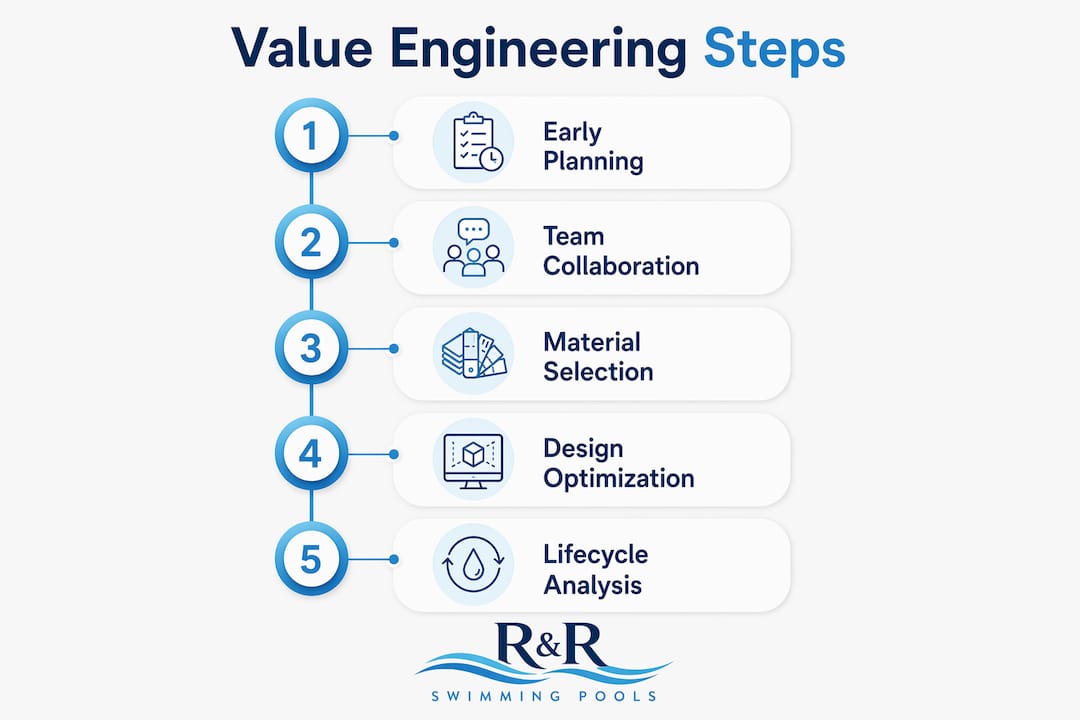
Custom pool value engineering is defined as a structured method for maximizing a pool’s function and quality relative to its total cost. Applied correctly, it delivers 5%–15% in total project savings without cutting corners on safety or performance. That range matters because a typical Central Florida inground pool represents a significant investment, and every dollar saved through smart design is a dollar that can go toward features you actually want. Randrswimmingpools has applied these principles across Central Florida since 1985, and the results consistently show that the biggest savings come from decisions made before a single shovel hits the ground. The Florida Building Code and site-specific soil conditions make early planning not just smart, but necessary.
What is custom pool value engineering and how does it work?
Value engineering is a systematic method for improving value by optimizing function relative to cost. It is not about buying cheaper materials. It is about asking whether every design decision earns its place in the project. The core principle is simple: value equals function divided by cost. Increasing value means improving what the pool does, reducing what it costs, or both at once.
The process follows a structured six-phase methodology used across construction disciplines:
- Information gathering. The team collects site data, soils reports, budget targets, and the homeowner’s functional priorities.
- Function analysis. Every design element gets evaluated for what it actually does. A freeform shape may look appealing, but does it serve the homeowner’s stated needs better than a rectangle?
- Brainstorming alternatives. The team generates substitute materials, layouts, and construction methods that deliver the same or better performance.
- Evaluation. Each alternative gets scored against cost, durability, code compliance, and aesthetics.
- Development. The best alternatives get detailed into drawings and specifications.
- Presentation. The homeowner reviews the findings and approves changes before construction documents are finalized.
This process works best as a team effort. The owner, pool designer, structural engineer, and contractor each bring a different lens. A contractor may know that a slight geometry adjustment saves two days of excavation. A structural engineer may spot a rebar specification that exceeds what the soil report actually requires.
Early involvement reduces redesign costs and maximizes savings potential. Once construction drawings are stamped and permitted, changes become expensive. The window for high-impact decisions closes fast.

Pro Tip: Ask your builder to join the design conversation before drawings are finalized. A single early meeting can surface cost-saving alternatives that would cost thousands to implement after permits are pulled.
Digital tools like BIM with clash detection and 3D modeling improve outcomes by enabling visualization and continuous cost estimating during design. These tools are no longer exclusive to commercial projects. Many Central Florida pool contractors now use them on residential builds.
How can you optimize pool materials and equipment for long-term value?
Material selection is where value engineering for pools produces the most visible results. The goal is not to find the cheapest option. The goal is to find the option that performs best over the full life of the pool.
Here is what to evaluate at each major material and equipment decision point:
- Concrete mix design. Standard shotcrete mixes meet Florida Building Code requirements for most residential pools. Over-specifying compressive strength adds cost without adding performance. A soils report tells you exactly what the site demands.
- Rebar sizing and spacing. Verifying site-specific soils reports and proper structural design is critical. Rebar that exceeds the engineering requirement is waste. Rebar that falls short is a liability. The soils report is the only honest guide.
- Plumbing layout. Oversizing pipe runs slightly during initial construction costs little upfront. It avoids expensive retrofits if you add a spa, water feature, or automation system later.
- Pumps and filtration. A pump that costs 20% more upfront but lasts longer and uses 30% less energy delivers superior lifecycle value. Variable-speed pumps, for example, meet current energy codes and cut operating costs significantly over a 10-year period.
- Pool finish. Quartz aggregate finishes cost more than standard plaster but last two to three times longer in Florida’s hard water and UV conditions. The lifecycle math usually favors the upgrade.
For equipment, energy-efficient pool heat pumps represent one of the clearest lifecycle cost wins available to Central Florida homeowners. Florida’s mild winters mean a heat pump extends your swim season at a fraction of the operating cost of a gas heater.
Pro Tip: During construction, have your builder install conduit stubs and plumbing tee-offs for features you plan to add within five years. The cost at rough-in is minimal. The cost to retrofit after the deck is poured is not.
Itemized quotes that specify structural materials, equipment brands, and site conditions are the only reliable basis for comparing bids. A lower total number on a vague proposal often hides material downgrades that show up as repair bills three years later.
What design optimizations reduce costs for Central Florida pools?
Central Florida’s climate, soil conditions, and stormwater regulations create specific design constraints. Working with those constraints, rather than against them, is where pool design optimization produces real savings.
The table below compares common design choices and their cost and value trade-offs:
| Design decision | Lower-cost option | Higher-cost option | Value engineering verdict |
|---|---|---|---|
| Pool shape | Rectangle or L-shape | Freeform organic shape | Rectangle reduces excavation and formwork costs; freeform adds 10%–20% to shell cost |
| Depth profile | Uniform 5-foot depth | Variable depth with deep end | Uniform depth cuts excavation volume; add deep end only if diving or lap swimming is a priority |
| Coping material | Brushed concrete coping | Natural travertine coping | Concrete coping performs well in Florida heat; travertine adds resale appeal at moderate premium |
| Deck size | Code-minimum surround | Oversized entertainment deck | Size deck to actual use patterns; oversized decks add cost and maintenance without proportional value |
| Water features | Single spillover spa | Multiple waterfalls and grottos | Plan plumbing for future features; build only what you will use in year one |
Optimizing geometry is the single biggest lever in pool design efficiency. A rectangular pool with a 3-foot setback from the property line requires less excavation, less concrete, and less labor than a freeform pool of the same water volume. That difference can fund a better finish, better equipment, or a larger deck.
Coordinated civil and structural value engineering can also optimize grading and stormwater detention, reducing sitework costs while meeting Florida’s increasingly strict drainage requirements. A pool that sits at the wrong elevation relative to the yard’s drainage pattern creates expensive problems. Getting the grading plan right during design costs nothing. Fixing it after construction costs a great deal.
Resale value is a legitimate design input. Intelligent pool design choices in Florida consistently influence home value, and buyers in Central Florida expect pools. A well-proportioned pool with quality finishes and efficient equipment adds more to appraised value than an oversized pool with dated features and high operating costs.
When should you bring in professionals for value engineering decisions?
The right time to involve professionals is during the schematic or concept design phase, before any drawings are detailed enough to create switching costs. Value engineering integrated early reduces redesigns, mitigates change orders, and speeds permit approvals. Waiting until a design is nearly complete means paying for changes twice.
The professionals who contribute most to effective pool value engineering include:
- Pool designer or architect. Translates your functional priorities into a layout that works with the site, not against it.
- Structural engineer. Sizes the shell, rebar, and footing based on the actual soils report, not conservative defaults.
- Licensed pool contractor. Identifies construction-phase savings that a designer working off-site cannot see. Randrswimmingpools brings this perspective to every project from the first conversation.
- Estimator. Produces itemized cost comparisons for alternative materials and methods so decisions are based on real numbers.
The delivery model matters too. A Design-Build approach, where one firm handles both design and construction, creates more opportunities for value engineering than a Design-Bid-Build model. In Design-Build, the contractor’s cost knowledge informs design decisions in real time. In Design-Bid-Build, the contractor sees the drawings only after they are complete, and any suggested changes become change orders.
Ask your team these questions before approving a design:
- What is the lifecycle cost of this equipment choice over 10 years?
- Which design elements are driving the most cost, and what are the alternatives?
- What would a 10% budget reduction require us to change, and what would we lose?
- Are there any non-standard dimensions in this design that add cost without adding function?
The warning about false value engineering deserves direct attention. Swapping in cheaper, less durable materials leads to higher long-term maintenance costs and potential pool failure. A contractor who proposes cutting rebar, thinning the shell, or using off-brand equipment to hit a price point is not doing value engineering. That is cost cutting. The difference shows up in repair bills and resale value.
You can also review key cost factors before your first professional meeting to arrive with informed questions rather than starting from zero.
Key Takeaways
Custom pool value engineering delivers the most savings when applied early, guided by lifecycle cost analysis, and executed by a coordinated team of designers, engineers, and builders.
| Point | Details |
|---|---|
| Start in the design phase | Value engineering decisions made before drawings are finalized save the most money with the least disruption. |
| Lifecycle cost beats sticker price | Equipment that costs more upfront but lasts longer and uses less energy delivers better total value. |
| Geometry drives construction cost | Simpler pool shapes reduce excavation, formwork, and material costs without reducing function. |
| Itemized quotes protect you | Fully specified bids reveal material quality and prevent hidden cost traps from vague proposals. |
| False VE is a real risk | Cutting structural materials or using off-brand equipment to lower price creates long-term repair costs. |
Why I think most homeowners approach pool budgets backward
Most homeowners I have worked with set a budget number first and then try to fit a design into it. That sequence creates pressure to cut in the wrong places. The smarter sequence is to define what the pool needs to do, build a design that does exactly that, and then apply value engineering to find savings that do not touch function or durability.
The Central Florida market has specific pressures that make this discipline more important than in other regions. Soil variability across Orange, Lake, and Osceola counties means a soils report is not optional. It is the document that tells you whether the structural design is appropriate or over-built. Skipping it to save a few hundred dollars is the most expensive shortcut a homeowner can take.
The other mistake I see repeatedly is narrowing design choices too late. By the time a homeowner falls in love with a specific freeform shape, a specific coping material, and a specific water feature package, the cost is locked in. The time to evaluate alternatives is before attachment sets in, not after.
Value engineering is not about building a cheaper pool. It is about building the right pool at the right cost. That distinction matters because the goal is a pool you enjoy for 20 years, not one you regret after the first repair bill. Increasing pool value through smart design decisions is a long game, and the homeowners who play it well start the conversation early.
— Results
How Randrswimmingpools helps Central Florida homeowners build smarter
Randrswimmingpools has been designing and building custom inground pools across Central Florida since 1985. That depth of experience means the team identifies value engineering opportunities before they become expensive problems, not after.
Every project starts with a free consultation focused on your site conditions, functional priorities, and budget. From there, R and R Swimming Pools builds a custom pool installation plan that reflects both your vision and the realities of Central Florida construction. The team brings structural, design, and construction knowledge to the same table from day one, which is exactly when it matters most. If you are ready to plan a pool that performs well and holds its value, Randrswimmingpools is the place to start that conversation.
FAQ
What does value engineering mean for a custom pool?
Value engineering for a custom pool is a structured process that maximizes function and quality relative to total cost. It involves evaluating design choices, materials, and equipment to find alternatives that perform equally well at lower cost or better at the same cost.
When is the best time to apply value engineering to a pool project?
The best time is during the concept or schematic design phase, before construction drawings are finalized. Early involvement reduces redesign costs and keeps the most impactful savings options open.
How much can value engineering save on a custom pool?
Structured value engineering typically saves 5%–15% of total project costs without compromising quality, safety, or long-term performance.
Is value engineering the same as choosing cheaper materials?
No. True value engineering maintains or improves function while reducing unnecessary cost. Swapping in lower-quality structural materials to hit a price point is cost cutting, not value engineering, and it leads to higher maintenance costs over time.
Does pool shape really affect construction cost that much?
Yes. A rectangular or L-shaped pool requires less excavation, less formwork, and less concrete than a freeform design of the same water volume. That geometry difference can represent 10%–20% of the shell cost alone.
