
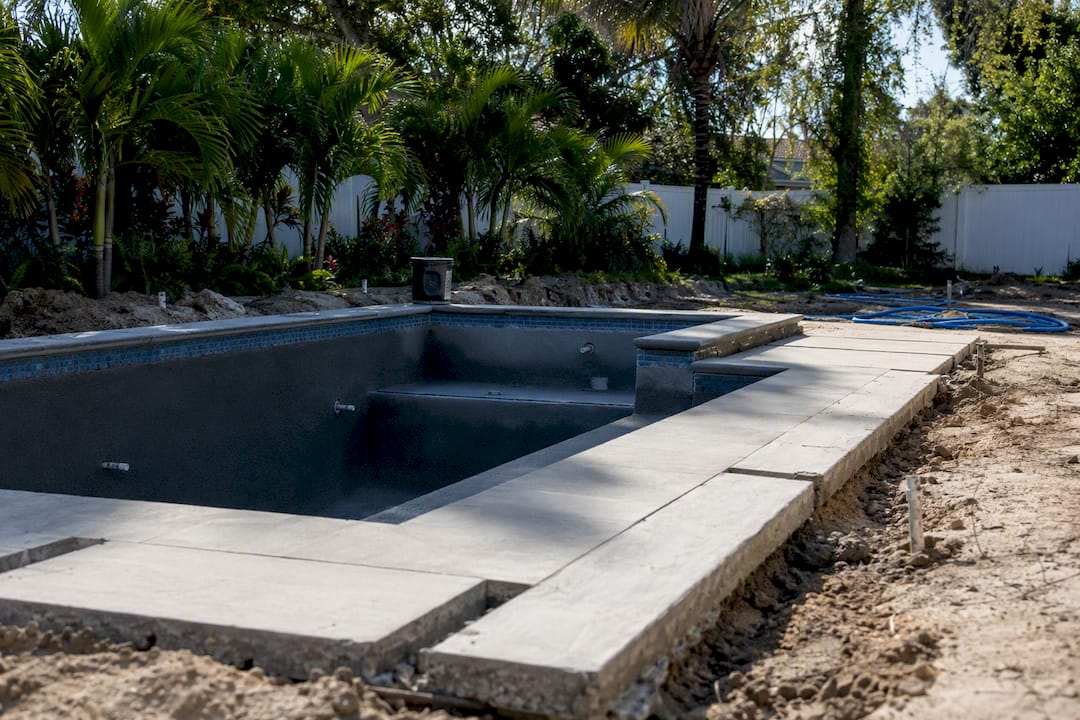
A small backyard pool generally means anything under about 600 square feet of water surface, and for most tight yards, that means one of three shapes: a plunge pool, a spool (a spa and pool combined), or a compact rectangular swim pool around 20 feet long. Installed costs for these smaller footprints typically run lower than the $65,909 national average for a full-size inground pool, though price still swings hard based on material, site access, and finishing choices.
- Plunge pool: 7 to 15 feet long, deep enough to submerge, not built for laps
- Cocktail/spool: spa-and-pool hybrid, often heated year-round
- Compact swim pool: up to about 20 feet, narrow enough for a side yard
Quick figure: Basic semi-inground or kit-style small pools can start between $7,000 and $25,000, while a permanent small inground shell typically starts higher before decking, fencing, and equipment get added.
Key Takeaways
Small backyard pools under 600 square feet cost less than the national average when owners cut shell size first and budget an extra 20 to 40 percent for decking, fencing, and equipment.
| Point | Details |
|---|---|
| Define “small” clearly | Anything under roughly 600 square feet of water surface, spanning plunge, cocktail, spool, and compact swim types. |
| Cut size before features | Reducing footprint saves more across excavation, decking, and equipment than trimming any single feature does. |
| Budget beyond the shell | Add 20 to 40 percent for decking, fencing, permits, and equipment on top of the base shell price. |
| Match type to actual use | Choose a compact swim pool for exercise, a spool for year-round hydrotherapy, a plunge pool for quiet soaking. |
| Vet contractors on the same terms | Compare itemized bids, confirm licensing and insurance, and ask about change-order policy before signing. |
| Work with an experienced local builder | Randrswimmingpools has designed and installed custom concrete and fiberglass small pools across Central Florida since 1985. |
Table of Contents
- What Counts as a Small Backyard Pool?
- What Do Small Backyard Pools Cost to Install?
- How Do You Design a Small Pool to Feel Bigger?
- Which Material Is Best for a Small Inground Pool?
- What Permits and Site Issues Affect Small Pool Installs?
- How Do You Choose a Contractor for a Small Pool Project?
- Why Trust R&R Swimming Pools With a Small Pool Project?
- How Do You Sanitize a Small Backyard Pool?
- What Does Long-Term Maintenance Cost for a Small Backyard Pool?
- How Should You Winterize a Small Pool?
- The Real Trade-Off Nobody Talks About Enough
- Ready to Turn These Ideas Into a Real Backyard Pool?
- Frequently Asked Questions
- Sources
What Counts as a Small Backyard Pool?
The pool industry doesn’t have one universal cutoff, but the working definition most builders and designers use is a water surface under roughly 600 square feet. That’s a useful shorthand, not a rigid rule. A 12×30 lap-style pool and a 14×14 plunge pool can both land under that threshold while serving completely different purposes.
Four subtypes dominate the small-pool category, and picking the right one matters more than picking the right size.
- Plunge pools run 7 to 15 feet long and 6 to 8 feet wide, deep enough (often 4 to 6 feet) for a genuine soak or cold-therapy dip, but too small for swimming laps.
- Cocktail pools sit slightly larger, usually 10 to 16 feet long, built more for lounging and entertaining than exercise.
- Spools (spa plus pool) combine heated soak space with a small swim zone, often 10×20 or smaller, and frequently include jets.
- Compact swim pools stretch to 16 to 20 feet, the minimum length that lets an adult take a few real strokes before turning around.
Depth guidance follows use case. A plunge pool built for cold-water therapy or quiet relaxation rarely needs to go past 5 feet. A compact swim pool intended for laps or exercise usually benefits from a consistent 4.5 to 5 feet, since a shallow swim pool feels cramped the moment more than one person gets in. Deeper water also means more excavation and more gallons to heat, so depth is a direct cost lever, not just a comfort setting.
Households with young kids often do better with a cocktail pool or a shallow spool, since the tanning ledge and bench seating give toddlers a place to play without full-depth water nearby. Couples without children, or empty nesters downsizing their yard ambitions, tend to gravitate toward plunge pools and spools for the hydrotherapy and low-maintenance appeal. Anyone training for fitness or rehab benefits most from the compact swim pool, even if it means giving up a spa attachment to fit the length.
What Do Small Backyard Pools Cost to Install?
Material choice drives cost more than almost any other decision you’ll make on a small-pool project. A vinyl-liner pool carries the lowest upfront shell price but needs a liner replacement roughly every 7 to 15 years. A fiberglass shell costs more than vinyl initially but installs fast and needs the least ongoing upkeep. Precast concrete splits the difference, offering more shape flexibility than fiberglass without the long build time of poured concrete. Gunite (poured concrete) costs the most and takes the longest to build, but it’s the only option with no real limit on shape, depth, or custom features, according to cost data from PoolPad.
The number that trips up most first-time buyers isn’t the shell price. It’s the extras. Budget an additional 20 to 40 percent on top of the shell cost for the items builders sometimes leave off an initial estimate:
- Decking and hardscape — concrete, pavers, or travertine surrounding the pool
- Fencing or safety barriers — often required by local code
- Permits and inspections — varies by municipality
- Equipment — pump, filter, heater, and automation
- Landscaping and screening — privacy plantings, retaining walls, grading
That 20 to 40 percent isn’t a padding number pulled from thin air. It reflects how small-pool budgets actually shift away from the shell and toward everything around it, per PoolPad’s cost breakdown. A tiny shell surrounded by expensive travertine decking and a full privacy fence can easily cost more than a slightly bigger pool with a basic concrete patio.
Here’s how three real budget tiers might shake out for a small backyard pool:
Budget scenario: A vinyl-liner plunge pool, basic concrete decking, minimal landscaping, and a standard fence. Total often lands in the $25,000 to $40,000 range, consistent with the lower end of small-pool pricing HomeGuide reports.
Mid-range scenario: A fiberglass spool with a heater, paver decking, and a low privacy wall. This tends to fall closer to the $44,499 to $65,909 band that Angi lists as the typical range most homeowners pay for an inground pool overall, even at a smaller footprint.
Premium scenario: A custom gunite compact swim pool with a tanning ledge, integrated spa, travertine decking, and full landscape screening. Costs here often exceed the upper bound Angi cites for average inground installs, since gunite and premium finishes push both material and labor costs up.
How Do You Design a Small Pool to Feel Bigger?
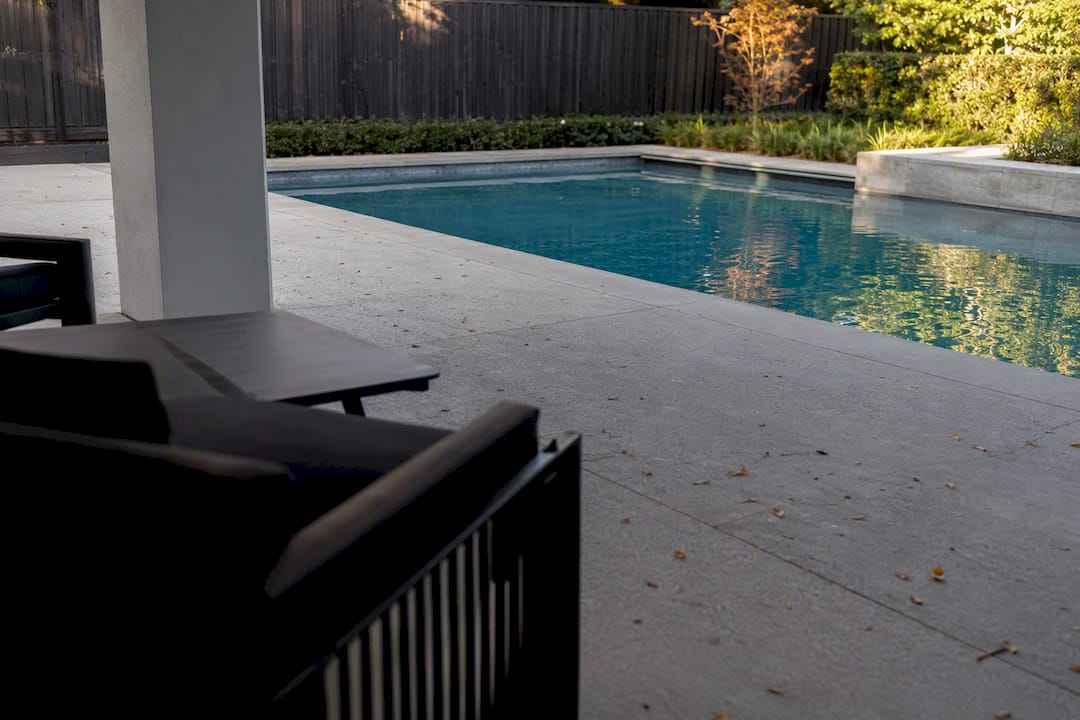
The single biggest lever for making a small pool feel larger isn’t the water. It’s what surrounds it. Continuous decking material that flows from the patio into the pool area, with no visual break, tricks the eye into reading the whole space as one zone rather than a pool carved out of a smaller yard.
Layout depends heavily on lot shape. Narrow side yards, common in older suburban neighborhoods, generally work best with a linear plunge pool or spool pushed against the property line, leaving a 3 to 4 foot walking clearance on the opposite side. Courtyard lots, where the pool sits enclosed by the house on two or three sides, handle a squarer cocktail pool well since there’s less need for a long swim lane. Sloped lots often call for a raised or partially elevated pool wall, which adds retaining-wall cost but can turn a problem grade into a design feature.
A few features consistently earn their cost in small-pool builds:
- Tanning ledges create a shallow lounging zone that reads as extra square footage even though it’s barely a foot deep.
- Built-in bench seating along one wall frees up deck space for furniture.
- Reflective or light-colored plaster finishes bounce more light around a shaded yard, which matters more in a small enclosed space than a large open one.
- Continuous decking material ties the pool visually to the rest of the yard instead of isolating it.
Pro Tip: If your yard can only fit one bonus feature, choose a tanning ledge over a spa. A spa adds heating and jet equipment cost year-round, while a ledge adds usable space with almost no added mechanical cost.
Feature trade-offs matter because small yards don’t have room for everything. A spa attachment adds year-round hydrotherapy value but eats into the swim length available. A dedicated swim jet system lets a short pool simulate lap swimming, which can be the better call for anyone using the pool for fitness rather than lounging. Prioritize based on how you’ll actually use the water, not how the feature photographs. For more layout templates built specifically around tight footprints, narrow yard pool designs covers space-saving approaches in more depth.
Which Material Is Best for a Small Inground Pool?
Fiberglass wins on speed and low maintenance. Manufactured shells arrive pre-formed and go into the ground fast, often in days rather than weeks, which matters if your yard has limited equipment access. The trade-off is shape. You’re choosing from a manufacturer’s catalog of molds, not designing a custom outline.
Vinyl liner pools cost less upfront than fiberglass or concrete, and they offer more shape flexibility than a fiberglass shell since the frame gets built on site. The liner itself is the ongoing cost: expect a replacement every decade or so, which adds up over the pool’s lifetime even though the initial price looks attractive.
Gunite (poured concrete) is the material of choice when a homeowner wants total control over shape, depth changes, integrated features, or an unusual footprint that has to work around trees, utility lines, or an oddly shaped lot. It comes at a real cost: longer build times measured in weeks rather than days, plus more long-term maintenance since the surface needs periodic resurfacing.
Precast concrete sits in the middle. It offers more customization than a fiberglass mold without the multi-week curing schedule of poured gunite, making it a reasonable compromise for homeowners who want a semi-custom look on a tighter timeline.
- Fiberglass: fastest install, lowest maintenance, limited shapes
- Vinyl liner: lowest upfront cost, periodic liner replacement, flexible shape
- Precast concrete: faster than gunite, more custom than fiberglass
- Gunite/concrete: fully customizable, longest build, highest long-term upkeep
What Permits and Site Issues Affect Small Pool Installs?
Every small pool project runs through some version of the same regulatory gate: a permit application, a review against local setback rules, and inspections at key construction stages. Permit costs vary significantly by municipality, and most jurisdictions also require a final inspection before the pool can legally hold water. Fencing and barrier compliance, often tied to PHTA safety guidance, gets checked at the same time.
Site conditions drive both price and schedule more than most homeowners expect going in.
- Access — if equipment can’t reach the backyard directly, expect hand-digging or crane costs
- Slope — grading and retaining walls add both time and money on sloped lots
- Water table — high water tables can require dewatering during excavation
- Rock or hard soil — may require special excavation equipment
- Utility locates — required before digging, and can delay the schedule if lines run through the planned footprint
Build timelines vary by construction method more than any other factor. Fiberglass and precast shells typically go from excavation to water in a matter of days to a few weeks, since the shell arrives finished and just needs to be set and plumbed. Gunite and custom concrete builds run longer, often several weeks, because the shell has to be formed, sprayed, and cured on site before plaster and finishing can begin. Homeowners should plan for a staging period too: equipment delivery, utility locates, and permit approval can add real time before excavation even starts.
How Do You Choose a Contractor for a Small Pool Project?
Comparing bids gets confusing fast because contractors don’t all quote the same way. Some hand over a shell price and treat decking, fencing, and equipment as separate line items. Others fold everything into one number with allowances that may not match what you actually want installed. Ask every contractor for the same breakdown so you’re comparing apples to apples.
A short list of questions separates a solid contractor from a risky one:
- Are you licensed and insured for pool construction in this area?
- What’s the realistic timeline from permit to first swim, including weather delays?
- Is the quote a shell price or a fully installed price with decking and equipment included?
- Which items are firm line items versus allowances that could change?
- What’s your change-order policy if site conditions turn out different than expected?
- What warranty comes with the shell, the equipment, and the labor?
Pro Tip: Ask to see the itemized breakdown of a past small-pool project similar in size to yours. A contractor confident in their pricing will show you exactly where the money went.
Red flags show up early if you’re looking. A bid dramatically lower than every other quote usually means something’s missing, whether that’s decking, permits, or equipment. No verifiable references, no proof of license or insurance, or vague answers about subcontractors are all reasons to keep shopping. R&R Swimming Pools’ design process walks through what a transparent, itemized proposal looks like from the homeowner’s side.
Why Trust R&R Swimming Pools With a Small Pool Project?
Randrswimmingpools has built and installed custom inground pools across Central Florida since 1985, which covers four decades of small-yard projects, side-lot installs, and full-size builds alike. That kind of tenure matters most when a site throws up the kind of surprises this article just covered: tricky access, sloped lots, or utility lines running through the planned footprint.
- Four decades of concrete and fiberglass pool construction in Central Florida
- Direct experience fitting compact plunge pools, spools, and swim pools into narrow and irregular lots
- Design galleries and sizing guidance available for homeowners comparing footprints before committing
Homeowners weighing fiberglass against gunite for a tight yard can review R&R Swimming Pools’ expert buyer guide for a side-by-side look at both build methods before requesting a quote.
How Do You Sanitize a Small Backyard Pool?
Smaller water volume changes the math on sanitation, but not the fundamentals. Chlorine remains the standard, whether delivered through tablets, liquid feed, or a salt chlorine generator, and it’s the sanitizer most municipal codes and PHTA guidance are built around. A salt system tends to appeal to small-pool owners specifically because the lower total water volume means a smaller, less expensive salt cell can keep up with demand.
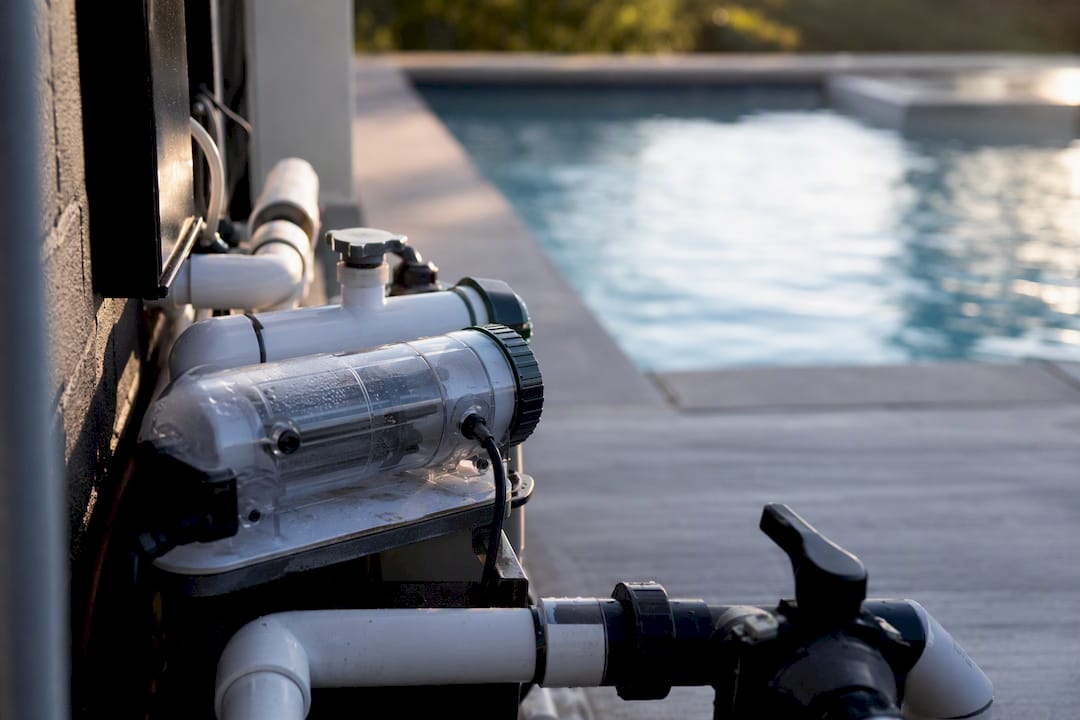
Bromine works as an alternative sanitizer, more common in heated spools and spas since it holds up better at higher water temperatures than chlorine does. Given how many small pools double as heated spas, bromine shows up more often in this category than in full-size swim pools.
UV and ozone systems supplement primary sanitizers rather than replace them, reducing the chemical load needed to maintain safe water. They tend to be a worthwhile add for small pools since a smaller reservoir shows chemical imbalance faster, meaning oversaturation or algae blooms can happen quicker than in a large pool with more water to dilute the problem.
Testing frequency should go up, not down, for a small pool. Less total water means a small dose of rain, sunscreen, or bather load shifts the chemical balance faster than it would in a bigger volume. Testing two to three times a week during heavy-use months keeps chlorine, pH, and alkalinity from drifting into problem territory before you notice.
What Does Long-Term Maintenance Cost for a Small Backyard Pool?
Recurring costs for a small pool run lower than a full-size pool, but they don’t disappear. Expect regular spending across a handful of categories: chemicals, filter cartridges or cartridge cleanings, pump and heater electricity, and periodic equipment repairs.
A smaller pool needs less chemical volume per treatment, which is the most direct ongoing savings compared to a full-size pool. Filter maintenance, whether cartridge, sand, or DE, still follows the same seasonal schedule regardless of pool size, since it’s tied to bather load and debris more than water volume. Vinyl-liner owners should plan ahead for the liner-replacement cost that arrives roughly every 7 to 15 years, a maintenance milestone that fiberglass and gunite owners never face in the same way. Gunite owners face the opposite pattern: no liner to replace, but periodic resurfacing and tile repair as the plaster ages.
Energy costs tied to pumps and heaters make up a bigger share of the annual maintenance budget than most new owners expect, especially for spools that run a heater year-round. Upgrading to a variable-speed pump and an efficient heater can meaningfully cut that recurring cost, an area covered in more detail in R&R Swimming Pools’ guide to energy-efficient pool equipment. Budgeting a modest annual reserve for equipment repairs, on top of routine chemical and filter costs, keeps a surprise heater or pump failure from becoming a financial shock.
How Should You Winterize a Small Pool?
Seasonal care for a small pool follows the same broad steps as any inground pool, but the smaller water volume means changes happen faster in both directions. A small pool heats up quicker in spring and cools down quicker in fall, so seasonal transitions deserve a tighter watch schedule than a full-size pool needs.
Before closing for cold weather, balance the water chemistry one final time, since starting winter with clean, balanced water dramatically reduces the algae and staining problems that show up at spring opening. Lower the water level below the skimmer if your climate sees hard freezes, and add a winterizing chemical treatment appropriate to your sanitizer type. Blow out and plug the plumbing lines to prevent freeze damage. For spools and heated small pools that stay in use through winter, the equipment simply needs a functioning freeze-protection system rather than a full shutdown.
Covering a small pool matters more than owners often assume. A smaller surface area means a cover has a bigger relative effect on heat retention and debris control than the same cover would on a large pool. A solid or mesh safety cover also cuts down on leaf and debris buildup that a smaller filtration system has to work harder to clear.
Spring reopening for a small pool tends to move faster than a large one, simply because less water needs re-balancing and the smaller shell warms up quicker under Central Florida sun. That said, don’t skip the shock treatment and full chemical test just because the pool looks clean. Cloudy or discolored water after a winter closure almost always traces back to skipped balancing steps the previous fall.
The Real Trade-Off Nobody Talks About Enough
Most small-pool advice focuses on cramming features into a tight footprint: squeeze in a spa, add a tanning ledge, find room for a swim jet. The research tells a different story. The homeowners who end up happiest with a small pool are the ones who cut size before they cut features, because a smaller shell shrinks excavation, decking, and equipment costs all at once, while trimming a feature only saves money on that one line item.
Conventional advice also underplays how much the non-shell budget matters. Homeowners fixate on choosing between fiberglass and gunite, then get blindsided when decking, fencing, and landscaping quietly add nearly half again to the total. That 20 to 40 percent isn’t an edge case. It’s the norm.
If there’s one thing to prioritize first, it’s matching pool type to actual use, not to what looks best in a gallery photo. A family that wants laps needs a compact swim pool, not a cocktail pool with a fountain feature. A couple chasing relaxation needs a heated spool, not a photogenic plunge pool that sits at 58 degrees every morning. Get that match right, and the budget conversation gets a lot easier.
Ready to Turn These Ideas Into a Real Backyard Pool?
Randrswimmingpools has spent four decades building custom concrete and fiberglass pools across Central Florida, including the compact plunge pools, spools, and narrow-lot builds this article just walked through. That kind of specialized experience with tight footprints means fewer surprises once excavation starts, whether your yard is a narrow side lot or a small courtyard.
If you’re weighing a plunge pool against a spool, or trying to figure out whether your lot can fit a compact swim pool, the fastest next step is getting a real quote based on your actual yard rather than guessing from online calculators. Start with the inground pool installation guide to see what a step-by-step build looks like, then request a free quote to get numbers specific to your property and the pool type you’re leaning toward.
Frequently Asked Questions
What is considered a small backyard pool?
Most builders define a small backyard pool as one with less than 600 square feet of water surface, which covers plunge pools, cocktail pools, spools, and compact swim pools up to about 20 feet long.
How much does a small inground pool cost?
Small permanent inground installs commonly start in the $25,000 to $40,000 range on the low end, while basic semi-inground or kit options can run as low as $7,000 to $25,000. Add 20 to 40 percent for decking, fencing, and equipment on top of the shell price.
What’s the smallest pool you can install in the ground?
Plunge pools as short as 7 feet long are common for inground installs, making them a realistic fit for narrow side yards and small courtyard lots where a full swim pool won’t fit.
Is a spool better than a separate spa and small pool?
A spool combines heated soak space and swim room into one footprint, and it often delivers better year-round value than installing a separate spa and small pool in a yard that doesn’t have room for both.
How long does it take to install a small pool?
Fiberglass and precast shells typically go in within days to a few weeks, while gunite or custom concrete builds usually take several weeks due to forming, spraying, and curing time before finishing work begins.
Sources
- How Much Does It Cost to Install a Pool? — Angi
- Small Inground Pools: Sizes, Costs & Ideas for 2026 — Plungie
- How Much Does an Inground Pool Cost in 2026? | PoolPad
- Inground pool cost — HomeGuide
