
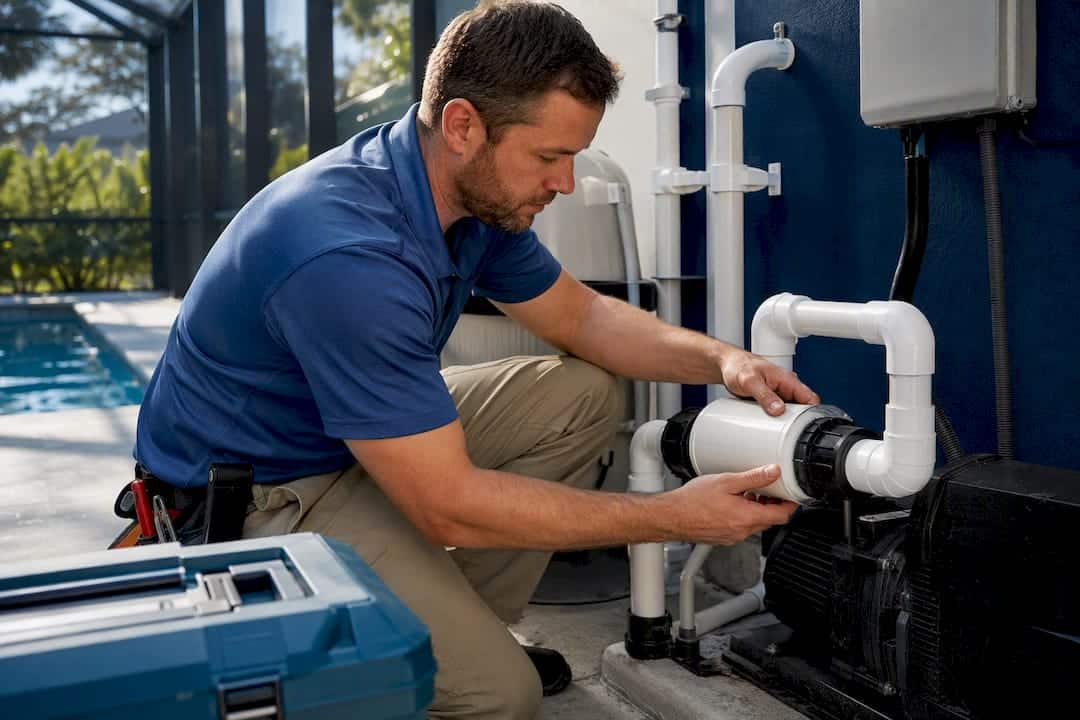
Converting a residential pool to saltwater typically costs within a broad range depending on pool size and complexity, with many homeowners paying a moderate amount including labor, electrical work, and start-up salt. Conversion usually pays off if you plan to keep the pool at least five years and your plumbing, finish, and equipment are in decent shape. If your pool has copper heat exchangers, natural stone coping, or aging plumbing, the math changes fast, and that’s where the real breakdown starts.
TL;DR:
- Conversion costs vary widely based on pool size, age, and complexity, with typical ranges from $1,000 to over $7,000 depending on features and retrofit needs.
- Electrical work and plumbing rerouting significantly impact total costs, especially for larger pools or if existing infrastructure is insufficient or outdated.
- Ongoing expenses include salt cell replacements every 3 to 7 years, increased pH balancing chemicals, and potential damage to incompatible fixtures or natural stone.
- Accurate quotes must specify equipment model numbers, amp ratings, labor hours, and warranty coverage, avoiding vague lump-sum proposals that hide hidden costs.
- Proper diagnostics before conversion can identify hidden plumbing or electrical issues, preventing surprise expenses and ensuring the project aligns with the pool’s actual condition.
Table of Contents
- How Much Does Saltwater Conversion Cost?
- What Drives the Cost of a Saltwater Pool Conversion?
- What Happens During a Saltwater Conversion?
- What Are the Ongoing Costs of Owning a Saltwater Pool?
- Is Converting to Saltwater Worth the Money?
- How Do You Know If Conversion Makes Financial Sense?
- What Pool Contractors Wish Homeowners Knew Before Converting
- Get a Straight Answer on Your Conversion Cost
- Sources
How Much Does Saltwater Conversion Cost?
Most quotes fall into three tiers, and knowing which one applies to your pool saves you from sticker shock or, worse, a lowball bid that leaves out half the job.
Low end ($1,000–$2,500): This covers a straightforward swap on a pool with accessible plumbing, an existing dedicated circuit or one close enough to extend cheaply, and no surface repairs needed. You’re mostly paying for the salt chlorinator unit and a few hours of labor.
Average ($2,200–$3,000): This is where most inground pools with concrete or fiberglass shells land. It typically includes a mid-range cell, standard electrical hookup, plumbing tie-in, and start-up chemicals, according to cost data from Well Built Florida.
High end ($2,800–$7,000): Larger pools, older equipment pads that need rewiring, or homeowners who want an advanced controller with app monitoring push costs into this range. Complex retrofits with plumbing rerouting or panel upgrades also land here.
Here’s how that breaks down by pool volume, based on example totals from current market pricing:
- Under 15,000 gallons: $1,400–$2,400 total, since these pools need a smaller cell and less flow to manage
- 15,000–25,000 gallons: $2,200–$3,800 total, the range most Central Florida backyard pools fall into
- Over 25,000 gallons: $2,800–$4,800 or more, driven by larger cells and often higher-output pump requirements
Quick math: A salt chlorine generator alone typically costs $600 to $2,500 depending on the model and amp output. Everything else in your quote (labor, electrical, plumbing, salt) stacks on top of that base number.
Regional factors move these numbers more than most homeowners expect. Electrician availability, permit requirements, and even local salt prices shift totals by several hundred dollars between markets. Florida’s humidity and salt-air exposure near coastal zones can also mean contractors spec slightly heavier-duty cells, which nudges the equipment line up.
What Drives the Cost of a Saltwater Pool Conversion?
Every line item on a conversion quote should map to something specific. If a contractor hands you a single lump-sum number with no breakdown, that’s your first red flag.
Salt chlorinator / cell: Pool size determines cell size, not personal preference. A pool under 15,000 gallons needs a smaller-output cell than a 30,000-gallon pool, and premium controllers with monitoring features add $200 to $600 over a basic unit.
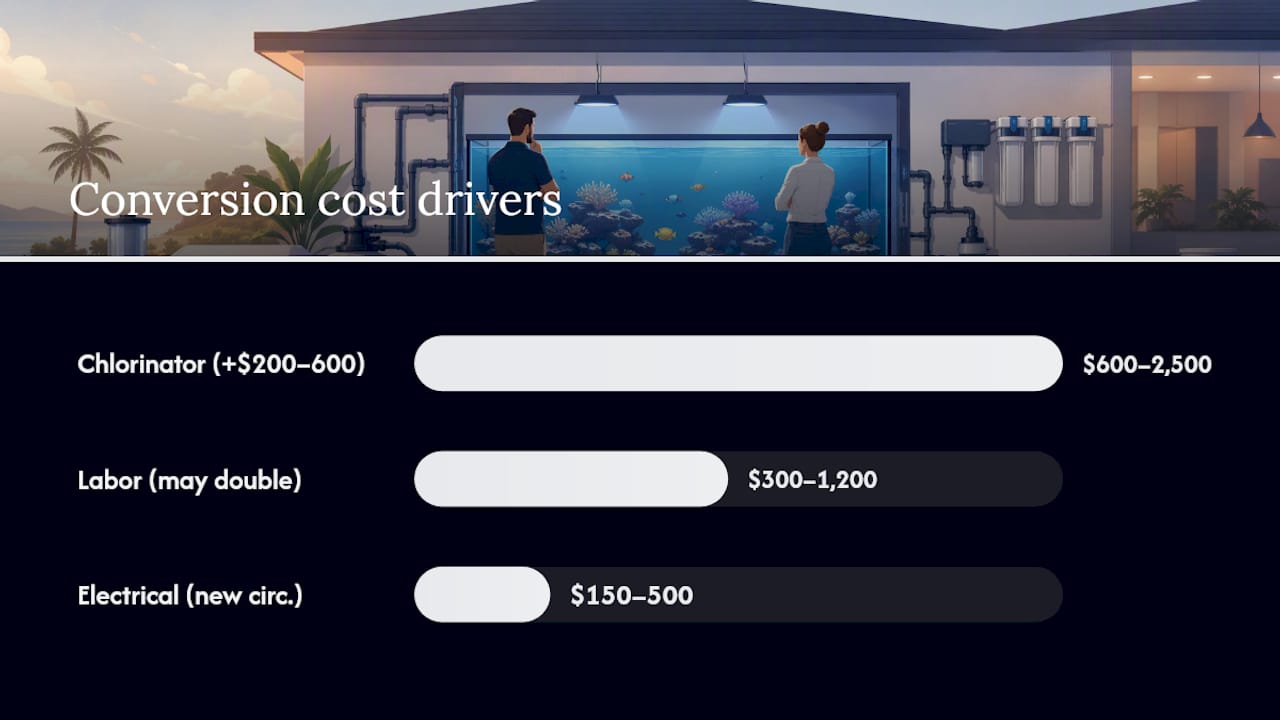
Labor: This is often the biggest swing variable. Straightforward installs run a few hundred dollars in labor, but rerouting plumbing or improving equipment pad access can nearly double that line item.
Electrical: If your equipment pad already has a dedicated circuit near the chlorinator’s future home, you may not need an electrician at all. If not, budget $150 to $500 for a licensed electrician to run a new circuit and breaker.
Plumbing and flow components: Some installs need a bypass valve or flow switch added inline. This is usually a smaller cost, but it adds labor time if your existing plumbing wasn’t designed with a chlorinator location in mind.
Diagnostics, start-up salt, and prep: A proper pre-install diagnostic checks plumbing material and equipment compatibility before anyone touches a wrench. Start-up salt itself is cheap, usually a one-time $50 to $400 fill charge depending on pool size.
- Chlorinator/cell: $600–$2,500
- Labor and installation: $300–$1,200
- Electrical work (if needed): $150–$500
- Plumbing additions (valve/flow switch): $100–$400
- Start-up salt and testing: $50–$400
Pro Tip: Ask for the cell’s amp output and model number on your written quote, not just “salt system included.” Two quotes at the same price can have wildly different equipment quality hiding behind identical wording.
What Happens During a Saltwater Conversion?
A conversion isn’t just bolting a box onto your equipment pad. Here’s the actual sequence a competent installer follows:
- Diagnostic and sizing check. The contractor measures pool volume, inspects existing plumbing material, checks heater type, and confirms equipment pad space before quoting a cell size.
- Equipment installation and plumbing hookup. The chlorinator gets mounted, and the installer chooses between an inline plumbing tie or a bypass configuration depending on your existing setup.
- Electrical wiring and safety checks. If a new circuit is needed, the electrician runs wiring, installs a breaker, and confirms proper grounding before power-up.
- Filling salt and balancing water. The pool gets dosed with the correct salt level for your specific cell, then the tech tests and adjusts pH, alkalinity, and stabilizer.
- Startup monitoring. The system runs its first cycles under supervision to confirm proper salt output and catch any error codes early.
Most straightforward jobs wrap in a single visit, roughly four to six hours. Jobs requiring an electrician or plumbing modifications often need two visits: one for the electrical and plumbing prep, a second for chlorinator installation and startup once permits or parts clear.
What Are the Ongoing Costs of Owning a Saltwater Pool?
The upfront number is only half the budget conversation. What surprises most owners isn’t the conversion invoice. It’s the recurring costs nobody mentioned at the sales pitch.
Cell replacement is the big one. Industry guidance points to budgeting replacement every 3 to 7 years, and real-world lifespans on the shorter end of that range are common rather than the exception. A replacement cell typically runs $400 to $900, which amortizes to roughly $80 to $250 a year depending on how long yours actually lasts.
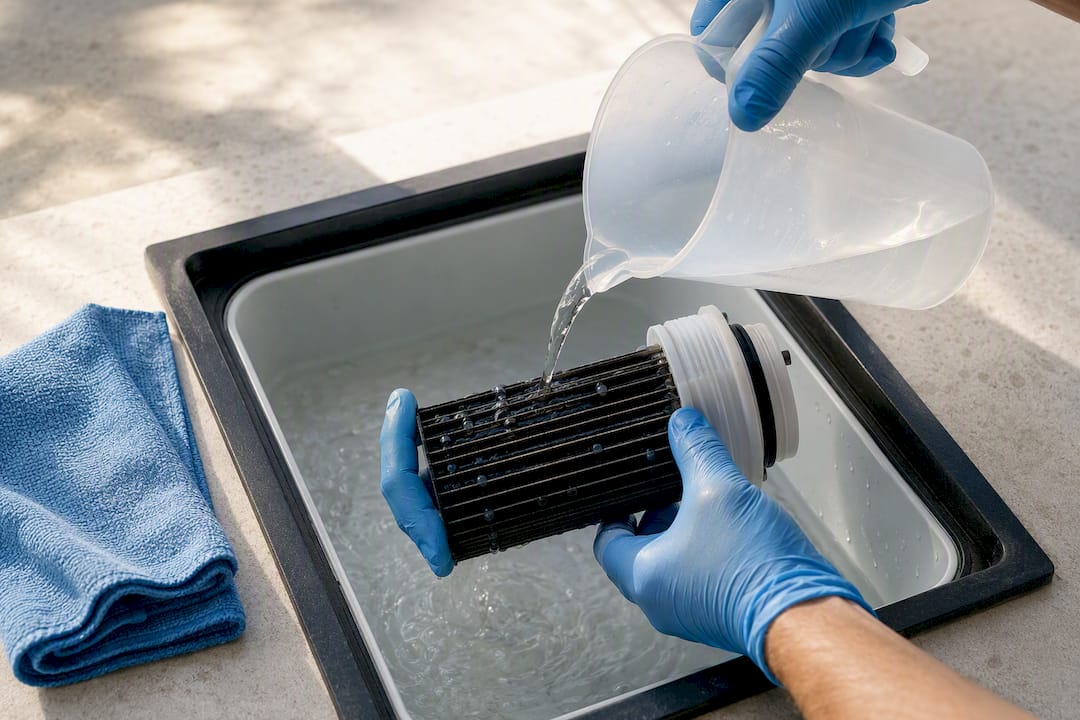
Routine maintenance costs less in chemicals than a traditional chlorine pool but doesn’t disappear. Salt, occasional cell cleaning, and periodic testing strips or reagents typically run $100 to $300 annually.
pH management is the hidden line item. Salt cells produce a byproduct that pushes pH upward over time, which means owners trade adding chlorine for adding more muriatic acid to bring pH back down. This is the maintenance task most new saltwater owners underestimate, according to guidance from In The Swim, and it’s worth reviewing why water balance matters before assuming the system runs itself.
Material compatibility risk is the wildcard. Salt systems can accelerate corrosion on certain metal fixtures and, in some cases, contribute to spalling on natural stone. A pool with copper heat exchanger components or unsealed natural stone coping carries real repair exposure that has nothing to do with the chlorinator itself.
- Cell replacement: $400–$900 every 3–7 years
- Salt top-offs and testing supplies: $100–$300 per year
- Increased muriatic acid usage for pH control: modest but recurring cost
- Potential repair exposure on metal fixtures or unsealed stone: variable, sometimes significant
Is Converting to Saltwater Worth the Money?
Pros that affect your wallet and your routine:
- Automated chlorine production means less manual dosing and fewer trips to buy chlorine
- Softer-feeling water and fewer chloramines, which many swimmers notice immediately
- Reduced handling of harsh chemicals, a real benefit if kids or pets use the pool often
Cons that show up later, not upfront:
- Higher initial investment compared to sticking with manual chlorination
- Cell replacement every few years is a real, recurring cost, not optional
- pH drift means more frequent acid dosing and closer water-balance monitoring
- Corrosion or stone-damage risk on incompatible surfaces and fixtures
Conversion is a poor fit if your pool has extensive natural stone coping, decorative metal features, or you plan to sell within a year or two. In those cases, the long-term maintenance comparison tilts back toward staying with a traditional system, at least until those materials get addressed separately.
How Do You Know If Conversion Makes Financial Sense?
A rough break-even rule: multi-year ownership models show saltwater systems typically catching up to chlorine-pool costs around year 4 to 6, once you factor annual chemical savings against your first cell replacement. If you’re moving before then, you likely won’t recoup the upfront cost.
Before signing anything, request these specifics on your written quote:
- The exact cell model and its amp output, not just “salt system included”
- Itemized labor hours, separate from parts and equipment
- Clear statement of who handles electrical work and what it costs
- Written warranty terms covering both the cell and labor
Watch for these red flags:
- No sizing calculation tied to your actual pool volume
- Open-ended labor line items with no hour estimate
- No warranty or replacement terms mentioned anywhere in writing
Pro Tip: Compare quotes by component instead of by bottom-line price. A $2,400 quote with a documented mid-range cell and clear labor hours often beats a $1,900 quote that hides a bargain-bin cell behind vague wording.
What Pool Contractors Wish Homeowners Knew Before Converting
After decades installing and renovating pools across Central Florida, the pattern is consistent: the surprises that blow up a conversion budget are almost always things a proper diagnostic would have caught. Old galvanized plumbing, an undersized electrical panel, or stonework that reacts badly to elevated salinity all show up during a thorough pre-install check, not after installation day. A real diagnostic costs little relative to the retrofit bill it can prevent, and that’s the gap between a smooth conversion and an expensive one.
— Results
Get a Straight Answer on Your Conversion Cost
Randrswimmingpools has spent decades building and renovating pools across Central Florida, and that experience shows up most in conversions, where hidden plumbing or electrical issues can turn a simple upgrade into a costly one. Our free diagnostic checks pool sizing, existing electrical capacity, and material compatibility before we ever hand you a number, so your quote reflects exactly what your pool needs rather than a generic estimate.
Most conversions we handle move from diagnostic to completed startup within one to two visits, and every installation comes with clear warranty terms on both equipment and labor, no vague fine print. If you’re weighing whether your existing plumbing and finish can handle the switch, start with our inground pool installation guide or reach out directly for a no-pressure quote built around your actual pool, not a generic price sheet.
Sources
- Salt Water Pool vs Chlorine Pool: Which One is Better? — Swim University
- Cost to Convert to Salt Water Pool: Practical Prices and Budget Ranges 2026 – Current Cost
- Saltwater pool vs chlorine pool: True cost — PoolCareHelp
- Salt Water Pool Conversion Cost and Price Guide 2026 – Well Built Florida
- Saltwater Pool Conversion FAQ — In The Swim
