
TL;DR:
- Permits for building, electrical, and plumbing are mandatory for adding a spa in Central Florida.
- Site challenges like high water tables and sandy soil require proactive engineering solutions.
- Choosing between spillover and non-spillover spas affects maintenance, safety, and visual impact.
Imagine stepping into your own custom spa after a long week, warm jets working out every knot, all while looking out at your backyard pool. That vision is absolutely achievable, but adding a spa to an existing pool in Central Florida is not a weekend project. It involves building permits, electrical and plumbing approvals, site engineering, and safety compliance under Florida law. Get it right and you add real value and daily enjoyment to your home. Get it wrong and you face costly delays, failed inspections, and potential liability. This guide walks you through every step, from permits and site prep to installation and finishing touches.
Table of Contents
- Understand permits and safety requirements
- Assess site conditions and prepare for challenges
- Choose your spa type and integration method
- Step-by-step installation process
- Expert perspective: Why site prep and local rules matter most
- Get professional help for your Central Florida pool spa project
- Frequently asked questions
Key Takeaways
| Point | Details |
|---|---|
| Permits are essential | You must secure county permits for every spa addition to avoid legal issues and project delays. |
| Site preparation prevents headaches | Addressing water table and soil challenges early reduces risk and cost for your spa installation. |
| Choose the right spa design | Spillover and non-spillover spas offer different benefits; select based on your pool and lifestyle. |
| Safety is legally required | Florida enforces strict safety barrier rules for spas—inspections ensure compliance at every stage. |
| Professional support speeds results | Expert advice and planning make your spa addition smoother, safer, and more luxurious. |
Understand permits and safety requirements
Before a single shovel touches your yard, you need to understand what Central Florida counties require when you add a spa to an existing pool. Permitting is not optional, and it is not a formality. It is a legal requirement that protects you, your family, and your investment.
Most counties require at least three separate permits for a spa addition:
- Building permit: Covers structural work, excavation, and the physical spa shell.
- Electrical permit: Required for all wiring, including spa heaters, pumps, lights, and GFCI (ground fault circuit interrupter) protection.
- Plumbing or gas permit: Covers water supply lines, drainage, and gas connections if you are using a gas heater.
Some counties also require a site plan drawn to scale, engineering approvals for structural changes, and a separate barrier inspection. The Fort Myers spa checklist confirms that strict permits are required for building, electrical, and plumbing or gas work, with county-specific rules layered on top of state minimums.
Florida Statute §515 sets the baseline for pool safety regulations across the state. Under this law, safety barriers are mandatory for all residential pools and spas. That means a fence, wall, or enclosure that meets specific height and gate latch requirements must be in place before your project passes final inspection.
Important: Safety barriers are not a suggestion. They are a legal requirement under Florida law, and inspectors will not sign off on your project without them.
Inspections happen at multiple stages, not just at the end. Expect inspections after excavation, after rough plumbing and electrical, and again at final completion. Missing an inspection stage can mean tearing out finished work for re-inspection, which is expensive and frustrating.
Here is a quick comparison of common permit types and typical timeframes in Central Florida:
| Permit type | What it covers | Typical approval time |
|---|---|---|
| Building permit | Structure, excavation, shell | 2 to 6 weeks |
| Electrical permit | Wiring, heaters, pumps, GFCI | 1 to 3 weeks |
| Plumbing or gas permit | Water lines, drainage, gas | 1 to 3 weeks |
| Site plan review | Engineering, setbacks, barriers | 2 to 4 weeks |
Reviewing pool permitting requirements specific to your county before you finalize your design will save you significant time and money. Each county office can tell you exactly what documents they need upfront.
Assess site conditions and prepare for challenges
Once regulatory needs are clear, site preparation is the next critical foundation for your spa addition. Central Florida presents some unique physical challenges that you simply do not encounter in other parts of the country, and skipping this step is one of the most common and costly mistakes homeowners make.
The two biggest site challenges in this region are a high water table and sandy or unstable soil. Both can cause serious structural problems if not addressed before construction begins.
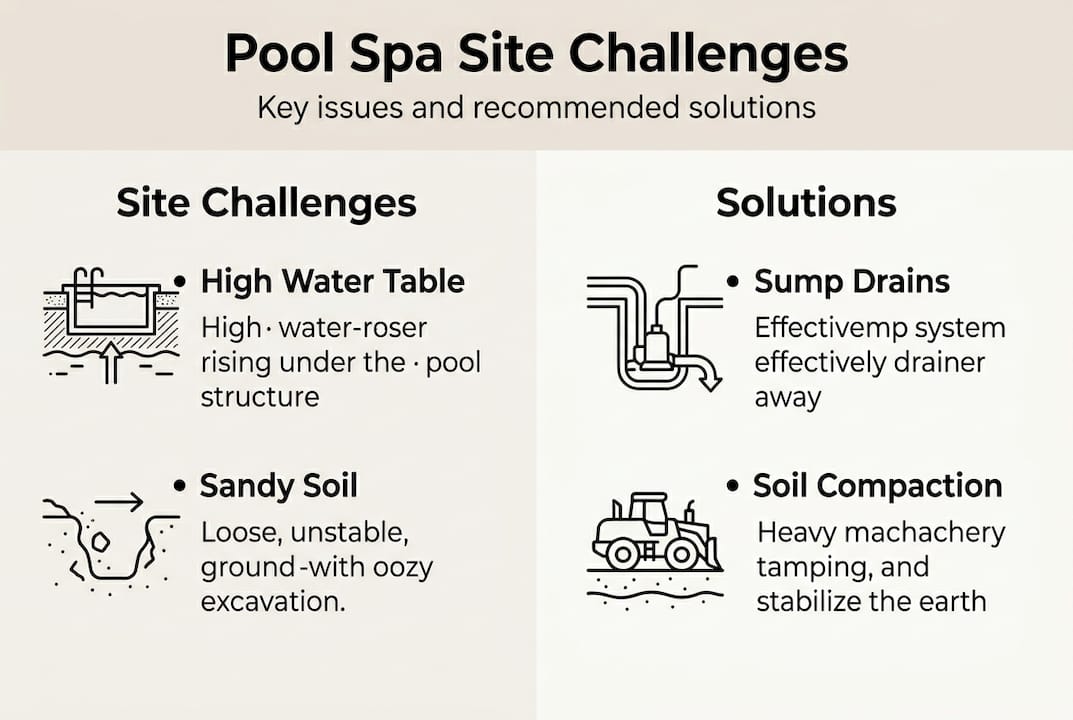
High water table is common throughout much of Central Florida, particularly near lakes, retention ponds, and low-lying areas. When the water table is close to the surface, excavation can flood quickly, and a newly installed spa shell can actually float or shift if not properly anchored. Solutions include installing sump drains to manage groundwater during and after construction, and using reinforced concrete pads to anchor the structure. As noted in pool spa combo discussions, high water table needs sump drains to prevent structural movement.
Sandy soil is another common issue. Sand does not compact the way clay-based soils do, which means it can shift under the weight of a concrete spa shell. An engineer may need to evaluate your soil and recommend compaction methods or soil reinforcement before excavation begins. The Fort Myers spa checklist also flags soil and water table issues as common concerns in this region.
Pro Tip: Before breaking ground, hire a licensed soil engineer to assess your specific lot. A few hundred dollars spent on a soil report can prevent tens of thousands in structural repairs later.
Here is a practical overview of common site challenges, solutions, and rough cost ranges:
| Site challenge | Recommended solution | Estimated cost range |
|---|---|---|
| High water table | Sump drains, anchored shell | $1,500 to $4,000 |
| Sandy or loose soil | Compaction, soil reinforcement | $1,000 to $3,500 |
| Limited yard space | Compact spa design, deck reconfiguration | $2,000 to $6,000 |
| Tree roots or utilities | Root barriers, utility rerouting | $500 to $2,500 |
You should also check for underground utilities, irrigation lines, and tree roots before excavation. Call 811 (the national dig-safe hotline) at least three business days before any digging. Reviewing your planning for new pool spa options early helps you account for these variables in your design and budget. For ideas on how decking can work around challenging spa sites, decking solutions for spa sites offer creative approaches worth exploring.
Choose your spa type and integration method
Having prepped your site, now it is time to select the best spa style and integration approach for your property. The two main options are a spillover spa and a non-spillover spa, and the difference between them goes well beyond aesthetics.
A spillover spa is elevated above the pool and shares water with it. When the spa jets run, water cascades over the edge and into the pool, creating a dramatic visual effect. Because the water is shared, the filtration and chemical balance of both the spa and pool are linked. This design is popular for its resort-style look, but it does come with maintenance trade-offs.
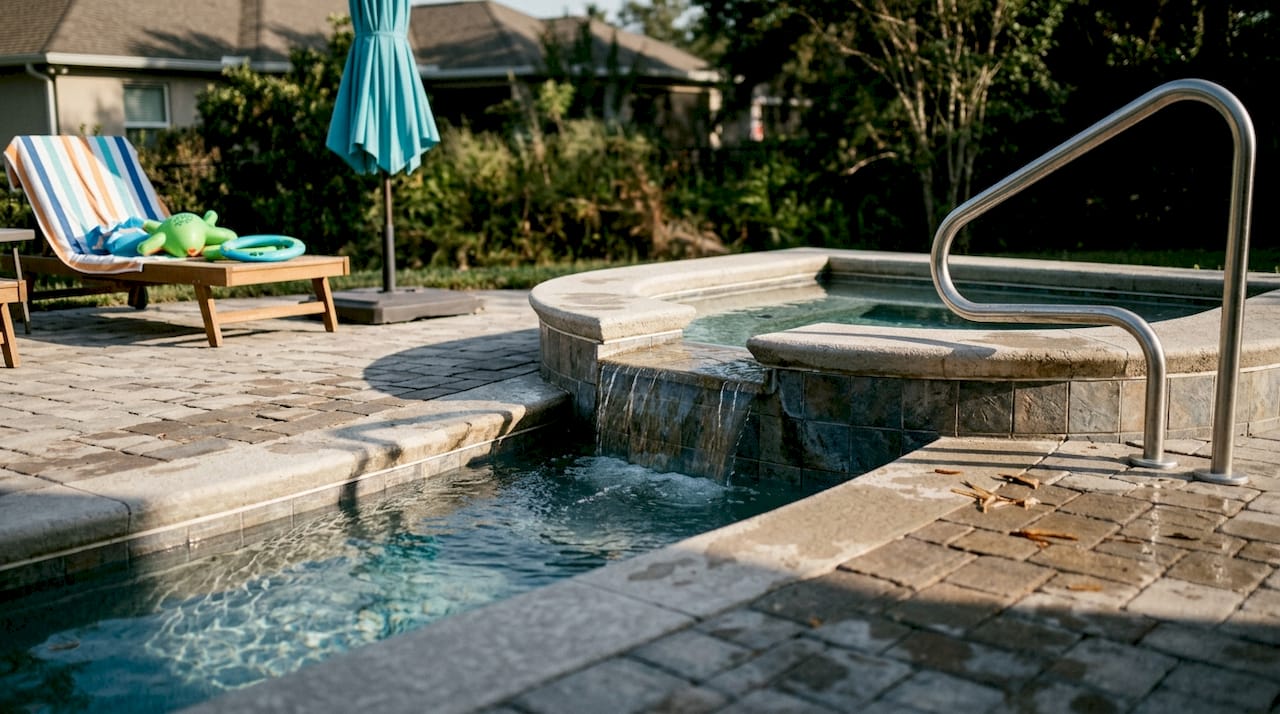
A non-spillover spa keeps the spa water separate from the pool. Water flow between the two is managed through an equalizer hole or a hidden pipe below the waterline, with a plug or valve controlling the connection. According to pool spa combo discussions, non-spillover designs use an equalizer hole or hidden pipe for controlled water flow, which makes chemistry management much easier. Spillover designs can develop clogs from debris and calcium buildup in the cascade channel, requiring regular cleaning of filters and valves.
Pro Tip: If water chemistry balance is a priority for you, choose a non-spillover design. You can treat the spa water independently, which is especially useful if you use the spa at higher temperatures than the pool.
Here is a side-by-side comparison to help you decide:
| Feature | Spillover spa | Non-spillover spa |
|---|---|---|
| Visual impact | High, dramatic waterfall effect | Subtle, clean look |
| Water chemistry | Shared, harder to balance | Independent, easier to manage |
| Clog risk | Higher (debris, calcium) | Lower |
| Equipment cost | Shared equipment, lower initial cost | Separate equipment pad, higher cost |
| Maintenance complexity | Moderate to high | Lower |
To retrofit either design into an existing pool, the general steps are: (1) consult with a licensed contractor on structural feasibility, (2) finalize the spa shell design and placement, (3) plan plumbing and electrical routing, (4) obtain permits, and (5) schedule excavation and installation in coordination with inspections. Learning more about the benefits of pool spa combo designs can also help you decide which style fits your lifestyle and budget best.
Step-by-step installation process
Once you have your chosen spa design and integration method, you are ready to proceed with actual installation. Following these steps in order keeps your project on track and avoids the most common and expensive mistakes.
- Excavation: Mark the spa footprint and dig to the required depth. Call 811 before digging. Manage groundwater with sump pumps if needed.
- Engineering and reinforcement: Install rebar and formwork for the concrete shell. If soil conditions require it, add compaction layers or reinforcement per your engineer’s specifications.
- Plumbing rough-in: Run all water supply lines, return lines, jet lines, and drainage before the shell is poured. Pipe sizing matters here. Undersized pipes reduce jet pressure and strain your pump.
- Electrical rough-in: Install conduit, GFCI breakers, bonding wire, and all wiring for heaters, pumps, and lights. All electrical work must meet NEC (National Electrical Code) requirements for wet locations.
- Spa shell placement: Pour or set the spa shell. For concrete spas, this is gunite or shotcrete application. For fiberglass, the shell is set into the excavated area and leveled.
- Connection to pool and equipment: Connect the spa to the pool’s plumbing and filtration system (for spillover) or set up a separate equipment pad (for non-spillover). Test all connections for leaks before backfilling.
- Inspections: Schedule required inspections at each stage. Do not skip or rush these. As the Fort Myers spa checklist confirms, safety barriers are mandatory and inspections enforce compliance at every stage.
- Finishing: Apply plaster, tile, or pebble finish to the spa interior. Install coping, decking, and any water features.
Safety first: Safety barriers are not optional. They are legally required under Florida law, and no final inspection will pass without them in place.
Common mistakes to avoid during installation:
- Using undersized pipes that reduce jet performance
- Skipping the bonding wire, which is a serious electrical safety hazard
- Failing to pull permits before starting work, which can result in stop-work orders
- Not accounting for the spa’s weight on the surrounding deck and soil
The most common causes of spa installation delays in Central Florida are permitting backlogs and barrier compliance issues. Build extra time into your schedule for both. Reviewing pool installation steps and understanding the inspection process before you start will help you set realistic timelines. Once your spa is running, following a solid maintenance after installation routine keeps everything in top shape.
Expert perspective: Why site prep and local rules matter most
After nearly four decades building pools and spas across Central Florida, we have seen the same pattern repeat itself. Homeowners spend months choosing tile colors, jet configurations, and lighting effects, then rush through permitting and site evaluation. That is where projects fall apart.
The fastest, smoothest spa additions we have been part of all share one thing: the homeowner invested time upfront in smart pool planning before anyone picked up a shovel. They had soil reports done. They called the county permit office early. They understood the barrier requirements before the design was finalized.
“The fastest installations focus more on planning than digging.”
Ignoring a high water table or dismissing sandy soil as a minor issue leads to cracked shells, floating structures, and costly repairs that no warranty covers. Local contractors who work in Central Florida every day know which soil conditions are common in your zip code and which county inspectors look for specific details. That local knowledge is worth more than any online shortcut.
Pro Tip: Build a relationship with your county permit office before you submit anything. A quick phone call to ask about their current review timeline and required documents can shave weeks off your approval wait. Pairing that with pool safety essentials knowledge means you walk into every inspection fully prepared.
Get professional help for your Central Florida pool spa project
Adding a spa to your existing pool is one of the most rewarding upgrades you can make to your Central Florida home, but it is also one of the most detail-intensive. From permits to soil conditions to integration choices, every decision builds on the last.
At R&R Swimming Pools, we have been designing and building custom pools and spas in Central Florida since 1985. Whether you need inspiration from our spa and pool combo ideas, a clear roadmap from our custom pool installation guide, or ongoing support through our Pool School resource, we are here to make your project as smooth as possible. Reach out today for a free evaluation and let our team handle the complexity so you can focus on enjoying the finished result.
Frequently asked questions
Do I need a permit to add a spa to my pool in Central Florida?
Yes, permits are required for building, electrical, and plumbing when adding a spa, and each county in Central Florida has its own specific documentation requirements on top of state minimums.
What are common site challenges when installing a pool spa?
High water tables and sandy soil are the most frequent issues in Central Florida, and you may need sump drains, soil compaction, or engineering solutions to ensure a stable, long-lasting installation.
What’s the difference between a spillover and non-spillover spa?
A spillover spa shares water and filtration with your pool and creates a dramatic cascade effect, while a non-spillover spa keeps water chemistry separate, reduces clog risk, and is generally easier to maintain.
Are safety barriers required for pool spas in Florida?
Yes, Florida law mandates safety barriers for spas to protect children and pets, and inspectors enforce this requirement at multiple stages of the installation process.