
TL;DR:
- Proper drainage and grading are essential to prevent water pooling, foundation damage, and plant bed erosion in Central Florida pool landscapes.
- Choosing native, low-maintenance plants like Muhly grass, coontie, and palmettos reduces debris and care needs, enhancing safety and beauty.
You invest in a pool to create your personal retreat, but then drainage backs up after every rain, your deck burns bare feet at noon, and plants you thought were beautiful start dropping leaves into the water every other day. These aren’t random bad-luck problems. They’re predictable outcomes of landscaping decisions that don’t account for Central Florida’s intense sun, heavy summer storms, and sandy soil. The good news is that each of these frustrations has a straightforward fix, and this guide walks you through every step using region-specific solutions that actually hold up in Florida’s demanding climate.
Table of Contents
- Assess your pool area: Requirements and planning essentials
- Choose the right plants: Florida-native resilience and color
- Upgrade hardscape and decking: Comfort, safety, and style
- Maintenance, storm-readiness, and avoiding common pitfalls
- Step-by-step improvement summary: Putting it all together
- Our perspective: Why drainage is the make-or-break factor in pool landscaping
- Ready for a pool transformation? Next steps and expert help
- Frequently asked questions
Key Takeaways
| Point | Details |
|---|---|
| Fix drainage first | Proper grading and drainage prevent costly problems and extend landscape life. |
| Choose Florida-natives | Native plants lower maintenance and withstand local weather better than exotics. |
| Upgrade decking for safety | Cool, slip-resistant, and well-drained decking improves comfort and prevents accidents. |
| Maintain and storm-proof | Regular maintenance and storm prep keep your poolscape safe and beautiful year-round. |
| Consult experts for major changes | Professional help ensures landscape investments last and add maximum value. |
Assess your pool area: Requirements and planning essentials
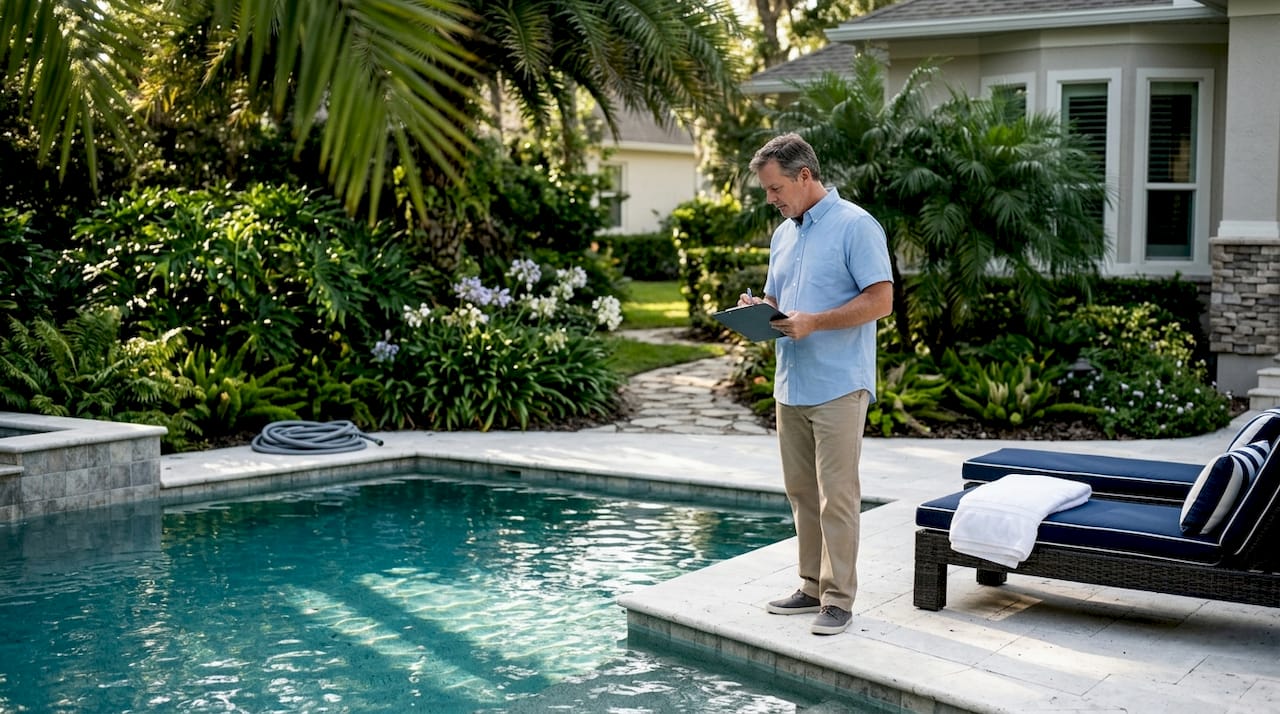
Before you move a single plant or pour a single bag of material, you need to understand what’s actually happening in your yard right now. Skipping this step is the number one reason homeowners repeat the same expensive mistakes.
Start by looking at how water moves across your yard during a rainstorm. Stand at a safe distance and watch where runoff collects, which direction it flows, and whether any of it creeps toward your pool or the foundation of your house. Proper drainage and grading are the true foundation of any successful pool landscape in Central Florida, and getting this wrong affects every other improvement you make.
Next, examine your sun and shade patterns at different times of day. Central Florida’s sun is intense from about 10 a.m. to 4 p.m., and surfaces that are in full sun during those hours will get dangerously hot. Note which areas stay shaded by trees, fences, or your home. Also look at wind direction. Afternoon storms in summer typically come from the southwest, so wind-exposed areas need tougher, lower-profile plants.
Check your soil. Florida’s sandy soil drains quickly in some spots and poorly in others, especially where clay layers exist beneath the surface. Compact areas around the deck can trap water and create soft spots that crack pavers over time.
Here’s a quick-reference table of the essential things to assess before touching your landscape:
| Assessment area | What to look for | Why it matters |
|---|---|---|
| Drainage and grading | Water pooling, soil erosion, runoff direction | Prevents flooding and foundation damage |
| Sun exposure | Hours of direct sun per zone | Guides plant and material selection |
| Wind exposure | Direction and frequency of strong winds | Determines plant durability needs |
| Soil condition | Sandy, clay, or compacted layers | Affects drainage and plant root health |
| Surface condition | Cracks, stains, uneven areas in deck | Identifies safety and maintenance risks |
| Pool type and edge design | Raised bond beam, flush deck, or raised spa | Dictates compatible landscaping styles |
Here’s a practical checklist to document before making any changes:
- Photograph areas where water pools after rain
- Mark shaded vs. full-sun zones at midday
- Note any algae stains on concrete, which signal chronic moisture
- Measure deck slope using a level (you want at least a 1% slope away from the pool)
- Identify tree roots that may affect drainage pipes or pavers
- Record which plants currently drop the most debris into the pool
Pro Tip: Dark stains or algae patches on your deck or surrounding soil are silent warnings. They almost always mean water is sitting there regularly, even if you’ve never noticed active flooding. Fix drainage before you do anything else.
Exploring pool landscaping ideas specific to Central Florida homes and understanding the role of landscaping in pool design can also help you frame your assessment with a clearer design vision. You can also browse a pool landscaping inspiration gallery to see how successful designs look in similar climates.
Choose the right plants: Florida-native resilience and color
With drainage and planning handled, you’re ready to bring color and vibrance to your pool area using smart plant choices. The biggest mistake most homeowners make here is picking plants based purely on looks at the nursery rather than on how they’ll actually behave month after month in Florida heat.
Florida-native plants win every time for pool landscaping. They evolved in this climate, which means they handle drought, tolerate heavy rain, resist most local pests, and require dramatically less care than tropical imports. In fact, low-care ornamentals can reduce your maintenance effort by up to 40% compared to high-maintenance exotic species, freeing you up to actually enjoy your pool instead of constantly tending to the yard around it.
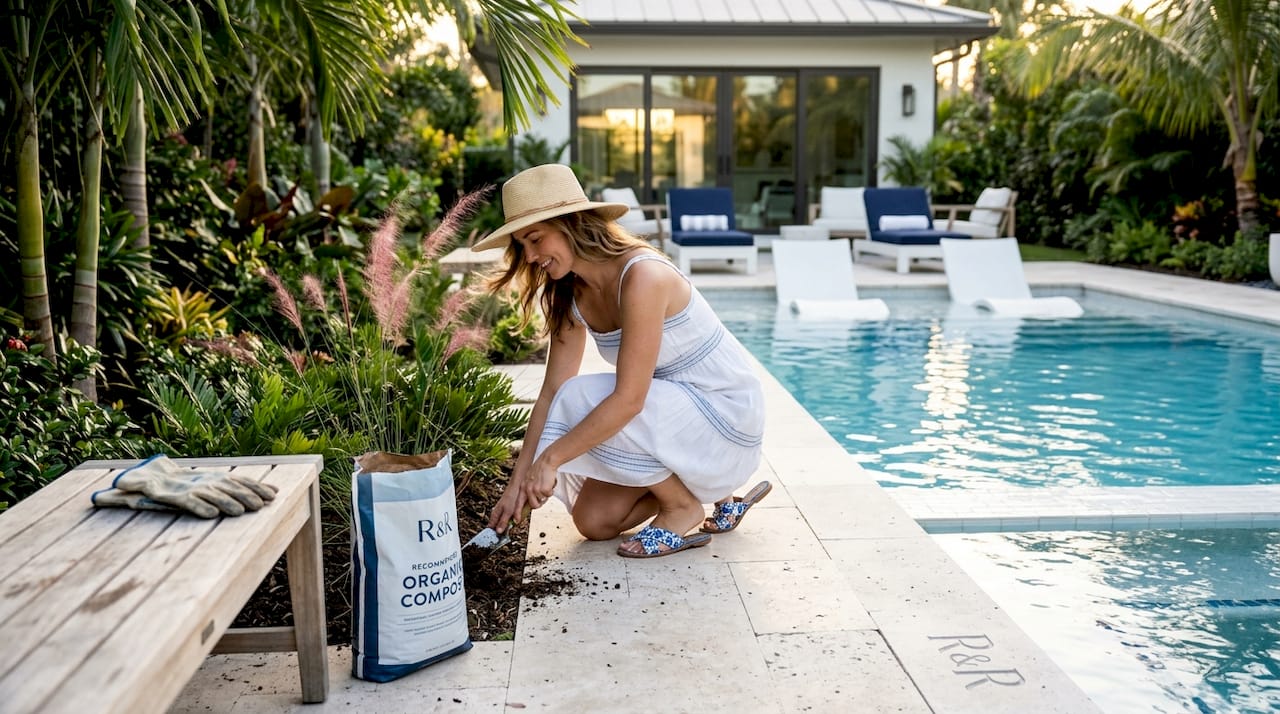
Muhly grass, as highlighted by UF/IFAS Extension, is one of the best pool-area plants available in Florida. It thrives in full sun, needs minimal water once established, and produces stunning pink plumes in the fall that add serious visual impact without a single leaf dropping in the pool. Coontie is another standout. This low-growing native shrub stays compact, handles drought exceptionally well, and holds its form even through summer storms. Native palmettos offer a classic Florida look, tolerate wind better than most palms, and their deep root systems don’t threaten pool plumbing the way large trees can.
Here’s a comparison of top plant choices for Central Florida pool landscaping:
| Plant | Light needs | Maintenance level | Best use |
|---|---|---|---|
| Muhly grass | Full sun | Very low | Border planting, accent rows |
| Coontie | Full sun to partial shade | Low | Foundation planting, mass groupings |
| Sabal palmetto | Full sun | Low | Vertical accent, corner framing |
| Simpson’s stopper | Full sun to partial shade | Low | Privacy hedge, wildlife garden |
| Firecracker plant | Full sun | Low to moderate | Color accent near pool edge |
| Dwarf bougainvillea | Full sun | Moderate | Trellis or container feature |
Common mistakes to avoid when choosing pool plants:
- Selecting messy droppers such as crape myrtles or Brazilian pepper, which shed constantly into pool water
- Planting thirsty species that require irrigation systems near the pool, adding to maintenance and chemical imbalance risk
- Choosing large trees within 10 feet of pool plumbing or the shell
- Using fragrant flowering plants directly poolside, which can attract bees in large numbers
- Ignoring mature size, buying small plants that will eventually crowd the deck or damage hardscape
You can find plenty of real-world pool landscaping examples from Florida homes to inspire your plant placement and design. For broader layout ideas, check these landscape design ideas from experienced professionals.
Upgrade hardscape and decking: Comfort, safety, and style
Landscaping plants are key, but your pool deck greatly impacts safety, style, and maintenance. Florida’s climate is brutal on surfaces: UV radiation fades and degrades materials fast, summer heat turns dark concrete into a hazard, and heavy rain demands surfaces that let water drain quickly.
Follow these steps to evaluate and upgrade your pool deck effectively:
- Walk the deck barefoot at midday to identify dangerously hot zones and note any surface areas that feel slippery when wet.
- Check the slope angle with a carpenter’s level. The deck should pitch away from the pool at roughly 1/8 inch per foot to direct water toward drains rather than back into the pool or toward the house.
- Identify surface cracking or lifting, which indicates substrate movement, tree root pressure, or soil settling that needs correction before resurfacing.
- Choose your upgrade material based on heat, slip resistance, and longevity. Cool deck coatings, textured concrete overlays, and permeable pavers are all strong choices.
- Apply appropriate sealant matched to your surface type. Using the wrong sealant on pavers or stamped concrete can trap moisture and accelerate cracking.
“Florida pool decks face heat and slip risks that homeowners in other states simply don’t encounter at the same intensity. Cool deck approaches and properly drained, textured surfaces are not optional upgrades here. They’re basic safety requirements.”
Cool deck systems use a textured, spray-applied coating that stays significantly cooler than standard concrete under direct sun because the texture creates tiny pockets of air and reflects heat more effectively. Permeable pavers are another excellent option: water flows through the joints between pavers rather than running off in sheets, which naturally manages drainage and reduces slip risk at the same time.
Learn more about your full range of pool decking materials and what each option offers Central Florida homeowners before making a final call.
Pro Tip: Combining a textured surface with correct deck slope gives you a much safer outcome than either fix alone. Texture stops slipping when wet; slope stops water from just sitting there in the first place. Do both.
Maintenance, storm-readiness, and avoiding common pitfalls
Besides the initial improvements, ongoing care and storm readiness are critical for Central Florida pool owners. Florida’s hurricane season runs from June through November, which overlaps perfectly with the peak outdoor living season. That overlap means your maintenance plan and your storm preparedness plan need to be one integrated strategy.
Your routine maintenance checklist for a healthy pool landscape should include:
- Weekly debris removal from beds adjacent to the pool
- Monthly irrigation check to confirm no heads are directing water toward the pool edge
- Quarterly trimming of all plants near the pool to maintain clearance and reduce debris load
- Seasonal inspection of drainage channels, catch basins, and deck slope integrity
- Annual sealant inspection on all hardscape surfaces, reapplying where the coating has thinned
“Neglecting regular trimming is consistently the leading cause of serious debris problems after Central Florida storms. Overgrown branches become projectiles, and storm preparedness starts months before a storm hits, not the day before landfall.”
When a storm is forecast, take these specific steps:
- Trim back any branches within reach of pool equipment or screen enclosures
- Remove all loose furniture, decorations, and planters from the pool area
- Lower your pool water level by about 2 to 3 inches to accommodate heavy rainfall runoff
- Store chemical containers and tools in a secure, waterproof location
Pro Tip: Mulch beds look great, but during a major rain event, mulch can wash directly into your pool and clog your filtration system. Keep mulch depth under 2 inches near pool edges, and create a small gravel or stone buffer zone between mulch beds and the pool surround.
For additional ongoing care strategies, these pool maintenance tips offer detailed guidance for Central Florida conditions, and understanding pool maintenance importance for 2026 can help you stay ahead of seasonal challenges. The patio installation insights resource also has useful advice on maintaining adjacent outdoor surfaces.
Step-by-step improvement summary: Putting it all together
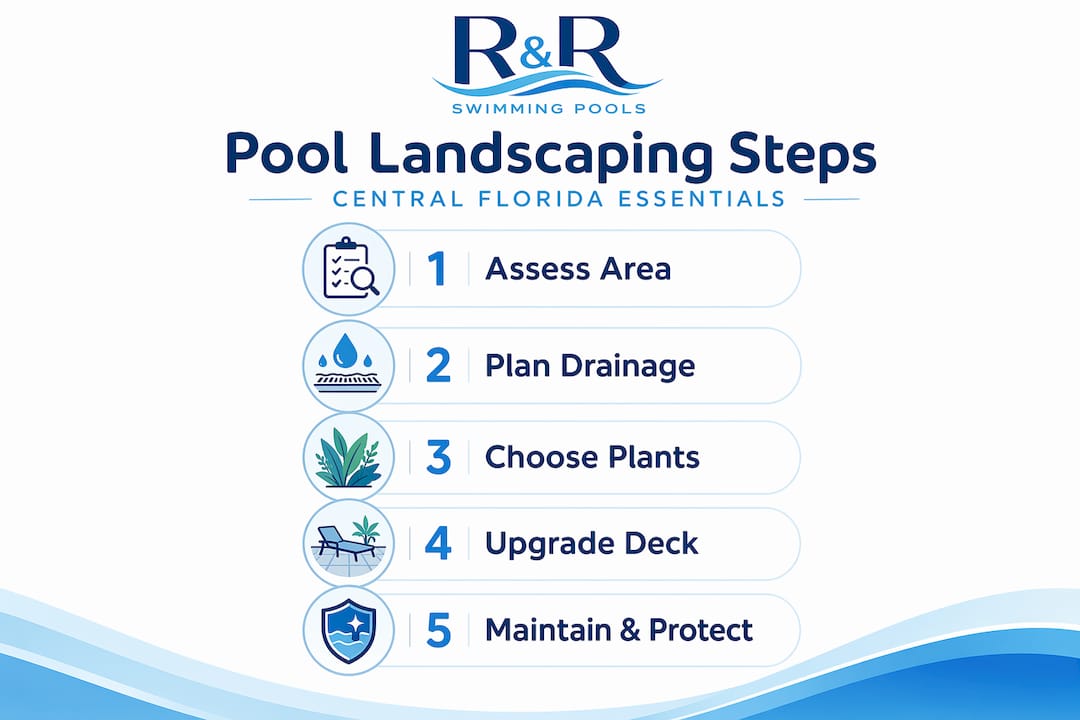
With each core element covered, it helps to organize your action plan and check your progress. Here is the full four-phase improvement roadmap in table form:
| Phase | Key action | Goal |
|---|---|---|
| 1. Assessment | Document drainage, sun, soil, and deck condition | Identify problems before spending money |
| 2. Plant selection | Choose Florida-native, low-debris species | Reduce maintenance and boost visual appeal |
| 3. Hardscape upgrade | Improve deck surface, slope, and drainage | Increase safety and long-term durability |
| 4. Ongoing maintenance | Establish routine and storm-prep schedule | Protect your investment year after year |
Here are your numbered action items for each phase:
- Photograph and map your yard, noting drainage patterns, sun zones, and surface damage
- Research and select a plant palette of at least three Florida-native species suited to your specific light conditions
- Get a professional assessment of your deck slope, then choose an appropriate surface upgrade
- Set calendar reminders for quarterly trimming, monthly irrigation checks, and annual sealant inspection
- Build a storm checklist and review it at the start of every June
As one key point worth repeating: drainage is the hidden factor that determines whether every other improvement succeeds or quietly fails. Even a gorgeous plant palette and beautiful pavers will underperform if grading and water control aren’t handled first. Return to your drainage assessment after every major storm season and adjust as needed.
Tracking how your improvements affect your home’s overall appeal is also worthwhile. Well-executed pool landscaping value in Central Florida is measurable, and getting the fundamentals right makes the difference between a feature that impresses buyers and one that raises concerns.
Our perspective: Why drainage is the make-or-break factor in pool landscaping
After decades of designing and building pools across Central Florida, we’ve watched a consistent pattern play out. Homeowners spend considerable money on beautiful plants, elegant pavers, and creative water features, and then watch those investments quietly deteriorate because the drainage was never properly addressed. It’s the landscaping problem nobody wants to talk about because it’s unglamorous, but it’s the one that causes the most damage.
The reality is that in Central Florida, you’re not just landscaping. You’re managing water. Every heavy afternoon storm drops enormous volumes of rain in short periods, and if your grading doesn’t direct that water away efficiently, you end up with saturated soil around your pool shell, undermined pavers, eroded plant beds, and in serious cases, moisture working toward your home’s foundation. No amount of beautiful plants fixes that.
We always tell clients: drainage planning is the first question any experienced pool and landscape professional asks. Before discussing plant selection or deck finishes, before talking about lighting or water features, the drainage conversation has to happen. Drainage is the hidden determinant of landscaping success, and hardscape and plant selections simply cannot compensate for poor water management.
The other uncomfortable truth is that most homeowners don’t discover drainage problems until something dramatic happens: a cracked slab, a soggy corner that won’t dry out, or a flooded equipment pad after a storm. By then, repairs cost significantly more than prevention would have. Investing in a proper drainage assessment before you make any other landscape change isn’t a cautious approach. It’s actually the bold move, because it protects every dollar you spend afterward.
Ready for a pool transformation? Next steps and expert help
With your improvement strategy in hand, partnering with local experts can ensure your investment delivers lasting beauty and ease.
When it comes to major upgrades like regrading your yard, installing catch basins, resurfacing your deck, or completely reimagining your pool landscape, professional guidance is what separates a result you’ll love for twenty years from one you’ll be fixing in five. At R&R Swimming Pools, we’ve been designing and building custom pools across Central Florida since 1985, and we understand how Florida’s climate demands specific, proven approaches at every stage. Whether you’re starting fresh or updating what you have, our custom pool installation guide walks you through the full process, and our pool remodeling guide covers everything involved in updating an existing pool and its surroundings. You can also explore our complete inground pool installation guide for a detailed look at what a new build involves from start to finish.
Frequently asked questions
What are the best low-maintenance plants for Central Florida pool landscaping?
Muhly grass, coontie, and native palmetto are all excellent choices because they tolerate Florida heat and drought with minimal care, and they don’t drop debris into the pool.
How can I prevent standing water or flooding around my pool?
Make sure your landscape slopes away from the pool and the house, and install drainage solutions such as catch basins or French drains where needed. Correct grading and drainage design are the most effective long-term solutions.
What’s the safest decking for Florida pools?
Textured cool deck coatings, permeable pavers, and surfaces with anti-slip finishes are the safest options. Cool deck systems and permeable surfaces reduce heat and slip risk significantly better than standard concrete.
How do I make my pool landscaping more storm-resistant?
Trim plants regularly, remove all loose items before storms hit, and choose wind-tough, deep-rooted native species. Storm preparedness and consistent trimming are the most effective defenses against post-storm debris and damage.
How much value can improved pool landscaping add to my Central Florida home?
Strategic pool landscaping can boost home value by as much as 15% in Central Florida, making it one of the highest-return outdoor improvements available to homeowners.
