
TL;DR:
- Pool automation in Central Florida has evolved into a sensor-driven, integrated system that manages equipment, chemistry, and lighting automatically year-round. Proper installation requires permits, compatibility planning, and professional involvement to ensure safety and full functionality. Homeowners should approach automation holistically with future-proof systems and trusted contractors for the best long-term value.
Most Central Florida homeowners picture a basic remote when they hear “pool automation.” Maybe a wall switch that turns the pump on from the couch. The reality in 2026 is far more interesting. Modern pool automation means a centralized, sensor-driven system that automatically coordinates your filtration, heating, lighting, sanitation, and valves based on real-time data and programmed schedules. This guide walks you through every layer of that technology, from hardware basics and what gets controlled, to compatibility challenges, Florida’s permitting rules, and how to make smart decisions that add genuine long-term value to your home.
Table of Contents
- What pool automation means in 2025
- Key features: What pool automation actually controls
- Compatibility and upgrades: What homeowners must know
- Installation and code: Florida requirements for pool automation
- Why true pool automation is more than just smart controls
- Ready to automate? Start with the right partners
- Frequently asked questions
Key Takeaways
| Point | Details |
|---|---|
| Modern pool automation scope | Pool automation now integrates sensors and remote controls to coordinate pumps, heating, lighting, and chemistry for maximum convenience. |
| Equipment compatibility matters | Not all pools are automation-ready, and you may need upgrades or special modules for older equipment to work with 2025 systems. |
| Compliance is essential | In Florida, hiring licensed pros and getting permits is critical for safety, warranty, and legal reasons. |
| True automation is holistic | Simply adding remote controls isn’t enough; the best systems create a seamless, proactive pool experience. |
What pool automation means in 2025
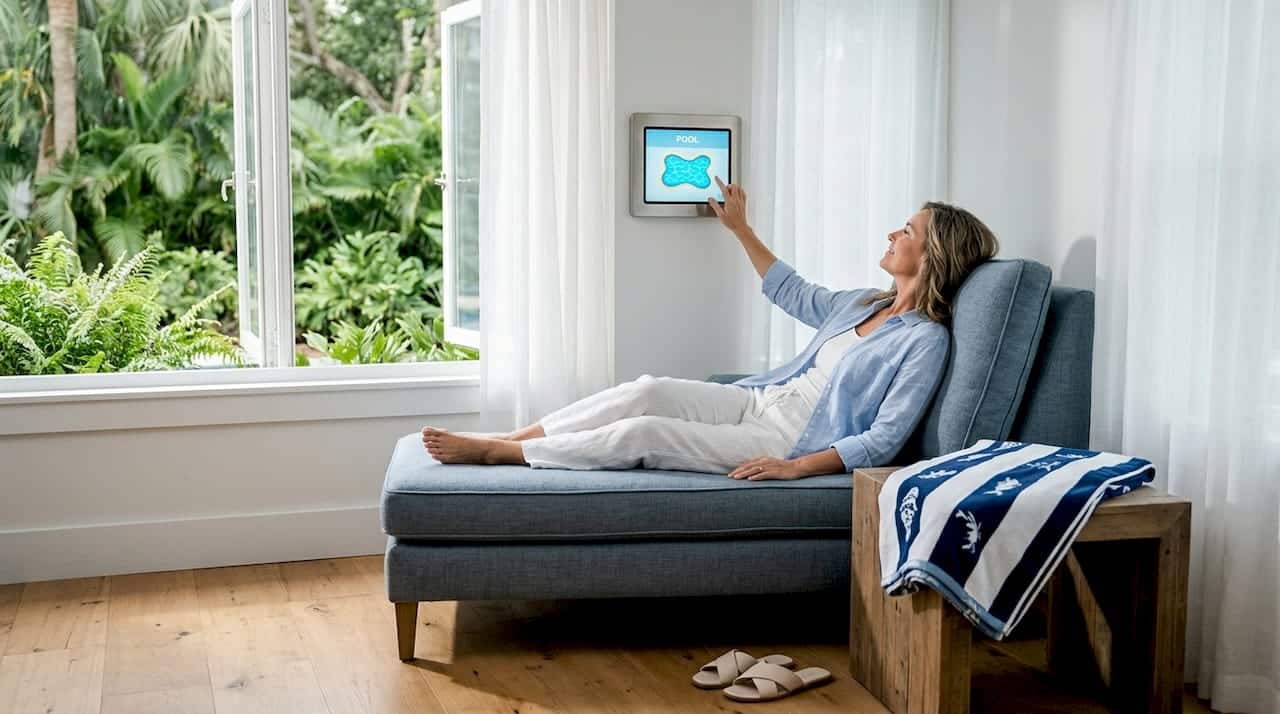
Pool automation has moved well past timers and remote controls. Think of it less like a TV remote and more like a smart home hub dedicated entirely to your pool and spa. The brain of the system is a dedicated controller panel, often featuring a touchscreen display, that communicates with every major piece of equipment in your equipment pad.
A typical 2025 architecture uses a dedicated controller with touchscreen and app connectivity, plus relays and outputs that switch high-voltage equipment while sensors feed live data into the automation logic. That means your pump, heater, lights, and valves are not just receiving on/off commands. They are responding to actual water temperature readings, time-of-day programming, and even energy pricing signals through smart scheduling.
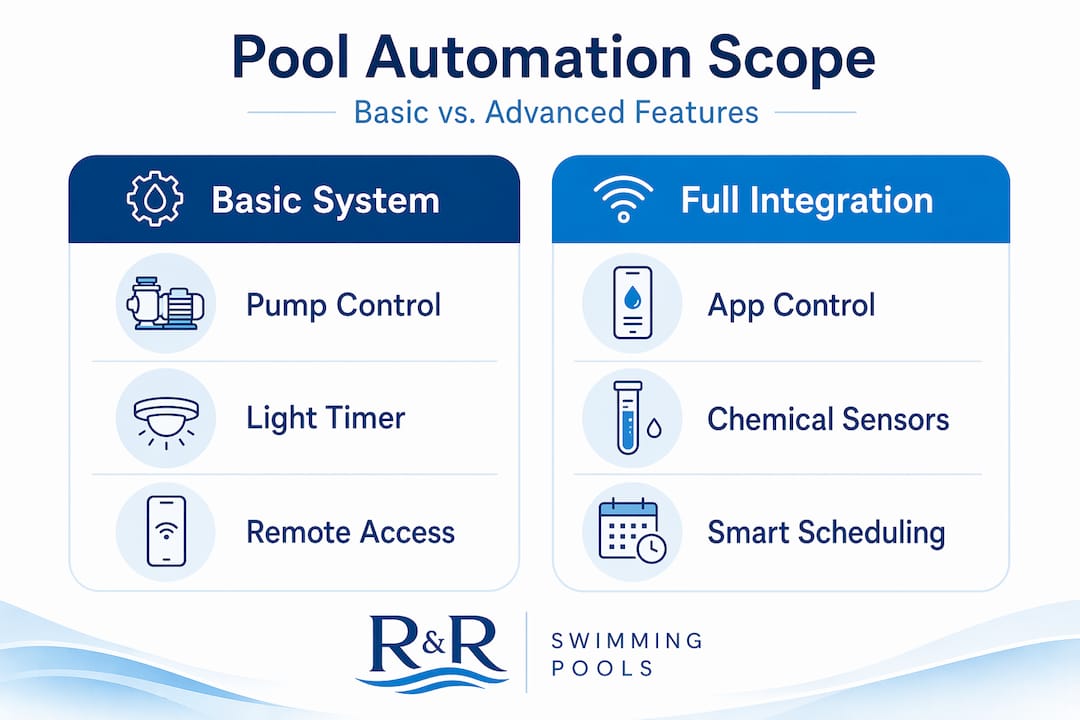
Here is a quick look at how entry-level, mid-range, and fully integrated systems compare:
| Feature | Basic system | Mid-range system | Full integration |
|---|---|---|---|
| App/remote control | Yes | Yes | Yes |
| Scheduling | Basic timers | Multi-program | Dynamic/sensor-driven |
| Chemistry monitoring | No | Partial (pH) | pH, ORP, chlorine |
| Energy management | Limited | Variable speed pump | Full demand optimization |
| Spa/pool valve control | Manual | Automated | Fully automated |
| Voice assistant support | No | Sometimes | Yes |
One of the biggest wins Central Florida homeowners get from energy-saving automation is variable-speed pump scheduling. By running the pump at lower speeds during off-peak hours, many homeowners cut pool-related electricity costs by 30 to 70 percent compared to traditional single-speed pump operation.
Key components found in a modern automated pool system include:
- Central controller panel with touchscreen or keypad interface
- Mobile app for iOS and Android remote access
- IoT (Internet of Things) connectivity for integration with smart home platforms like Amazon Alexa or Google Home
- Relay boards and output modules that switch high-voltage equipment safely
- Sensors for water temperature, pH, ORP (oxidation reduction potential, a measure of sanitation strength), and flow
- Variable-speed pumps that respond to automation commands
- Smart lighting drivers for color and scene control
Central Florida’s year-round swim season makes every one of these features worth considering. You are not running your pool four months a year. You are running it twelve months a year, which means the efficiency gains and convenience payoffs add up fast.
Key features: What pool automation actually controls
Once the controller is in place, the list of things it can manage is longer than most homeowners expect. Automation systems manage pump and heater control, lighting schemes, valve actuation for pool/spa switching, and sensor-driven monitoring such as water temperature and chemistry including pH, ORP, and free chlorine, all accessible through app-based remote control.
Here is a numbered breakdown of the main functions, explained in plain terms:
- Filtration pump control. The pump runs on a programmed schedule, often synced with utility off-peak hours. Variable-speed pumps slow down or speed up based on demand, cutting energy use significantly.
- Heater management. Your heater activates only when water temperature drops below your set point. No more manually firing up the heater an hour before a swim.
- Lighting scenes. LED pool lights can shift through colors and preset scenes. Want soft white for a quiet evening and vivid color for a party? Both are a single tap away.
- Valve actuation. Automated valves redirect water between your pool and spa, eliminating the manual valve-turning process that is easy to forget or get wrong.
- Chemical dosing. Advanced systems integrate liquid chlorine feeders or salt chlorine generators, dosing automatically based on ORP sensor readings. This keeps your sanitizer level stable without daily manual testing.
- pH control. pH sensors trigger acid feed pumps to keep pH within the ideal 7.4 to 7.6 range automatically, protecting your equipment and swimmer comfort.
- Spillover and water feature control. Waterfalls, bubblers, and deck jets can all be activated on schedules or triggered remotely.
Pro Tip: You do not have to automate everything at once. A phased upgrade approach lets you start with pump scheduling and lighting control, then add chemistry monitoring and spa automation as your budget allows. Each phase adds standalone value and builds toward a fully integrated system over time.
The sensors are what separate true automation from basic remote control. A pH sensor and ORP sensor working together give your system a real picture of water chemistry, allowing it to react before your pool goes out of balance rather than after you notice cloudy water. For Central Florida homeowners dealing with heavy rainfall that dilutes chemicals and intense UV exposure that burns off chlorine quickly, proactive sensor-driven dosing is a genuine game-changer.
Compatibility and upgrades: What homeowners must know
Here is where things get practical. Not every piece of pool equipment can slot into an automation system without some preparation. Brand compatibility, communication protocols, and equipment age all influence what is possible and how much work is involved.
Homeowners may need relays, modules, or equipment upgrades to achieve full automation functionality. This is especially true for older equipment that pre-dates modern communication standards.
Common compatibility scenarios you should be aware of:
- Older single-speed pumps cannot be speed-controlled by automation. You can still schedule them on/off, but to get variable-speed efficiency, you will need to upgrade to a compatible variable-speed model.
- Non-communicating heaters may need a relay module to allow automation control. Many heaters from the 1990s and early 2000s fall into this category.
- Basic light fixtures that predate LED technology cannot be color-controlled. Swapping to LED fixtures is usually straightforward and dramatically expands your automation options.
- Existing chlorinators may need an interface module or replacement to allow automated chemical dosing.
- Older valve actuators sometimes use different voltage standards. Your contractor will test these before assuming they are compatible.
Pro Tip: Before purchasing any automation package, ask your contractor to audit your existing equipment list and map out which items communicate natively with the controller, which need modules, and which require replacement. That audit saves you from surprises mid-project.
“The most common mistake we see is homeowners buying a top-tier controller and then discovering their existing pump, heater, and lights all need to be replaced before they can take full advantage of it. Compatibility planning up front is not optional.”
The good news is that a phased upgrade plan works beautifully for most Central Florida pools. Many contractors will install the controller and automate what is already compatible, then help you upgrade remaining equipment over one or two seasons. This approach spreads the cost without sacrificing the core convenience you want immediately.
When evaluating systems, also consider the controller brand ecosystem. Some major brands have a tightly integrated ecosystem where their pumps, heaters, and lights all communicate natively with the controller using a shared data bus. Mixing brands can work but often requires additional interface devices and can complicate troubleshooting later. Staying within a single manufacturer’s ecosystem is not always possible or necessary, but it simplifies the setup considerably.
Installation and code: Florida requirements for pool automation
This is the section most homeowners skip over and later regret. Installing pool automation is not like setting up a smart thermostat. Florida’s regulatory environment means that certain parts of the installation require licensed professionals, permits, and inspections.
Florida pool automation projects can trigger permitting and licensing constraints, especially when electrical circuits, panels, bonding, grounding, or new wiring is involved. Unpermitted work creates compliance risks and can void equipment warranties.
Low-voltage control wiring and high-voltage switching are both part of automation installations. Faults and maintenance boundaries can determine whether a licensed pool/spa contractor or a licensed electrical contractor must be involved, and sometimes both are needed.
Here is a step-by-step view of how a properly managed automation installation unfolds in Central Florida:
- Initial site assessment. A licensed contractor reviews existing equipment, wiring, and the equipment pad layout. They document what is compatible and what needs upgrading.
- Permit application. If new electrical circuits, sub-panels, or significant wiring changes are required, a permit is pulled from the local building department before work begins.
- Equipment procurement. The controller, modules, sensors, and any replacement equipment are ordered and delivered.
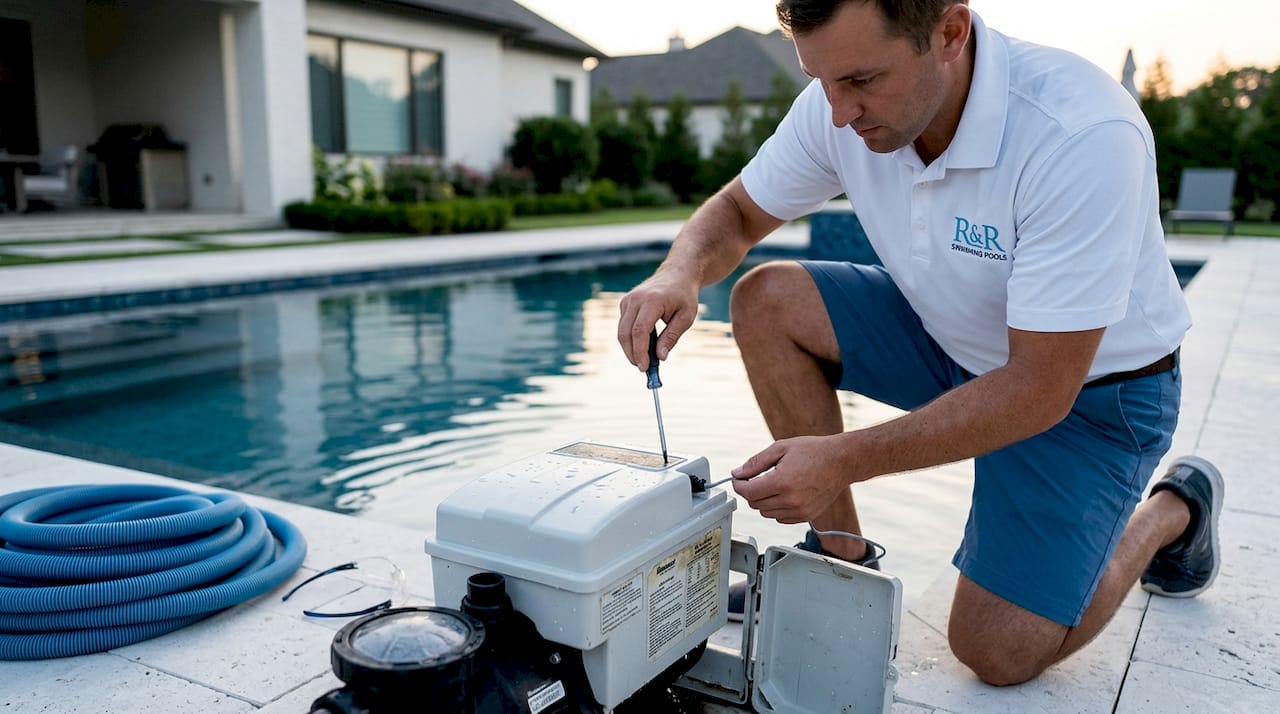
- Controller panel installation. The panel is mounted at the equipment pad, connected to the relay board, and wired to each controlled device. Low-voltage sensor wiring runs separately from high-voltage lines.
- Bonding and grounding verification. Florida electrical codes require proper bonding and grounding of pool equipment. Any changes to the equipment pad must maintain these safety standards.
- Programming and commissioning. The contractor programs schedules, sensor parameters, and app connectivity. You walk through the system together so you understand how to use it.
- Inspection. A building inspector verifies that permitted electrical work meets code before the project is officially closed out.
Understanding Central Florida pool permits is worth your time before any project starts. Our permitting guide covers the specifics for Orange, Seminole, Osceola, and surrounding counties, because requirements vary more than most people realize. When you are ready to evaluate contractors, knowing how to approach hiring pool contractors the right way protects your investment and keeps your project on schedule.
“Unpermitted electrical work at a pool can create liability issues that surface during a home sale inspection. Always pull the permit.”
Skipping the permit process to save time or money is a short-term decision with long-term consequences. Insurance claims can be denied, home sales can stall, and in some cases, you can be required to remove and redo the work entirely. The permit process exists to protect you, and with an experienced contractor managing it, the process is straightforward.
Why true pool automation is more than just smart controls
After nearly four decades working with Central Florida homeowners on custom pools, we have observed a clear pattern: the people who get the most out of automation are not the ones who bought the fanciest controller. They are the ones who thought about integration before they thought about features.
The difference between a remote-controlled pool and a truly automated pool is not the app. It is whether your systems talk to each other and respond to reality. A remote control lets you tell your heater to turn on. A true automation system monitors water temperature, knows you typically swim at 6 p.m. on weekdays, and starts the heater at 4 p.m. automatically so the water is already perfect when you arrive. That shift from reactive to proactive is what changes the ownership experience.
We also see homeowners get caught in a gadget trap: buying a smart lighting controller here, a standalone chemical feeder there, and a separate pump timer somewhere else. Each device has its own app. None of them talk to each other. The result is more complexity, not less. That is the opposite of what automation should deliver.
Our strongest advice is to plan your automation system holistically from the beginning, even if you install it in phases. Decide on your central controller platform first, then select all other equipment to be compatible with that platform. This single decision prevents most of the compatibility headaches we described earlier and gives you a clear upgrade roadmap for the future.
Future-proofing matters too. The platforms that support open integration standards today will absorb new sensor types, new voice control ecosystems, and energy management features as they emerge. Choosing a closed or proprietary system might feel fine today but limit your options in five years.
Ready to automate? Start with the right partners
Building a smart pool in Central Florida is an exciting project, and getting the details right from the start makes all the difference.
At R&R Swimming Pools, we have been designing and building custom inground pools across Central Florida since 1985, and automation is now a core part of nearly every project we deliver. Whether you are planning a new build or upgrading an existing pool, our team can walk you through every option available. Explore the full range of custom pool features we offer, brush up on water chemistry and system basics through our Pool School, or dig into the details of the inground pool installation process so you know exactly what to expect. Reach out today to schedule your free consultation and let’s design a backyard you will use every single day of the year.
Frequently asked questions
How much does pool automation typically cost in 2026?
Basic automation packages start around $1,500, but fully integrated systems with app control, sensors, and advanced features may exceed $5,000 including installation. The scope of compatible equipment upgrades is the biggest variable in total project cost.
What pool equipment can be automated in 2026?
Filtration pumps, heaters, lighting, sanitation systems including chlorine generators and chemical dosing, and pool/spa valves are all commonly automated in modern systems.
Do I need a permit to install pool automation in Florida?
A permit is usually required if the automation involves new electrical wiring or panels. Always check with your local building department before any work begins.
Can I automate an older pool or does it need upgrades?
You can usually automate older pools, but you may need to add relays or modules or replace specific equipment to achieve full functionality with a modern controller.
Who should install a pool automation system in Central Florida?
A licensed pool or electrical contractor with automation experience should manage the installation. Because automation spans low and high-voltage wiring, some projects require both a pool/spa contractor and a licensed electrician working together.