
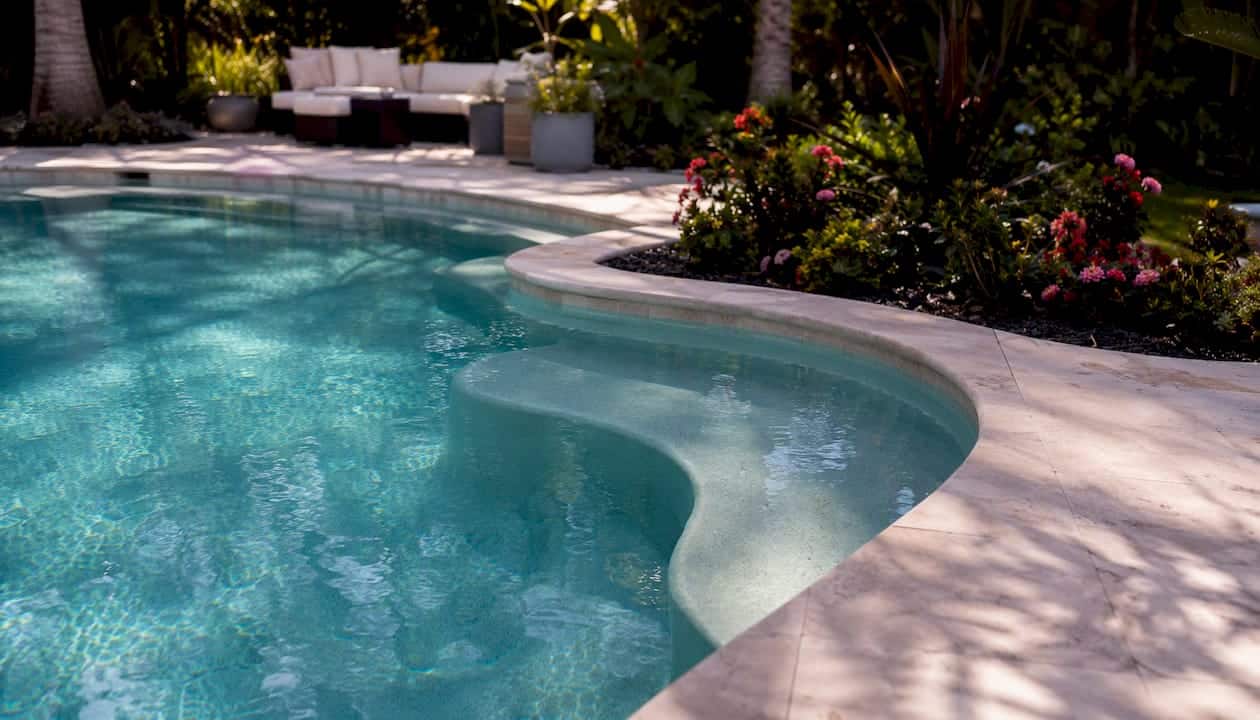
For most homeowners, an integrated tanning ledge or built-in concrete bench gives the best combination of comfort, resale value, and long-term durability. Both options align with 2021 ISPSC code requirements for slip-resistant surfaces and count as approved pool entries and exits. If you’re planning a new build or a scheduled resurfacing, this is the moment to add permanent seating at the lowest incremental cost.
Your clearest next steps:
- New build: Tell your pool designer you want a tanning ledge or integrated bench during the design phase, before the shell is poured or molded.
- Existing pool: Schedule a site visit with a licensed installer to assess whether a retrofit bench or bolt-on swimout fits your shell type and budget.
- Tight budget: Price removable in-pool chairs or stools for your tanning ledge first. They cost a fraction of structural work and can be added any time.
Key Takeaways
Integrated tanning ledges and built-in concrete benches give most homeowners the best return on comfort, safety compliance, and resale value when planned during a new build or scheduled resurfacing.
| Point | Details |
|---|---|
| Best overall choice | A tanning ledge or integrated bench offers the strongest mix of comfort, code compliance, and resale value. |
| Timing saves money | Adding structural seating while the pool is drained for other work is significantly cheaper than a standalone retrofit. |
| Code requirements apply | The 2021 ISPSC requires slip-resistant surfaces on all underwater seats and benches; hire a licensed contractor for permanent installs. |
| Removable chairs are low-risk | Prefab in-pool chairs for tanning ledges add seating without structural work and can be added or changed at any time. |
| Randrswimmingpools | Randrswimmingpools offers custom bench and tanning ledge installations for new builds and renovations across Central Florida. |
Table of Contents
- What are the main types of pool bench seating?
- How do the seating types compare?
- What should you know before installing permanent in-pool seating?
- What materials last longest, and how do you maintain them?
- What do pool bench seating options typically cost, and how long do they take?
- How do you choose the right seating and vet a contractor?
- When can you DIY, and when should you hire a pro?
- What to expect when working with a local pool builder
- The seating choice that actually matters most
- Randrswimmingpools builds bench seating that fits your pool and your backyard
- Sources
What are the main types of pool bench seating?
Pool bench seating covers a wider range than most homeowners expect, from furniture you drop in and pull out to concrete structures built into the shell itself. Here’s how each category works and where it fits best.
Built-in concrete bench or swimout. Poured as part of the pool shell on concrete pools, these are wide ledges (typically 18–24 inches deep) set at a comfortable sitting depth, usually 18 inches below the waterline. They’re permanent, fully integrated, and the most durable option available. Ideal for entertaining pools and family pools where adults want to sit in the water while supervising kids.
Tanning ledge (sun shelf). A shallow, flat platform, usually 6–12 inches deep, built into one end of the pool. It’s technically a seating and lounging surface rather than a submerged bench, but it functions as the most-used “seat” in most residential pools. Works in concrete, fiberglass, and vinyl-liner pools. Fiberglass shells often come with a molded tanning ledge already included.
Bolt-on swimout. A prefabricated unit that attaches to the pool wall, typically used in vinyl-liner or fiberglass pools where cutting into the shell for a full structural bench isn’t practical. Less expensive than a full rebuild, but the attachment hardware must be stainless steel to resist corrosion, and the liner must be cut and re-sealed around it precisely.
Vinyl-liner framed bench. For vinyl-liner pools, benches are usually framed in polymer or steel before the liner is fitted, then the liner is cut and wrapped around the frame. Adding steps or benches to a vinyl-liner pool is straightforward during a liner replacement but significantly more involved as a standalone retrofit.
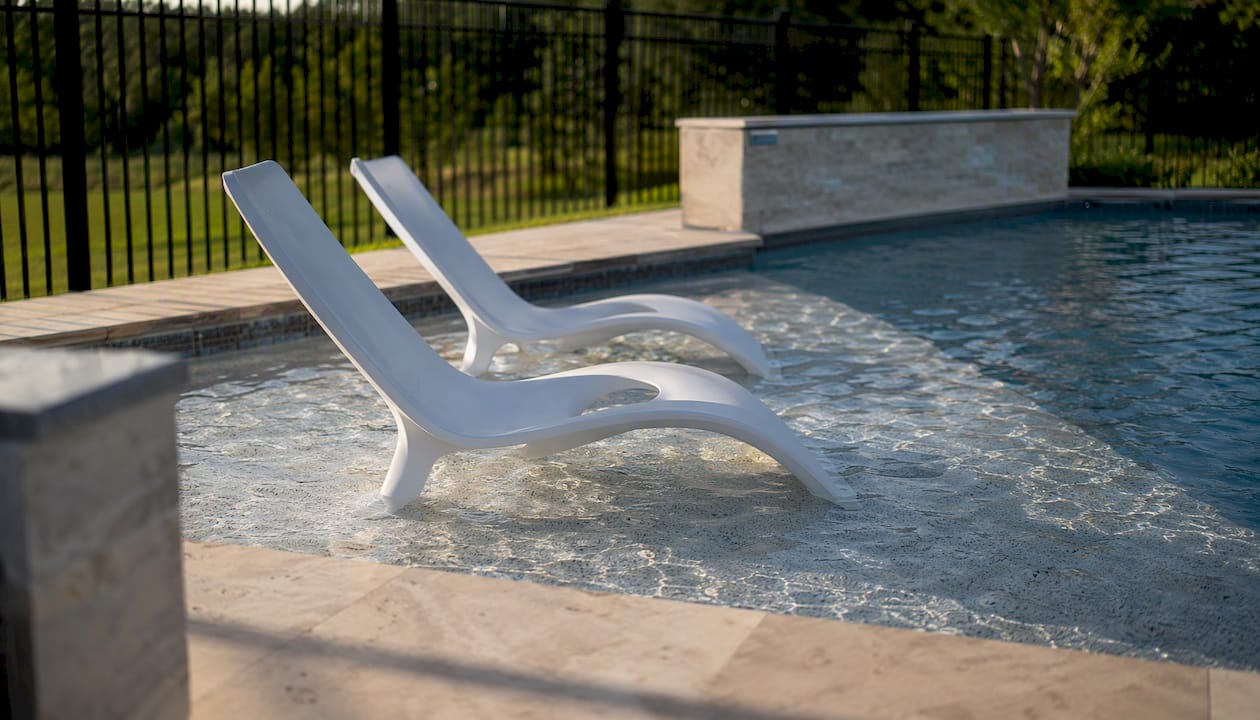
Removable in-pool chairs and stools. Off-the-shelf products designed to sit on tanning ledges or sun shelves. Prefab in-pool seats are gaining traction because they add seating for entertaining without any structural work. You place them, use them, and store them off-season.
Swim-up dining bench. An integrated bench built into the pool wall, often semi-circular or U-shaped, paired with an in-pool table. Swim-up dining configurations typically include a bench with a back and additional stools for higher seating capacity. Best suited to larger concrete pools with dedicated entertaining zones.
Poolside and stock-tank benches. Freestanding outdoor furniture placed at the pool edge, or curved cedar benches built to surround stock-tank pools. Cedar curved bench products for stock tanks run roughly 22 inches deep and are sized to fit 6-, 8-, 9-, or 10-foot tanks. No structural work required.
How do the seating types compare?
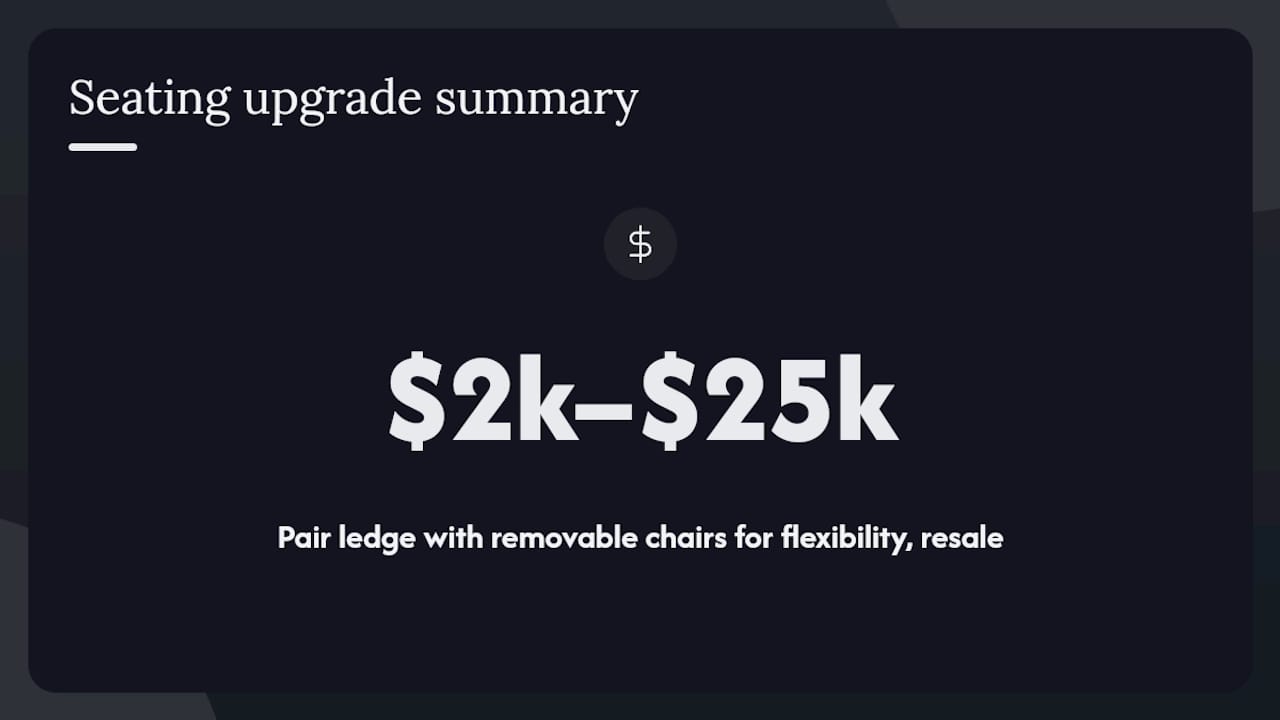
Tanning ledges and in-pool furniture fall into what renovation guides classify as a “lifestyle” upgrade tier, with example costs ranging $2,000–$25,000 depending on scope and structural complexity.
Pro Tip: For resale value and family use, a tanning ledge paired with two or three removable in-pool chairs gives you the most flexibility. You get a permanent feature that photographs well and appeals to buyers, plus seating you can reconfigure for parties or store when not needed.
What should you know before installing permanent in-pool seating?
Timing is everything with structural seating. Adding a built-in bench or swimout during a new build costs a fraction of what the same work costs as a standalone retrofit, because the pool is already open, the contractor is already mobilized, and there’s no need to drain and re-seal a finished shell. Pairing a bench installation with a scheduled resurfacing or plumbing upgrade follows the same logic and is significantly more cost-effective than treating it as a separate project.
Before any permanent seating goes in, a licensed installer should work through this checklist:
- Bench footprint and placement. Confirm the bench doesn’t conflict with the diving envelope, skimmer lines, or return jets. Swimouts and built-in benches must be placed where they won’t obstruct circulation.
- Seat height and depth. A comfortable submerged bench sits below the waterline at a depth that balances sitting comfort and ease of standing up.
- Slip-resistant surfaces. The 2021 ISPSC requires slip-resisting surfaces on all treads for underwater seats, benches, and swimouts. Textured tile, exposed aggregate, or non-slip coatings all qualify. Smooth plaster on a bench seat is a code and safety issue.
- Liner or finish coordination. On vinyl-liner pools, the bench frame must be set before the liner is fitted. On concrete pools, tile or plaster must wrap the bench continuously to prevent water infiltration at seams.
- Plumbing and lighting. If you want a light near the bench or a return jet positioned for comfort, those lines need to be roughed in before the shell is finished. Retrofitting plumbing after the fact is expensive.
- Permits. Most jurisdictions require a permit for structural pool modifications. Confirm with your local building department before work starts.
The Randrswimmingpools pool safety guide for Central Florida homeowners covers local code considerations and seasonal factors that affect installation timing in the region.
What materials last longest, and how do you maintain them?
Material choice shapes both your maintenance schedule and your long-term costs. Here’s how the main options stack up:
- Concrete with tile. The most durable combination for in-pool benches. Tile resists UV, chlorine, and saltwater well. Grout needs inspection once a year and repointing every few years depending on water chemistry. Avoid dark-colored grout in high-sun environments; it fades unevenly.
- Fiberglass molded benches. Factory-finished and non-porous, so algae has less to grip. Cleaning is straightforward: brush weekly and check for gel-coat crazing every few years. Saltwater and UV exposure are generally well-tolerated.
- Vinyl-liner framed benches. The liner itself is the maintenance item. Inspect it at every liner change for cuts, wrinkles at the bench seam, and fading. A liner that fits poorly around a bench frame is a leak waiting to happen.
- Stainless steel hardware (bolt-on units). Use 316-grade stainless for any hardware in contact with pool water. Lower grades corrode in saltwater pools within a few seasons.
- Cedar or composite for poolside benches. Cedar needs an annual application of a UV-blocking sealant to prevent graying and cracking. Composite (PVC-based or capped composite) requires almost no maintenance beyond rinsing, but costs more upfront.
For Central Florida pools specifically, UV exposure is intense year-round. Florida pool design considerations favor lighter-colored tile and composite materials that don’t absorb heat or fade as quickly as darker finishes.
Pro Tip: In saltwater pools, apply a penetrating silane-siloxane sealer to concrete bench surfaces every two to three years. It reduces chloride absorption into the concrete and extends the life of the finish noticeably, especially in high-UV climates.
What do pool bench seating options typically cost, and how long do they take?
Cost ranges vary by seating type, pool shell, site access, and whether structural or plumbing work is involved.
When requesting bids, give contractors these details so quotes are comparable:
- Pool type (concrete, fiberglass, vinyl liner) and approximate age
- Desired bench location, dimensions, and water depth at that point
- Whether plumbing or lighting changes are needed
- Finish preference (tile type, plaster color, composite grade)
- Whether you’re combining the bench work with other scheduled work (resurfacing, liner replacement, plumbing)
How do you choose the right seating and vet a contractor?
Start with your pool type and how you actually use the pool, then work outward to budget and maintenance appetite.
Decision framework:
- Concrete pool, new build or resurfacing: Go integrated. A built-in bench or tanning ledge costs the least relative to its value when the pool is already open.
- Fiberglass pool: Check whether the shell already has a molded tanning ledge. If not, a bolt-on swimout or removable chairs are the practical options without major structural work.
- Vinyl-liner pool: Time any framed bench or step addition to coincide with a liner replacement. Doing it mid-liner-life means cutting and re-sealing, which adds cost and risk.
- Tight budget or rental property: Removable in-pool chairs on an existing tanning ledge are the lowest-risk, lowest-cost path to added seating.
- Entertaining focus: A swim-up dining bench or U-shaped integrated bench is worth the investment if you host regularly. Budget $5,000 and up and plan it into a new build.
Red flags in contractor bids:
- No mention of permits for structural work
- Vague finish specs (“tile TBD” or “standard plaster”)
- No warranty on labor or materials
- Missing references to slip-resistance requirements or code compliance
- Payment schedule that front-loads more than 30–40% before work begins
Questions to ask every contractor:
- Do you pull permits for structural bench or swimout installations?
- Can you show me photos of similar bench installations you’ve completed?
- What warranty do you offer on the bench structure and finish?
- How do you coordinate the bench work with the liner or plaster finish?
- What’s your timeline from contract to completion, and what causes delays?
- Are you licensed and insured in Florida?
The Randrswimmingpools custom pool planning guide walks through how to structure a design conversation with a contractor and what to bring to a first site visit.
When can you DIY, and when should you hire a pro?
| Task | DIY reasonable? | Skills/tools needed | Hidden cost if done wrong |
|---|---|---|---|
| Removable in-pool chairs/stools | Yes | None | None |
| Poolside cedar bench assembly | Yes | Basic carpentry, drill | Low |
| Bolt-on swimout installation | Marginal | Liner cutting, stainless hardware, waterproofing | Liner leak, voided warranty |
| Vinyl-liner framed bench | No | Structural framing, liner fitting | Liner failure, water damage |
| Built-in concrete bench | No | Concrete forming, tile work, plumbing | Structural failure, code violation |
| Swim-up dining bench | No | Full pool construction skills | Structural failure, permit issues |
The safety case for hiring a pro on permanent work is straightforward. A bench with inadequate slip resistance, wrong seat depth, or poor waterproofing at the liner seam creates real injury and leak risk. The 2021 ISPSC code treats underwater seats and benches as pool entries and exits, which means they’re subject to the same structural and surface requirements as steps and ladders. Getting that wrong on a DIY project can trigger a failed inspection and a mandatory tear-out.
Pro Tip: The best low-risk DIY upgrade that still looks intentional: add a set of quality resin in-pool chairs to an existing tanning ledge, then build a simple composite bench along the pool deck edge. You get a layered seating look without touching the pool structure.
What to expect when working with a local pool builder
Hiring a contractor for bench seating, whether as part of a new build or a renovation, follows a predictable process when the contractor is organized. Here’s what a well-run project looks like:
- Site visit and assessment. A licensed builder visits to measure the pool, assess the shell type, and identify any constraints (plumbing locations, existing steps, liner condition). This is where you discuss placement, depth, and finish options.
- Design and material selection. You review tile or finish samples, confirm bench dimensions, and agree on placement. For concrete pools, this is also when any plumbing or lighting additions are scoped.
- Permitting. Structural modifications typically require a permit. A reputable contractor handles the application and schedules inspections. Ask for the permit number before work starts.
- Construction and finish. Bench framing, concrete work, or liner fitting happens in sequence with any other pool work. Finish work (tile, plaster, or liner wrap) follows.
- Warranty handoff. A professional contractor provides written warranty documentation covering both materials and labor. Ask specifically what the warranty covers for the bench surface and any liner work.
Portfolio photos of completed bench and swimout installations are a reliable trust signal. Ask to see projects similar in scope to yours, specifically the finish quality around bench edges and liner seams. Randrswimmingpools has been building custom concrete and fiberglass pools across Central Florida since 1985. You can review backyard pool upgrade examples that include integrated seating to get a sense of what’s possible before your site visit.
The seating choice that actually matters most
Most homeowners spend too much time comparing seating types and not enough time thinking about how the pool gets used on a typical Tuesday in July. A swim-up dining bench is genuinely impressive, but if your pool is primarily for kids and weekend laps, a tanning ledge with a couple of removable chairs does the job better and costs a third of the price.
For family pools, the tanning ledge wins almost every time. It’s shallow enough for toddlers to sit safely, comfortable for adults to lounge, and it photographs well for resale. For entertaining-focused pools, an integrated bench along one wall, combined with a tanning ledge at the other end, gives you two distinct seating zones without overbuilding.
The one thing I’d push back on in most pool planning conversations: don’t treat the bench as an afterthought. Deciding on seating type after the shell design is finalized often means either accepting a compromise placement or paying retrofit prices for work that would have cost half as much during the original build.
Randrswimmingpools builds bench seating that fits your pool and your backyard
R and R Swimming Pools has designed and installed custom inground pools across Central Florida since 1985, including concrete and fiberglass builds with integrated benches, tanning ledges, swimouts, and swim-up dining features. For homeowners weighing a new build or a renovation, the team handles the full scope: site assessment, bench placement and sizing, material selection, permitting, construction, and finish coordination with liners and lighting.
Central Florida’s year-round sun and warm climate make in-pool seating a feature you’ll use constantly, not just on weekends. Whether you’re adding a tanning ledge to a new concrete pool or retrofitting a bolt-on swimout to an existing fiberglass shell, getting the placement, depth, and finish right from the start saves money and avoids costly corrections later. Randrswimmingpools offers free consultations and custom pool installation planning for homeowners across Central Florida. Contact the team to schedule a site visit and get a quote scoped to your pool type and seating goals.
Sources
- The Complete Guide to Pool Renovation in 2026: What to Upgrade, What to Skip, and What It Actually Costs – Modern Pool Tools
