
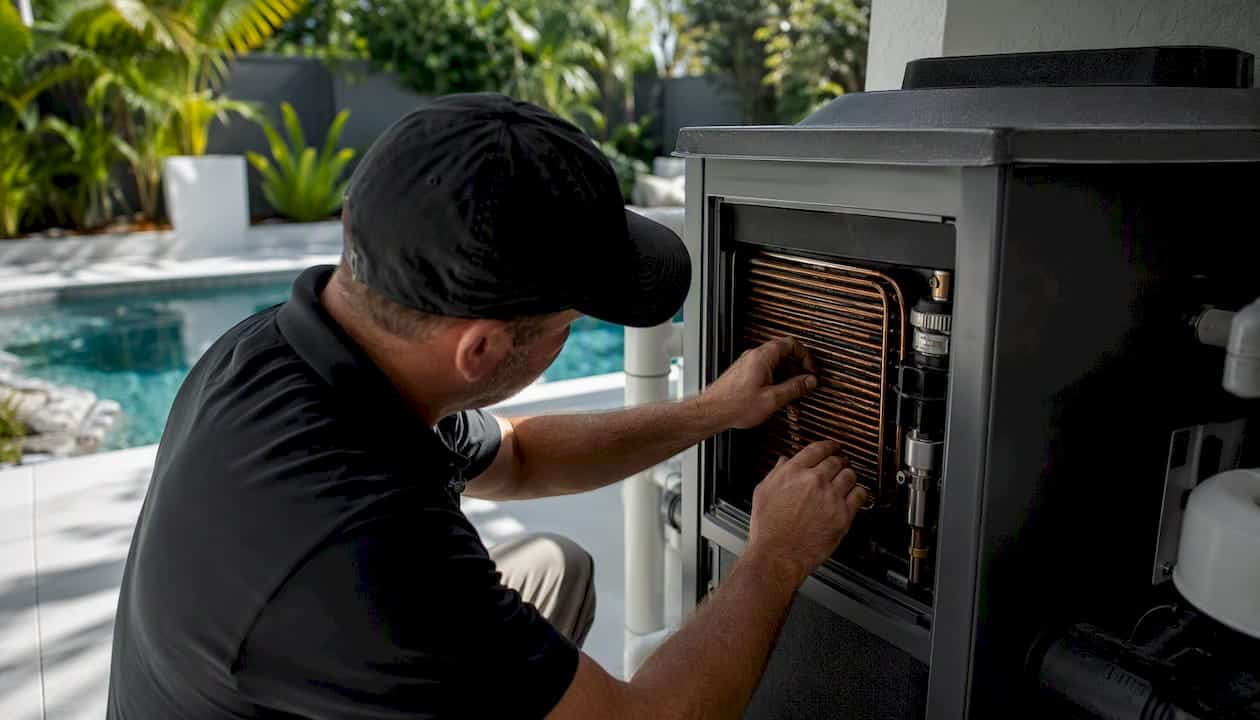
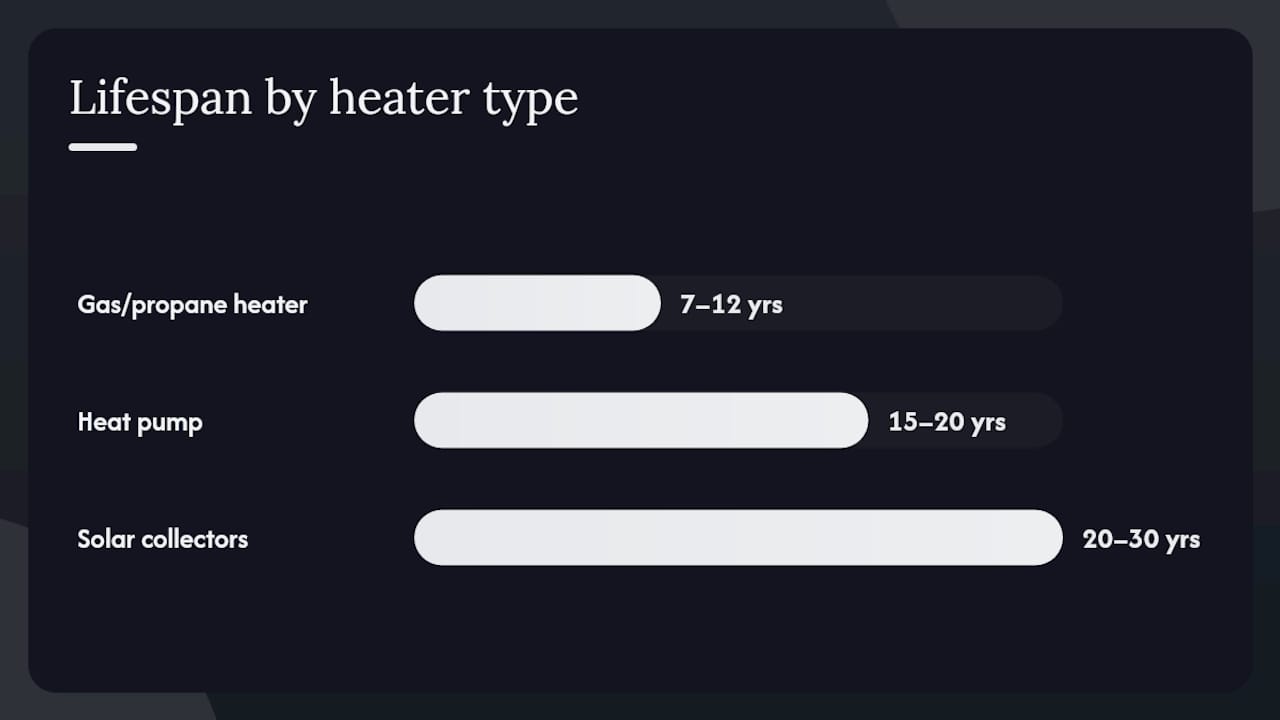
Gas and propane heaters typically last 7–12 years, heat pumps run 15–20 years, and solar systems commonly reach 20–30 years. Those ranges assume reasonable care. Skip annual service and let your water chemistry drift, and a gas heater can fail by year 5 or 6. Keep up with both, and that same unit might still be running at year 14.
Before you call a technician, do three things right now:
- Find the manufacture date on the unit’s data plate (usually inside the cabinet door or on the back panel).
- Look for rust on the cabinet, water stains inside the housing, or a yellow or sooty flame on a gas unit — any one of those is a red flag.
- Check your service records. If you can’t find a receipt for a professional inspection in the last 12 months, that gap matters more than the heater’s age.
Pro Tip: If your heater is under 8 years old with no visible corrosion and no recent service, scheduling a professional tune-up now is almost always cheaper than diagnosing a breakdown mid-swim-season.
A rough verdict by age: units under 8 years old are worth servicing and keeping; units between 8 and 12 years old need a repair-vs-replace evaluation; anything over 12 years that requires a major repair should be replaced rather than patched.
Key Takeaways
Gas heaters typically last 7–12 years, heat pumps 15–20 years, and solar systems 20–30 years — and annual professional service is the single biggest factor separating a heater that hits the top of that range from one that fails years early.
| Point | Details |
|---|---|
| Lifespan by type | Gas/propane: 7–12 years; heat pumps: 15–20 years; solar: 20–30 years under normal use. |
| Chemistry is the top priority | Keep pH at 7.4–7.6 and calcium hardness at 200–400 ppm to prevent corrosion and scale. |
| Annual service doubles lifespan | Properly maintained gas heaters can last significantly longer than neglected ones, which may fail within fewer years. |
| Repair-vs-replace rule | Repair if under 8 years and cost is under 50% of replacement; replace if over 10 years or the heat exchanger is cracked. |
| Randrswimmingpools | Central Florida’s local resource for heater replacement, pool renovation, and installation since 1985. |
Table of Contents
- How long does pool heater lifespan vary by type?
- What actually shortens a pool heater’s life?
- What are the signs your pool heater is failing?
- Maintenance habits that extend your heater’s life
- Should you repair or replace your pool heater?
- What do pool heater repairs and replacements actually cost?
- How Central Florida’s climate changes the equation
- How to plan a pool heater replacement
- Randrswimmingpools serves Central Florida homeowners ready for a real solution
- Sources
How long does pool heater lifespan vary by type?
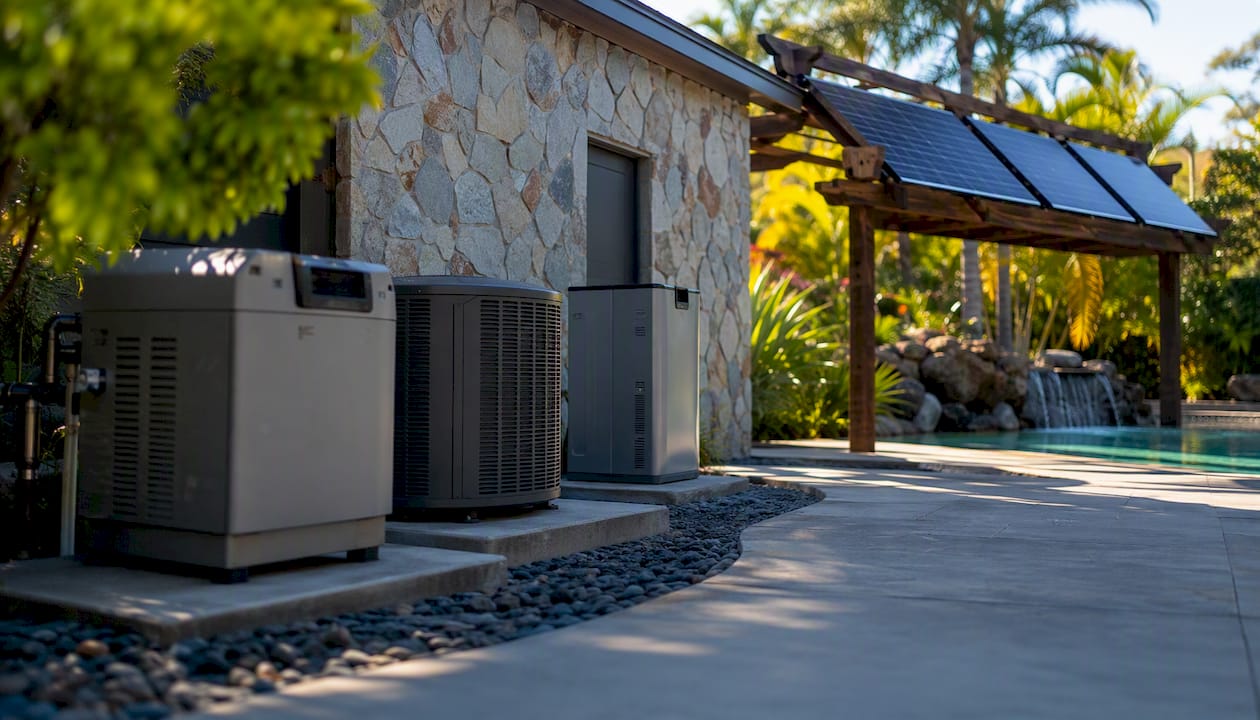
The gap between heater types is wider than most homeowners expect. A gas or propane heater typically lasts 7–12 years, with well-maintained units sometimes reaching 15. Heat pumps commonly run 15–20 years. Solar collectors are the long-game option, often lasting 20–30 years, though they depend on a separate backup for cold snaps.
| Heater type | Typical lifespan | Maintenance needs | Common failure points | Energy efficiency | Approx. installed cost |
|---|---|---|---|---|---|
| Gas/propane | 7–12 years | Moderate | Heat exchanger, igniter, burner | Lower | $1,500–$4,500 |
| Heat pump | typically has a longer lifespan than gas heaters | Low to moderate | Compressor, evaporator coil | High | $3,000–$7,000 |
| Solar | has the longest lifespan among pool heaters | Low | Collector panels, flow valves | Highest | $3,000–$7,000+ |
| Electric resistance | relatively shorter lifespan | Low | Heating elements | Low | $1,000–$3,000 |
The lifespan gap comes down to materials and how hard each type works. Gas heaters push combustion gases through a copper or cupronickel heat exchanger every single cycle, and that exchanger corrodes over time, especially when water chemistry is off. Heat pumps move refrigerant rather than burning fuel, so the core components face less thermal stress. Solar systems have no combustion and no refrigerant cycle at all, which is why their collectors can outlast the pool equipment around them.
Annual professional service is the single biggest variable for gas heaters. The same hardware can die at year 7 or last to year 14 depending mainly on service frequency and chemistry control. For heat pumps, correct sizing and clean evaporator coils are the most frequent determinants of whether a unit reaches the 15–20 year band or fails much earlier.
What actually shortens a pool heater’s life?
Most premature failures trace back to a handful of controllable problems. Water chemistry is the biggest one.
Water chemistry is where most heaters die early. pH below 7.2 accelerates corrosion inside the heat exchanger; pH above 7.8 causes calcium scale to build up on internal surfaces. Calcium hardness below 150 ppm makes water “hungry” for minerals, so it pulls them from metal components. Above 400 ppm, scale deposits restrict flow and insulate heat transfer surfaces. Both extremes shorten heater life measurably.
Low flow is the second most common killer. A clogged filter, an undersized pump, or a partially closed valve can reduce water flow through the heat exchanger below the manufacturer’s minimum. When that happens, the exchanger overheats locally, and copper or cupronickel tubes crack or pit. Most heaters have a flow switch that shuts the unit down before damage occurs, but a worn or bypassed switch won’t catch the problem.
Other factors that cut years off a heater’s life:
- Incorrect BTU sizing. An oversized heater short-cycles, which stresses the ignition system and heat exchanger with rapid temperature swings. An undersized unit runs continuously and wears out faster.
- Poor venting on gas units. Blocked or improperly pitched flue pipes trap combustion gases, which corrode internal components from the outside in.
- Saltwater systems. Salt chlorine generators produce chlorine at a lower, steadier concentration than tablet feeders, which is actually gentler on heaters. The risk comes when salt levels drift above 3,500 ppm or when the cell is placed downstream of the heater, exposing the exchanger to high chlorine concentrations.
- Freeze damage. A heater left with standing water during a hard freeze can crack the heat exchanger in a single night. Central Florida rarely sees freezing temperatures, but it does happen.
- Rodent entry. Mice and rats nest in heater cabinets during cooler months, chewing wiring and blocking burner ports. A mesh screen over the cabinet vents costs almost nothing and prevents expensive repairs.
Pro Tip: After any heavy rain or flooding event, inspect the heater cabinet for standing water and debris before restarting the unit. Post-storm recovery steps apply to pool equipment as much as the pool itself.
What are the signs your pool heater is failing?
Some warning signs are obvious. Others show up quietly in your utility bill or in a pattern of service calls before the heater finally quits.
Physical signs on gas heaters:
- Yellow or sooty flame instead of a clean blue one
- Rust streaks on the exterior cabinet or rust flakes in the water
- Water pooling inside the cabinet (not condensation — actual standing water)
- Burning or chemical smell near the unit
- Repeated ignition lockouts that require manual resets
Operational signs across all types:
- The heater runs but the pool temperature doesn’t rise
- Heating cycles that are noticeably shorter or longer than normal
- Error codes that reappear after clearing
- Fuel or electricity costs climbing without a change in usage
Common signs that a heater is ready to be replaced include yellow or sooty flame, rusted cabinet, water in the cabinet, cracked heat exchanger, and repeated ignition failures. Any one of those on a unit over 10 years old is a strong signal to replace rather than repair.
Heat pump-specific warnings:
- Ice forming on the evaporator coil outside of normal defrost cycles
- Loud grinding or rattling from the compressor
- The unit running continuously without reaching the set temperature
A cracked heat exchanger is a replacement call, not a repair call. Welding or patching a cracked copper exchanger rarely holds under pool pressure and chemistry. The repair cost often approaches or exceeds 50% of a new unit’s price, and a patched exchanger typically fails again within a season or two. When a technician confirms a cracked exchanger on a heater over 8 years old, replacement is almost always the right financial decision.
Maintenance habits that extend your heater’s life
Consistent maintenance is what separates a heater that reaches 15 years from one that fails at 7. The schedule below is practical for most homeowners.
Weekly (takes about 5 minutes):
- Test pH and adjust to the 7.4–7.6 range.
- Check calcium hardness monthly; target 200–400 ppm.
- Visually confirm water is flowing through the heater (check the pressure gauge or flow indicator).
Quarterly:
- Inspect the exterior cabinet for rust, pest entry, or debris blocking vents.
- Clean or backwash the filter to maintain adequate flow.
- Check the heater’s pressure switch and flow switch for correct operation.
- For heat pumps, clear leaves and debris from around the evaporator coil.
Annual (professional service):
- Burner inspection and cleaning on gas units.
- Heat exchanger inspection for scale, pitting, or cracks.
- Igniter and thermocouple test and replacement if worn.
- Flue inspection and cleaning.
- Refrigerant pressure check on heat pumps.
- Solar collector and valve inspection on solar systems.
Maintaining pH at 7.4–7.6 and calcium hardness at 200–400 ppm is the single most protective ongoing action for heater longevity. Chemistry that drifts outside those bands does more cumulative damage than almost any other factor.
| Maintenance task | Frequency | Why it matters |
|---|---|---|
| pH and sanitizer check | Weekly | Prevents corrosion and scale |
| Filter cleaning | Monthly or as needed | Maintains flow rate |
| Cabinet inspection | Quarterly | Catches rust and pest damage early |
| Professional service | Annually | Catches hidden wear before failure |
| Winterizing/freeze prep | Before cold snaps | Prevents cracked heat exchanger |
Simple, frequent checks plus one annual service can keep a heater running 10–15 years rather than 6–8 years. That difference represents thousands of dollars in deferred replacement cost.
Pro Tip: Before closing the pool for winter or shutting the heater down for an extended period, drain the heat exchanger completely and blow out the water lines. A single hard freeze with standing water in the exchanger can crack it overnight, turning a $200 winterizing visit into a $3,000+ replacement.
Should you repair or replace your pool heater?
But age modifies that threshold significantly.
Decision framework:
- Under 8 years old: Repair almost anything short of a cracked heat exchanger, as long as the repair stays under 50% of replacement cost. The unit has useful life remaining.
- 8–10 years old: Apply the 50% rule strictly. A repair over $500–$700 on a gas heater in this age range deserves a replacement quote before you commit.
- Over 10 years old: Favor replacement for any major component failure. Repair if the unit is under ~8 years and the repair is under ~50% of a new unit; replace if the heater is over ~10 years, the heat exchanger is cracked, or service calls are frequent.
Factors that push toward replacement regardless of age:
- Cracked or leaking heat exchanger
- Second or third major repair in two years
- Refrigerant leak on a heat pump (recharging an old unit is expensive and often temporary)
- The unit is no longer under any manufacturer warranty
Quick decision checklist for a service visit:
- Ask the technician for the unit’s manufacture date if you don’t have it.
- Get a written repair estimate before authorizing any work.
- Ask specifically whether the heat exchanger shows any signs of cracking or pitting.
- Compare the repair estimate to the installed cost of a comparable new unit.
- Factor in energy efficiency: a new heat pump replacing an aging gas heater often pays back the cost difference within 3–5 years in operating savings.
Pro Tip: Get a replacement quote at the same time as a repair quote on any unit over 8 years old. You don’t have to act on it, but having both numbers in hand makes the decision straightforward instead of emotional.
What do pool heater repairs and replacements actually cost?
Repair costs vary widely depending on the component. Common repairs and their typical U.S. price ranges:
- Igniter replacement: $150–$300 parts and labor
- Thermostat or pressure switch: $100–$250
- Burner assembly cleaning or replacement: $200–$400
- Heat exchanger repair (minor): $500–$1,500 (often not worth it on older units)
- Compressor replacement on a heat pump: $1,000–$2,500
Average repair costs run around $478, though that figure covers a wide range of repair types. A simple sensor swap sits well below that; a heat exchanger job sits well above it.
Installed replacement costs by type:
- Gas/propane heater: $1,500–$4,500 installed
- Heat pump: $3,000–$7,000 installed
- Solar system: $3,000–$7,000 or more, depending on collector count and roof work
The operating-cost picture matters too. For a pool used year-round in Central Florida, that efficiency gap can translate to meaningful savings over a 15–20 year lifespan. If you’re replacing an aging gas heater, the energy-efficient pool options available now make a heat pump worth serious consideration.
Pro Tip: When getting replacement quotes, specify the BTU output, fuel type, and whether the quote includes all installation labor, permits, and disposal of the old unit. Two quotes that look similar on paper can differ by $800 or more once those line items are separated.
How Central Florida’s climate changes the equation
Central Florida homeowners use their pools year-round, which changes the math on heater wear in ways that matter. A heater in Minnesota might run 4–5 months a year. In Central Florida, that same unit runs 10–12 months, accumulating run hours at more than twice the rate.
More run hours mean more frequent service intervals are worth it. A 90-second walk-around each visit, quarterly deep passes, and one annual professional service can keep a heater in Florida running 10–15 years rather than 6–8 years when neglected. Given year-round use, that annual service visit matters more here than in seasonal climates.
Local considerations specific to Central Florida:
- Salt chlorine generators are common here. Keep salt levels between 2,700–3,400 ppm and place the salt cell downstream of the heater to protect the heat exchanger from high chlorine concentrations.
- Hard water is a real issue in many Central Florida communities. Calcium hardness can creep up quickly, especially in summer when evaporation is high. Test monthly, not just quarterly.
- Freeze events are rare but real. Central Florida sees occasional overnight freezes, typically in January or February. A freeze protection mode on your heater controller is worth enabling every fall.
- Humidity and rain accelerate exterior corrosion. Inspect the cabinet exterior quarterly and touch up any rust spots before they penetrate the housing.
From 40 years of installing and servicing pools across Central Florida: the homeowners who get 15+ years from a gas heater are almost always the ones who scheduled their annual service in September or October, before the cooler months when heaters run hardest. The ones who call us with a dead heater in January are usually the ones who skipped two or three annual visits in a row.
Pro Tip: For Central Florida pool maintenance, schedule your professional heater service in September. That timing catches wear from the summer swim season and gets the unit ready for the months when it works hardest.
How to plan a pool heater replacement
When the decision is made, a little preparation saves time and avoids surprises on installation day.
Pre-replacement checklist:
- Measure the existing unit’s footprint and note the BTU rating, fuel type, and voltage requirements.
- Confirm the gas line size (for gas units) or electrical panel capacity (for heat pumps) can support the new unit.
- Check whether a permit is required in your municipality. Most Florida counties require a permit for heater replacement.
- Decide whether to upgrade: switching from gas to a heat pump requires an electrician to run a dedicated circuit, but the long-term savings often justify the added upfront cost.
- Ask your contractor whether the existing pad, plumbing connections, and bypass valves can be reused.
What to expect during installation:
- A straightforward gas-for-gas swap typically takes 4–6 hours.
- A fuel-type change (gas to heat pump) can take a full day or more, depending on electrical work.
- The contractor should pressure-test all connections before startup and walk you through the new controls.
- Expect a brief startup period where the heater cycles a few times before reaching stable operation.
Options worth considering at replacement time:
- Upgrading to a higher-efficiency gas heater (look for units with 95%+ thermal efficiency ratings).
- Switching to a heat pump if your pool runs more than 6 months a year.
- Adding a solar blanket or liquid solar cover to reduce heater run time regardless of which type you choose.
Pro Tip: Print the homeowner’s guide to pool heaters and bring it to your contractor quote. It gives you the vocabulary to ask the right questions about BTU sizing, efficiency ratings, and installation scope.
What most homeowners get wrong about pool heater care
The pattern we see most often is not neglect exactly. It’s selective maintenance. Homeowners keep the water chemistry reasonably balanced, they clean the filter, they do the visible stuff. What they skip is the annual professional service, usually because the heater seems to be working fine.
A heater that’s “working fine” can still have a heat exchanger with early pitting, a burner running slightly rich, or a flow switch that’s borderline. None of those show up on your pool thermometer. They show up two years later as a $2,800 repair call or a full replacement.
The second pattern is wrong sizing. A heater that’s too large for the pool short-cycles constantly, stressing the ignition system with rapid on-off sequences. A heater that’s too small runs continuously and wears out the burner and heat exchanger faster than the manufacturer’s ratings assume. Getting the BTU calculation right at installation is worth the conversation with your contractor.
The practical first call: before you authorize any repair on a heater over 8 years old, ask the technician to inspect the heat exchanger specifically and give you a written condition report. That one piece of information changes the entire repair-vs-replace calculation.
Randrswimmingpools serves Central Florida homeowners ready for a real solution
Randrswimmingpools has been building and servicing custom inground pools across Central Florida since 1985. When a heater reaches the end of its life, that’s often the moment homeowners start thinking about the bigger picture: whether the pool itself needs renovation, whether the equipment pad should be reconfigured, or whether it’s time to upgrade the entire backyard setup.

Randrswimmingpools handles heater replacement as part of a broader pool service and installation offering, so you’re not just swapping a box. You get a contractor who knows your pool’s plumbing, your local permit requirements, and the specific demands of year-round Central Florida use. Whether you need a straightforward replacement quote or want to explore a full pool renovation while the equipment is already being touched, the team is ready to walk through the options with you. Contact Randrswimmingpools to schedule an inspection or get a replacement quote for your Central Florida home.
Sources
The claims in this article draw on the following sources. Each is worth bookmarking if you’re managing a repair-or-replace decision.
- Pool Heater Maintenance: Seasonal Checklist
- Gas Pool Heater Maintenance: Annual | ProTuff Products
- Pool Heater Routine Maintenance and Cleaning
- Repair vs Replace Pool Heater: How to Decide | Adam’s Pool and Spa Service
- 4 Signs You Need a New Pool Heater in Harrison, NY – GC Reliable Service