
TL;DR:
- Heated pools in Florida extend swim seasons and improve year-round comfort.
- Heat pumps are the most energy-efficient and cost-effective option for Florida climates.
- Proper design, insulation, and automation maximize efficiency and minimize operating costs.
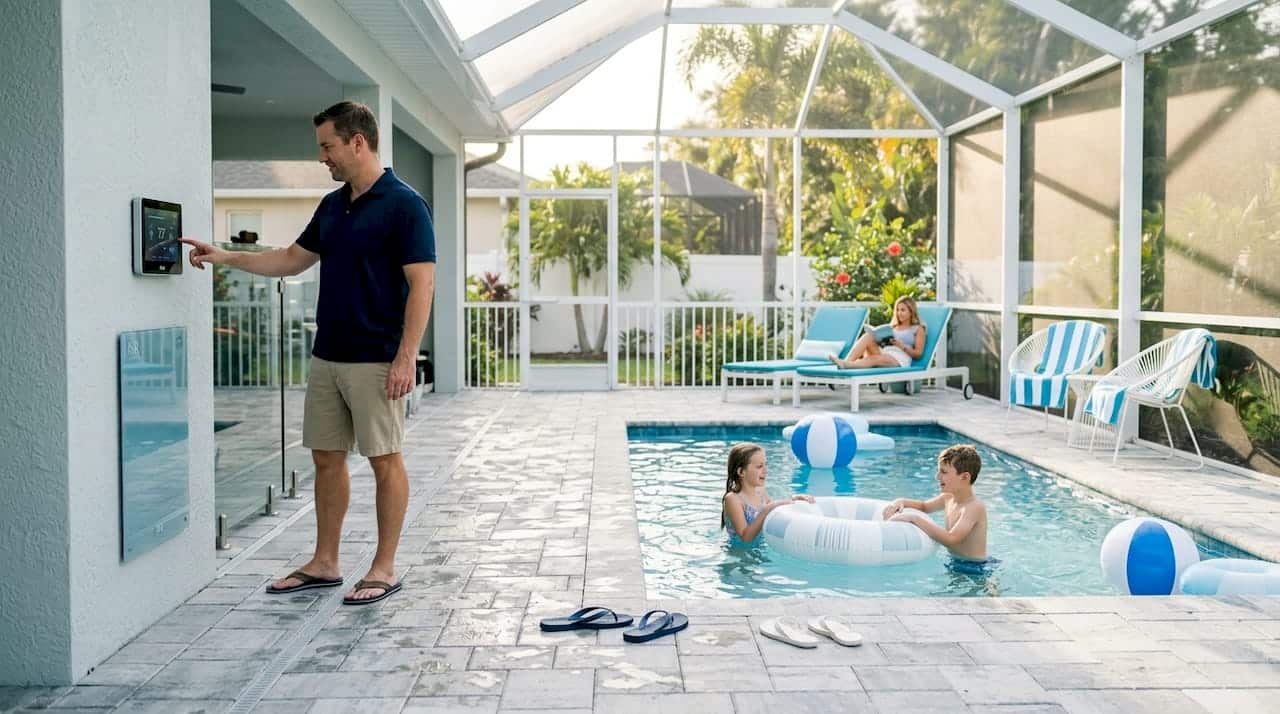
Florida pools are always warm enough. That’s what a lot of homeowners assume before they install one and experience their first January night swim at 65°F with a water temperature that feels more like a cold plunge than a relaxing retreat. A heated pool is a swimming pool with a heating system installed to raise and control water temperature above ambient conditions, and it changes the entire experience of owning a pool in Central Florida. In this article, you’ll learn how heated pools work, which systems perform best in Florida’s climate, and how the right setup can turn your backyard into a year-round luxury escape.
Table of Contents
- What is a heated pool and how does it work?
- Popular types of heated pool systems
- Benefits of a heated pool: Comfort, value, and lifestyle
- What most pool owners miss: Efficiency, operating costs, and best practices
- Getting the most from your heated pool: Design and renovation tips
- Beyond basics: What most guides forget about heated pools in Central Florida
- Ready for comfort? Next steps for your dream heated pool
- Frequently asked questions
Key Takeaways
| Point | Details |
|---|---|
| Heated pool definition | A heated pool uses a mechanical system to raise and maintain water temperature for improved comfort and year-round use. |
| Ideal for Florida homes | Heat pump systems provide efficient, cost-effective heating in Central Florida’s mild climate. |
| Boost home value | A heated pool is a sought-after luxury that enhances property resale value and lifestyle. |
| Efficiency matters | Proper system sizing, controls, and smart operation greatly impact comfort and energy costs. |
| Plan smart upgrades | Combining design, renovation, and energy-savvy choices maximizes your investment and enjoyment. |
What is a heated pool and how does it work?
Most people picture a pool heater as something you only need if you live up north. But anyone who’s tried swimming in an unheated Central Florida pool between November and March knows that the water can get genuinely uncomfortable, even when daytime air temperatures feel pleasant.
A heated pool works by transferring heat from outdoor air into the pool water using a refrigeration cycle, much like how your air conditioner works in reverse. The pool pump circulates water continuously through the heater unit, which extracts warmth from the surrounding air and transfers it into the passing water. That warmed water flows back into the pool, gradually raising the overall temperature over several hours.
It’s worth noting that this process is not instant. Heating is gradual, and the rate depends on the heater’s output capacity, the pool’s volume, and outdoor air temperatures. A clear understanding of this helps you set realistic expectations before your first cool-weather swim.
Here’s a quick look at what goes into a typical heat pump setup:
| Component | Role |
|---|---|
| Heat pump unit | Extracts heat from outdoor air |
| Pool pump | Circulates water through the heater |
| Thermostat/controller | Maintains your chosen temperature |
| Pool cover (recommended) | Retains heat overnight |
| Return jets | Distributes warmed water evenly |
Key features of how a heated pool system operates:
- Continuous circulation keeps water temperature stable rather than heating in bursts
- Thermostat controls allow you to set and maintain your exact comfort temperature
- Gradual heating means running your system ahead of swim time, not right before
- Energy draw is ongoing but manageable with proper scheduling and insulation
- Pool size directly affects how long the system needs to reach target temperature
“Heat-pump pool heaters are among the most energy-efficient options available for pool heating, particularly in climates with consistently mild outdoor air temperatures.”
Pro Tip: Running your heater during off-peak electricity hours (typically late night to early morning) can reduce your monthly energy bill without sacrificing water temperature by morning.
Popular types of heated pool systems
With the basics of heated pools in mind, it’s important to consider which heating systems work best for Central Florida properties. Not every system performs equally well in Florida’s specific climate, and choosing the wrong one can mean higher costs and less consistent comfort.
Heat pumps are ideal for Florida because they remain highly efficient when outdoor air temperatures stay above 45 to 50°F, which covers most of Central Florida’s year. They pull warmth from the air rather than generating heat from burning fuel, which makes them significantly more economical to run over a full season. Gas heaters are faster at raising temperature but cost more to operate and rely on fuel prices. Solar heaters have the lowest operating cost but depend heavily on direct sunlight and may not perform during overcast stretches or cooler months.
Here’s a side-by-side comparison of the three main systems:
| System type | Upfront cost | Monthly operating cost | Best for | Limitation |
|---|---|---|---|---|
| Heat pump | Moderate | Low to moderate | Year-round use in Florida | Slows in very cold air |
| Gas heater | Low to moderate | High | Quick heating on demand | Ongoing fuel cost |
| Solar heater | High | Very low | Summer supplementing | Weather dependent |
Steps to choosing the right system for your backyard goals:
- Assess your climate exposure by evaluating how many months per year your pool will face temperatures below 60°F
- Set a budget for both installation and monthly operation, not just the upfront purchase price
- Review your pool’s volume because larger pools may need a higher-capacity unit or a supplemental system
- Consider automation options that pair with smart home systems for convenient control
- Talk to a licensed pool contractor about energy efficient pool options specific to your zip code and backyard layout
One thing most homeowners overlook is that even a heat pump may benefit from a gas backup during Florida’s rare cold snaps. Pairing systems gives you the best of both worlds: everyday efficiency from the heat pump and rapid recovery power from gas when temperatures dip sharply. Understanding pool pump upgrade tips can also help you maximize circulation efficiency, which directly affects how well your heating system performs.
Benefits of a heated pool: Comfort, value, and lifestyle
Understanding your heater options makes it easier to see the real advantages a heated pool can bring to your home and lifestyle. The benefits go well beyond simply avoiding cold water. They touch nearly every aspect of how you use and enjoy your backyard.
Heating-control systems let homeowners keep pool water warm enough for comfortable swimming beyond typical unheated conditions, and that translates directly into more swim days per year. In Central Florida, a heated pool can realistically add three to four months of comfortable swimming compared to an unheated pool, turning what might be a six-month pool into a true year-round amenity.
Key benefits of installing a heated pool:
- Extended swim season gives your family far more enjoyment per dollar invested in the pool
- Consistent water temperature means no unpleasant shock when entering the water any month of the year
- Support for therapy and wellness because warmer water relieves muscle tension and supports low-impact exercise
- Increased property value as buyers increasingly recognize a heated pool as a premium backyard feature
- Better social hosting since guests are far more willing to swim when they know the water will feel comfortable
- Design flexibility because heated pools pair beautifully with spa features, waterfalls, and nighttime lighting for a resort-like atmosphere
A heated pool can push your property’s appeal well above comparable homes in your neighborhood. Real estate agents in Central Florida consistently note that well-designed, feature-rich pool packages attract faster offers and command higher sale prices than homes with basic or no pool at all.
Pro Tip: When planning your heated pool, consider adding a spa attached to the same heating system. Spas heat faster due to their smaller volume and can be ready for evening use while your pool is being maintained at a comfortable swim temperature.
Learning more about investing in pool heating can help you make a confident case for the upgrade. And if you’re concerned about ongoing costs, there are proven strategies for cutting energy costs without sacrificing comfort.
What most pool owners miss: Efficiency, operating costs, and best practices
While the benefits are clear, it’s essential to understand some less-discussed realities around running a heated pool smartly in Florida’s climate. Many owners install a great heating system and then operate it in ways that quietly drain their energy budget.
Heat pump efficiency drops as outdoor air temperatures fall below 45 to 50°F, and when Central Florida gets one of its occasional cold snaps, your system has to work harder and consume more electricity to maintain the same water temperature. This isn’t a flaw. It’s simply physics. But it’s a reality that smart pool owners plan for.
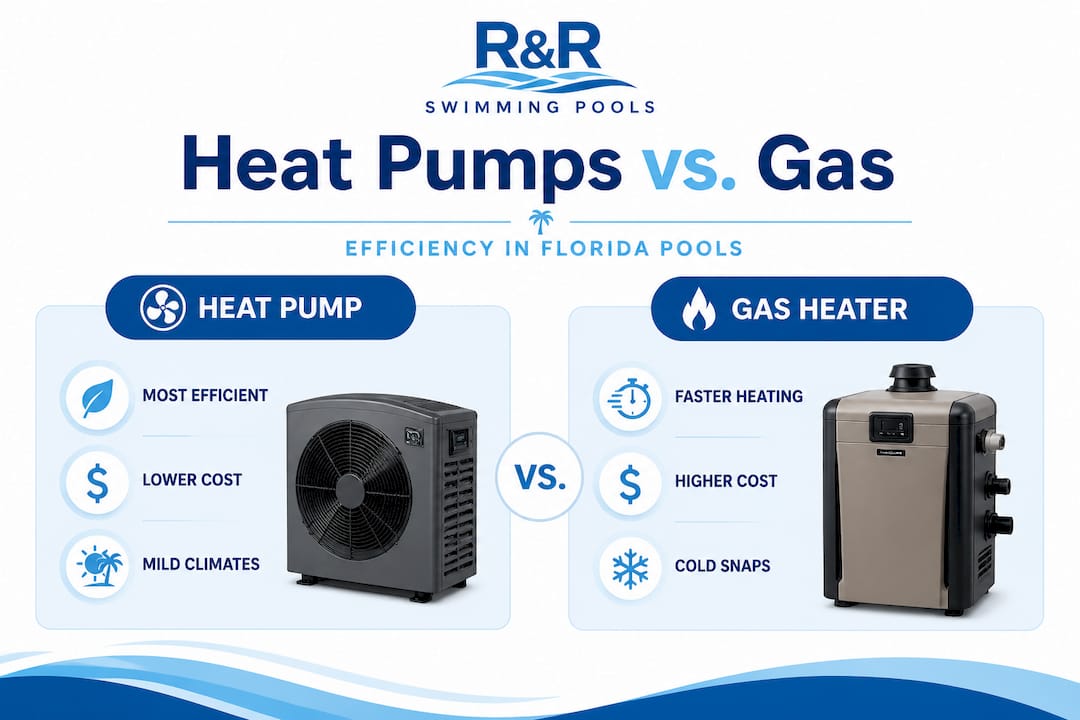
The edge case most homeowners ignore is relying entirely on a heat pump during those brief but real cold stretches in December, January, and February. During those periods, operating costs can spike noticeably if you haven’t planned for them with a backup system or a smart scheduling strategy.
Common mistakes and how to avoid them:
- Not using a pool cover is one of the biggest cost errors because uncovered pools lose the majority of their heat overnight through surface evaporation
- Running the heater at peak electricity hours means paying premium rates when off-peak scheduling could deliver the same result for less
- Setting the thermostat too high for daily swimming wastes energy; 82 to 84°F is comfortable for most swimmers and far more efficient than 90°F
- Skipping routine maintenance lets scale buildup reduce heat transfer efficiency inside the heater, forcing the system to work harder
- Ignoring automation options means manually managing a system that could be handled by a smart controller on a programmed schedule
“A quality pool cover can reduce heat loss by up to 70%, making it one of the most cost-effective tools in any heated pool owner’s toolkit.”
Pro Tip: Explore energy-efficient pool upgrades like variable speed pumps and smart thermostats. These work together with your heater to cut monthly costs without any sacrifice in water quality or temperature comfort. You’ll find more practical guidance through pool efficiency tips tailored to Florida conditions.
Getting the most from your heated pool: Design and renovation tips
For homeowners ready to take the next step, here’s how to turn heated pool know-how into a standout backyard upgrade. Whether you’re installing a new pool or renovating an existing one, the design choices you make now will define your comfort and costs for years ahead.
Water heating is achieved by warming circulating water through the heater, and the pump flow rate and heater output directly determine how quickly and consistently you reach your target temperature. Getting the sizing right is the single most important design decision you can make.
Steps to designing or renovating a heated pool for maximum comfort and value:
- Size the heater to your pool volume accurately because undersizing means your system will struggle and overwork, while oversizing wastes upfront investment
- Plan the plumbing layout to minimize friction in the system, which allows water to circulate more efficiently through the heater
- Integrate automation from day one so your heater, pump, and lighting all operate on coordinated schedules through a single app or controller
- Add pool cover infrastructure at installation, including a roller or automatic cover system, so you always use it consistently
- Choose heater placement carefully to ensure the unit receives good airflow and is positioned away from fences or walls that could restrict air intake
- Review backyard pool upgrades to see how other Central Florida homeowners have combined heating features with waterfalls, spas, and custom lighting for a cohesive luxury feel
Renovation pitfalls are real and often expensive. Many homeowners who add heating to an existing pool discover that their original pump isn’t powerful enough to support the added flow demands, or that older plumbing has too much resistance for efficient circulation. A full evaluation before any renovation saves you from discovering these problems mid-project.
Pro Tip: Before committing to a design, walk through the process with a licensed pool professional who can review your custom pool design goals against the technical realities of your property, including soil conditions, sun exposure, and existing electrical capacity.
Beyond basics: What most guides forget about heated pools in Central Florida
Here is a perspective that most articles on heated pools simply skip past. Many first-time pool buyers in Florida think that because the weather is warm most of the year, a heater is a luxury they can add later. What they discover, often within the first winter, is that “later” comes faster than expected and adds retrofit costs that a planned installation would have avoided.
We’ve worked with Central Florida homeowners since 1985, and one pattern appears repeatedly. Clients who planned for heating from the start report dramatically higher satisfaction with their pool than those who planned to “figure it out later.” By the time they get around to adding a heater, they’ve already missed two or three winters of comfortable swimming, and the retrofit often costs more than it would have during original installation.
The other reality that guides overlook is microclimate. Central Florida isn’t uniform. A pool shaded by mature trees will lose heat faster than an open-sky pool. A pool near a screen enclosure benefits from less wind exposure. These details matter enormously for heater sizing and operational costs, and they’re only visible to someone walking your yard, not reading a general article online.
Smart automation is also underrepresented in most buyer discussions. The homeowners who run their heated pools most efficiently aren’t the ones watching their thermostat manually. They’re the ones who set up a smart controller once, define their schedule, and let the system maintain comfort passively. Combined with energy savings for Florida pools, this approach creates the best long-term outcome in both comfort and cost.
The bottom line is that a heated pool in Central Florida isn’t an extravagance. It’s a sensible upgrade for any homeowner who wants to actually use their pool consistently throughout the year rather than watching it sit idle for several months at a stretch.
Ready for comfort? Next steps for your dream heated pool
You now have a clear picture of how heated pools work, which systems fit Florida’s climate, and what separates a well-planned installation from an expensive afterthought. The next step is putting that knowledge to work.
At R&R Swimming Pools, we’ve been building custom heated pools across Central Florida since 1985. Our team can help you evaluate best inground pool types to find the right match for your yard, budget, and lifestyle. If you’re comparing pool options, our pool value comparison guide walks you through the most important trade-offs. And when you’re ready to start planning, our detailed custom pool installation guide covers every step from site assessment to final finish. Reach out today for a free design consultation and let’s build the backyard you’ve been envisioning.
Frequently asked questions
How long does it take for a heated pool to warm up?
Most pools warm at a rate of 1 to 3°F per hour, depending on the heater’s output capacity, pool volume, and outdoor air temperature. Heating circulates through the system gradually, so plan to start your heater several hours before swimming.
Are heated pools expensive to run in Central Florida?
Operating costs are very manageable in Florida’s climate because heat pumps stay efficient when outdoor air stays above 50°F, which covers most of the year. Using a pool cover and scheduling off-peak operation keeps monthly costs competitive.
Which is better for Florida: a heat pump or a gas heater?
Heat pumps are generally the smarter long-term choice because they remain most efficient in Florida’s consistently mild air temperatures and cost significantly less to run month over month than gas alternatives.
Will a heated pool add value to my home?
Yes. A heated pool is widely recognized as a luxury upgrade that increases both property value and buyer appeal, particularly in Central Florida where outdoor living and year-round usability are strong selling points for buyers.
