
TL;DR:
- Pool waterfalls enhance aesthetics, noise masking, relaxation, water circulation, and property value.
- Various styles and add-ons exist, with installation requiring licensed permits and proper planning.
- Regular maintenance and choosing experienced contractors are key to long-lasting water features.
There’s a widely held belief among homeowners that pool waterfalls belong exclusively to luxury resort-style builds with six-figure budgets. That simply isn’t true. Whether you have an existing concrete pool in Orlando or you’re planning a brand-new fiberglass installation in Seminole County, adding a waterfall is more achievable than most people realize. This guide covers everything you need to know: the real benefits, the style options that fit different yards and budgets, what permits and licensed contractors Central Florida law requires, and how to keep your waterfall performing beautifully for decades. By the end, you’ll have a clear, confident path forward.
Table of Contents
- Why add a waterfall to your pool?
- Types of pool waterfalls and their features
- Cost, installation, and permitting in Central Florida
- Maintenance and long-term value of pool waterfalls
- What most homeowners miss when planning a pool waterfall
- Ready to add a waterfall to your Central Florida pool?
- Frequently asked questions
Key Takeaways
| Point | Details |
|---|---|
| Waterfalls add value | Pool waterfalls can boost both your home’s relaxation factor and resale value when well-maintained. |
| Permits required | Licensed contractors and county permits are necessary for legal and safe waterfall installations. |
| Retrofitting is possible | You can add a waterfall to most existing pools via specialized techniques like core-drilling. |
| Maintenance is key | Simple regular care ensures lasting beauty, sound, and enjoyment from your pool waterfall. |
Why add a waterfall to your pool?
A waterfall isn’t just decorative. It changes how your entire backyard feels and functions. Once you understand what these features actually deliver day to day, it’s easy to see why so many Central Florida homeowners prioritize them even on modest budgets.
Pool water features like waterfalls genuinely improve how you experience your outdoor space, and the pool waterfalls benefits extend well beyond looks. Here’s what you get:
- Aesthetic impact. Moving water creates a visual focal point that still photography can’t capture. The shimmer, the movement, and the layered sound transform a flat, static pool into a living feature.
- Sound masking. Central Florida neighborhoods can get loud, especially near major roads or busy communities. A waterfall generates a consistent, pleasant white noise that naturally drowns out traffic, lawn equipment, and neighbor activity.
- Relaxation and wellness. The sound of moving water lowers perceived stress. Spending 20 minutes near a waterfall after work feels measurably different from sitting beside a silent pool.
- Improved water circulation. Waterfalls keep water moving through the system, which helps distribute chemicals more evenly and reduces stagnant areas where algae tends to grow.
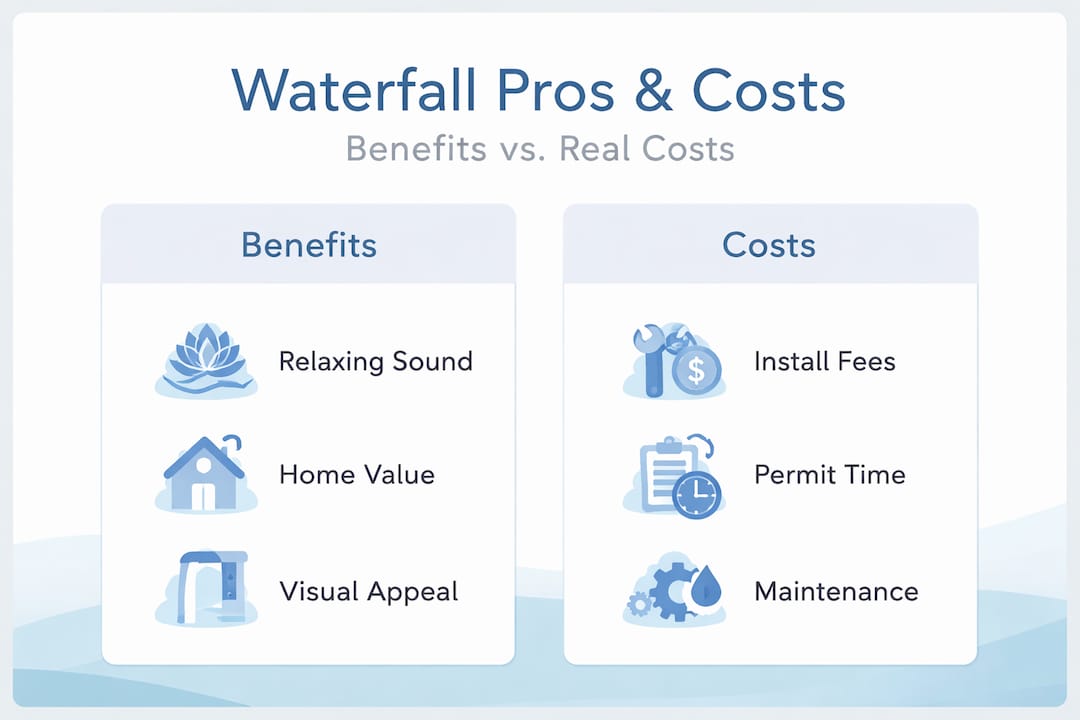
- Property value. Pool water features can boost relaxation and increase property value, making them one of the most rewarding additions for resale-focused homeowners.
“Even a modest waterfall can shift the entire atmosphere of your backyard. Buyers notice it immediately, and sellers who invest in water features often recoup far more than they spend.”
Pro Tip: If your budget is tight, start with a simple sheet waterfall or a single scupper. You get most of the sound and visual benefits at a fraction of the cost of a full rock feature.
Styles vary enormously. A sleek contemporary home might benefit from a clean sheet waterfall. A more natural, tropical-style yard could work perfectly with a multi-tier rock waterfall surrounded by lush Florida plantings. The point is that there’s a waterfall design for nearly every pool and nearly every budget.
Types of pool waterfalls and their features
Understanding the options before you start shopping saves you from making expensive decisions based on pictures alone. Each waterfall style has different installation requirements, maintenance demands, and visual personalities.
Waterfall features can be integrated into new pools or added as retrofits with core-drilling, which means existing pool owners are rarely locked out of an upgrade. Here’s a breakdown of the main types:
| Type | Look and sound | Maintenance level | Best for |
|---|---|---|---|
| Sheet waterfall | Clean, glass-like curtain of water | Low | Modern and contemporary pools |
| Rock waterfall | Natural, tropical, multi-tiered | Medium to high | Freeform and lagoon-style pools |
| Scupper | Architectural spout feature | Low | Raised wall designs, formal pools |
| Rain curtain | Dense, dramatic vertical rainfall | Medium | Statement pools with pergolas or ledges |
Each type works differently. Sheet waterfalls use a precisely engineered edge to create that flat, glassy pour. Rock waterfalls are typically built from hand-placed natural stone or hand-sculpted artificial rock (a material that looks natural but holds up better in Florida’s heat). Scuppers are often mounted into raised bond beams (the raised walls around the edge of a pool deck) and produce a controlled arc of water. Rain curtains fall from a horizontal beam overhead, creating a wall of vertical water streams.
Beyond the waterfall structure itself, you have a range of add-on options worth discussing with your contractor when you plan custom pool features:
- LED color-changing lighting: Makes your waterfall usable and visually stunning after dark. In Florida’s year-round outdoor living climate, this is almost always worth adding.
- Fire features: Fire bowls or fire and water combos (fire on top, waterfall below) create a dramatic contrast and extend evening use into cooler months.
- Automation and smart controls: Modern pool automation systems let you turn the waterfall on and off from your phone, set timers, and sync it with pool lighting and heating schedules.
- Fog features: Ultrasonic foggers create a mist effect around the waterfall that looks particularly impressive at night.
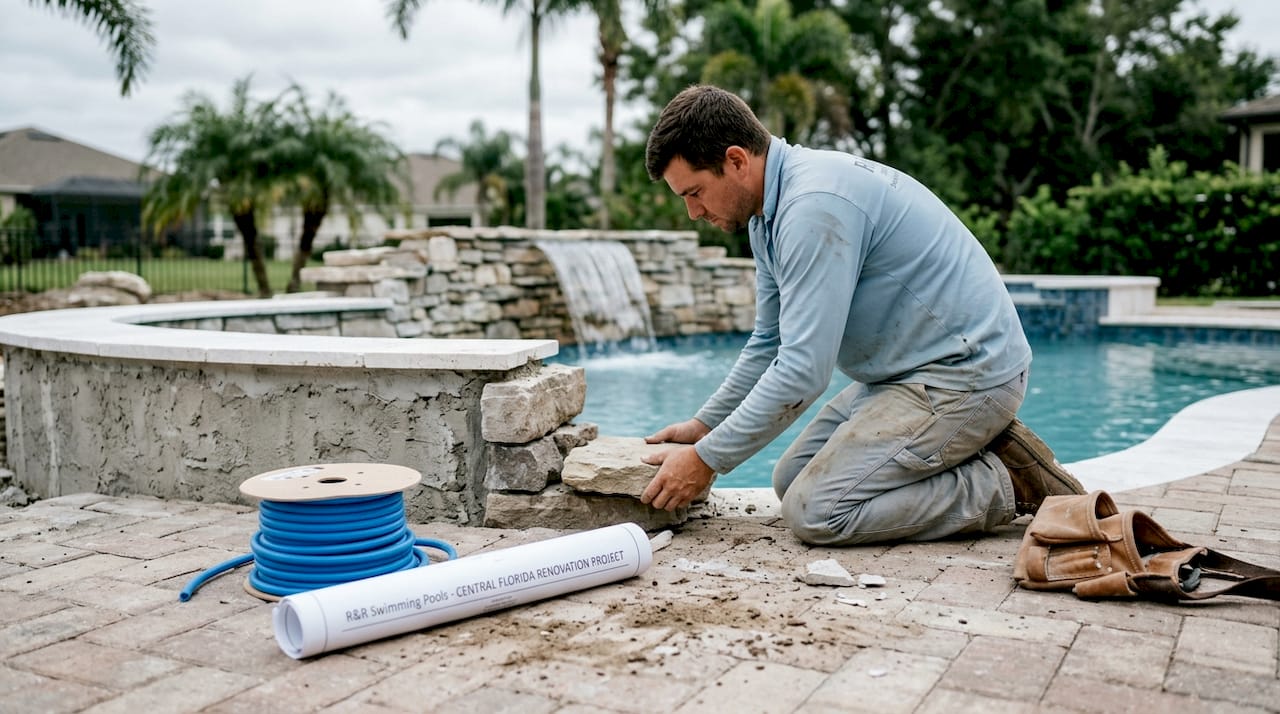
If you’re adding a waterfall to an existing pool, your contractor will likely need to core-drill the pool shell. This process cuts a precise hole through the concrete or fiberglass shell to route plumbing lines. It sounds dramatic, but experienced contractors do this routinely with minimal disruption to your pool structure. New builds make the plumbing much simpler since it’s planned into the original design.
Cost, installation, and permitting in Central Florida
Here’s where many homeowners get caught off guard. The feature itself is only part of the equation. Permits, contractor licensing, inspections, and the scope of your specific project all affect your total investment.
Installation in Central Florida requires licensed CPC (Certified Pool Contractor) contractors for plumbing and electrical modifications, plan review, and inspections per the Florida Building Code. This is not optional. Skipping permits doesn’t just create legal risk. It can void your homeowner’s insurance and create serious problems when you sell your home.
Here’s a realistic overview of what to expect:
| Project scope | Permit fee range | Typical installation time | Approximate cost range |
|---|---|---|---|
| Simple scupper or sheet waterfall | $100 to $500 | 1 to 3 days | $1,500 to $4,000 |
| Mid-range rock waterfall | $150 to $500 | 3 to 7 days | $4,000 to $8,000 |
| Elaborate multi-tier or fire-and-water feature | $200 to $500 | 1 to 2 weeks | $8,000 to $15,000+ |
These ranges reflect typical Central Florida pricing as of 2026. Material quality, yard access, existing pool condition, and the contractor’s level of experience can push numbers in either direction.
The pool permitting steps in Sarasota, Seminole, and Hillsborough Counties follow a similar general process, though each county has specific forms and requirements. Here’s a typical sequence:
- Choose your waterfall design. Work with your contractor to finalize the style, materials, plumbing routing, and any electrical features like lighting or automation.
- Submit permit application. Your licensed contractor handles this on your behalf. Permit applications typically include site plans, structural drawings, and equipment specifications.
- Wait for plan review. Counties review submitted plans for code compliance. This can take anywhere from a few days to a few weeks depending on the county’s current workload.
- Begin permitted construction. Once approved, your contractor can begin work. No work should start before permit approval.
- Schedule required inspections. Inspections are required at specific stages of construction. Missing an inspection window means rescheduling, which delays your project.
- Final inspection and approval. Once all work passes inspection, your permit closes and your waterfall is officially code-compliant.
Pro Tip: Ask your contractor to schedule inspections the moment a phase of work is complete. Waiting a few extra days to “batch” inspections almost always costs you more time than it saves.
You can also review the pool installation timeline and the custom pool installation overview for a deeper look at how projects are sequenced from start to finish. Understanding the full process helps you ask smarter questions and avoid being surprised by delays that are actually normal parts of the build.
One more thing on cost: don’t judge a bid solely by price. A contractor who quotes significantly lower than others may be skipping permits, using lower-quality materials, or planning to cut corners on the rock sculpting or plumbing work. In Florida’s climate, those shortcuts show up fast.
Maintenance and long-term value of pool waterfalls
Installation day is exciting. But your relationship with your waterfall is a long one. Understanding what upkeep looks like keeps you from being blindsided and helps you protect your investment over time.
The good news is that pool waterfalls contribute to increased home value and owner satisfaction when well-maintained. The operative phrase is “well-maintained.” Neglected waterfalls develop mineral staining, clogged pump lines, and algae buildup on rock surfaces that can make a beautiful feature look worse than no feature at all.
Here’s what regular maintenance involves:
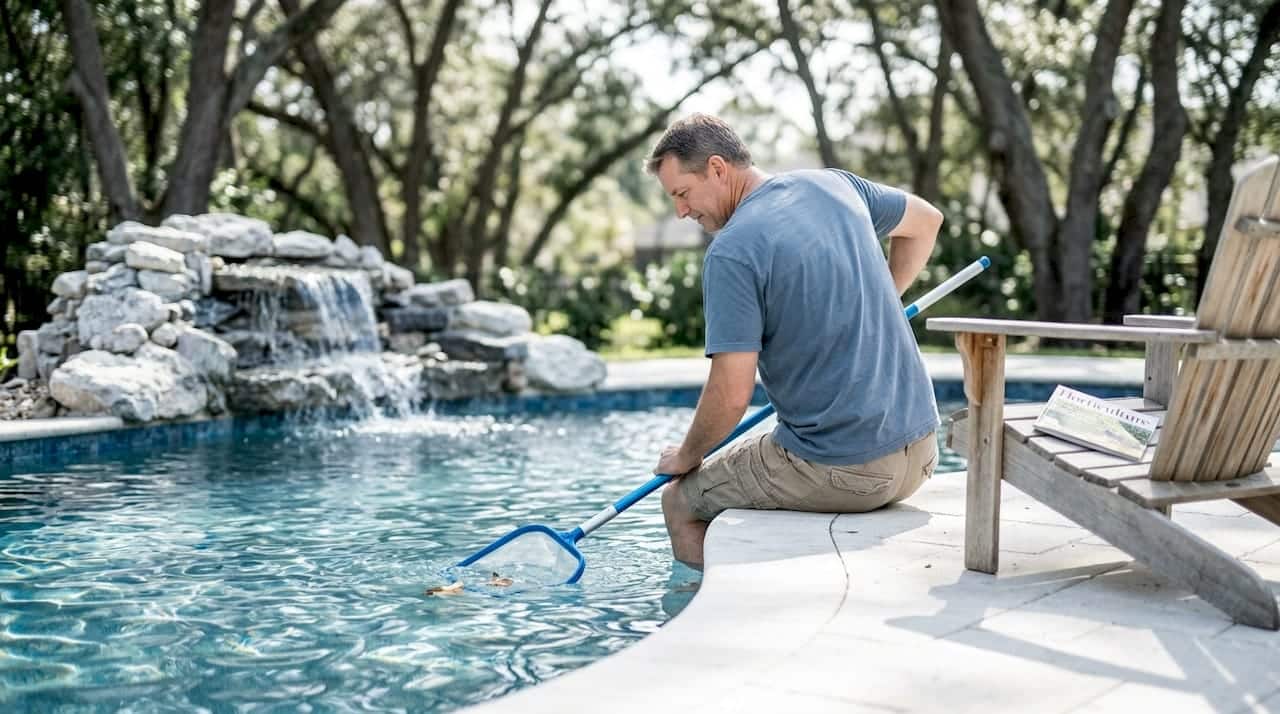
- Weekly cleaning of exposed surfaces. Rock and stone surfaces collect organic debris like leaves, pollen, and algae. Brushing them weekly (or more during Florida’s spring pollen season) prevents staining and buildup.
- Monthly pump and filter checks. The pump that drives your waterfall runs on the same system as your pool. Check for unusual noise, reduced flow, or pressure changes that might indicate a blockage or mechanical issue.
- Mineral deposit management. Florida’s water is naturally hard (meaning it contains elevated calcium and magnesium). Over time, these minerals can leave white, chalite deposits on waterfall surfaces. A good water chemistry routine and occasional acid washing keep this under control.
- Debris clearing after storms. Central Florida’s afternoon thunderstorm season brings debris. After any significant storm, clear leaves and branches from around the waterfall’s edges to prevent pump clogs.
- Quarterly nozzle and jet inspection. For scuppers and rain curtains, check that all nozzles are clear and flowing evenly. Uneven flow often means a blockage somewhere in the line.
Quality waterfalls boost value in Central Florida neighborhoods, and well-documented maintenance records make that value tangible to future buyers. Real estate data suggests that desirable outdoor water features can yield a 5 to 8 percent home value increase in competitive Florida markets, particularly in communities where outdoor living space is a major buying factor.
“The homeowners who get the most out of their waterfall investment are the ones who treat maintenance like a routine, not a reaction. A quick check every week costs almost nothing. Fixing a clogged pump or a stained rock feature costs far more.”
Longevity is another strong argument for waterfalls. A properly installed concrete waterfall with quality sealers and regular upkeep can last 20 to 30 years or more. Fiberglass shell additions tend to hold up well in Florida’s UV environment when properly gel-coated. The materials matter, but so does the craftsmanship behind them.
What most homeowners miss when planning a pool waterfall
After working with Central Florida homeowners for decades, we’ve noticed a consistent pattern. Most people focus entirely on what their waterfall will look like and almost nothing on what it takes to get there cleanly. That gap creates the vast majority of regrets we see.
The essential planning steps almost always get underestimated. Permitting in particular catches people off guard. Homeowners assume the contractor handles everything and there’s nothing to worry about. That’s mostly true if you choose the right contractor. But “mostly” matters. If your contractor isn’t properly licensed as a CPC in Florida, isn’t familiar with your specific county’s requirements, or pulls permits as an afterthought rather than a first step, you inherit that risk.
Here’s what we’d tell every homeowner before they start: your contractor selection is the single most important decision in this process. Not the stone color. Not the waterfall style. The contractor. A skilled, licensed, locally experienced contractor makes the permits flow smoothly, handles inspections without drama, and builds a feature that holds up to Florida’s relentless heat, UV exposure, and storm seasons.
We also see homeowners chase features that look incredible on Pinterest but don’t match their actual lifestyle. A massive multi-tier rock waterfall with fog effects and fire bowls is stunning. It’s also louder than most people expect, requires more maintenance, and may overwhelm a smaller backyard. Ask yourself: how often do you actually use your pool in the evening? Do you want a dramatic feature or a relaxing one? Both are valid answers, but they lead to very different designs.
Finally, site access matters more than people think. In many Central Florida neighborhoods, backyard gates, mature landscaping, and pool enclosures (screen cages around the pool area) can significantly limit how equipment and materials get to the work site. An experienced contractor surveys this early and accounts for it in the scope and cost. If yours doesn’t ask about access, that’s a warning sign.
Ready to add a waterfall to your Central Florida pool?
At R & R Swimming Pools, we’ve been designing and building custom pools and water features across Central Florida since 1985. We understand the permits, the counties, and the craftsmanship required to build something that looks incredible on day one and still looks great 20 years later.
Whether you’re starting from scratch or upgrading an existing pool, we’re ready to help you think through every detail. You can explore pool waterfall options and get inspired by our feature gallery, review our custom pool installation guide to understand the full build process, or explore new pool construction if you’re ready to start fresh. Our team offers free consultations and personalized estimates so you get exactly what fits your yard, your lifestyle, and your budget. Let’s build something worth diving into.
Frequently asked questions
Do I need a building permit to add a pool waterfall in Central Florida?
Yes, most counties in Central Florida require a building permit and inspections for any new water feature involving plumbing or electrical modifications. Working with a licensed CPC contractor ensures this process is handled correctly.
Can I add a waterfall to my existing pool or do I need a new build?
Most waterfalls can be added to existing pools through core-drilling techniques that route plumbing through the pool shell without a full rebuild. New builds make the process easier, but retrofits are a very common and practical option.
How much does it cost to install a pool waterfall?
Expect permit fees ranging from $100 to $500, with installation costs starting around $1,500 for a basic feature and climbing above $10,000 for elaborate multi-tier or fire-and-water designs.
How long does construction of a waterfall usually take?
A simple waterfall typically takes 1 to 3 days to complete, while complex or multi-feature builds can require 1 to 2 weeks from start to final inspection.
Does a pool waterfall need special maintenance?
It requires regular brushing, pump checks, and water chemistry management to prevent mineral buildup and debris clogs. Well-maintained waterfalls deliver lasting value and keep the feature looking and functioning at its best year after year.
