
TL;DR:
- Pool owners need core tools like a telescopic pole, skimmer net, pool brush, water testing kit, and vacuum to maintain water quality and surface cleanliness. Upgrading to robotic cleaners and automatic covers greatly reduces manual effort and improves maintenance efficiency. Regular routines, proper tool care, and professional help when needed ensure long-term pool health and cost savings.
Pool homeowner maintenance tools are the physical equipment every pool owner needs to keep water clean, chemistry balanced, and surfaces free of algae and debris. The core toolkit includes a telescopic pole, skimmer net, pool brush, water testing kit, and a vacuum. Without these tools working together, even a well-built pool degrades quickly. This guide covers the right tools for every pool type, how to use them efficiently, and when to upgrade to professional-grade equipment.
1. What are the core pool homeowner maintenance tools?
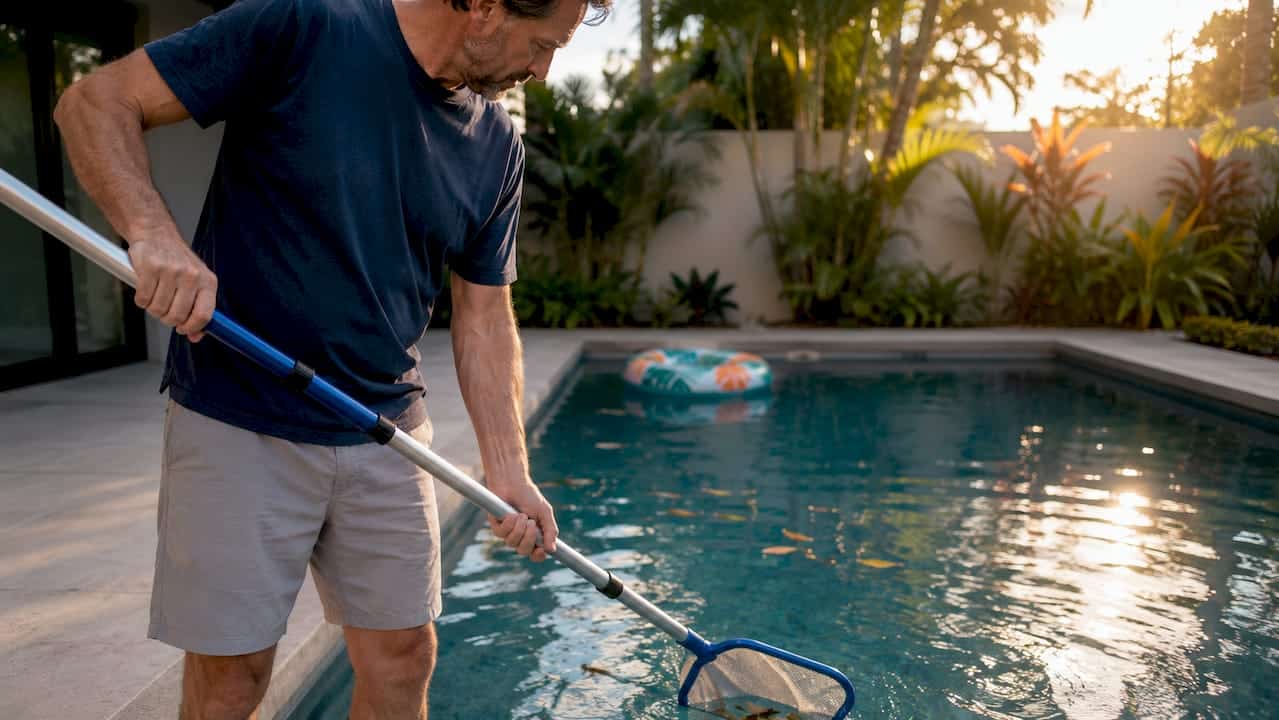
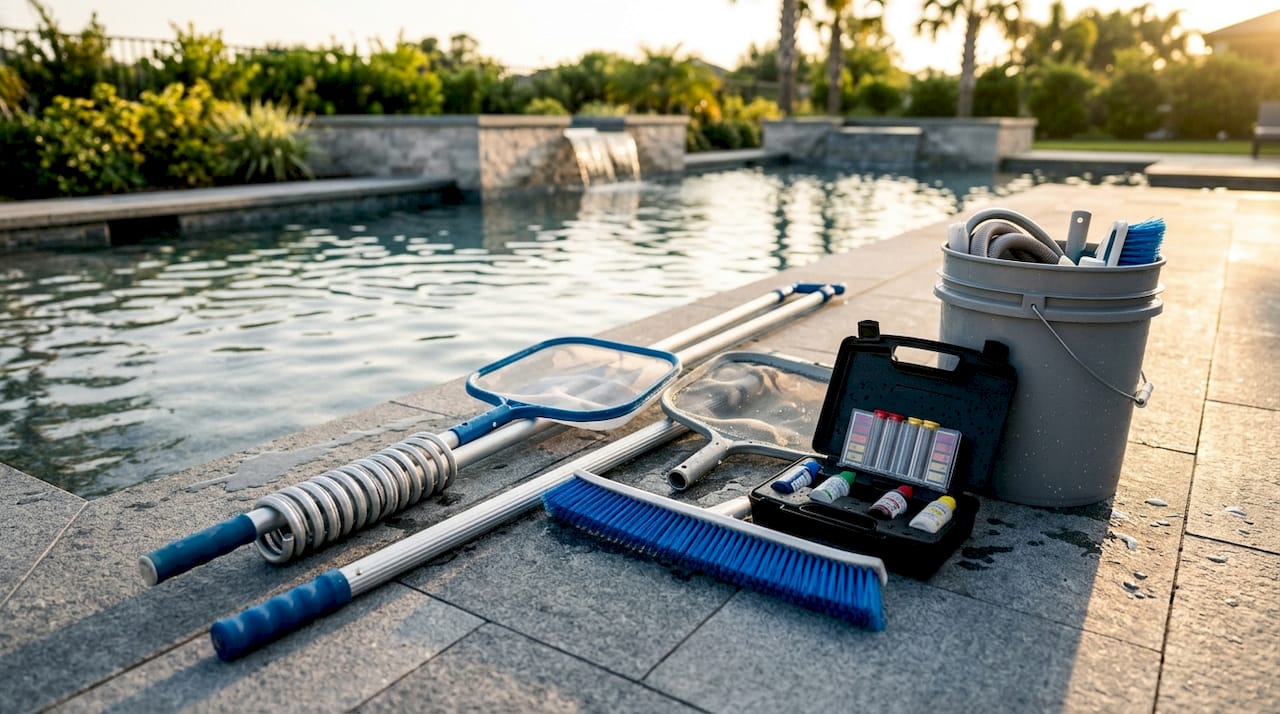
Every pool owner needs five foundational pieces of equipment before anything else. A telescopic pole is the backbone of your kit. It should reach at least 16 feet to cover the full floor and far walls without you leaning dangerously over the edge.
A skimmer net and a leaf rake serve different purposes. The skimmer net catches light surface debris like pollen and insects. A leaf rake’s deep bag removes heavy organic material from the floor, such as wet leaves and pine needles, far more efficiently than a flat net.
Pool brushes come in three main types: stainless steel, nylon, and soft bristle. Stainless steel works on concrete pools. Nylon brushes suit vinyl liner pools. Soft bristle brushes are the right choice for fiberglass surfaces. Using the wrong brush causes micro-scratches that trap algae and accelerate surface wear.
Water testing kits round out the starter set. Liquid reagent kits give more accurate readings than basic test strips. Digital test strips, such as those compatible with the LaMotte ColorQ system, offer speed and consistency. Testing 1–2 times weekly is the standard because clear water does not mean balanced water. Unbalanced chemistry corrodes equipment and allows bacteria to grow.
Pro Tip: Buy a dedicated storage bag or wall rack for your pole attachments. Keeping the skimmer net, brush, and vacuum head in one place cuts setup time and prevents bristle deformation from improper storage.
2. How do advanced tools upgrade pool maintenance efficiency?
Advanced home pool care tools reduce the time you spend on physical labor and improve the thoroughness of each cleaning session. Robotic pool cleaners are the single biggest upgrade available to homeowners. They run on set schedules, scrub floors, walls, and waterlines automatically, and park themselves when finished. Manual cleaning time drops to minutes of oversight rather than 30–60 minutes of active work.
Automatic and solar pool covers are another high-impact addition. Automatic covers reduce debris accumulation by up to 90%. That means less skimming, less chemical consumption, and less strain on your filter system.
A pressure gauge mounted on your filter is a tool most homeowners overlook. Clean the filter when the gauge reads 8–10 psi above its normal baseline. Waiting longer causes cloudy water and creates conditions for algae to take hold.
Other specialty tools worth adding include:
- Underwater flashlight: Lets you inspect fittings, returns, and the main drain without draining the pool.
- Pool equipment wrench set: Tightens and removes filter housing, pump lids, and valve fittings without damaging threads.
- Cordless handheld vacuum: Spot-cleans sand, dirt, and small debris between full vacuuming sessions.
- Algae brush with stainless steel bristles: Targets stubborn algae patches on concrete walls before they spread.
Commercial-grade aluminum poles resist bending during heavy-duty tasks like spring openings and post-storm debris removal. Cheap poles flex and snap under load, which is a false economy when you factor in replacement costs.
3. How to choose the best tools based on pool type and size
Matching your equipment to your pool’s surface, size, and environment is the most practical decision you will make as a pool owner. Brush material compatibility is non-negotiable. Stainless steel on a vinyl liner will tear it. Soft bristle on a concrete pool will wear out in weeks.
| Pool Type | Recommended Brush | Pole Length | Vacuum Type |
|---|---|---|---|
| Concrete | Stainless steel bristle | 16 feet | Robotic or manual |
| Vinyl liner | Nylon bristle | 12–16 feet | Manual or cordless |
| Fiberglass | Soft bristle | 12–16 feet | Robotic preferred |
Pool size determines pole length and vacuum capacity. A small plunge pool under 400 square feet works fine with a 12-foot pole and a basic manual vacuum. A large inground pool over 800 square feet benefits from a 16-foot pole and a robotic cleaner with a large debris canister.
Environmental factors matter just as much as pool specs. A pool surrounded by oak trees needs a heavy-duty leaf rake and possibly a robotic cleaner with a fine filter basket. A pool in an open yard with minimal tree coverage can rely on a standard skimmer net and weekly vacuuming.
Budget is a real constraint, but the maintenance checklist for Central Florida shows that mid-range tools from brands like Pentair and Hayward outlast budget alternatives by years. Spending more upfront on a quality telescopic pole and brush set saves money over three to five seasons.
Pro Tip: If you have a fiberglass pool, pair your soft bristle brush with a robotic cleaner that uses rubber scrubbing tracks instead of bristle pads. Rubber tracks clean effectively without scratching the gel coat surface.
4. What maintenance routines get the most from your tools?
A consistent weekly routine is the single most effective way to protect your pool. Weekly tasks take 30–60 minutes when done consistently, covering skimming, brushing, testing, and vacuuming. Skipping a week allows algae spores and debris to accumulate, which doubles the recovery time.
The weekly sequence that works best:
- Skim the surface with a flat net to remove floating debris.
- Brush all walls, steps, and the waterline from top to bottom.
- Vacuum the floor, moving slowly to avoid stirring up settled debris.
- Test water chemistry and adjust pH, chlorine, and alkalinity as needed. Target pH 7.2–7.6, free chlorine 1–3 ppm, and alkalinity 80–120 ppm.
- Check the skimmer basket and pump basket and empty both.
Monthly tasks focus on the filter and shock treatment. Check the pressure gauge and backwash or clean the filter when pressure rises 8–10 psi above baseline. Shock the pool monthly, or after heavy rain and heavy use, to eliminate combined chlorine and organic waste.
Proper tool care directly extends equipment life. Rinsing tools after each use, storing poles horizontally in shade, and never resting brushes on their bristles can double the lifespan of your equipment. A simple logbook or phone note tracking test results and maintenance dates helps you spot patterns before they become problems.
Homeowners handle weekly care well, but algae blooms, equipment diagnostics, and seasonal openings benefit from professional service. Calling a pro for those tasks prevents costly repairs that DIY tools cannot address.
Pro Tip: Keep a waterproof notepad or use a pool app like Pool Pal to log your weekly test results. Tracking trends over 4–6 weeks reveals chemistry drift before it causes visible problems.
Key takeaways
The right combination of pool cleaning equipment, consistent weekly routines, and proper tool care is the most cost-effective way to maintain a healthy pool long-term.
| Point | Details |
|---|---|
| Start with five core tools | Telescopic pole, skimmer net, leaf rake, pool brush, and water testing kit form the foundation. |
| Match brush to pool surface | Nylon for vinyl, soft bristle for fiberglass, stainless steel for concrete prevents surface damage. |
| Use pressure gauge for filter care | Clean the filter when pressure reads 8–10 psi above baseline to maintain water clarity. |
| Robotic cleaners save significant time | Automated cleaners handle floors, walls, and waterlines on a schedule, cutting active cleaning time sharply. |
| Store tools correctly | Rinse after use, store poles horizontally, and never rest brushes on bristles to double equipment lifespan. |
What I’ve learned after years of watching pool owners get this wrong
The most common mistake I see is treating pool maintenance tools as an afterthought. Homeowners spend tens of thousands on a beautiful inground pool and then buy the cheapest pole and brush they can find. That decision costs them more within two seasons than a quality kit would have cost upfront.
The second mistake is skipping water testing because the water looks clear. Clear water and balanced water are not the same thing. Unbalanced chemistry corrodes metal fittings, degrades vinyl liners, and creates conditions where algae blooms appear overnight. A reliable liquid reagent kit or a digital tester takes three minutes to use and prevents hours of remediation work.
Robotic cleaners changed the maintenance equation for most pool owners I work with. The upfront cost feels steep, but the time savings and thoroughness of wall-to-waterline scrubbing justify the investment within the first season. Pair a robotic cleaner with a quality pressure gauge and an automatic cover, and your weekly active maintenance time drops dramatically.
The last thing I tell every pool owner: know your limits. Weekly care with the right tools is absolutely manageable as a DIY task. But algae blooms, pump failures, and seasonal openings after a hard winter are situations where calling a professional saves you money, not costs you money.
— Randrswimmingpools
How Randrswimmingpools supports your pool from day one
R and R Swimming Pools has been building custom inground pools across Central Florida since 1985. That experience goes beyond construction. The team understands what each pool type demands in terms of ongoing care, and that knowledge shapes every pool they design.

Whether you are planning a new build or looking to get more out of an existing pool, Randrswimmingpools offers guidance that connects your inground pool installation to a realistic, long-term maintenance plan. The pool maintenance workflow guide walks you through exactly which tools to use and when. For homeowners ready to build or renovate, the team is available for a free consultation to match your pool design to your maintenance goals.
FAQ
What tools does every pool owner need to start?
The five core tools are a telescopic pole, skimmer net, leaf rake, pool brush, and water testing kit. A manual or robotic vacuum rounds out the starter set.
How often should I test my pool water?
Test pool water 1–2 times per week. Clear water does not confirm balanced chemistry, and unbalanced water causes bacteria growth, corrosion, and scaling.
What brush should I use on a fiberglass pool?
Use a soft bristle brush on fiberglass pools. Stainless steel and stiff nylon brushes scratch the gel coat surface and create areas where algae can take hold.
When should I clean my pool filter?
Clean or backwash the filter when the pressure gauge reads 8–10 psi above its normal baseline. Waiting longer reduces filtration efficiency and leads to cloudy water.
Can I maintain my pool entirely on my own?
Weekly maintenance with the right tools is manageable for most homeowners in 30–60 minutes. Algae blooms, equipment failures, and seasonal openings are situations where professional service prevents costly long-term damage.
