
TL;DR:
- A detailed pool construction contract protects homeowners from disputes, cost overruns, and liability. It should include specific scope details, milestone payments, permit responsibilities, warranties, and a change order process. Verifying contractor licensing and demanding clear, written terms prevent misunderstandings and ensure project accountability.
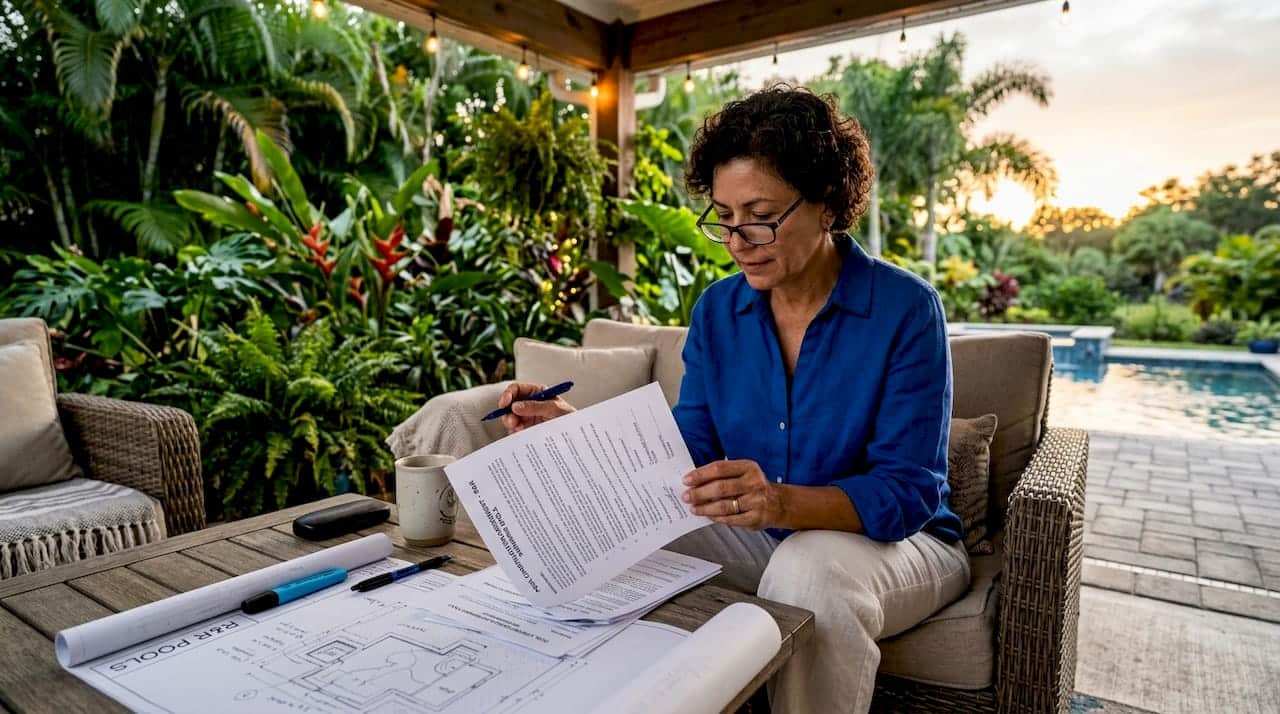
A pool construction contract is a legally binding document that defines every material, milestone, payment, and protection involved in your project. The role of pool contract details goes far beyond paperwork. These details are the single mechanism that prevents cost overruns, schedule disputes, and workmanship arguments before they start. Central Florida homeowners face region-specific requirements around permitting, licensing, and county inspections that make contract specifics even more critical. A vague contract does not just create confusion. It creates liability.
What are the essential elements in pool contract details?
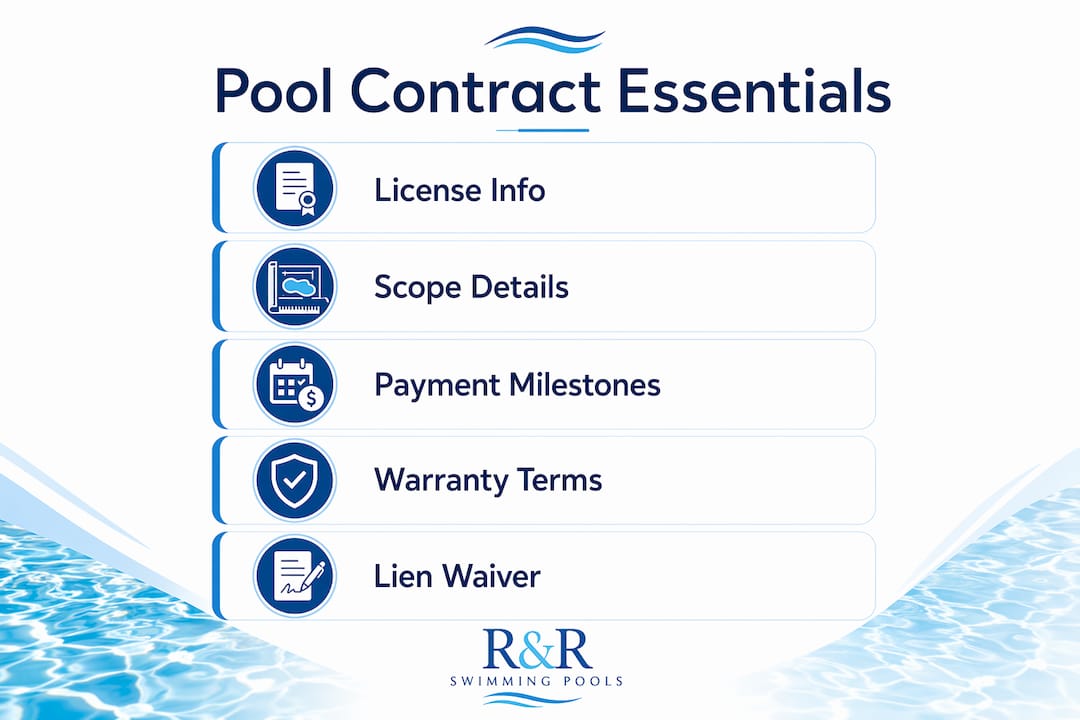
A valid pool construction contract in Florida must include the contractor’s legal business name, license number, detailed scope of work, payment schedule tied to milestones, warranty terms, estimated start and completion dates, and a formal change order process. Each of these elements serves a specific legal and practical function. Miss one, and you lose a layer of protection.

The scope of work section is where most contracts succeed or fail. It should name the exact pool dimensions, shell material (concrete or fiberglass), surface finish, coping style, equipment brands and model numbers, and any water features. Generic phrases like “premium finish” or “standard equipment” are not acceptable. Vague contract terms like these are a leading cause of residential construction disputes because two parties can read the same phrase and reach completely different conclusions.
Here are the core elements every Central Florida pool contract must address:
- Contractor credentials: Full legal business name, Florida contractor license number, and proof of general liability and workers’ compensation insurance.
- Detailed scope: Pool dimensions, shell type, finish materials, equipment specifications, and all included features listed by name and model.
- Permit responsibilities: A clear statement of who obtains permits, pays permit fees, and coordinates county inspections. This matters especially across Lake, Orange, and Osceola counties, which each have their own inspection processes.
- Payment schedule: Payments tied to specific construction milestones, not arbitrary calendar dates.
- Warranty terms: Separate coverage for manufacturer warranties on equipment and workmanship warranties on construction quality.
- Change order process: A written procedure requiring signed approval before any scope or cost change takes effect.
- Dispute resolution: A defined method for resolving disagreements, whether through mediation, arbitration, or another agreed process.
Pro Tip: Before signing, cross-reference the contractor’s license number with the Florida Department of Business and Professional Regulation (DBPR) database. This takes under two minutes and confirms the license is active and in good standing.
Warranty language deserves special attention. Warranty provisions should clearly distinguish manufacturer warranties from workmanship warranties. Manufacturer warranties cover equipment like pumps and heaters. Workmanship warranties cover the builder’s labor and structural quality. Homeowners often assume one covers the other. They do not. Understanding pool warranties in Central Florida before you sign prevents a painful discovery after something goes wrong.
How do detailed contract provisions prevent disputes?
Clear contract language removes the gray areas where disputes live. When every material, timeline, and payment is documented, neither party can credibly claim a misunderstanding. The contract becomes the single source of truth for the entire project.
The change order process is where many pool projects unravel. Verbal agreements about adding a spa, changing tile, or upgrading a pump feel harmless in the moment. Months later, those conversations become the center of a billing argument. Written change orders documenting all scope modifications, including cost, timeline impact, and signatures from both parties, are the most effective way to keep projects predictable. Good builders maintain this paper trail as standard practice, not as an afterthought.
Lien waivers are another protection most homeowners overlook. Lien waivers signed at major payment milestones protect you from unpaid subcontractors filing claims against your property after you have already paid the general contractor. Without them, you could pay twice for the same work.
“Dispute resolution clauses and lien waivers in contracts play a critical role in protecting homeowners from extended legal battles and third-party claims that can arise after payments are made. A contract without these provisions leaves homeowners exposed long after the project is complete.”
Allowances are a subtler risk. Builders sometimes use unrealistically low placeholder costs to make a bid look competitive. When actual costs come in higher, the homeowner must approve expensive change orders to keep the project moving. Allowances set unrealistically low turn a competitive bid into a budget trap. Ask your builder to justify every allowance figure before you sign.
What are the red flags to spot in a pool contract?
Most contract problems are visible before you sign. You just need to know what to look for. The following warning signs indicate a contract that puts you at risk.
- Excessive upfront payment. Payment schedules should be tied to visible construction milestones. Requests for more than 10–15% upfront, or any demand for over 50% before work begins, are a serious red flag. Legitimate builders fund early phases from their own operating capital.
- Vague scope descriptions. Phrases like “as discussed,” “builder’s choice,” or “standard grade” give the contractor unchecked discretion over your project. Every material and product should be named specifically.
- No change order procedure. If the contract does not define how changes are approved and priced, assume all changes will be verbal and unenforceable.
- Missing permit language. A contract that does not assign permit responsibility leaves a critical gap. In Central Florida counties, unpermitted pool construction can result in fines, forced demolition, or title issues when you sell.
- Unclear warranty terms. If the warranty section does not separate manufacturer coverage from workmanship coverage, or does not specify duration, it offers little real protection.
- No dispute resolution clause. Without a defined process, any disagreement defaults to litigation, which is expensive and slow.
Pro Tip: Florida licensed pool builders are required to carry both general liability and workers’ compensation insurance. Ask for certificates of insurance naming you as an additional insured before the first shovel hits the ground.
Verifying contractor credentials in Central Florida is not optional. It is the baseline check that separates a professional builder from an unlicensed operator who will disappear when problems arise.
How should you review and negotiate pool contract details?
Treat the contract as the project’s single source of truth, not a formality to get through quickly. Every question you ask before signing is cheaper than every dispute you resolve after construction starts.
Start by reading the scope of work against your design plans line by line. If a feature appears in the design but not in the contract, it is not included. Request written confirmation for every item you were verbally promised. Verbal promises do not survive disagreements.
Key steps for an effective contract review:
- Request itemized allowances. Ask the builder to provide market-rate justification for every allowance figure. If a tile allowance is $8 per square foot but the tile you selected costs $14, negotiate the allowance up before signing.
- Align payments with milestones. Review the pool building timeline and confirm that each payment corresponds to a visible, verifiable stage of construction such as excavation, shell completion, or equipment installation.
- Confirm permit responsibility in writing. The contract must state that the contractor pulls all required permits and coordinates all county inspections. Never accept a contract that leaves this ambiguous.
- Add a written approval clause for all changes. If the contract does not already require written, signed change orders for every modification, request that language be added before you sign.
- Consult a construction attorney for large projects. For projects exceeding $50,000, a one-hour legal review is a low-cost insurance policy against contract gaps that could cost far more later.
The pool contractor selection process and the contract review process are inseparable. A builder who resists adding specifics to a contract is signaling how they will handle disputes during construction.
Key Takeaways
A pool contract’s details are the legal and practical foundation that protects your investment, sets clear expectations, and prevents disputes from the first day of construction to the final warranty claim.
| Point | Details |
|---|---|
| Scope must be specific | Name every material, finish, and equipment model. Generic terms create disputes. |
| Payments follow milestones | Never pay more than 10–15% upfront. Tie every payment to a visible construction stage. |
| Lien waivers protect you | Request signed lien waivers at each major payment to block third-party claims on your property. |
| Warranty types differ | Separate manufacturer and workmanship warranties in writing. One does not cover the other. |
| Contract quality predicts builder quality | A detailed, clear contract signals a professional builder. A vague one signals future problems. |
What a decade of contracts taught me about builder integrity
The quality of a pool contract is the most reliable early signal of how a builder operates. I have seen homeowners sign two-page agreements and spend years in disputes over projects that cost six figures. I have also seen homeowners with 20-page contracts sail through construction without a single argument. The correlation is not coincidental.
Builders who resist adding specifics to a contract are not protecting themselves from unreasonable clients. They are protecting themselves from accountability. A professional builder welcomes a detailed contract because it protects them too. It documents exactly what they agreed to deliver and prevents scope creep from clients who later claim they were promised more.
The most overlooked contract detail is the dispute resolution clause. Homeowners skip it because they assume they will never need it. The builders who omit it know that without it, any dispute defaults to a process that favors whoever has more time and money to spend on litigation. That is rarely the homeowner.
My honest recommendation: if a builder hands you a vague contract and tells you to “trust the process,” walk away. The contract is the process. A builder who cannot document their commitments in writing has not yet earned your trust.
— Results
How Randrswimmingpools approaches transparent pool contracts
Randrswimmingpools has built custom inground pools across Central Florida since 1985. That four-decade track record is built on contracts that leave nothing to interpretation.
Every R and R Swimming Pools project starts with a detailed scope, milestone-based payment schedule, and clearly documented warranty terms. Homeowners who want to understand exactly what a professional pool installation looks like from contract to completion can start with the inground pool installation guide, which walks through every phase of the process. For homeowners considering a custom build, the custom pool installation guide covers design decisions, contract expectations, and what to ask before signing. Schedule a free consultation to see what a transparent, fully documented pool contract looks like in practice.
FAQ
What must a Florida pool contract legally include?
A valid Florida pool contract must include the contractor’s license number, detailed scope of work, milestone-based payment schedule, warranty terms, estimated dates, and a formal change order process. These elements are required to legally protect both the homeowner and the contractor.
How much upfront payment is acceptable in a pool contract?
Reputable pool contracts request no more than 10–15% upfront. Any demand for over 50% before construction begins is a red flag that signals financial instability or poor business practice.
What is the difference between a manufacturer warranty and a workmanship warranty?
A manufacturer warranty covers pool equipment like pumps and heaters. A workmanship warranty covers the builder’s construction quality and labor. Both should appear separately in your contract with defined durations.
Why do pool contracts need a lien waiver provision?
Lien waivers protect homeowners from subcontractor claims against the property after payment is made to the general contractor. Without them, you could legally owe money for work you already paid for.
How do I verify a pool contractor’s license in Florida?
Search the contractor’s license number on the Florida Department of Business and Professional Regulation (DBPR) website. The search is free, takes under two minutes, and confirms whether the license is active, current, and in good standing.
