
TL;DR:
- Custom pool shapes in Central Florida must consider local soil, drainage, and climate conditions for durability.
- Planning steps include goal setting, yard measurement, sketching, designer consultation, and feasibility checks.
- Proper assessment and stabilization prevent long-term structural problems, especially with freeform designs.
Choosing the right pool shape for your Central Florida backyard feels exciting until the options pile up. Freeform or geometric? Lap pool or resort-style? Then come the questions about soil, drainage, permits, and budget, and suddenly a fun project feels like a technical maze. The good news is that with the right planning process, customizing your pool shape is very achievable. This guide walks you through every major decision, from understanding your shape options to confirming your design is actually buildable in Central Florida’s unique conditions, so you can move forward with confidence.
Table of Contents
- Understanding customization options for pool shape
- Planning for Central Florida conditions
- Step-by-step process: Designing your custom pool shape
- Verifying feasibility and construction readiness
- Why most pool shapes get it wrong in Central Florida
- Ready to bring your dream pool shape to life?
- Frequently asked questions
Key Takeaways
| Point | Details |
|---|---|
| Tailor pool shape to your space | Your pool’s shape should fit your yard, style preferences, and how you plan to use it. |
| Plan for Florida conditions | Local soil and water table challenges must drive pool design and construction timing. |
| Follow a step-by-step process | Starting with your goals and site requirements leads to better pool shape outcomes. |
| Verify with professionals | Always confirm plans for permits, feasibility, and buildability before breaking ground. |
Understanding customization options for pool shape
A “custom” pool shape simply means a pool designed specifically for your yard, your lifestyle, and your taste rather than pulled from a catalog of standard sizes. Custom pools can follow classic geometric lines or flow in organic curves. The key difference from a standard pool is that every dimension, angle, and feature is chosen with your specific space in mind.
When you explore Central Florida pool shapes, you will find five popular categories that most designs fall into:
| Pool shape | Appearance | Best for |
|---|---|---|
| Rectangular | Clean, straight lines | Lap swimming, modern yards |
| Freeform | Organic, curving edges | Tropical or naturalistic looks |
| Kidney | Curved with an indent | Smaller yards, casual use |
| Roman | Rectangular with curved ends | Classic, formal aesthetics |
| Lap | Long and narrow | Fitness-focused homeowners |
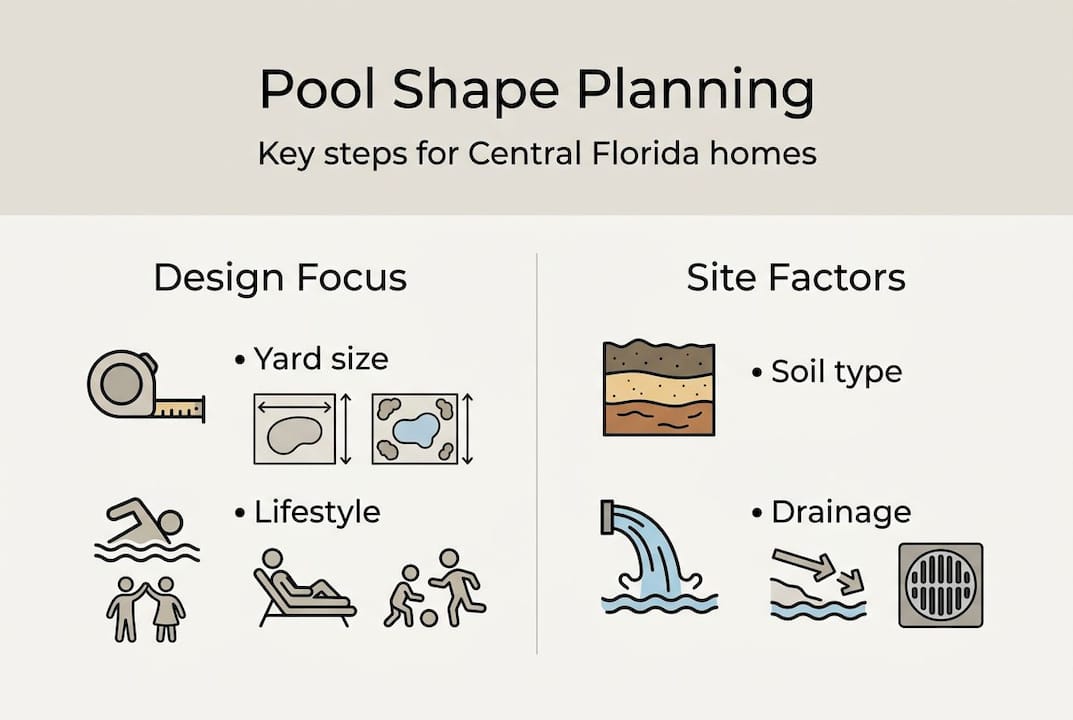
Your yard size, how you plan to use the pool, and the features you want all shape which option makes the most sense. A family that wants a water slide and shallow play area has very different needs from a homeowner who wants to swim laps every morning. Low-maintenance pool shapes like rectangles are worth considering too, since rectangles require 15% less maintenance than more complex freeform designs in Florida homes.
Before you sit down with a pool builder, think through these design goals:
- Blend with landscaping: Do you want the pool to feel like a natural part of your yard or a bold centerpiece?
- Maximize swim space: Is open water area more important than shallow lounging zones?
- Create a resort look: Do you want waterfalls, grottos, or spa features built into the shape?
- Accommodate future features: Could you add a hot tub or sun shelf later?
- Work within your budget: More complex shapes cost more to build and maintain.
Having clear answers to these questions makes your first conversation with a designer far more productive.
Planning for Central Florida conditions
Before finalizing your vision, account for local landscape and weather factors. Central Florida’s environment is genuinely different from most of the country, and those differences directly affect which pool shapes are practical for your yard.
The three biggest local challenges are a high water table, sandy soil composition, and heavy summer rainfall. Central Florida sits on a limestone shelf covered by sandy soil, which drains quickly in some spots and holds water in others. Summer storms can dump several inches of rain in a single afternoon, stressing drainage systems around your pool.
| Site factor | Why it matters | How it affects your design |
|---|---|---|
| High water table | Water pressure from below can shift pool walls | Requires dewatering during excavation and structural reinforcement |
| Sandy soil | Low load-bearing capacity | Shapes with long unsupported walls need extra stabilization |
| Heavy rainfall | Pooling water around the shell | Drainage plan must be part of the shape design |
| Yard slope | Water runoff direction | Influences where the pool sits and how decking is graded |
As part of your pool planning steps, your builder should assess all of these factors before recommending a shape. The excavation cost considerations in this region are significant because a high water table requires dewatering and specialized excavation techniques that add time and expense to the project.
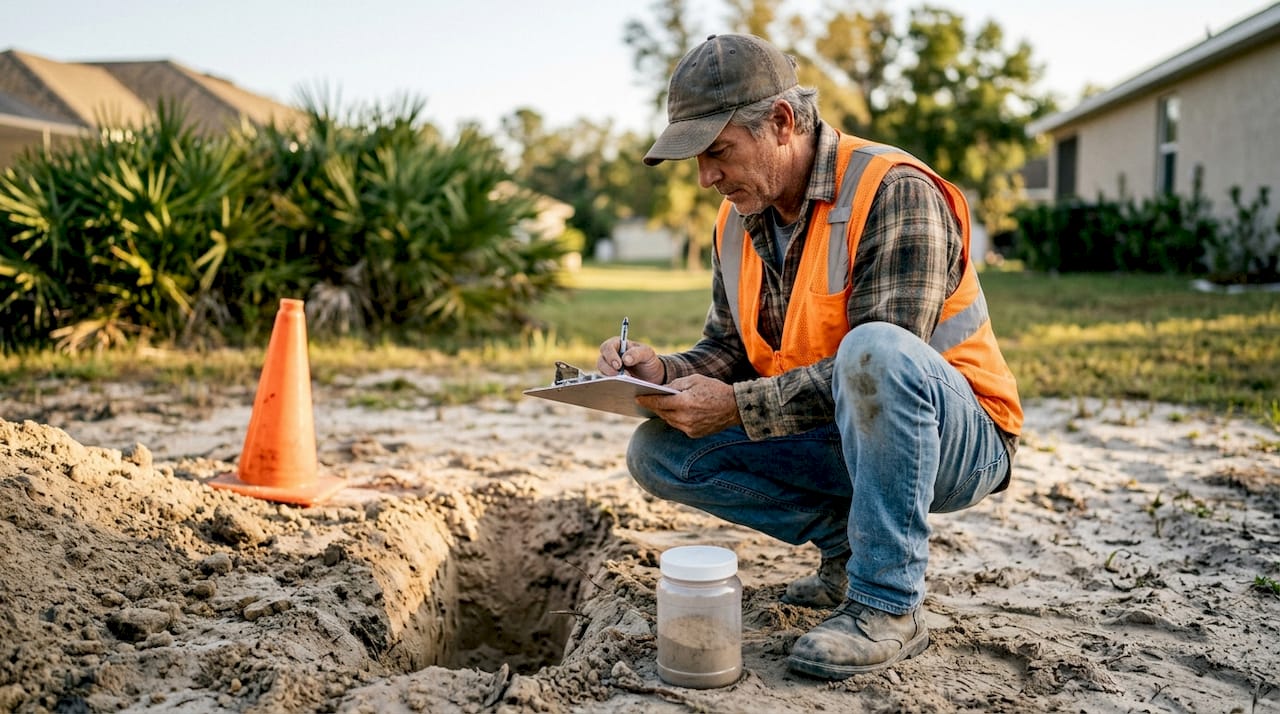
When planning pool features like raised walls, beach entries, or attached spas, your engineer needs to account for soil movement over time. A shape that looks stunning on paper can develop structural problems within a few years if the ground beneath it was not properly prepared.
Pro Tip: Schedule your pool construction to start during Central Florida’s dry season, roughly October through April. You will avoid the worst of the summer rain delays, and your contractor will have an easier time managing the excavation site.
Step-by-step process: Designing your custom pool shape
With local factors in mind, here is how to design your custom pool shape step by step.
- Set your goals and must-haves. Write down how you will use the pool most often, who will use it, and which features are non-negotiable. This list guides every decision that follows.
- Measure your available space. Walk your yard with a tape measure and note the distances from your home, property lines, trees, and utility lines. Florida setback rules typically require pools to sit a minimum distance from fences and structures.
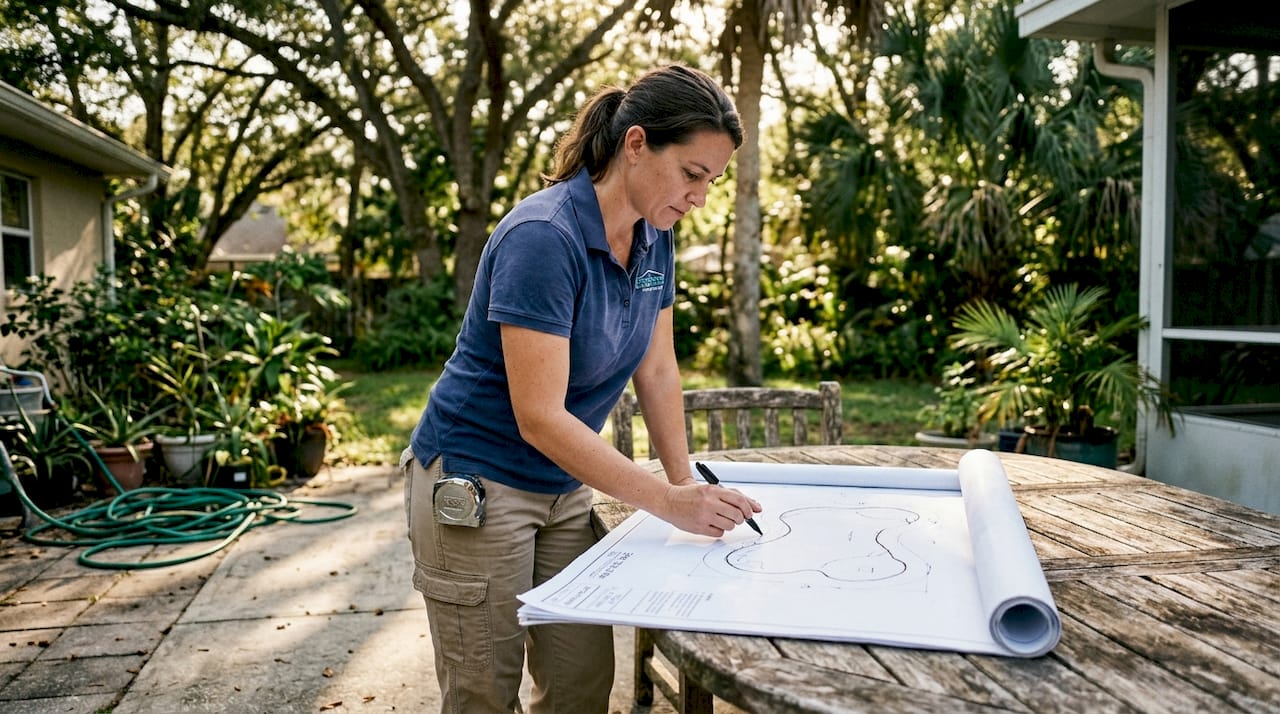
- Sketch a rough shape. You do not need to be an artist. A simple drawing showing the general outline and where features like steps or a spa would go gives your designer a starting point.
- Consult with a pool designer. Bring your sketch, your goals list, and your yard measurements. A good designer will refine your ideas and flag any issues early.
- Review technical feedback. Your designer may suggest adjustments based on soil reports, drainage requirements, or budget. Stay open to changes that protect the long-term performance of your pool.
- Finalize your plans. Once you are satisfied with the shape and features, your builder creates formal blueprints for permitting and construction.
As the custom pool planning guide makes clear, pool shape customization must consider both function and aesthetics for the best results. A shape that only looks good but ignores how you actually live in your backyard will disappoint you within a season.
Custom features like tanning ledges, built-in benches, and entry steps are easiest to incorporate during this design phase. Adding them later is expensive and sometimes impossible without major reconstruction. Think about landscaping ideas at this stage too, since the pool shape and surrounding plantings should work together visually.
Pro Tip: Ask your designer for 3D renderings before approving the final plan. Seeing your pool from multiple angles, including from inside your home looking out, can reveal proportion issues that flat drawings miss entirely.
Verifying feasibility and construction readiness
Once your shape is designed, ensure it is practical to build before signing off. A beautiful design that cannot be permitted or built within your budget is just an expensive drawing.
Start by reviewing your design with a licensed pool contractor who will check three things: whether the shape meets local building codes, whether the engineering is sound for your specific soil conditions, and whether the total cost fits your budget. Do not skip this step even if you love the design.
Here is a feasibility checklist to work through before construction begins:
- Structural integrity: Does the shape require any unsupported spans or unusual wall heights that need special engineering?
- Drainage plan: Where will water go during heavy rain, and does the pool deck slope away from your home?
- Total cost: Does the final design, including all custom features, fit within your approved budget?
- Code compliance: Has your contractor pulled the required permits with Orange, Lake, or Osceola County?
- Future maintenance impact: Will the shape make it harder or more expensive to clean, resurface, or repair the pool later?
Important: Certain custom shapes require extra stabilization in sandy soils, according to pool stabilization advice for the Tampa Bay and Central Florida region. Skipping soil stabilization to save money upfront is one of the most common causes of expensive structural repairs within the first decade of pool ownership.
For ongoing care after construction, reviewing pool maintenance tips specific to Central Florida will help you understand how your chosen shape affects cleaning time, chemical balance, and equipment needs.
Balancing your dream design with construction realities is not about settling. It is about making sure your investment holds up for decades, not just looks great in the first summer photos.
Why most pool shapes get it wrong in Central Florida
After nearly four decades of building pools across Central Florida, we have seen a consistent pattern. Homeowners fall in love with a shape online or in a magazine, and some contractors are happy to build exactly what the customer wants without asking the hard questions. Then, five or eight years later, the calls start coming in about cracking walls, shifting decks, or drainage problems that trace directly back to decisions made before the first shovel hit the ground.
The most overlooked step in the entire custom pool design process is a genuine soil and drainage assessment before the shape is finalized. Freeform pools are the most common regret we hear about, not because freeform is a bad design choice, but because their irregular shapes create more surface area in contact with unstable sandy soil. When that soil shifts, the consequences are expensive.
The best custom pools we have built share one trait: the designer asked tough questions early. They pushed back on shapes that looked great but created engineering problems. They insisted on proper stabilization even when it added to the upfront cost. Great pool design is not just about aesthetics. It is about building something that performs beautifully for 20 or 30 years in a climate that is genuinely demanding.
Ready to bring your dream pool shape to life?
If you have worked through this guide and you feel ready to move from planning to building, the next step is connecting with a team that knows Central Florida’s conditions inside and out.
At R&R Swimming Pools, we have been designing and building custom concrete pool building projects across Central Florida since 1985. Our process starts with the tough feasibility questions, not the pretty sketches. Whether you are just starting to explore ideas or you are ready to review blueprints, our custom pool installation guide walks you through what to expect at every stage. We also serve homeowners throughout Lake County through our new pool construction services. Contact us today for a free quote and let’s design a pool that works as well as it looks.
Frequently asked questions
What is the best pool shape for Central Florida homes?
Rectangular pools are often recommended for Central Florida because they are 15% lower maintenance than complex shapes and work well with most yard layouts and soil conditions.
How does a high water table affect my pool design?
A high water table makes excavation more complex and costly because it requires dewatering and specialized excavation techniques to keep the site stable during construction.
What should I ask my pool builder before choosing a shape?
Ask specifically about soil suitability for your chosen shape, how drainage will be handled, what permits are required, and how the shape will affect your long-term maintenance costs.
Can I add custom features like benches or tanning ledges to any pool shape?
Yes, most modern pool shapes can incorporate custom features like tanning ledges, benches, and entry steps, but these are easiest and most cost-effective to plan during the initial design phase rather than added later.
