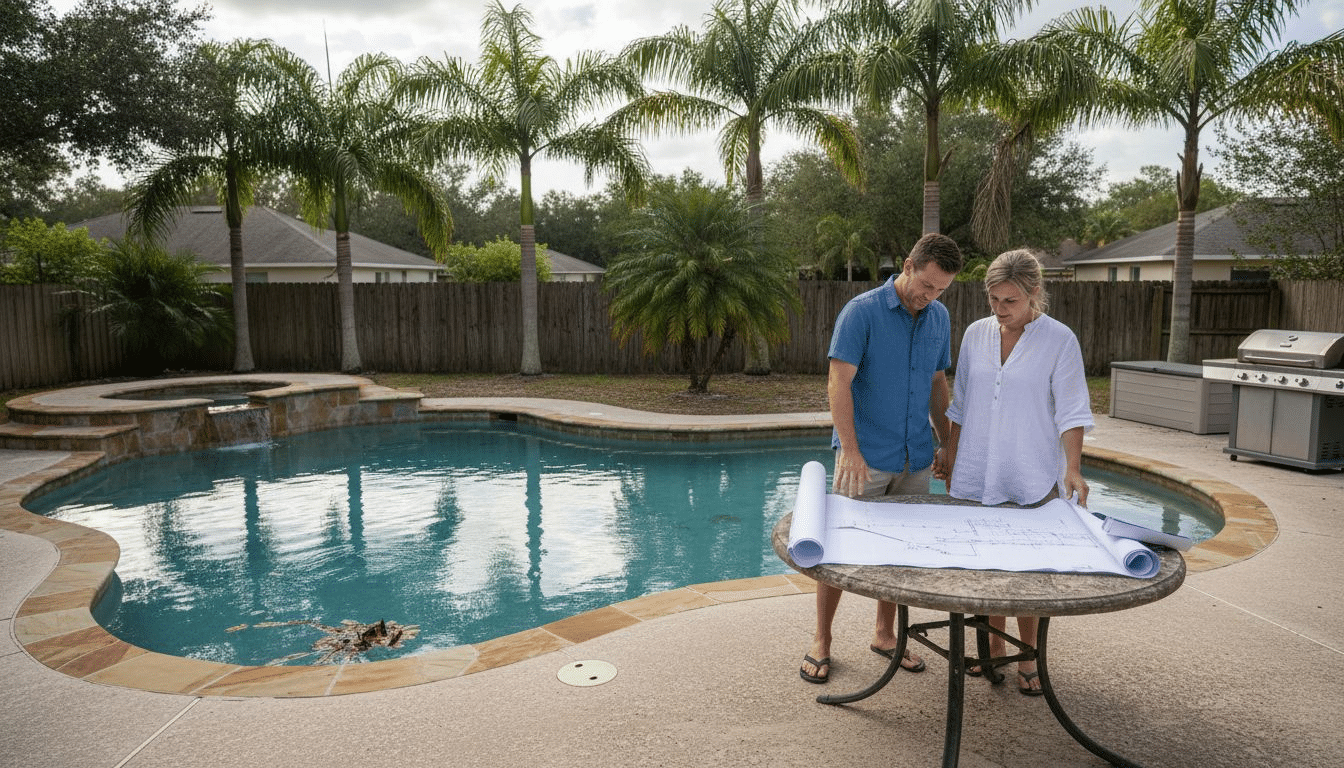
Planning custom pool features in Central Florida means juggling strict permitting regulations, climate specific design needs, and personalized choices for spas, waterfalls, and entertainment spaces. Without structured planning, up to 40% of pool projects face schedule delays and budget overruns. This guide walks you through seven actionable steps to confidently plan safe, compliant, and personalized pool features that transform your backyard into a functional oasis.
Table of Contents
- Step 1: Site Assessment And Permitting
- Step 2: Defining Homeowner Needs And Feature Prioritization
- Step 3: Designing Personalized Pool Features
- Step 4: Budgeting And Timeline Expectations For Central Florida Pools
- Step 5: Common Mistakes And Troubleshooting
- Step 6: Safety And Compliance Requirements
- Step 7: Finalizing Plans And Preparing For Construction
Key takeaways
| Point | Details |
|---|---|
| Early permit approval prevents costly delays | Secure all building and health permits upfront to avoid legal complications and schedule setbacks. |
| Prioritize features aligning with lifestyle and budget | Rank desired features by importance and cost impact to focus spending effectively. |
| Design must consider Florida climate and regulations | Choose durable materials resistant to heat, humidity, and salt while meeting local codes. |
| Anticipate realistic costs and timelines | Expect budgets from $45,000 to $120,000+ and timelines of 4 to 6 months including contingencies. |
| Safety compliance is critical for legal and family protection | Install required 48 inch high fencing, self-closing gates, and approved alarms to meet Florida Building Code. |
Step 1: site assessment and permitting
Starting with thorough site evaluation and securing permits establishes the legal and logistical foundation for your pool project. Central Florida jurisdictions enforce specific building codes, health regulations, and utility requirements that directly impact design feasibility and construction timelines.
Identify your local building department early and request detailed permit application requirements. Most municipalities require site plans showing property boundaries, existing structures, proposed pool location, setback distances, and utility lines. Health department approvals may mandate specific drainage, sanitation, and barrier installations. Submitting incomplete applications causes avoidable delays.
Understanding permitting timelines helps you set realistic project schedules. Approval processes typically take 2 to 4 weeks but can extend longer during peak construction seasons or if revisions are needed. Engaging contractors familiar with Central Florida codes streamlines approval since experienced professionals know local inspectors and common revision triggers.
Prepare for potential permit revisions by building contingency time into your schedule. Inspectors may request adjustments to safety barriers, drainage plans, or structural details. Addressing these proactively minimizes frustration and keeps construction moving forward.
Key permitting steps include:
- Contact your local building and health departments to understand jurisdiction specific requirements
- Gather property surveys, utility maps, and existing structure documentation
- Submit complete applications including detailed site plans and engineered drawings
- Schedule pre-construction meetings with inspectors to clarify expectations
- Budget extra time for potential revisions and follow up approvals
Pro Tip: Request a pre-application consultation with your building department. Inspectors often provide valuable feedback that prevents costly redesigns later.
Step 2: defining homeowner needs and feature prioritization
After securing permits, focus shifts to clarifying your personal pool feature priorities based on lifestyle, entertainment needs, and budget constraints. This prioritization directly shapes design decisions and spending allocation.
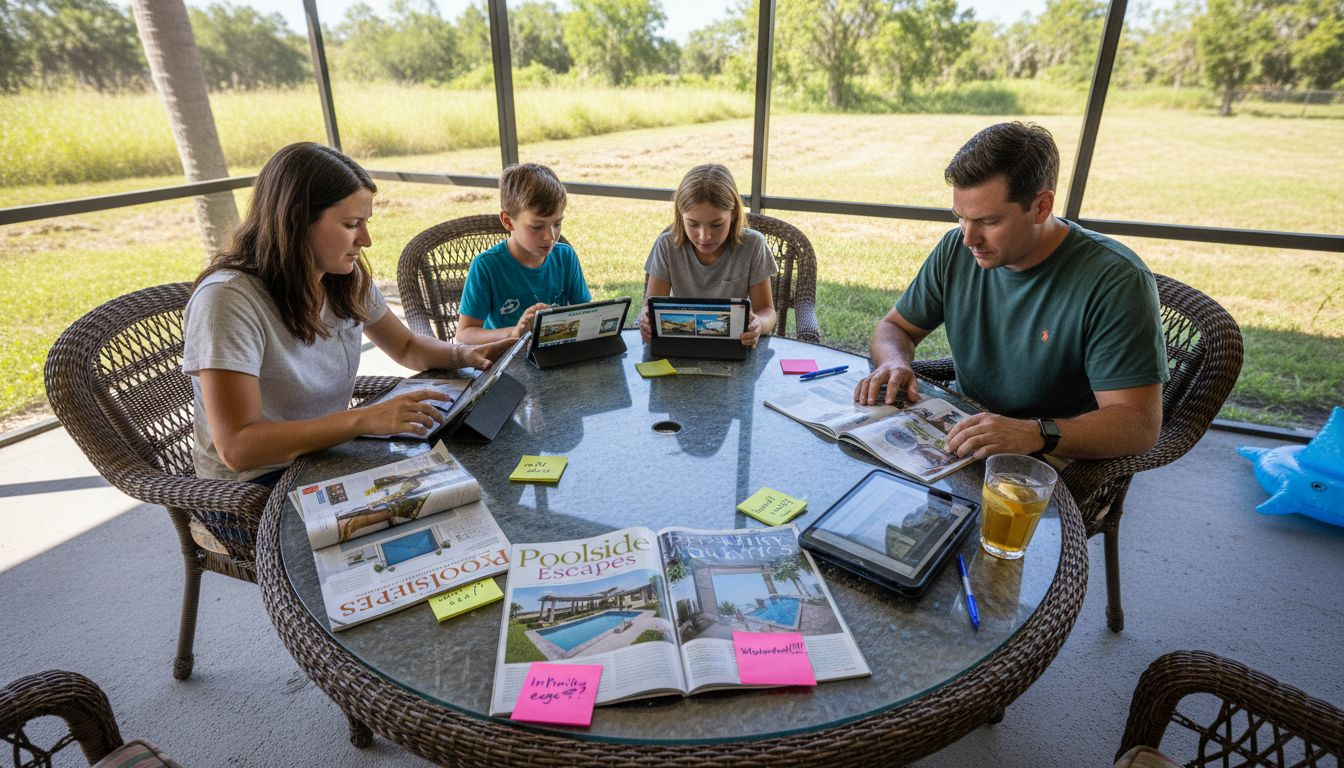
Start by compiling a comprehensive list of desired features such as attached spas, cascading waterfalls, water jets, deck materials, integrated lighting, heating systems, and safety barriers. Include both functional and aesthetic elements that enhance your backyard experience.
Rank these features by importance to your family’s daily use and long-term satisfaction. Distinguish between must-have elements that define your pool’s core purpose and nice-to-have additions that enhance but aren’t essential. This clarity prevents overspending on lower priority items while underfunding critical features.
Assess your family’s lifestyle patterns honestly. Do you host frequent gatherings requiring expansive decks and outdoor kitchens? Do you prioritize relaxation with hydrotherapy spa jets? Do young children necessitate shallow play areas and enhanced safety barriers? Aligning features with actual usage patterns maximizes return on investment.
Allocate your budget realistically across prioritized features by researching approximate costs for each element. Custom pool planning guides provide cost benchmarks that help you balance aspirations with financial reality. Luxury features like integrated spas and waterfalls typically add 15% to 25% to base pool costs.
Communicate your priorities clearly to contractors during initial consultations. Detailed priority lists enable designers to propose solutions that maximize value within your budget rather than generic packages that may not suit your needs.
Prioritization framework:
- List all desired pool features without initial budget constraints
- Rank features from essential to optional based on lifestyle fit
- Research approximate costs for each feature to inform tradeoffs
- Identify features offering highest value for your family’s specific needs
- Document priorities in writing to guide contractor discussions
Pro Tip: Create a visual inspiration board with photos of features you love. This communicates your aesthetic vision more effectively than verbal descriptions alone.
Step 3: designing personalized pool features
Building on feature priorities, technical design planning ensures personalized elements like spas and waterfalls function reliably in Central Florida’s challenging climate while integrating seamlessly with your pool’s overall aesthetic.
Waterfalls require specialized plumbing systems with dedicated pumps, filtration loops, and drainage provisions to handle water recirculation without overwhelming your main pool system. Electrical installations must support pump motors, LED lighting, and control systems while meeting National Electrical Code standards for wet environments. Structural foundations need engineering to support rock formations or prefabricated waterfall units against soil shifting and water pressure.
Attached spas demand separate heating and hydrotherapy systems beyond standard pool equipment. Jet placements, seating depth, and temperature controls require precise planning during design rather than retrofit attempts. Insulated plumbing prevents heat loss and reduces operating costs in Florida’s variable winter temperatures.
Choose materials specifically rated for Florida’s intense UV exposure, high humidity, and potential salt air in coastal areas. Natural stone, porcelain tile, and premium plaster finishes resist fading and deterioration better than economy options. Stainless steel fixtures outlast cheaper alternatives in corrosive environments.
Utilize 3D CAD modeling and design visualization technology to see accurate renderings before construction begins. These tools reveal spatial relationships, proportion issues, and aesthetic mismatches that aren’t obvious in 2D drawings. Request multiple viewing angles and lighting scenarios to evaluate how features appear throughout the day.
Balance aesthetic goals with functional requirements like proper drainage, equipment access for maintenance, and circulation patterns that prevent dead zones. Beautiful features that create maintenance headaches or circulation problems diminish long-term satisfaction.
Integrate features coherently with your pool’s shape and backyard landscape rather than adding disconnected elements. Custom pool design processes emphasize holistic planning where waterfalls, spas, decking, and landscaping create unified outdoor living spaces.
| Design Element | Florida Specific Considerations | Typical Cost Impact |
|---|---|---|
| Waterfalls | UV resistant rock, reinforced plumbing, dedicated pump systems | 15% to 20% increase |
| Attached Spas | Separate heating, insulated plumbing, hydrotherapy jets | 20% to 25% increase |
| LED Lighting | Sealed fixtures, GFCI protection, corrosion resistant wiring | 5% to 8% increase |
| Natural Stone Decking | Heat resistant materials, slip resistant finish, proper drainage | 10% to 15% increase |
Design checklist:
- Specify equipment requirements for each custom feature including pumps, heaters, and electrical loads
- Select materials rated for Florida climate including UV, humidity, and salt resistance
- Review 3D renderings from multiple angles and lighting conditions
- Verify proper drainage and circulation for all water features
- Confirm maintenance access points for equipment and cleaning
Pro Tip: Visit completed projects with similar features to see how materials weather over time in Florida conditions. Photos don’t reveal texture, scale, or long-term durability like in-person inspections.
Step 4: budgeting and timeline expectations for Central Florida pools
Once design specifications are settled, establishing realistic budget ranges and project timelines prepares you for the financial and scheduling commitments ahead while preventing common surprises.
Custom inground pool costs in Central Florida range from $45,000 to $120,000 or more depending on size, materials, and feature complexity. Basic concrete or fiberglass pools with standard equipment anchor the lower end, while luxury installations with integrated spas, waterfalls, premium finishes, and extensive decking reach six figures.
Luxury features significantly impact total investment. Connected spas with hydrotherapy systems add $8,000 to $15,000. Custom waterfalls range from $5,000 for simple designs to $30,000 for elaborate rock formations with multiple cascades and lighting. Natural stone decking costs $15 to $30 per square foot compared to $8 to $12 for basic pavers.
Project timelines typically span 4 to 6 months from initial design consultations through final inspections and startup. This includes 2 to 4 weeks for permitting, 6 to 8 weeks for excavation and shell construction, 3 to 4 weeks for plumbing and electrical installations, 2 to 3 weeks for decking and finishing, and final weeks for cleanup and system commissioning.
Delays commonly arise from permit revisions, weather disruptions during rainy season, material delivery issues, or design changes mid-project. Building contingency time of 2 to 4 additional weeks into your schedule prevents stress when inevitable hiccups occur.
Maintain clear communication with your contractor through regular progress meetings and documented change orders. Step by step pool building guides and 7 essential planning steps help you understand what to expect at each construction phase.
| Budget Component | Percentage of Total | Typical Range |
|---|---|---|
| Pool Shell Construction | 40% to 50% | $18,000 to $60,000 |
| Equipment and Systems | 15% to 20% | $6,750 to $24,000 |
| Custom Features | 15% to 25% | $6,750 to $30,000 |
| Decking and Finishes | 15% to 20% | $6,750 to $24,000 |
| Permits and Engineering | 3% to 5% | $1,350 to $6,000 |
Budgeting timeline:
- Request detailed written estimates from multiple licensed contractors
- Compare line item costs rather than just total prices
- Identify allowances that may increase during material selection
- Set aside 10% to 15% contingency for unexpected costs
- Explore financing options if needed to spread payments over construction phases
- Confirm payment schedule tied to completion milestones not arbitrary dates
Step 5: common mistakes and troubleshooting
After understanding budgets and timelines, recognizing frequent planning and execution errors helps you proactively avoid costly delays and compliance failures that plague many Central Florida pool projects.
Failing to secure all required permits upfront creates legal complications that halt construction and potentially require expensive corrections. Some homeowners skip health department approvals or assume building permits cover all requirements, only to face stop work orders during inspections.
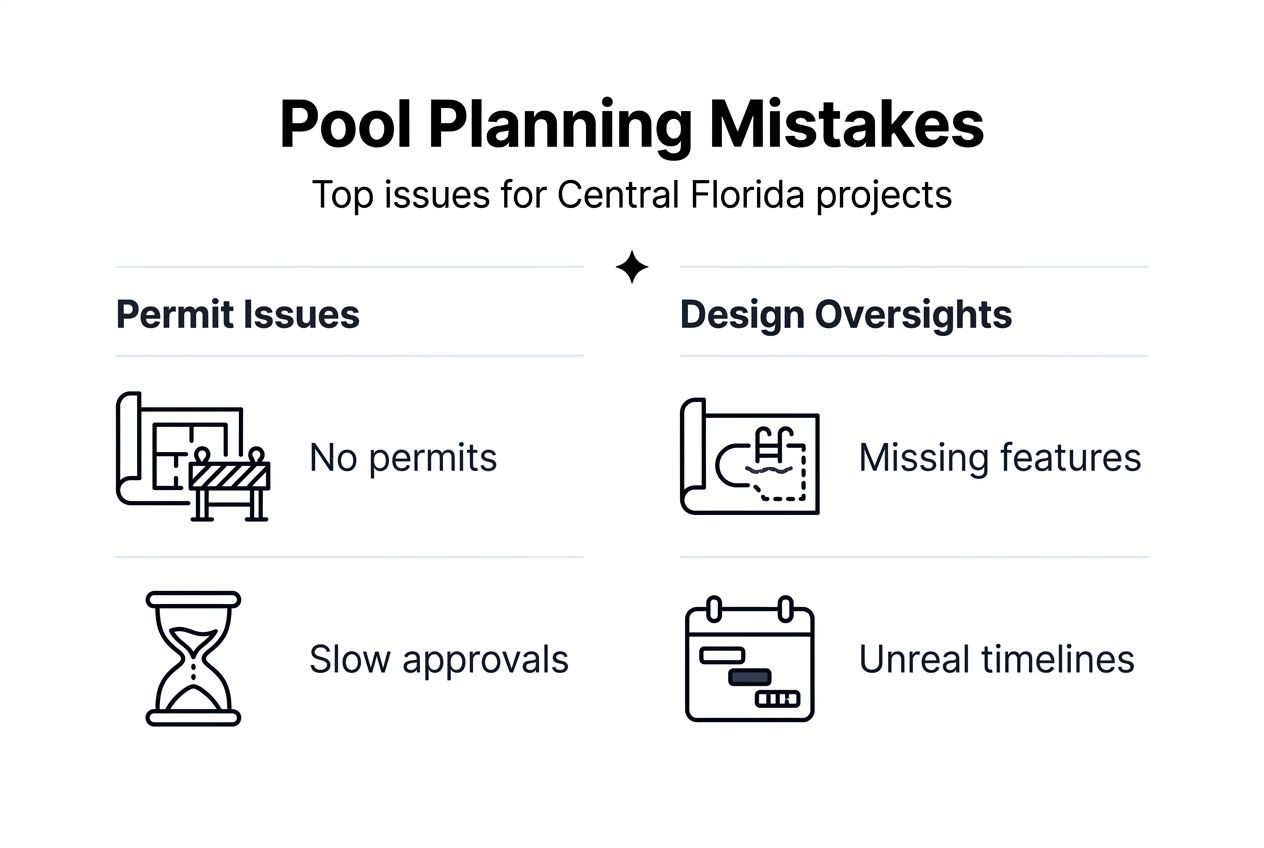
Underestimating the complexity and costs of custom features leads to mid-project budget crises or compromised designs. Waterfalls that seemed simple in concept often require extensive structural work, specialized equipment, and engineering that weren’t initially budgeted.
Ignoring safety barrier and alarm regulations risks fines, insurance complications, and genuine hazards to children. Florida’s strict pool safety laws aren’t optional, and retrofit installations cost significantly more than incorporating requirements during initial construction.
Setting unrealistic timelines based on best case scenarios creates frustration when normal delays occur. Expecting 3 month completion for complex projects sets everyone up for disappointment.
Poor communication with contractors causes errors, rework, and finger pointing over unmet expectations. Assumptions about finishes, equipment brands, or feature specifications that weren’t documented in contracts lead to disputes.
Troubleshooting strategies:
- Verify permit completeness with building departments before breaking ground
- Request detailed cost breakdowns for custom features during design phase
- Incorporate all safety requirements into initial plans rather than afterthoughts
- Add contingency time to contractor estimates when planning your schedule
- Document all decisions and changes in writing with signed change orders
- Schedule regular progress meetings to address issues before they escalate
Pro Tip: Take time-stamped photos at each construction phase. Visual documentation protects both you and your contractor by providing clear evidence of work progression and any issues that arise.
Experienced pool contractors anticipate common pitfalls and guide you around them through proven processes and clear communication protocols.
Step 6: safety and compliance requirements
Following troubleshooting guidance, understanding mandatory Florida pool safety regulations ensures legal compliance and protects your family from preventable accidents that result in tragic injuries and fatalities each year.
Florida Building Code Section 424 mandates barrier requirements for all residential pools. Barriers must be at least 48 inches high measured from grade, constructed to prevent climbing, and installed to eliminate gaps larger than 4 inches. Fencing, walls, or building structures can serve as barriers if they meet specifications.
Gates providing access through barriers must be self-closing and self-latching with release mechanisms located at least 54 inches from the bottom or on the pool side of the gate. This prevents young children from opening gates independently.
Pool alarms meeting ASTM standards provide additional protection layers beyond required barriers. Surface wave detection alarms, subsurface disturbance sensors, and door/gate alarms alert you to unexpected pool access.
Regular inspections and maintenance of safety features constitute best practices that many homeowners neglect. Gate latches wear and lose tension over time. Fence damage from storms creates gaps. Testing systems monthly ensures they function when needed.
Neglecting safety compliance exposes you to significant liability in accident scenarios. Insurance companies may deny claims for pools lacking required safety features. Local authorities can impose fines and require expensive retrofit installations.
Safety requirements include:
- Minimum 48 inch high barriers around entire pool perimeter
- Self-closing, self-latching gates with proper release mechanism placement
- Barriers constructed to prevent climbing with vertical members or mesh
- Alarms meeting ASTM F2208 standards for surface wave detection or door/gate monitoring
- Electrical installations meeting National Electrical Code for wet locations
- Proper bonding and grounding of all metallic pool components
Florida Statute 515.27 requires pools be equipped with an approved safety feature such as barrier, alarm, or safety cover. Compliance protects both legal liability and precious lives.
Pool installation processes incorporate safety requirements from initial design through final inspections, ensuring nothing is overlooked.
Step 7: finalizing plans and preparing for construction
Concluding the planning sequence, these final preparation steps ensure all approvals are secured and your property is ready for construction to begin smoothly without preventable delays.
Conduct a comprehensive final design review with your contractor before signing off. Walk through 3D renderings, equipment specifications, material selections, and timeline expectations one last time. Verify that all your prioritized features are accurately reflected and no assumptions exist about unspecified details.
Confirm all necessary permits are fully approved and physical permit documents are on site before excavation begins. Inspectors require posted permits and may issue stop work orders if documentation is missing.
Coordinate utility marking through your local utility notification service at least 48 to 72 hours before ground breaking. Underground power, gas, water, and communication lines must be identified to prevent dangerous and expensive damage during excavation.
Schedule site clearing and boundary setting with your contractor. Remove obstacles like sheds, fencing, or landscaping that interfere with equipment access. Mark pool boundaries, setback lines, and staging areas for materials and equipment.
Discuss construction timeline details including daily work hours, site access points, material delivery schedules, and inspection milestones. Establish communication protocols for progress updates and how quickly you’ll respond to questions requiring homeowner decisions.
Prepare for contingencies by ensuring you have up-to-date contact information for your contractor, project manager, key subcontractors, and relevant building inspectors. Know who to call when questions or issues arise.
Final preparation checklist:
- Complete final design review and obtain written homeowner approval
- Verify all permits are approved and physical documents are available
- Contact utility notification service for underground line marking
- Clear site of obstacles and establish staging areas for materials
- Confirm construction schedule including start date, daily hours, and inspection milestones
- Review communication plan for progress updates and decision points
- Document pre-construction property condition with photos
- Secure pets and notify neighbors of upcoming construction activity
Preparing for your pool build with thorough final preparations prevents last-minute scrambling and ensures construction proceeds efficiently from day one.
Discover expert pool installation in Central Florida
Planning custom pool features requires navigating complex regulations, technical design considerations, and budget realities that overwhelm many Central Florida homeowners. R & R Swimming Pools specializes in custom inground pool installation that transforms detailed planning into stunning backyard realities.
Our expert team guides you through every phase from initial design consultations and permit applications through construction management and final inspections. We leverage 40 years of Central Florida experience to anticipate challenges, streamline approvals, and deliver personalized pools with integrated spas, waterfalls, and entertainment features that exceed expectations.
Explore comprehensive inground pool installation guides and flexible financing options that make your pool dream achievable within your budget and timeline.
FAQ
What permits are needed for custom pools in Central Florida?
Building permits from your local municipality and health department approvals are required for all residential pool installations. Applications must include site plans, utility layouts, engineered structural drawings, and safety barrier specifications. Permitting timelines typically range from 2 to 4 weeks.
How should I prioritize pool features to fit my budget?
List all desired features, then rank them by importance to your family’s lifestyle and entertainment needs. Research approximate costs for each element to identify must-have features versus nice-to-have additions. Focus spending on high-priority items that deliver the most value for your specific usage patterns.
What safety features are legally required for pools in Central Florida?
Florida Building Code requires barriers at least 48 inches high around pool perimeters with self-closing, self-latching gates. Release mechanisms must be positioned at least 54 inches from the ground or on the pool side. Approved pool alarms meeting ASTM standards provide additional protection layers.
How long does the average custom pool project take in Central Florida?
Typical projects span 4 to 6 months from initial design through final inspections and startup. This includes 2 to 4 weeks for permitting, 6 to 8 weeks for excavation and shell construction, and several weeks for equipment installation, decking, and finishing. Build contingency time for weather delays and permit revisions.
What features add the most cost to custom pool installations?
Integrated spas with hydrotherapy systems add $8,000 to $15,000. Custom waterfalls range from $5,000 to $30,000 depending on complexity. Natural stone decking costs significantly more than basic pavers. Luxury features collectively can increase project costs by 15% to 25% above base pool installations.
