
TL;DR:
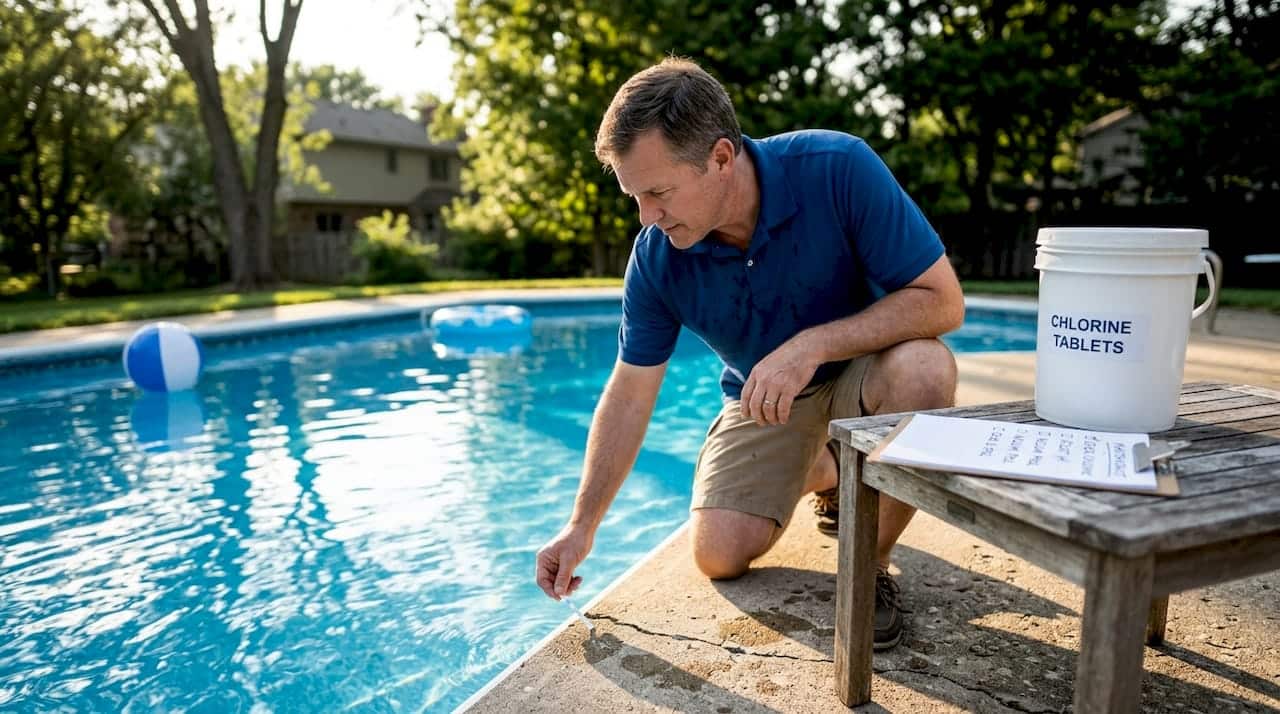
- Proper chlorination in Florida pools requires precise application to combat the effects of intense heat, sunlight, and frequent storms. Using the right chlorine types, maintaining balanced chemical levels, and timely shocking ensure water clarity and safety. Consistent testing, record-keeping, and professional support help homeowners navigate Florida’s unique pool care challenges effectively.
Many Florida homeowners treat pool chlorination like a simple chore, something like tossing in a tablet and calling it done. That mindset leads to green water, irritated eyes, and pools that need expensive repairs. Chlorine is not just bleach, and adding it correctly is far more involved than most people realize. In Central Florida, where summer heat is intense and afternoon thunderstorms are almost daily, getting chlorination right means the difference between a backyard oasis and a health hazard. This guide walks you through everything you need to know.
Table of Contents
- What is pool chlorination?
- Types of chlorine and how they differ
- Balancing chlorine, pH, and other pool chemicals
- When and how to shock your pool
- Traditional chlorine vs. alternatives: Saltwater, BBB method, and more
- What most guides miss about pool chlorination in Central Florida
- Ready to get expert pool help in Central Florida?
- Frequently asked questions
Key Takeaways
| Point | Details |
|---|---|
| Chlorination prevents illness | Proper chlorine keeps pool water safe by targeting bacteria, viruses, and algae. |
| Choose chlorine type wisely | Different chlorine forms affect water balance, comfort, and maintenance needs. |
| Balance chemicals for clarity | Maintaining FC, pH, and CYA creates comfortable, clean water and avoids problems. |
| Shock treatment is crucial | Regularly shocking your pool removes hidden contaminants and keeps water safe for swimming. |
| Saltwater isn’t chlorine-free | Saltwater pools generate chlorine and require the same careful monitoring as traditional pools. |
What is pool chlorination?
At its core, pool chlorination is the process of adding chlorine or chlorine compounds to pool water to disinfect it by killing bacteria, viruses, algae, and other microorganisms through the formation of hypochlorous acid (HOCl). That last part matters. When chlorine dissolves in water, it produces HOCl, which is the actual disinfectant doing the heavy lifting. Without it, harmful pathogens survive and thrive.
Central Florida’s climate creates a uniquely demanding environment for pool owners. Water temperatures regularly reach 85 to 90 degrees Fahrenheit during summer months. Warm water accelerates the growth of bacteria and algae. Add in direct sunlight for most of the day and frequent rain showers that dilute and disrupt chemical balance, and you have a situation where chlorination needs to be precise, consistent, and more frequent than pools in cooler states.
Here is what proper chlorination actually does for your pool:
- Kills bacteria and viruses that cause skin infections, ear infections, and gastrointestinal illness
- Prevents algae blooms that turn water green and make surfaces slippery
- Oxidizes organic matter like sweat, sunscreen, and body oils that swimmers introduce
- Maintains water clarity so you can see the bottom clearly at all times
- Extends pool surface life by preventing biological buildup that degrades plaster and tile
“A pool without properly maintained chlorine is not just unpleasant, it is a potential source of serious waterborne illness. Florida’s heat makes this more urgent, not less.”
Managing chlorination properly starts with understanding the equipment involved. Automatic pool chlorinators make the process far more reliable by delivering consistent doses without manual intervention.
Now that you know why chlorination matters, let’s break down the types of chlorine, their pros and cons, and what works best for Florida pools.
Types of chlorine and how they differ
Not all chlorine products are created equal. Each form of chlorine behaves differently in your water, affects pH differently, and carries different practical advantages. Chlorine types include liquid chlorine (sodium hypochlorite), granular calcium hypochlorite (Cal-Hypo), dichlor, and trichlor tablets, each producing HOCl but differing in pH impact, stabilizer addition, and application.
Here is a practical comparison to help you choose:
| Chlorine type | Form | pH impact | Adds CYA (stabilizer)? | Best use case |
|---|---|---|---|---|
| Liquid chlorine | Liquid | Raises pH | No | Regular dosing, larger pools |
| Cal-Hypo | Granular | Raises pH | No | Shock treatments |
| Trichlor tablets | Tablet/puck | Lowers pH | Yes | Slow, continuous feeding |
| Dichlor | Granular | Neutral | Yes | Quick spot dosing |
| Salt (via SWG) | System-generated | Slightly raises | No | Gentle, automated chlorination |
A few important things to keep in mind about each type:
- Liquid chlorine is affordable and fast-acting but degrades quickly in sunlight and can spike your pH if added in large amounts without adjustment
- Cal-Hypo is very powerful (65 to 78% available chlorine) but can raise calcium hardness over time, potentially causing cloudy water or scale on pool finishes
- Trichlor tablets are the most convenient option but steadily add cyanuric acid (CYA) to your water, which can accumulate to problematic levels over a Florida season
- Dichlor dissolves quickly and is nearly pH-neutral, making it useful for spas and for quick adjustments
- Saltwater systems are increasingly popular in Central Florida because they generate chlorine gently and continuously, reducing the harshness many swimmers notice with traditional chlorine
Pro Tip: If you currently use trichlor tablets as your primary chlorine source, test your CYA every month during swim season. In Florida’s heat, CYA can climb above 80 ppm before you know it, making your chlorine far less effective even when levels look fine on a basic test.
Saltwater pools deserve special mention because many homeowners mistakenly believe they are chlorine-free. They are not. They simply generate chlorine from dissolved salt using an electrolytic cell, producing a gentler, more consistent supply of HOCl.
Understanding your chlorination options makes it easier to keep your water balanced. Next, let’s cover how to monitor and manage chlorine levels for health and clarity.
Balancing chlorine, pH, and other pool chemicals
Chlorine does not work in isolation. It interacts with every other chemical in your water, and getting the balance wrong means your chlorine loses its effectiveness even when there is plenty of it present.
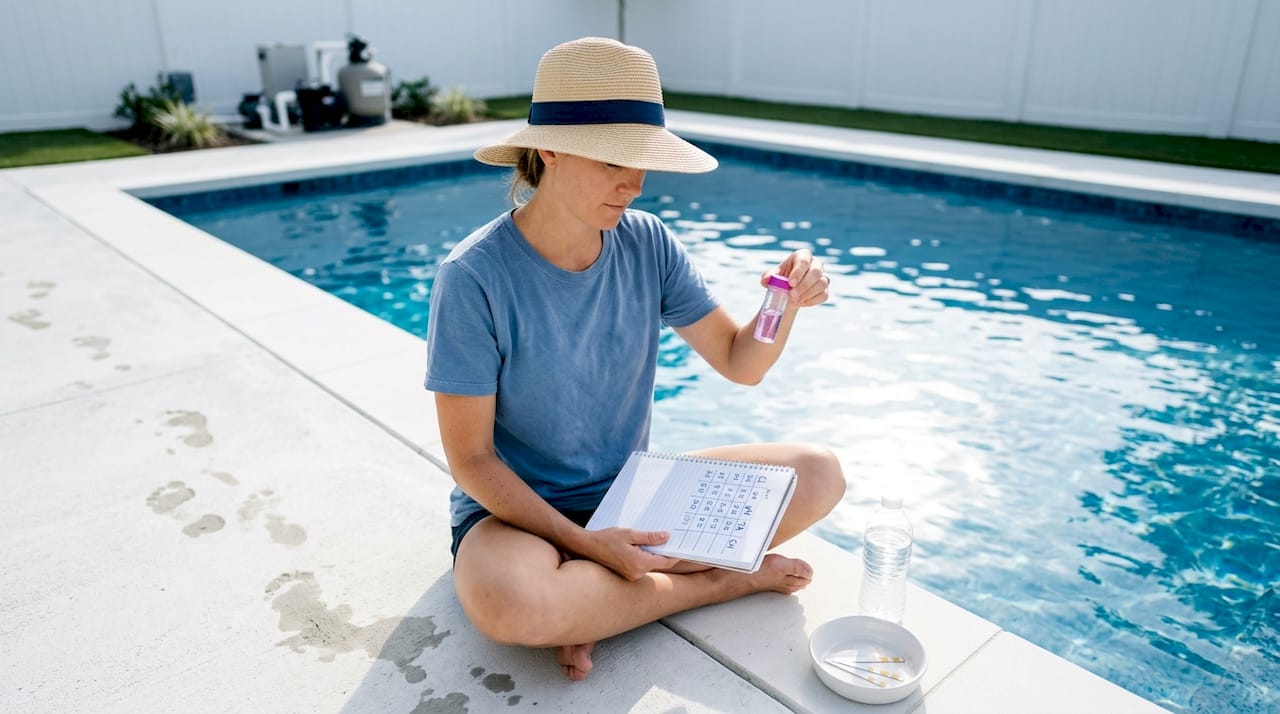
The target ranges for Central Florida pools are specific: free chlorine (FC) should be 2 to 4 ppm in hot climates, combined chlorine (CC) below 0.5 ppm, pH between 7.2 and 7.8, and cyanuric acid (CYA) between 30 and 50 ppm outdoors to protect chlorine from UV degradation.
Here is what each parameter actually means for a Florida pool:
| Parameter | Target range | What goes wrong outside range |
|---|---|---|
| Free chlorine (FC) | 2 to 4 ppm | Below 1 ppm: algae and bacteria thrive. Above 10 ppm: skin/eye irritation. |
| Combined chlorine (CC) | Below 0.5 ppm | Above 0.5 ppm: chloramines cause that “pool smell” and eye irritation |
| pH | 7.2 to 7.8 | Below 7.2: corrosive to surfaces. Above 7.8: chlorine loses up to 80% effectiveness |
| Cyanuric acid (CYA) | 30 to 50 ppm | Below 30 ppm: chlorine burns off fast in sun. Above 80 ppm: chlorine is locked up |
| Calcium hardness | 200 to 400 ppm | Too low: water becomes aggressive and etches plaster |
Follow these steps to maintain proper chemical balance throughout the season:
- Test your water at least twice a week using a reliable test kit or digital tester, not cheap strip tests that give imprecise readings
- Adjust pH first before adjusting chlorine, since pH directly controls how effective your chlorine actually is
- Add chlorine in the evening whenever possible to reduce UV breakdown before it can work overnight
- Check CYA monthly and if it exceeds 80 ppm, plan for a partial drain and refill to dilute it back down
- Track your results in a simple notebook or app so you can spot trends before they become problems
Pro Tip: After a heavy Florida rainstorm, always retest and rebalance within 24 hours. Rain water is slightly acidic and dilutes your chemicals. Pools that sit unbalanced after rain in summer can develop an algae bloom within 48 hours. These pool maintenance tips can help you stay ahead of those kinds of surprises.
Using a reliable maintenance checklist makes it much easier to stay consistent, especially during busy summer months when the pool gets used most. The expert maintenance tips available from professionals in Central Florida can save you significant time and money.
Once your water chemistry is balanced, you’ll need to know when and how to shock the pool for advanced sanitation, especially after heavy use or rain.
When and how to shock your pool
Pool shock is not the same as regular chlorination. It is a large, concentrated dose of chlorine intended to break through chloramines and organic contaminants that accumulate over time.
“Shock treatment (breakpoint chlorination): Raise FC to 5 to 10 ppm or 10 times your CC level to eliminate chloramines and contaminants. Wait until FC drops below 4 ppm before allowing anyone to swim.”
Here is when you should shock your pool:
- After heavy rain or flooding that dilutes chemicals and introduces organic debris
- After a pool party or unusually heavy swimmer load that spikes sweat, sunscreen, and body oil contamination
- When you detect that “pool smell” which actually signals chloramines from combined chlorine above 0.5 ppm
- When you spot early signs of algae, such as slightly cloudy water or a faint green tint on walls
- Weekly during peak summer months as a preventive measure for heavily used pools
The right way to shock your pool is straightforward but often done incorrectly. Add shock directly to the water in the evening, never through the skimmer. Pre-dissolve Cal-Hypo in a bucket of water before adding it. Run your pump for at least 8 hours after shocking so the chemical distributes evenly. Keep people out until you test and confirm FC has dropped below 4 ppm.
The importance of regular maintenance cannot be overstated when it comes to shock treatment timing. Skipping routine maintenance means you end up needing to shock more often and at higher doses. A solid maintenance importance guide helps you understand how these tasks connect.
Shock treatments are a key part of advanced pool care. But newer chlorination alternatives are gaining attention in Florida, so let’s break down how they compare.
Traditional chlorine vs. alternatives: Saltwater, BBB method, and more
Plenty of Central Florida homeowners are exploring alternatives to the traditional chlorine tablet and shock routine. Two approaches worth understanding are saltwater systems and the BBB method.
Saltwater pools use an electrolytic chlorine generator (ECG) to convert dissolved salt into chlorine automatically. The maintenance benefits of saltwater pools include gentler water on skin and eyes, fewer manual chemical additions, and reduced chloramine formation. That said, saltwater systems require their own maintenance, including regular cell cleaning, calcium management, and salt level monitoring.
The BBB method stands for Bleach, Baking Soda, and Borax. It is a DIY approach that uses plain liquid chlorine (bleach) for sanitation, baking soda to raise total alkalinity, and borax to raise pH without adding to total alkalinity. The main advantage is avoiding the CYA buildup that comes with stabilized chlorine products like trichlor tablets.
Key points about alternative systems:
- Saltwater systems produce chlorine continuously at lower concentrations, which many swimmers find more comfortable
- The BBB method is budget-friendly and gives you precise control over what goes into your water
- Both alternatives still require you to maintain proper FC levels, test regularly, and shock when needed
- UV and ozone systems can be added as supplemental sanitizers but do not replace chlorine entirely
- No current technology eliminates the need for some form of active chlorine in a residential pool
Pro Tip: Regardless of which chlorination method you choose, always keep liquid chlorine on hand for quick adjustments. Florida weather can change your pool chemistry overnight, and waiting for tablets to dissolve is not always fast enough to prevent an algae bloom.
What most guides miss about pool chlorination in Central Florida
After decades of building and supporting pools across Central Florida, we have seen the same patterns repeat. Most online guides treat chlorination as a universal topic. They give you the basics and move on. But Florida pools are a different challenge, and the gaps in that generic advice are where homeowners end up spending unnecessary money.
The biggest surprise for new pool owners here is how aggressively the sun destroys chlorine. A pool in Minnesota with 3 ppm FC at sunrise might still have 2.5 ppm by evening. The same pool in Orlando might have less than 1 ppm by noon on a clear July day. CYA protection becomes non-negotiable, not optional, but then CYA itself becomes the problem when it accumulates too high. It is a constant balancing act.
Rain is equally disruptive. A two-inch afternoon storm can drop your pH, dilute your chlorine by 10 to 15 percent, and introduce organic debris all at once. Homeowners who check their chemistry once a week during a dry spring get blindsided when July’s daily storms arrive. We always recommend testing after every significant rain, full stop.
The CYA issue deserves its own warning. We see many homeowners who have used trichlor tablets for two or three seasons without ever doing a partial drain. Their CYA is sitting at 120 or 150 ppm. At that level, chlorine is so locked up that even 5 ppm FC barely sanitizes the water. The only fix is dilution, which means draining 30 to 50 percent of the pool and refilling. That is a real cost that a simple $5 monthly CYA test could have prevented.
Record-keeping sounds tedious but it is genuinely one of the most useful habits a pool owner can build. A simple log showing your twice-weekly test results tells you exactly when your pool trends toward low pH after rain or when your chlorine consumption spikes in summer heat. Patterns become obvious fast. Following maintenance tips for Central Florida gives you a structured framework to build that habit correctly from the start.
Ready to get expert pool help in Central Florida?
If this guide has shown you anything, it is that smart pool care starts with the right knowledge and the right support. Chlorination is manageable when you have a plan tailored to Florida’s unique climate and your specific pool type.
Whether you are installing a new custom pool or renovating an existing one, working with experienced local professionals makes a real difference. Explore our Pool School for in-depth resources covering everything from water chemistry to equipment upgrades. If you are thinking about a renovation that could simplify your maintenance routine, our guide to luxurious pool remodeling walks you through the full process. R&R Swimming Pools has been serving Central Florida homeowners since 1985, and we are ready to help you get the most from your backyard investment.
Frequently asked questions
Why is chlorine especially important in Central Florida pools?
Hot climate, frequent rain, and heavy pool use increase bacteria and algae growth, making precise chlorination essential. Central Florida pools require FC levels of 2 to 4 ppm to stay ahead of these conditions.
How often should you test chlorine levels in your pool?
Test chlorine and pH at least twice a week during swim season. Regular testing prevents algae, irritation, and cloudy water, and after heavy rain or a pool party, test again the same day.
What happens if you use too much chlorine?
Excess chlorine causes skin and eye irritation and makes the pool unsafe for swimming. Always wait until FC falls below 4 ppm before allowing swimmers back in after a shock treatment.
Are saltwater pools chlorine-free?
No. Saltwater pools generate chlorine from salt through an electrolytic cell and still require the same FC monitoring as traditional pools. They offer gentler water but are not a chlorine-free system.
Can you swim immediately after pool shocking?
No. Wait until free chlorine drops below 4 ppm after shocking before swimming. Rushing back into a recently shocked pool can cause serious skin and eye irritation.
