
TL;DR:
- Florida has the highest child drowning rates, making pool fencing essential for safety.
- Four-sided fencing reduces child drowning risk by up to 83 percent, far more effective than alarms.
- Proper compliance with Florida’s fencing laws is critical for ensuring a safe pool environment.
Florida leads the nation in child drowning fatalities, with drowning being the leading cause of death for children ages 1 to 4. That statistic alone should stop every Central Florida pool owner in their tracks. Many families assume a watchful eye and a pool cover are enough. They are not. This guide walks you through why pool safety fencing is your most powerful defense, what Florida law requires, and how to build a layered approach that truly keeps your children safe around the water.
Table of Contents
- The facts: Why drowning risks demand action in Central Florida
- Understanding Florida pool safety laws and fence requirements
- How pool safety fencing saves lives: What the data and experts say
- Your pool safety checklist: Applying best practices in Central Florida
- Our perspective: The pool safety gap most families never see
- Ready to protect your family? Explore expert pool safety solutions
- Frequently asked questions
Key Takeaways
| Point | Details |
|---|---|
| Drowning risk is highest for kids | Florida leads the nation in child drowning fatalities, with pools posing a top risk for families. |
| Fencing is the most effective barrier | Four-sided pool fences prevent the majority of drownings and are required by law for new pools. |
| Laws mandate strong barriers | Florida Statute 515 requires at least one effective safety feature, usually a code-compliant fence. |
| Layered safety is best | Combining fencing with alarms, covers, and vigilant supervision gives the greatest protection. |
| Customization and inspection matter | Choosing and maintaining the right fence for your home and regularly inspecting it are essential to ongoing safety. |
The facts: Why drowning risks demand action in Central Florida
Central Florida has one of the highest concentrations of residential pools in the country. The sunshine is relentless, the summers stretch for months, and backyard pools are practically a rite of passage for families here. But that culture of pool ownership comes with a responsibility that too many homeowners underestimate.
“A child can drown in the time it takes to answer a phone call. You do not need negligence. You just need a moment.”
Florida ranks 5th nationally in unintentional drowning deaths, with over 500 fatalities recorded in 2023 alone. Young children are the most vulnerable group by far. Their natural curiosity draws them to water, and they have no concept of danger or depth.
Here is what makes the risk so hard to manage with supervision alone:
- Children move fast and quietly. A toddler can reach a pool in under 30 seconds.
- Drowning is silent. There is no splashing or screaming like you see in movies.
- Distractions happen constantly, from phones to conversations to other kids.
- Many drownings occur when a child is believed to be inside the home.
That last point is critical. Studies consistently show that isolation fencing reduces risk by 83% compared to no barrier at all. Not 10%. Not 30%. Eighty-three percent. No other single safety measure comes close to that number.
Pool alarms and safety covers provide some value, but they are reactive tools. An alarm goes off after a child has already entered the water. A cover can be pushed aside or improperly secured. Fencing, when properly installed, stops access before anything dangerous happens. Our pool safety guide covers all the complementary layers worth adding, but fencing is where you start.
Now that we have addressed the gravity of the problem, let us clarify what pool safety fencing laws require and how they specifically impact Central Florida homeowners.
Understanding Florida pool safety laws and fence requirements
Florida is one of the few states with dedicated residential pool safety legislation. Florida Statute Chapter 515 mandates that every residential pool must have at least one approved safety feature. Fencing is the most common and most effective choice.
Here is what a compliant pool fence must include:
- Minimum height of 4 feet on all sides
- Non-climbable design with no footholds or handholds below 45 inches
- Self-closing and self-latching gates that open outward away from the pool
- No gaps greater than 4 inches between vertical members
- Latch placement at least 54 inches from the ground or on the pool side of the gate
Florida law also allows alternative safety features to satisfy the Chapter 515 requirement. Here is how the most common options compare:
| Safety feature | Stops access before water contact | Requires active use | Can fail without notice |
|---|---|---|---|
| Four-sided pool fence | Yes | No | Rarely |
| Pool alarm | No | No | Yes (battery/tech) |
| Safety cover | Partial | Yes | Yes (improper use) |
| Screen enclosure | Yes (if compliant) | No | Possible (storm damage) |
Screen enclosures can qualify as barriers in Florida if they meet height, latch, and non-climbable standards, but they are more vulnerable to hurricane damage and gaps from wear. Above-ground pools require either a removable ladder that locks or a compliant barrier around the pool perimeter.
Pro Tip: Always verify your fence installation with your local county inspector before the pool is filled. Orange, Osceola, and Seminole counties each have their own inspection schedules. Pulling permits and passing inspection protects you legally and ensures the fence is actually doing its job. Our pool permitting guide explains exactly what to expect from that process, and our pool inspections checklist gives you a step-by-step walkthrough.
With legal basics and practical requirements in mind, let us examine what actually makes fencing so effective backed by data and best practices.
How pool safety fencing saves lives: What the data and experts say
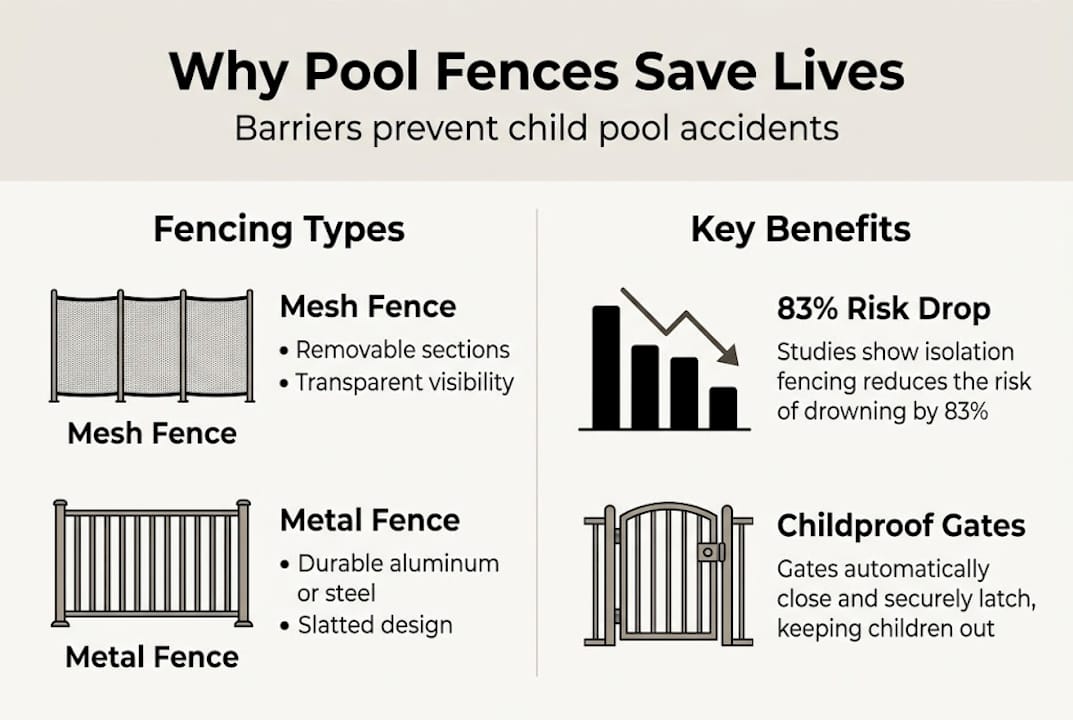
The science on this is not ambiguous. The CDC, the Consumer Product Safety Commission (CPSC), and the American Academy of Pediatrics (AAP) all agree: fencing is the single most effective physical barrier for preventing child drowning. Fencing is the most effective barrier per every major pediatric and public health authority.
Here is a breakdown of what the data actually shows:
| Safety measure | Estimated drowning reduction |
|---|---|
| Four-sided isolation fencing | 19% to 83% |
| Three-sided fencing (house as 4th wall) | Significantly less effective |
| Pool alarms alone | Minimal, no agreed figure |
| Supervision alone | Variable, unreliable |
The 83% reduction figure applies specifically to four-sided isolation fencing, meaning the fence fully surrounds the pool and does not use the house wall as one side. When the house serves as a side, children can access the pool directly through a door, and the fence loses most of its effectiveness.
“Pool barriers save lives. The data is clear, and the technology is simple. A proper fence around a pool is one of the most cost-effective child safety interventions available.”
Aesthetic concerns are real. We hear them constantly. Families worry that a fence will ruin the look of their backyard. But modern aluminum and mesh fencing options are slim, transparent, and barely noticeable once installed. The CPSC pool barrier insights reinforce that barriers remain underused largely because of appearance concerns, not cost. That is a preventable tragedy.
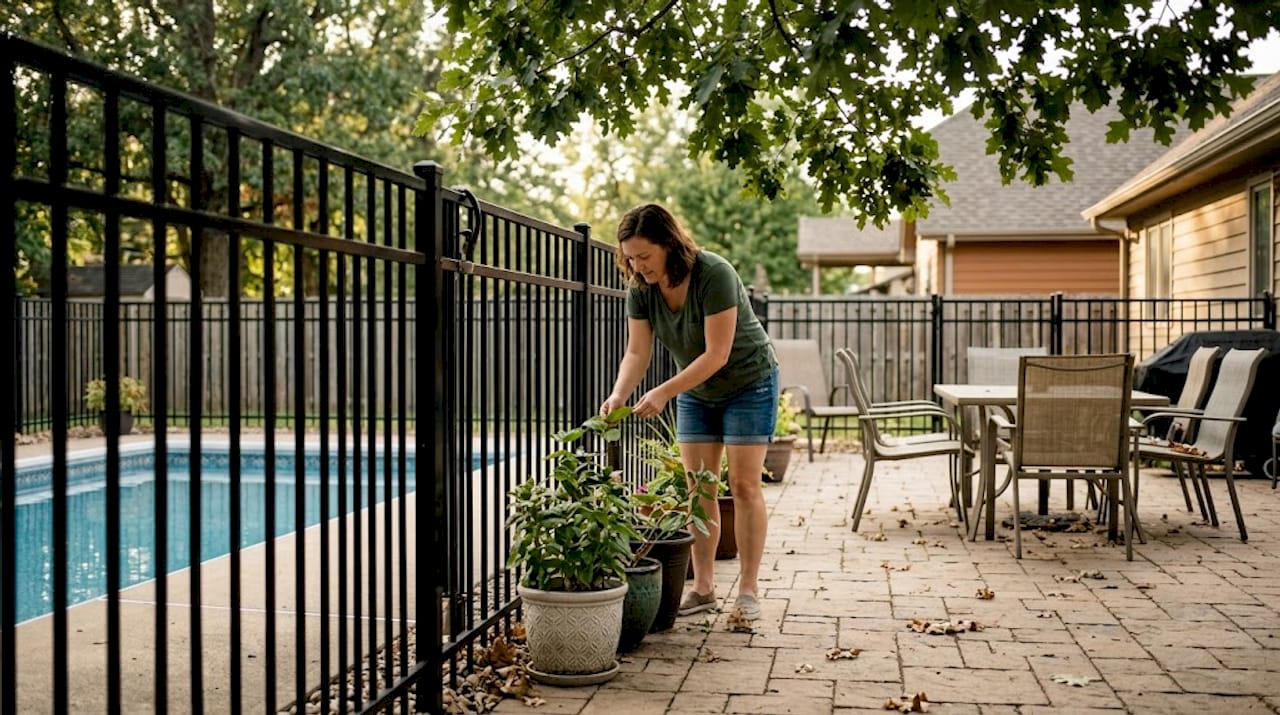
The role of pool enclosures in Florida goes beyond fencing alone, but no enclosure or cover replaces a compliant four-sided fence as your primary barrier.
Recognizing fencing’s proven importance, the next step is applying these insights to your family’s pool installation or renovation process.
Your pool safety checklist: Applying best practices in Central Florida
Choosing and maintaining the right fence requires more than a single purchase. Here is how to get it right from selection through long-term upkeep.
Choosing your fence material
- Mesh fencing: Removable, cost-effective, and nearly transparent. Great for families who want flexibility.
- Aluminum fencing: Durable, hurricane-resistant, and low-maintenance. Ideal for permanent installations.
- Wood fencing: Less common for pools due to rotting, warping, and gap issues over time. Requires more maintenance.
Prioritize 4-sided mesh or aluminum fencing that meets Chapter 515 standards and inspect it annually for gaps and latch function.
Step-by-step compliance checklist
- Confirm fence height reaches at least 4 feet on all sides.
- Check that all gates self-close and latch securely without manual assistance.
- Walk the perimeter and look for gaps wider than 4 inches.
- Test latch placement to confirm it sits above 54 inches or faces pool-side.
- Inspect for bent posts, rust, or storm damage after every hurricane season.
- Schedule a professional inspection every 12 months.
Pro Tip: After every tropical storm or hurricane, walk your fence line before letting kids back in the pool area. Wind and debris can knock posts loose, bend gates, or create gaps that were not there before.
Beyond fencing, layer your safety strategy with pool alarms on doors and the water surface, a CPSC-compliant pool cover for off-season protection, swimming lessons starting at age 1, and consistent adult supervision whenever children are near the pool. Our pool maintenance tips include a section on keeping safety equipment in top shape year-round. You can also use our safety inspection checklist to stay current on every required safety element.
With actionable strategies in place, it is time to consider the larger perspective.
Our perspective: The pool safety gap most families never see
After nearly four decades of building pools across Central Florida, we have seen a pattern that worries us. Families invest tens of thousands of dollars in a beautiful pool, then hesitate on the $1,500 to $3,000 needed for a proper fence. The reasoning is almost always the same: “We will always be watching,” or “We have an alarm,” or “The screen keeps it enclosed.”
Supervision is not a barrier. It is a behavior, and behaviors slip. Alarms are secondary tools, not primary ones. The CPSC annual report is direct: fencing is the primary defense, and alarms or covers are valuable supplements that can and do fail.
We have spoken with families who added fencing after a near-miss and said it was the best decision they ever made, not because something happened, but because they finally stopped worrying every time they turned their back. That peace of mind is real. Good pool maintenance and safety habits matter, but nothing replaces the physical layer a proper fence provides. Make that the first line of protection, not the last thought.
Ready to protect your family? Explore expert pool safety solutions
At R&R Swimming Pools, we have been helping Central Florida families build safe, beautiful backyard pools since 1985. Whether you are planning new pool construction or working through a pool renovation checklist, we bring decades of local experience to every project including getting your fencing, barriers, and permits right from day one.

Safety should never be a budget compromise. We offer flexible pool project financing options so that proper fencing and compliant safety features are accessible for every family, regardless of where you are in the renovation or build process. Reach out today for a free consultation and let us help you protect what matters most.
Frequently asked questions
What makes a pool fence compliant with Florida law?
A compliant pool fence in Florida must be at least 4 feet high, non-climbable, with gates that self-close, self-latch, and open outward, with no gaps over 4 inches. Chapter 515 outlines these barrier requirements including height, gate mechanisms, and gap maximums.
Can a screen enclosure replace a pool fence in Florida?
Screen enclosures can serve as barriers if they meet the height and closure standards set by Florida statute, but they must be inspected and maintained. Enclosures may qualify only when fully compliant with latch, height, and non-climbable design requirements.
Is supervision enough without a pool fence?
No. Proper pool fencing prevents up to 83% of child drownings, a result that adult supervision alone cannot reliably replicate, especially in the split seconds that matter most.
Are alarms a substitute for fence barriers?
Alarms are helpful supplements, not replacements. Fencing is primary; alarms and covers add value but can fail due to dead batteries, technical malfunctions, or improper installation.
